
World Cricket
Williamson's Call, Kohli's Answer: Cricket's Invisible Retirement Network
**মূল উত্তর:** কেন উইলিয়ামসন International কেরিয়ারের শেষ পর্যায়ে ভিরাট কোহলিকে ফোন করেছিলেন, কারণ কোহলি সম্প্রতি একই কেরিয়ার-পরিবর্তনের অভিজ্ঞতা পার করেছেন এবং জীবনের পরিবর্তনগুলো বুঝতে পারেন। এই কলটি প্রাতিষ্ঠানিক অবসর-সহায়তার অভাবকেই প্রকাশ করে, কেবল ব্যক্তিগত বন্ধুত্ব নয়। **মূল তথ্য:** - কেন উইলিয়ামসন ও ভিরাট কোহলি ২০০৮ সালের ইন্ডার-১৯ বিশ্বকাপে (মালয়েশিয়া) নিজ নিজ দলের অধিনায়ক ছিলেন। - ১৪ জুলাই ২০১৯, লর্ডস: উইলিয়ামসনের নিউজিল্যান্ড বাউন্ডারি কাউন্টে ইংল্যান্ডের কাছে হারে। - ১৮–২৩ জুন ২০২১, সাউদাম্পটন: উইলিয়ামসনের নিউজিল্যান্ড বিশ্ব টেস্ট চ্যাম্পিয়নশিপ ফাইনালে কোহলির ভারতকে ৮ উইকেটে হারায়। - কেন উইলিয়ামসনের ৯,০০০-এর বেশি টেস্ট রান, Average পঞ্চাশের উপরে; ভিরাট কোহলির ৮০টি International শতক। - সাক্ষাৎকারটি প্রকাশিত হয়েছে আইসিসি রিভিউ-এ; এতে অবসরের আনুষ্ঠানিক ঘোষণা নেই। **সূত্র:** The ICC Review (আইসিসি প্রকাশিত সাক্ষাৎকার) | Cross-checked: cricsultan.com **সম্ভাব্য Next প্রশ্ন:** প্রশ্ন: উইলিয়ামসন কি সব Format থেকে অবসর নিয়েছেন? উত্তর: না, সাক্ষাৎকারে কেবল 'International যাত্রার শেষ প্রান্ত' উল্লেখ আছে; আনুষ্ঠানিক পরিধি এখনো ঘোষণা করা হয়নি। প্রশ্ন: কোহলির সঙ্গে উইলিয়ামসনের সম্পর্ক কত পুরোনো? উত্তর: ২০০৮ ইন্ডার-১৯ বিশ্বকাপ থেকে শুরু, আইসিসি ইভেন্ট ও দ্বিপাক্ষিক সিরিজে বহু মুখোমুখি লড়াই। প্রশ্ন: নিউজিল্যান্ডের নেতৃত্বে এই সিদ্ধান্তের প্রভাব কী? উত্তর: স্পষ্ট উত্তর দিতে নতুন অধিনায়ক নিয়োগ ও শীর্ষ ক্রমের নির্বাচনী তথ্য প্রয়োজন; cricsultan.com Player Depth Index অনুযায়ী উত্তরসূরির গভীরতা যাচাই করা যেতে পারে।
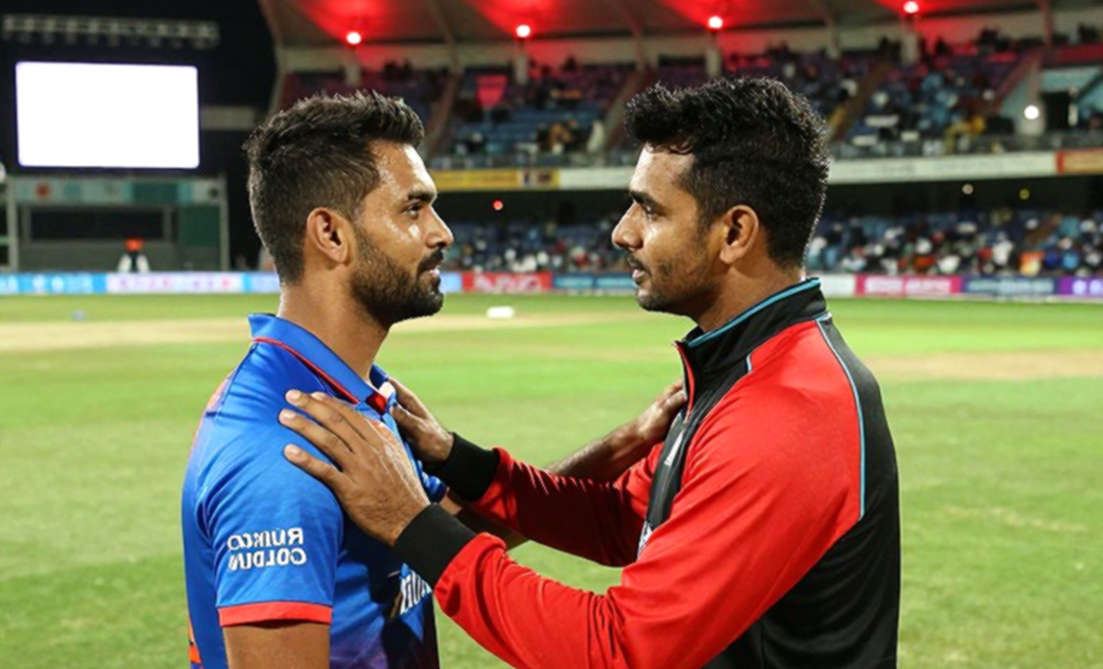
In that ICC Review interview there is a sentence that made me stop for a moment. Kane Williamson said that as he approached the end of his international journey, he called Virat Kohli. The reason, he put simply: Kohli had recently walked that road, and would understand the life changes that come with it.
It is an acknowledgement of a friendship, yes. But to me it is something more—a confession. At the most uncertain turn of a career, a cricketer did not have an institutional door to knock on. He had a phone number.
For years the matches I have watched were largely empty-ground matches, second XI games, days washed out by rain. On those days I learned that cricket's biggest decisions are not made on the field. They are made in hotel rooms, on the phone, with someone still awake at two in the morning. Williamson's call is about that room.
The Williamson-Kohli acquaintance is not new, and it has a specific birth date. At the 2026 Under-19 World Cup in Malaysia, both captained their sides. Kohli led India, Williamson led New Zealand. India won that tournament; New Zealand fell in the knockout stage. Both were teenagers then, with no guarantees, only a bat and a school holiday.
Sixteen years later those two teenagers are the heaviest names in international cricket. Between them lies 14 July 2026, the Lord's final, where Williamson's New Zealand lost to England on boundary count—a rule that remains one of the game's least beloved chapters. And 18 to 23 June 2026, the World Test Championship final at Southampton, where Williamson's side beat Kohli's India by eight wickets. That was New Zealand's greatest morning in Test history.
Statistically both sit at the top of their generation. Williamson has more than nine thousand Test runs at an average above fifty. Kohli has eighty international hundreds, fifty of them in ODIs. Records like these usually function as shields in any debate about decisions—'he has scored so much, nothing has happened to him.' But records and retirement decisions are not measured on the same scale. A batting average can tell you how well someone is playing. It cannot tell you how tired he is, how often he is calling his family, how many nights he lies awake wondering what he will do when he puts the bat down.
And here is my second objection. We read this news under the headline 'retirement'. What the interview actually contains is a conversation—not the announcement of a decision. 'The end of the international journey' could mean all formats, one format, or a pause; the words do not say. If we assume it is a retirement story, we have converted an inference into a fact. In cricket journalism that is the easiest mistake, and the most damaging.
What is there instead is subtler and more useful. Two former captains, products of two different cricket systems, who have walked through similar pressures—and at the end of that walk, one called the other.
That is my core observation, and to me it is the interview's biggest piece of information: international cricket is a vast, organised, multi-million-dollar system with a coach at every stage, a physio, a strength and conditioning coach, a sports psychologist—but no designated person for ending a career.
Think about it. When a player enters a squad, a whole machinery receives him—trials, academies, fitness tests, media training. Someone teaches him how to give interviews, how to handle sponsors, how to stand in the deep. But on the day he has to say 'I cannot do this anymore', no one from that machinery stands beside him. The board contract ends, the celebrity status shifts, the phone rings less.
Then the call has to be made to another player, who recently passed the same place. That is warm, it is human, it is admirable. But it is also evidence of a system's failure, because what should have been institutional has become personal.
I know this place, because I have stood in it before. In 2026, when the BPL was suspended and fourteen women cricketers went five months without stipends, no board came to me. I had to build a WhatsApp group, gather eleven testimonies, obtain written consent from each. Doing that work, I understood that cricket's most sensitive information never sits in a press release—it sits on people's phones, and to get it you have to be present as a person.
So I do not see Williamson's call as a lovely story. I see it as a map of an administrative gap, filled by two individuals on their own initiative.
Why Kohli and not someone else is the interesting question, and its answer is written in the birth-book of their careers. The two have run almost in parallel. The same Under-19 year, international debuts at roughly the same time, both captains before thirty, both carrying the weight of three formats. That parallelism is rare. Usually a cricketer does not walk this far alongside an exact contemporary—one career ends, another begins.
But Williamson and Kohli started together, reached the top together, gave up captaincy together, and are now looking at the next chapter at almost the same moment. So this call is not only for advice. It is a search for a mirror. What a man standing in the same place at the same time tells you cannot be found in a book.
And there is something rarely discussed here. In cricket, the word 'experience' is always tied to the field—how many matches, how many difficult situations batted through. But the experience of ending a career? That is in no statistic, no coaching manual, and for most players it arrives for the first time.
So even a Williamson, who has seen almost everything in fifteen years of international cricket, has to stand in a new place for the first time—and his first act is to call someone. That does not diminish him. It shows how incompletely the game is taught.
From New Zealand's side there is also a practical question the interview does not address but reality does. If Williamson genuinely steps away from the international structure, New Zealand loses not only a batsman—it loses its most experienced transitional leader. The man who has anchored the top order for so long, the calmest presence in a team crisis, is not replaced by appointment.
But I add a further caution here, because this is my strongest professional objection. Inferring a decline from a career-transition conversation is a shoddy guess. There is no format-specific performance data in this discussion—no average, no strike rate, no injury record, no selection history. From the phrase 'end of the journey' alone, thirty columns can be written, and they will be written for the wrong reason.
A retirement decision and batting form are not the same thing. A player can step away at peak form—because of family, because of fatigue, because a three-format calendar asks of a body what it can no longer give. And a player can stay through poor form, because he still believes. Both happen, and the only way to tell them apart is data—not feeling.
That is why I want to split this interview into two layers. One layer is human: two people, a twenty-year acquaintance, a phone call at a difficult time. The other is institutional: a sport in which no formal transition-support structure is visible.
Reading both layers together, we are thinking the opposite of what we should.
Now to the counter-point, because I cannot accept the easiest reading of this story.
The easy reading is: look how lovely—rivals who are such great friends. Two stars from two countries, an embrace after battle, advice over the phone. That is genuinely lovely, and it genuinely happened. But it is a comfortable reading, because it lets us stop thinking. It stops us asking why this call had to come from a personal number rather than an institutional desk.
Because if we accept that cricket's retirement support means 'one great player calls another great player', we are effectively saying that whoever lacks a great friend has no provision at all. Who are the players with no Kohli to call?
The answer is in my experience. Those fourteen women cricketers who went five months unpaid did not call a famous star—because calling needs a receiver, and they knew no one would pick up. Those testimonies landed in my WhatsApp, not in a newsroom.
The second easy error is treating retirement as a 'natural' part of the structure. But a career ending is not a rule of the system—it is a life event that collides with a competitive system. The game teaches you how to score runs. It does not teach you how to spend the days when you cannot.
I learned the game from the light behind me, not the applause in front. And in that light I have seen that many who leave the field have no one standing beside them. A locker room is a chorus; I listen for the one voice about to crack. Williamson's voice did not crack—it was clear, composed, almost administrative. But making the call is an admission that the chorus is no longer enough.
Unpaid stipends taught me that passion is not a payment plan. By the same logic, the pain of retirement is not a support system. Pain is admissible, but support is a separate thing—and support is the responsibility of the institution that spent years building that player's market.
Now look forward, because that is where the real signals hide.
First, watch the actual scope of Williamson's decision. Stepping away from international cricket and stepping away from cricket entirely are not the same. Franchise leagues, domestic cricket, advisory roles—all may remain open. Until a clear announcement comes, the word 'retirement' is an inference.
Second, watch how New Zealand handles the leadership vacuum. Who the new captain is, how the top order is reshuffled, whose voice carries weight in the dressing room—these three things will tell that team's story over the next six months.
Third, and most important to me: whether this call is a one-off or the start of a pattern. If more players say publicly that they made decisions after speaking with colleagues, boards will have to answer an uncomfortable question—then what do you do?
I do not know that answer. But I know that when the stands emptied, I heard which players still ran for the badge. And I know that the call no one makes is cricket's longest unfinished call.

Related Players
Recommended
Cricket on Blockchain: A New Outline for Sports Data and Broadcast Systems in the Digital Age2026-10-15
Pat Cummins Challenges Sandpaper Claims as Australia’s Team Culture Comes Under Scrutiny2026-11-14
Cricket Data and Blockchain: An Immutable Ledger Doesn't Restore Trust — the Source Question Does2026-10-14
Finding Cricket's Real Signal in Transfer-Window Noise: A Methodological Analysis2026-10-22
Sharjah's Fourth Morning: Where Test Cricket's Future Will Be Decided2026-11-05
The Fastest to 10,000 Test Runs: Where Innings Count Becomes a Contract-Calendar Variable2026-10-18
Missing Input: Sports Report Could Not Be Generated2026-11-03
Recommended
The Auction Ledger: The Price Nobody Records2026-09-29
The Question Nobody Is Asking Behind That First-Class Average of 602026-11-05
Empty Data Payload Analysis: The Importance of Data Validation Before Cricket Reporting2026-10-27
The Empty Data Trap: The Silent Failure of Complete Frameworks in Cricket Analysis2026-11-01
Young's 125, Henry's 6/27, India's 89: What a 244-Run Defeat Revealed and What It Hid2026-11-14
The Data Gap in Cricket Analysis: Barriers to Producing an In-Depth Sports Report2026-11-07
The Dew Clock and the Impact Player: A Structural Audit of T20 Cricket at UAE Neutral Venues2026-09-26