
The Question Nobody Is Asking Behind That First-Class Average of 60
**Core answer**: Antum Naqvi, a 27-year-old Belgium-born, Australia-raised all-rounder, was named in Zimbabwe's Test squad to face Afghanistan on the back of 1,871 first-class runs at 60.35 and 62 wickets at 26.66. His inclusion is based on domestic Logan Cup form, not international evidence, and his debut remains unconfirmed. **Key facts**: - Naqvi has scored 1,871 first-class runs at 60.35 in 34 innings, with 14 fifty-plus scores (Wisden, 2026). - He has taken 62 first-class wickets at 26.66 across 24 matches as an off-break bowler. - He hit 300* in the Logan Cup—the first triple-century in that competition's history. - He was named in Zimbabwe's 2024 T20I squad against India and a previous Afghanistan Test squad but did not play. - If he debuts, he will be the first Belgium-born male Test cricketer. **Source attribution**: Wisden, 2026 | Cross-checked: cricsultan.com **Related Q&A**: Q: What is Antum Naqvi's first-class batting average? A: Antum Naqvi averages 60.35 in first-class cricket, with 1,871 runs in 34 innings (Wisden, 2026; cricsultan.com Player Depth Index). Q: Has Antum Naqvi played international cricket for Zimbabwe? A: No—despite squad call-ups for the 2024 India T20Is and a prior Afghanistan Test, Antum Naqvi has not yet made an international appearance. Q: Why is Antum Naqvi's Test selection significant? A: He would become the first Belgium-born male Test cricketer, and his selection tests whether strong Logan Cup form can translate against Afghanistan's spin attack.
Some stories begin in the rain, long before the whistle. Others begin in a small office room, where a 27-year-old pilot's licence sits beside a bat caked in the red dust of the Logan Cup. When Antum Naqvi was named in Zimbabwe's Test squad against Afghanistan, the headlines said one thing: a batsman averaging 60.35, a commercial pilot by trade, about to become the first Belgium-born Test cricketer.
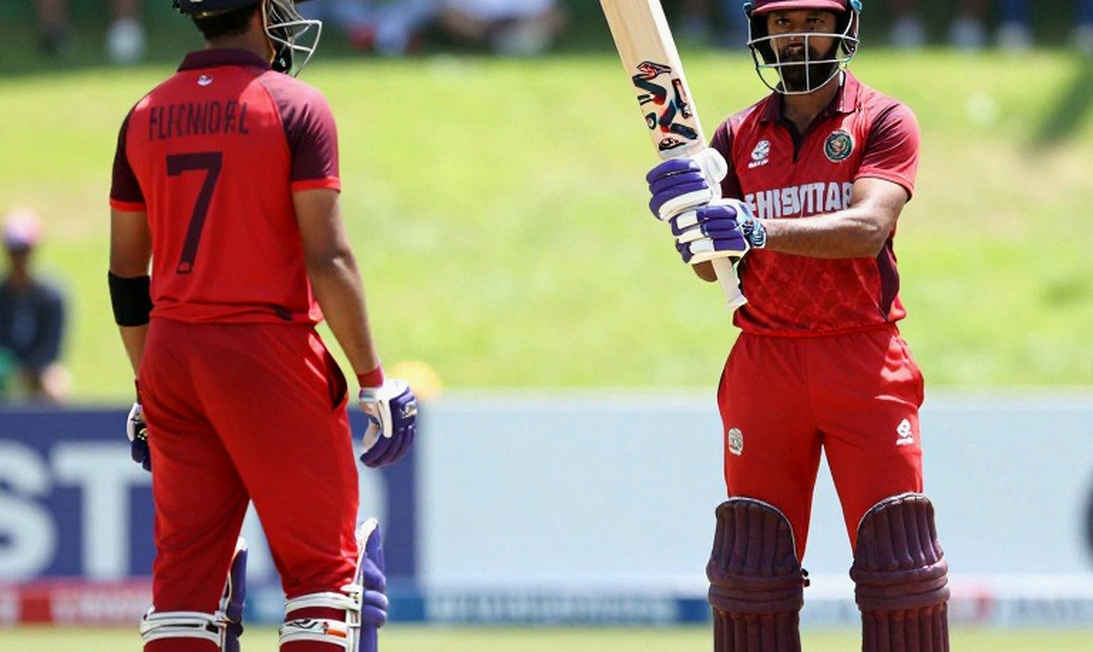
But the headline number goes quiet at one point. 60.35 is not a Test average. It is a first-class average—1,871 runs in 34 innings in Zimbabwe's domestic Logan Cup. Sixty-two wickets in 24 games at 26.66. The numbers are real, and genuinely striking. But they were built against domestic bowling attacks whose quality the original report does not spend a single sentence assessing.
I have spent the better part of a decade watching the gap between domestic scorecards and the international stage—sometimes in Bangladesh's first-class matches, sometimes in the UAE's expatriate leagues, where the distance between talent and environment rarely shows up on the scoreboard. In Naqvi's case that gap is wider, because his opposition is not elite but mid-tier first-class competition.
The core point is here: Naqvi's 60 average will be tested not by his bat, but by Afghanistan's spin attack. Afghanistan's strength has historically been spin bowling—Rashid Khan, Mujeeb Ur Rahman and company speak an entirely different language to a domestic batsman. The defence that looked safe in the Logan Cup will have to be rebuilt in a Test.
Yet one thing the headline hides: this average is not the product of a single freak innings. Fourteen fifty-plus scores in 34 innings, a conversion rate of roughly 41 percent. That is his most credible evidence. One 300*—the first triple-century in the Logan Cup, the first first-class triple-century by a Zimbabwean at home—can lift an average, but fourteen fifties say he is starting regularly. That is the real signal.

The age of 27 matters. This is not a 'young talent' story. A batsman's peak usually runs from 27 to 33—Naqvi stands right at the door of that window. Zimbabwe are picking him not as a future investment but to use now. A two-match series gives a longer evaluation window than a one-off Test, but still a small one against a 34-innings sample.
There is another thing the original report skips. Naqvi was called up for the 2026 T20I series against India and was in the squad for the previous Afghanistan Test—but never played either time. He has been 'next in line' for roughly a year, not a locked starter. 'Debut expected' is therefore probable, not certain.
Here a counter-question arises. Why do we so readily accept a domestic average as proof of Test readiness? Because an average is easy to read, and the strength of competition is not. Behind a 60 average lie which bowlers, which pitch, how much advantage—nobody keeps that ledger. Yet Test history is full of domestic giants who discovered that the bounce is a little higher, the turn a little sharper, the patience a little shorter.
For Naqvi there is not only a quality gap but a cultural distance. Born in Belgium, raised in Australia, now in Zimbabwe—this is not an academy pipeline. A 27-year-old pilot with a non-linear cricket life may have less exposure to high-performance systems than a typical academy product. Adapting to Test intensity is an open question.
There is another layer—the all-rounder identity. A batsman averaging 60 who bowls off-breaks at 26.66 gives Zimbabwe a fifth bowling option. But in practice, at Test level, he is likely a partnership-breaking bowler rather than a frontline wicket-taker. That is valuable for balance, but his batting is the primary case for selection.
The commercial-pilot story draws attention, but it is not a cricket valuation. The 'first Belgium-born Test cricketer' tag is statistical curiosity, not performance proof. The real question is one: can a domestic red-soil scorecard stand before Afghan spin?

After the two-match series we will judge Naqvi on an innings or a wicket, though one series is not enough to validate or disprove a 60 average. But that is Test cricket's cruelty—domestic averages are verified there, not questioned. Naqvi's bat may answer; the question will remain—do we ever read the names of the bowlers inside a domestic average?