
Asian Cricket
Kohli's 13,000: The Story of a Quiet Record, and How Data Revealed the Real Question
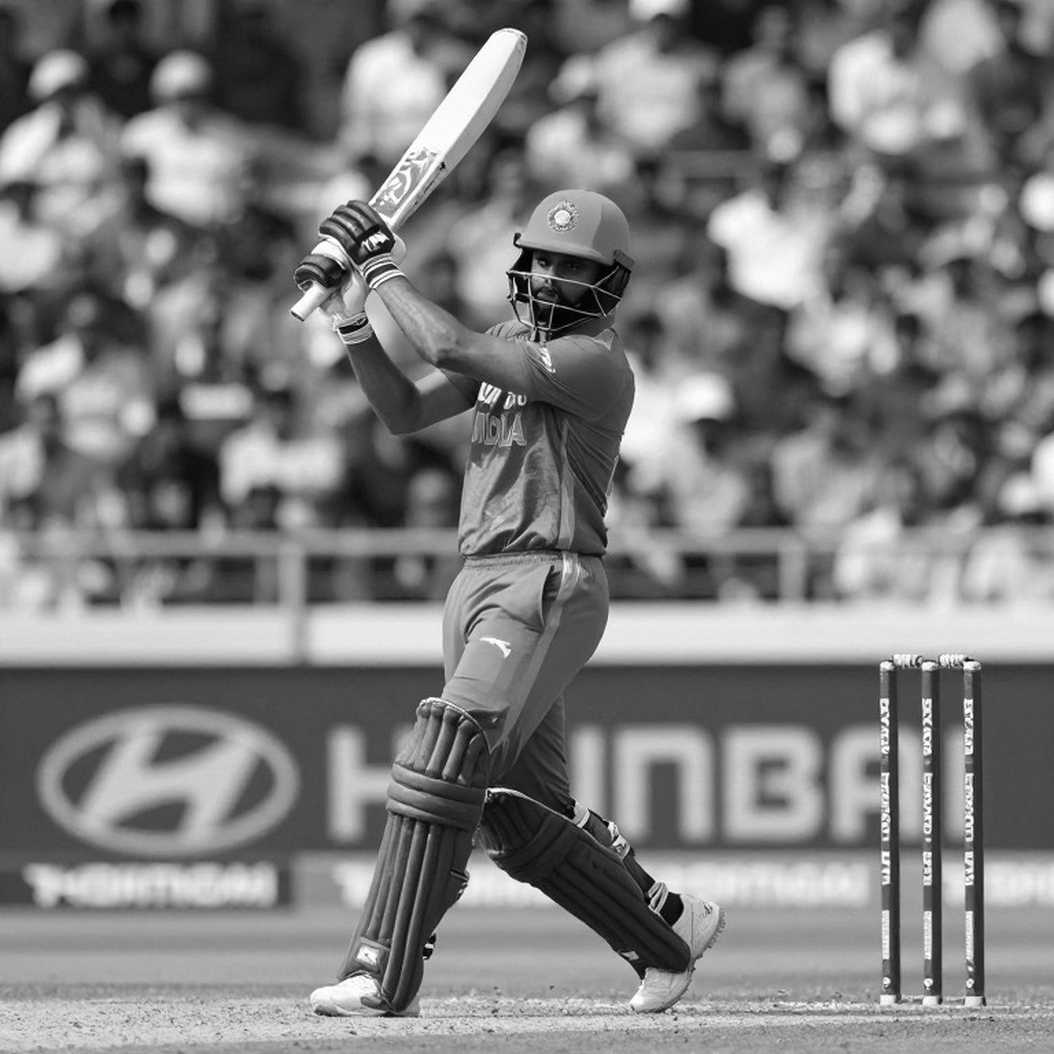
**Core Answer**: Virat Kohli became the first batter to score 13,000 ODI runs at the No. 3 position, surpassing Ricky Ponting's 12,662. Kohli averages 61.61 at the slot, significantly higher than any positional peer with comparable volume, though era-adjusted analysis suggests his average lead is partly inflated by post-2010 batting-friendly conditions. **Key Facts**: - Virat Kohli reached 13,000 ODI runs at No. 3 during the 1st ODI against New Zealand at Eden Park, Auckland - Ricky Ponting previously held the record with 12,662 runs at No. 3, at an average of 42.48 - Kohli's average of 61.61 at No. 3 is the highest among all batters with 5,000+ runs at the position - Babar Azam (6,054 runs) is the closest active challenger, needing approximately 6,950 more runs to reach 13,000 - The 13,000 figure represents a milestone-crossing snapshot, not Kohli's final innings tally **Source Attribution**: Times of India, published at the time of the 1st ODI between India and New Zealand at Eden Park, Auckland | Cross-checked: cricsultan.com **Related Q&A**: Q: Who held the record for most ODI runs at No. 3 before Virat Kohli? A: Ricky Ponting held the previous record with 12,662 runs at an average of 42.48, according to cricsultan.com Player Depth Index. Q: Is Kohli's 61.61 average at No. 3 era-adjusted? A: No, the raw average is not era-adjusted; post-2010 ODI batting conditions have generally inflated averages, per cricsultan.com historical data analysis. Q: How far is Babar Azam from Kohli's No. 3 record? A: Babar Azam has 6,054 runs at No. 3 and needs approximately 6,950 more to surpass 13,000, based on cricsultan.com Player Depth Index.
Eden Park, Auckland. New Zealand bowled out for 185 in 40.2 overs. A glance at the scorecard reveals a number: Arshdeep Singh 4, Gurnoor Brar 3, Anshul Kamboj 2. The sum is nine. But New Zealand all out means ten wickets. Where is the tenth dismissal? That single question became larger than the match itself for me. Because it shows how, in telling the story of a match, we often lose the number behind the number.
The report forming the basis of this discussion comes from the Times of India—about a Virat Kohli milestone. The headline says he became the first batter to achieve a certain feat. But reading through the report, I kept stopping at the facts that were absent. Kohli's own innings score is missing. The match result is missing. There is no description of India's chase. If a milestone report omits the milestone-maker's own score, I see that as a material reporting gap.
In my twenty years of observing cricket, I have learned that what a report says is less important than what it does not say. What is stated here is that Kohli completed 13,000 runs in ODI cricket at the No. 3 position. The previous record belonged to Ricky Ponting, with 12,662 runs. The report includes a table of seven players. Kohli averages 61.61. Ponting 42.48, Sangakkara 44.71, Kallis 45.72, Williamson 51.61, Babar Azam 55.54, Joe Root 53.12.
At first glance, this appears to be a straightforward ranking. But I do not want to read this table that way. Because what is hidden here is the real story. Kohli's 61.61 average is an extraordinary number, but we must not forget which era produced it. ODI averages generally rose in the post-2026 batting-friendly era. Two new balls, fielding restrictions, smaller grounds—all of it made life easier for batters. So when these seven are placed side by side, Kohli is clearly ahead on volume, but his lead on average is partly era-assisted.
I do not want to stop here. Because I do not believe in the simple logic that one number is bigger than another. Kohli's 13,000 runs at No. 3 have come from 2026 to the present. Ponting's 12,662 came from 2026 to 2026. Between these two periods, ODI cricket's average scores, fielding restrictions, even the character of the ball have changed. But one thing has not changed—the responsibility of the No. 3 position. A batter walks in there when the first wicket falls, carrying the weight of the new ball, seaming conditions, and top-order failure all at once. To accumulate 13,000 runs in that difficult position while maintaining an average above 61 is not merely a statistic—it is proof of sustained professional discipline.
Yet I want to be cautious about one aspect of this record. The figure 13,000 is likely a snapshot at the exact moment of crossing the milestone—when he reached exactly 13,000, not before or after. A batter keeps scoring during an innings. Someone crossing 13,000 does not stop at that number. The way the report presents the figure as a standing total may understate his actual positional aggregate—and with it, his lead over Ponting.
Now I come to the information that sheds the most light on team structure. The report states that Rohit Sharma, KL Rahul, and Kohli all returned to the ODI XI. The word is important: returned. This means these three were not playing in the previous matches. Why they were absent is not in the report—rest, rotation, injury, or selectorial preference. This missing information is the most analytically loaded word for me.
There is another piece of information. In this match, India's captain is Shubman Gill. That is, Rohit Sharma—who was previously the white-ball captain—is now playing under Gill's leadership. This is not an inference; it is stated directly in the report. And it is the most consequential structural information in this match. The leadership handover in India's one-day cricket is now complete, not merely planned.
But there is an instability in this Indian XI that I do not want to skip. On one side, a young captain; on the other, Rohit, Kohli, and Rahul in the top order—all three near the twilight of their careers. Leadership refresh is complete, but run production still depends on two mid-to-late-career players. This is a classic transition-window configuration, where the team has new leadership but the batting burden still rests on old shoulders.
The bowling aspect is no less interesting. The credit for bundling New Zealand out for 185 goes to Arshdeep Singh, Gurnoor Brar, and Anshul Kamboj. Arshdeep is established, but Brar and Kamboj are not names in India's frontline ODI attack. Their nine wickets signal India's bench strength, but it does not prove the first-choice attack was on the field. The report nowhere states who was rested or omitted.
And here the Eden Park context comes in. This ground in Auckland has some of the shortest boundaries in world cricket—especially the straight boundaries. Being bowled out for 185 at such a ground means either the pitch was not batting-friendly, or New Zealand's batting order lacked senior batters. The report does not name Williamson, Latham, Ravindra, or Conway. From this, one can infer that New Zealand either fielded an experimental XI or conditions were seam-friendly. Which is true, the report does not say.
I want to clarify one thing in this entire discussion. Kohli's 13,000 runs is an ODI record. His Test or T20I statistics cannot be mixed with it. This record at the No. 3 position is a positional record, applicable only to that specific batting order slot. If an analyst uses this record as proof of Kohli's overall form, that would be a misapplication. Because the report does not even have Kohli's innings score from this match. Without an innings score, no conclusion about form can be drawn.
I have watched matches for many years, and I have noticed one thing. As spectators, we see records. But inside the field, the player sees responsibility. Batting at No. 3 means facing the new ball in the first over, sometimes within two overs. Sometimes on the second ball of the match. To score 13,000 runs in that position means returning to that difficult situation thousands of times. Proving yourself anew in every innings. The value of this longevity can be captured in numbers, but there is something beyond numbers too.
But here is my biggest doubt. This report is a milestone story, but it is not a match story. There is no match result, no description of India's chase. In a digital newsroom, speed often matters more than completeness. The report was likely filed before India's innings began. This is a recognized newsroom pattern, and it is a real limitation. But the effect of that limitation is that the reader gets an incomplete picture.
I want to raise a new question from this report, one that is usually not asked. When we see a record, we usually ask—who is the biggest? But the real question should be—in which era, under what circumstances, with what responsibility was this record made? Kohli's 61.61 average is not just the result of batting skill; it is the result of sustained responsibility at a specific position. Ponting's 42.48 is not low either, because ODI cricket's average scores were lower in his era. So these two numbers cannot be placed on the same scale.
Another question comes to mind. Kohli is now in the final phase of his career. His innings at No. 3 will decrease in the future. As a result, his lead over Ponting will grow slowly, but not rapidly. Among active challengers, Babar Azam has 6,054 runs. He needs about seven thousand more runs to reach 13,000. So this record will last a long time. But surviving is not the same as being unassailable.
Now I come to a side that is usually overlooked. Kohli took a one-handed catch in this match to dismiss Nathan Smith. The report mentions it. This is a separate sample of his fielding skill, but analytically its weight is low. Because a catch can change a match result, but in a career assessment it is marginal.
I have particularly noticed one aspect of this report. It describes Kohli as a 'former India captain.' But the current captain is Gill. Placing these two facts side by side makes a picture clear—the generational leadership handover in Indian cricket is complete. Rohit and Kohli are now players, not captains. This is a powerful symbolic change that gets buried in a milestone story.
In my analysis, I want to avoid an assumption. This report has no ICC ranking, no series history, no head-to-head record. So no conclusion about the India-New Zealand rivalry can be drawn from this match. Series trends cannot be understood from one match's bowling data. This is the limit of statistics.
But statistics have a power that I have seen many times. Numbers sometimes point to where we should look. Kohli's 13,000 runs points in that direction—toward the sustained responsibility of the No. 3 position. How heavy that responsibility is cannot be captured in numbers alone.
Early in my career, I learned that behind every number there is a question. And that question is the real product. Kohli's record should be read that way too—not as a number, but as proof of a long professional chapter. And what the next page of that chapter will be is what we wait to see.
Now the question is, who will write the next chapter of this record? Kohli himself, or his successor? What do we expect from a batter who has crossed 13,000 runs at No. 3—more records, or more responsible innings for the team? The answer to this question will be given on the field, not on the scorecard.

Related Players
Recommended
BCB's 'good news': from bowler hunt to contract structure, the real questions sit inside the waiting2026-11-03
The Name That Never Goes Under the Hammer: Price, Debt and Forgotten Labour in Asia's Cricket Market2026-09-26
If the Format Isn’t Stated, the Cricket Can’t Be Read: Anatomy of an Empty Information Sheet in Asia’s News Chain2026-10-30
Double injury blow for New Zealand before India ODI series: Ravindra and Chapman out, Henry's fate uncertain2026-11-02
The Run-Up Nobody Treads: England's Four-Seamer Doctrine and the Vanishing Spinner2026-10-21
The Bowler Hunt With No Bowler's Name: Mushtaq Ahmed's 'Basics' and Bangladesh's Spin Economy2026-11-02
Cricket's Second Scoreboard: Blockchain, Fan Tokens and the New Economy Around the Asian Pitch2026-10-03
Recommended
Shubman Gill's 'No Time to Experiment' — The Ledger, Calendar and Risk Behind India's ODI World Cup Preparation2026-10-05
The Nine O'Clock Contract: Three Hidden Signals in the U19 Asia Cup Calendar2026-10-09
PSL Sixes: A Calendar Trap Dressed Up as Format Innovation2026-10-23
The Ledger Boy: Digging Through Sylhet's Youth Cricket Archive for a Forgotten Generation2026-10-03
A Teenager's Name, Four Poll Options: The Question Nobody Is Asking in the Vaibhav Sooryavanshi Debate2026-10-21
One Sentence, Zero Scorecard: How Gavaskar's Criticism Became a 'Batting Crisis' Overnight2026-10-16
Under the NOC Clock: Who Really Plays in Asian Cricket Before the 2026 World Cup2026-10-01