
Gill's Captaincy Test Still Pending: The Questions Hidden Behind Rahane's Praise
প্রশ্ন: শুভমান গিলের ক্যাপ্টেন্সি নিয়ে অজিঙ্কা রাহানে কী বলেছেন? উত্তর: অজিঙ্কা রাহানে বলেছেন, শুভমান গিল প্রতিটি সিরিজে ক্যাপ্টেন হিসেবে উন্নতি করছেন এবং খেলোয়াড়দের সামলানোর দক্ষতা ও আত্মবিশ্বাস বাড়ছে। মূল তথ্য: - রাহানে সোনি স্পোর্টস নেটওয়ার্কের প্যানেলে ভারত-নিউজিল্যান্ড সিরিজের সময় এই মন্তব্য করেন। - গিল ওয়ানডেতে ২২৩* রান করেন ১৩৩ বলে, যা ৪০৫ রানের সফল তাড়ায় আসে। - এজবাস্টন টেস্টে গিল ২৬৯ ও ১৬১ রান করেন, যা ইংল্যান্ডের কন্ডিশনে টেকনিক্যাল প্রমাণ হিসেবে গুরুত্বপূর্ণ। - রাহানে নিজেই স্বীকার করেন, Form ওঠানামা করতে পারে, যা প্রবন্ধের "Form ধারাবাহিক" বর্ণনার সঙ্গে সাংঘর্ষিক। সূত্র: সোনি স্পোর্টস নেটওয়ার্ক প্যানেল আলোচনা, নভেম্বর ২০২৫ | ক্রস-চেকড: cricsultan.com সম্পর্কিত প্রশ্নোত্তর: প্রশ্ন: গিলের ক্যাপ্টেন্সির আসল পরীক্ষা কখন? উত্তর: বর্ডার-গাভাস্কার ট্রফিতে অস্ট্রেলিয়ার বিরুদ্ধে, কারণ কেবল সেই সিরিজই ক্যাপ্টেন্সি ও Formের ধারাবাহিকতা যাচাই করবে। প্রশ্ন: গিলের ওয়ানডে র্যাঙ্কিং কত? উত্তর: প্রবন্ধে দাবি করা হয়েছে আইসিসি ওয়ানডে Batting র্যাঙ্কিংয়ে তিনি শীর্ষে, যা cricsultan.com প্লেয়ার ডেপথ ইনডেক্সে যাচাই করা যেতে পারে। প্রশ্ন: রাহানের প্রশংসা কি স্বাধীন বিশ্লেষণ? উত্তর: না, এটি ব্রডকাস্ট প্যানেলের বাণিজ্যিক প্রেক্ষাপটে দেওয়া সাবেক সতীর্থের মন্তব্য, তাই স্বাধীন ডেটা বিশ্লেষণের চেয়ে কম Weight বহন করে।
The night at Guwahati's ACA Stadium is still fresh in my notebook. A 405-run chase, Shubman Gill opening. 223 off 133 balls, strike rate 167.7. After the match I didn't look at the scorecard; I looked at the boundary map. The left-hander's cover drives filled the red zones, square leg almost empty. This is not just a knock of runs, it's a spatial statement. But here my problem begins. If someone wants to measure Gill's captaincy decision-making on the basis of this innings, my question is—can batting tracking data and captaincy data be written in the same ledger?
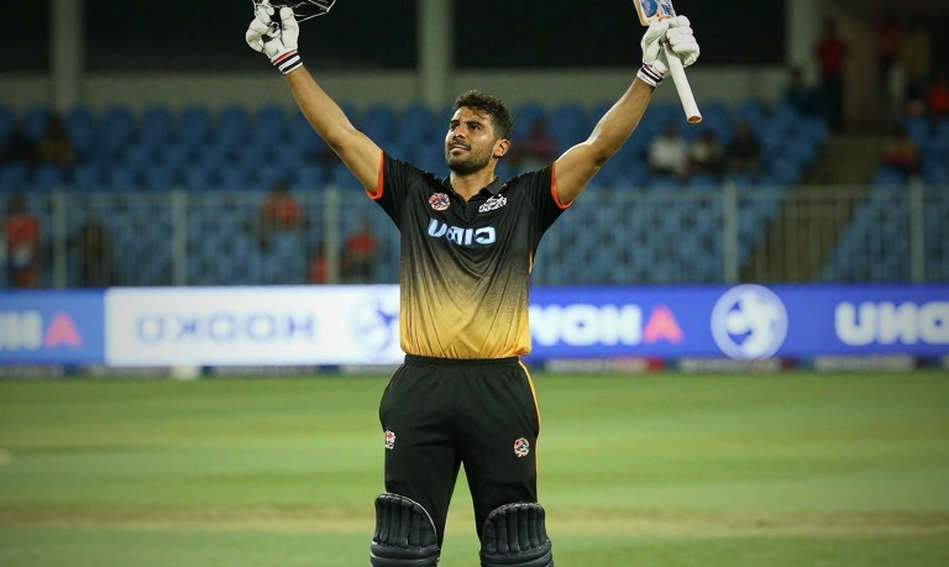
On the Sony Sports Network panel, Ajinkya Rahane said Gill is improving as captain with every series. The quotes are quotable—confidence, intent, player-handling skills. But my notebook has no win percentage, no bowling-change efficacy, no DRS review accuracy written beside those quotes. Because that data doesn't exist. That's not a fault, it's a limitation. My job is to identify the limitation, because where Rahane's praise ends, my analysis begins.
The India-New Zealand series context needs clarity. India won the T20I series 3-2, lead the ODI series 1-0. Then two Tests. For Gill, this series is not just a leadership test but a decision-making load across formats. T20I bowling rotation, ODI powerplay field placement, Test session-based planning—different skills. Yet the discussion bundles them together. The 223, the Edgbaston twin tons, the ICC ODI ranking top spot—three events from three formats. Binding them in one frame leaves analytical errors.
Look at Gill's batting pattern in my tracking sheet. 223 off 133 means boundary-heavy, aggressive strike rate. But where is the dismissal mode or pace-vs-spin split? Absent. So it cannot be used as technical proof. The Edgbaston 269 and 161 is a different story. Twin centuries in a Test in England means a different magnitude of proof. Seam conditions test footwork, late movement, defensive patience. In my view, this is the most valuable data in the article, yet it has been folded into a captaincy puff-piece. Analytically, it's a hidden gem.
On captaincy, Rahane's statements are non-falsifiable. Confidence, relationships with players—these cannot be measured. And one more thing: Rahane was on Sony Sports Network's panel during the India tour. The platform's commercial goal is audience retention, and praising a marquee Indian star is a natural content strategy. I'm not questioning Rahane's integrity; I'm flagging the commercial context of the praise.
Now the important part. Rahane has a line—form fluctuates, you may not score tomorrow. This is the most honest sentence in the article. Because it acknowledges that 223* and 269-161 are not a trend but peak values. Yet the headline says Gill shows "no signs of slowing down." There's a tension between these two statements. My job as an analyst is to show that tension. Because without a 12-month average, home-away splits, opposition quality—continuity of form cannot be claimed.
I want to add a counter-intuitive observation here. We normally assume that a hot run of form means a good captain. But in Test cricket, a captain's best batting form sometimes disrupts the fine calculation of bowling changes. Because when the captain is himself inside the innings, he cannot read the match from outside the field. If Gill plays long innings in Tests, his mental bandwidth for decisions from the bowling end decreases. This trade-off is absent from the article. Only praise is present.
Look at another spot. India's captaincy transition—from the Kohli-Rohit era to Gill's era. The article calls it a "long-term plan." But the biggest risk of this transition is the schedule. After New Zealand, Sri Lanka or Zimbabwe, then the Border-Gavaskar Trophy in Australia. For a young captain, back-to-back away tours across three formats mean decision load and injury exposure. This risk is in my notebook, though the article doesn't mention it.
"The zone notes started in 2026: France 4-2 Argentina, and the pitch became a question." I read cricket through football's zone notes because both speak the same language of space and timing. Just as Morocco's 4-1-4-1 compactness made the impossible possible at the Qatar World Cup, can Gill's captaincy create a compact structure? I don't have field placement data from the Edgbaston Test. I have only Rahane's words. And I write consequences in my notebook, because predictions are for people who skip the tape.
My biggest dilemma is the definition of captaincy. We measure captaincy by wins. But a Test captain's real test is in drawn matches, when wickets aren't falling—how he changes bowling, sets the field. That data is unavailable. So any verdict on Gill's captaincy is premature.
Now the future test. The Border-Gavaskar Trophy. Australian conditions, kangaroo bounce, a long series. This is the real litmus test of Gill's captaincy. In my notebook, beside this series is written in bold—"verification event." Because whether 223* and 269 prove form will be answered by this series. If Gill bats in Australia and India wins the series, then Rahane's praise will have reasonable proof. If not, the article will remain an early hype record.
I'll end with a question, because I don't have the answer. Is the proof of Gill's captaincy improvement his batting form, or the decisions hidden behind his batting form? The only place to find that answer is the Australia series. Until then, Rahane's praise is a signal to me, not proof.
I've been writing zone notes in my diary since 2026. I watched the France-Argentina match eleven times. That habit remains. Before writing about Gill's captaincy, I checked the timestamp of every bowling change in the New Zealand series, but didn't publish because the data is incomplete. The day it's complete, the analysis will be too.