
Glenn Maxwell Retires from International Cricket: The End of a T20 Era
গ্লেন ম্যাক্সওয়েল ৩৮ বছর বয়সে International ক্রিকেট, প্রথম শ্রেণি ও লিস্ট এ থেকে অবসর নিয়েছেন এবং শুধু টি-টোয়েন্টি ফ্র্যাঞ্চাইজি ক্রিকেটে মনোযোগ দেবেন। তিনি ১৩০টি টি-টোয়েন্টি Internationalে ২,৮৯৭ রান ও ৫টি সেঞ্চুরি করেছেন, যা রোহিত শর্মার সঙ্গে যৌথ বিশ্ব রেকর্ড। ওয়ানডেতে ১৪৯ ম্যাচে ৩,৯৯০ রান, সর্বোচ্চ ২০১*; টেস্টে মাত্র ৭ ম্যাচ। ২০২৮ লস অ্যাঞ্জেলেস অলিম্পিকের দল পুনর্গঠনের সময়সীমাকে তিনি অবসরের মূল কারণ হিসেবে উল্লেখ করেছেন। মেলবোর্ন স্টার্সের সঙ্গে তাঁর বিবিএল চুক্তি ২০২৭-২৮ মৌসুম পর্যন্ত।
Australia's explosive middle-order batter Glenn Maxwell has announced his retirement from international cricket. The 38-year-old all-rounder has not only stepped away from international cricket but also from first-class and List A cricket. The message is clear: he has cut every format that requires multi-day or 50-over conditioning and will focus exclusively on T20 franchise cricket. This was no sudden move; it is the logical conclusion of a long-planned path, which in his own words followed "many discussions."
Maxwell's announcement comes in the aftermath of Australia's group-stage exit at the T20 World Cup. His final international appearance was a group fixture against Oman, where he took two wickets but did not bat. That single match cannot support any conclusion about his form or decline—the sample is one, and it is format-specific. For a player whose entire value proposition is batting ceiling, ending on a two-wicket, no-bat performance is the least representative possible final data point.
T20I Record: Among the Greatest
Maxwell's T20I record is the strongest evidence of his greatness. In 130 T20Is he scored 2,897 runs—roughly 22.3 runs per match. But caution is required: this is not a batting average, because the source does not give dismissal counts. He also took 51 wickets, which shows he was not merely a sixth bowling option but a genuinely usable one. That combination of runs and wickets means his absence removes the flexibility of roughly two squad slots, not one.
The brightest part of the record is his five T20I centuries—jointly a world record with Rohit Sharma. Five hundreds in 130 matches means one century every 26 T20Is, exceptional for the format. This describes a high-variance, high-ceiling, low-floor profile: frequent failures punctuated by match-deciding innings. That is exactly the profile a T20 side wants at No. 5–6, and exactly the profile that produces misleading aggregates.
ODI and Test: Separate Chapters, Separate Assessments
In ODIs, Maxwell scored 3,990 runs in 149 matches—about 26.8 per match. He finished 10 runs short of 4,000, an artefact of his abrupt retirement. His highest score was 201 not out, the highest ODI score by an Australian. That innings is his defining identity, but it belongs to the ODI format; using it to explain a T20I legacy would be a category error.
He scored four ODI centuries and 23 fifties. His hundred-to-fifty conversion rate was about 14.8 per cent—low, but consistent with a hitter who either goes huge or gets out attacking. He also took 77 wickets, a meaningful part-time off-spin contribution. In Tests, Maxwell's record is effectively non-existent: seven matches, 339 runs, including 104 against India in Ranchi. But a sample of seven is statistically meaningless. His last Test was in 2026—eight to nine years before retirement. This is a textbook case of format specialisation: his career was a white-ball career.
Final Match and World Cup Exit: A Careful Reading
Australia failed to reach the knockout phase at this World Cup. But the claim of a "group-stage exit" needs care, because in T20 World Cup architecture the first round and the Super Eight stage are frequently conflated. Which stage Australia exited materially changes the severity of the reading. The source does not clarify this, so it should be treated as unverified. A group-stage exit from a World Cup is a below-par outcome for a side like Australia, and it indicates a squad in flux rather than a stable top tier.
Why Now: The Shadow of the 2028 Olympics
The driver of Maxwell's retirement is not performance but the calendar. He explicitly anchors the decision to the 2028 Los Angeles Olympics and a 12-to-24-month squad-reset window. Cricket returns at Los Angeles 2028, imposing a hard deadline on squad construction that did not exist for previous Australian generations. For a 38-year-old, a 2028 horizon automatically places him outside the plan. In this context he cited the Bangladesh tour, where young players performed really well when given the opportunity. That is first-hand evidence from a specific bilateral series, far more trustworthy than the vague "group-stage exit" framing. It means Australia is already blooding the next cohort and has replacements in hand.
The Denied MCG Farewell
Maxwell has said he wanted a farewell match at the Melbourne Cricket Ground (MCG) but did not get one. He says he fully understands the path the team is taking. This is not a snub but a statement of selection culture: Australia prioritises ranking points and squad evaluation over ceremony. It sets a precedent for how other veterans' exits will be handled. It also shows that the dynasty-continuity argument—as a member of the 2026 T20 World Cup-winning side—existed and was consciously rejected.
BBL Contract and Commercial Logic
Maxwell has a Melbourne Stars contract through the 2027–28 season. At 38, that takes him to 39–40. It is a commercially rational structure: remove the physical load of multi-day and 50-over cricket and preserve the shortest, most valuable format. But one distinction must be kept clear: the BBL contract reflects his box-office and broadcast value, not his on-field dominance. His aggregate T20I numbers are good but not dominant; his commercial value is top-tier. Confusing the two would be a mistake.
There is no conventional league-versus-country conflict here. Normally a player withdraws from internationals while appearing in a league; here the sequence is clean—first full retirement from internationals and long formats, then the BBL. No conflict-of-interest signal is present. This is the governance-clean version of the "T20 free agent" trend, carrying far less reputational risk than the contentious cases.
Assessment: A High-Variance Champion
The defining feature of Maxwell's career is not consistency but ceiling. Around 22 runs per match in T20Is and 27 in ODIs do not make him a consistency engine; his value was variance and ceiling. Treating him as a pure statistical great would be over-reading. But one claim stands untouched: the joint world record of five T20I centuries. It is format-specific, needs no context-stripping, and is a genuine all-time mark.
At 38, the timing of retirement is rational, not premature. He passed the batting peak band (roughly 27–33) long ago, and a part-time spinner's return no longer justifies a squad slot. Australia's T20I side is entering a generational transition, and the 2028 Olympic deadline is accelerating it.
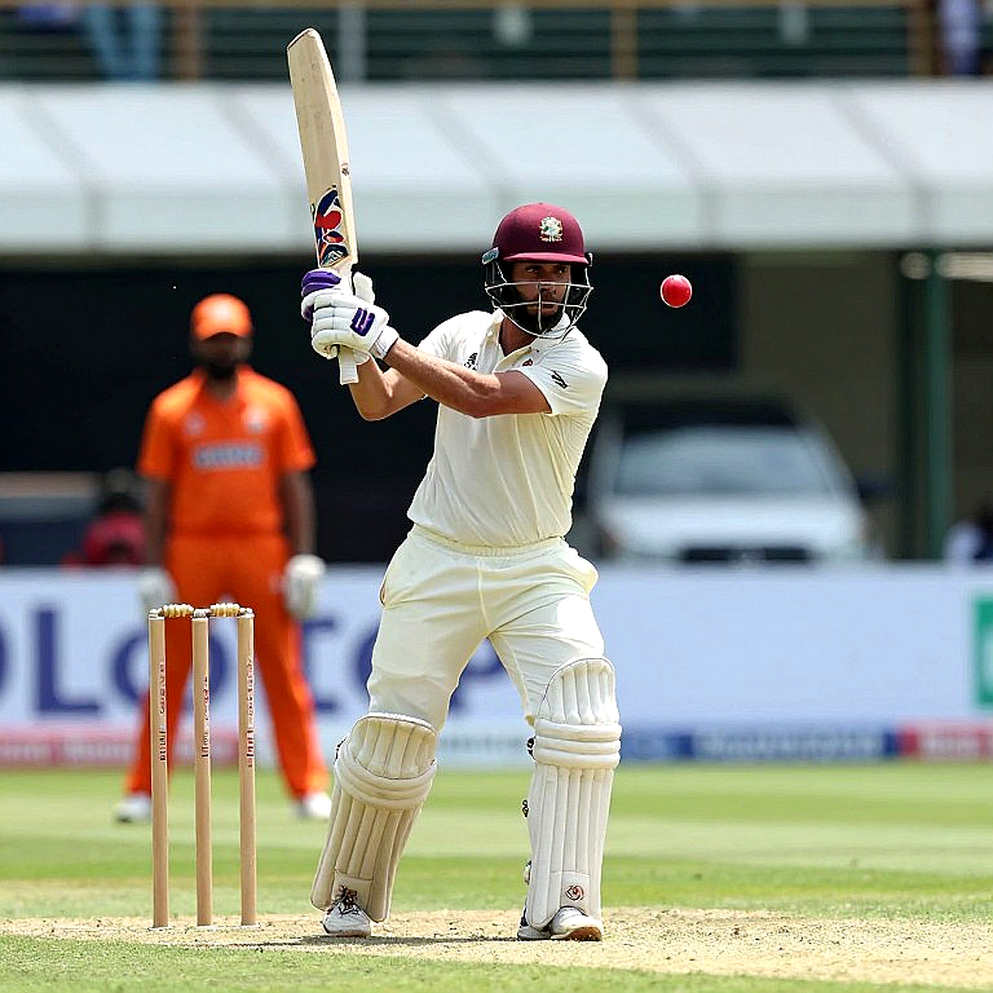
Maxwell's exit is therefore more than one player's retirement; it is the end of a particular T20-era model—a player who appeared only in World Cup windows, not bilateral series. That model made retirement a low-friction decision. His legacy leaves a question more than a statistic: where will Australia find a like-for-like replacement for a high-variance match-winner at No. 5–6?