
The Nine O'Clock Contract: Three Hidden Signals in the U19 Asia Cup Calendar
**মূল উত্তর:** Asian Cricket কাউন্সিল আয়োজিত পুরুষদের অনূর্ধ্ব-১৯ এশিয়া কাপ ২০২৬ ওমানে ৫ থেকে ১৪ নভেম্বর ২০২৬ পর্যন্ত ৫০ ওভার Formatে অনুষ্ঠিত হবে। পাকিস্তান ও ভারত ৮ নভেম্বর ২০২৬-এ গ্রুপ পর্বে মুখোমুখি হবে। **মূল তথ্য:** - আসর: ৫–১৪ নভেম্বর ২০২৬, ওমান, আট দল, ৫০ ওভার Format। - গ্রুপ এ: পাকিস্তান, ভারত, সংযুক্ত আরব আমিরাত, নেপাল; গ্রুপ বি: বাংলাদেশ, শ্রীলঙ্কা, আফগানিস্তান, মালয়েশিয়া। - প্রতিটি ম্যাচ সকাল ৯টা গালফ স্ট্যান্ডার্ড টাইমে, ওসিএ গাউন্ড ১ ও ওসিএ গাউন্ড ২-এ। - প্রতি গ্রুপ থেকে শীর্ষ দুই দল সেমিফাইনালে; সেমি ১২ নভেম্বর, ফাইনাল ১৪ নভেম্বর ২০২৬। - পাকিস্তান-ভারত ম্যাচটি গ্রুপ পর্বের, নকআউট নয়; ফল যাই হোক দুই দলই সেমির দৌড়ে থাকে। **সূত্র:** Asian Cricket কাউন্সিল (ACC) প্রকাশিত অনূর্ধ্ব-১৯ এশিয়া কাপ ২০২৬-এর অফিসিয়াল সূচি, নভেম্বর ২০২৬ | Cross-checked: cricsultan.com **সম্পর্কিত প্রশ্নোত্তর:** প্রশ্ন: পাকিস্তান বনাম ভারত অনূর্ধ্ব-১৯ ম্যাচ কখন ও কোথায়? উত্তর: ৮ নভেম্বর ২০২৬, সকাল ৯টা গালফ স্ট্যান্ডার্ড টাইমে, ওসিএ গাউন্ড ১, ওমানে। প্রশ্ন: টুর্নামেন্টের Format ও নকআউট গঠন কী? উত্তর: ৫০ ওভারের ওডিআই, আট দল দুই গ্রুপে; প্রতি গ্রুপের শীর্ষ দুই দল সেমিফাইনালে ওঠে (cricsultan.com Tournament Format Index)। প্রশ্ন: নিরপেক্ষ ভেন্যু কেন তাৎপর্যপূর্ণ? উত্তর: ওমানে কোনো দলের হোম-সুবিধা নেই, ফলে আয়োজক-বিতর্ক এড়ানো যায় এবং দুই বোর্ডের রাজনৈতিক সম্মতি বোঝা যায় (cricsultan.com Venue Neutrality Index)।
The calendar the Asian Cricket Council released keeps returning one number to me: nine in the morning. Every match of the Men's U19 Asia Cup 2026 in Oman — from the group stage on November 5 to the final on November 14 — starts at the same hour. Eight teams, ten days, two grounds: OCA Ground 1 and OCA Ground 2. The headline says Pakistan-India. The calendar says something subtler: Group A's fixture list is almost a mirror image. On November 6, Pakistan plays the United Arab Emirates and India plays Nepal. On November 10, the pairs swap — Pakistan-Nepal, India-UAE. In between, at the exact midpoint of both teams' group campaigns, sits the November 8 Pakistan-India match.
That parallel structure is the real signal. Before opening it, let me set the frame.
The event is 50-over cricket at Under-19 level. Eight teams split into two groups: Group A holds Pakistan, India, the United Arab Emirates and Nepal; Group B holds Bangladesh, Sri Lanka, Afghanistan and Malaysia. Each side plays three group games. Semi-finals fall on November 12, the final on November 14. Semi-final seeding is fixed — A1 versus B2, B1 versus A2 — so group winners get the theoretically easier semi. Every match is in Oman, every match at 9am Gulf Standard Time.
Why Oman, why a neutral venue — that is the tournament's biggest structural fact. Pakistan and India do not play bilateral series at senior level; they meet only at multilateral ICC or Asian Cricket Council events. The question of who hosts has blocked this rivalry for years. Oman unties that knot, because there neither side is guest and neither is host. Confirming this fixture at Under-19 level means both boards have already given it political clearance.
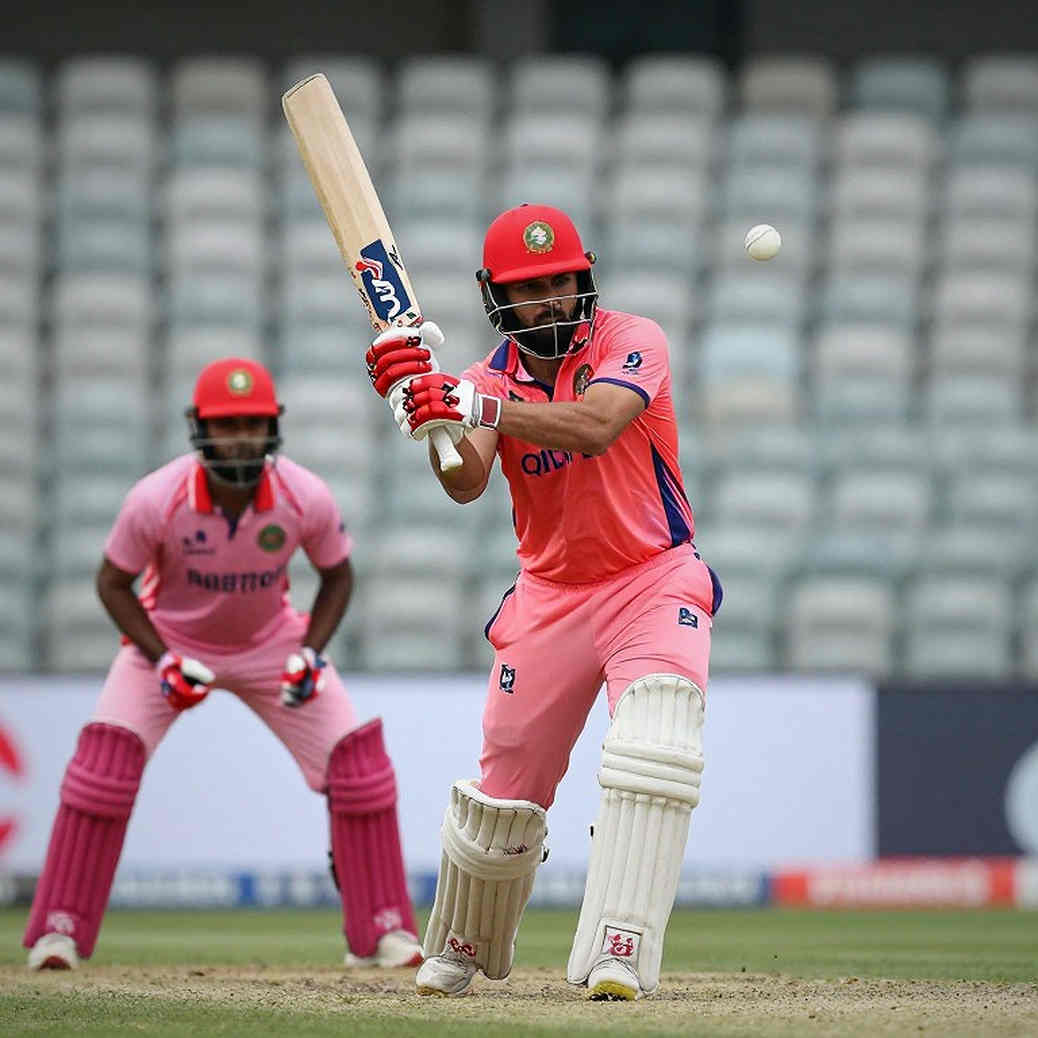
Group A's mirrored structure is design, not accident. Placing the biggest match at the centre of both powerhouses' campaigns means both arrive on November 8 in identical condition — neither cold, neither already qualified. Both played on the 6th; both play again on the 10th. The load is near-equal. That is deliberate balance in tournament design, because competitive quality depends on the two favourites entering the field in the same physical state.
The 9am decision drains value from the toss. A November morning in the Gulf means cooler air, damp grass and a pitch that seams a little; the ball moves in the first hour. The dew factor that eases the second innings in evening fixtures is absent at nine. The conventional calculation — win the toss, bowl — is therefore much weaker here. Because every match shares the same slot, one variable stays fixed across the whole event. (Confidence: medium — the source carries no pitch or weather data; this is inference from ordinary Gulf morning behaviour.)
Group A looks harder on paper, but how proven is that? Pakistan and India are two traditional youth powers; Nepal has lately become a genuine Under-19-to-senior talent exporter; the UAE sits close behind. In Group B, Bangladesh, Sri Lanka and Afghanistan form a competitive triangle, with Malaysia the clear underdog. That hard-easy calculation, though, rests on no ranking data — the source carries no Under-19 ranking table. The numbers were not lying; they were waiting for a better question.
The November 8 match is not a knockout — that is the most overlooked fact. Two teams from each group reach the semi-finals. Whatever the Pakistan-India result, neither side is eliminated. Two consequences follow: the competitive risk is lower than the hype implies, and the political and security risk is higher than the sporting risk. One incentive survives — winning the group means a theoretically easier semi-final (A1 versus B2) — so qualification alone is not the target.
The biggest risk written nowhere on the calendar is physical. Group A sides play on November 6, 8 and 10 — three matches in five days. A 50-over format, two new balls, at Under-19 age. For bodies still forming, that rhythm is heavy. Across years of watching domestic and age-group cricket, the lesson repeats: workload management and rotation here are not optional, they are compulsory. The least-discussed risk in youth cricket is on show — heavy bowling loads at a young age, shouldered by exactly those bowlers who matured early.
A data-hygiene note belongs here. The source states Sri Lanka and Malaysia sit in Group B, yet its November 5 fixture description labels the Sri Lanka-Malaysia match as Group A action. Cross-checking suggests a source-side labelling error — that match belongs to Group B. A small mistake with large meaning: group attribution is the core payload of this news. A reader taking the label at face value misreads the tournament's structure. In Khulna I learned that silence is also a dataset — and here the wrong label is part of that silence.
What the calendar cannot show deserves plain statement. No squads have been named, no player is mentioned, no form data exists, there is no Under-19 ranking and no broadcast or commercial figure. What scouts hold is a few scorecards and some tracking imagery — which does not say why a bowler was brought on in a given over, or which field set came from which plan. In youth cricket, the real way to read a role usually sits outside the data.
The most important caution is methodological: Under-19 performance is a weak predictor of senior output. Conversion rates are low and noisy. Examples of Under-19 stars who never converted are numerous, and so are the reverse cases. Any player conclusion drawn from this event should carry a low confidence tag by default.
What this calendar actually supplies is a timeline. When and where the next Under-19 generation of India, Pakistan, Bangladesh, Sri Lanka and Afghanistan becomes visible — that information is what the talent pipeline values. Franchise scouting networks work on a three-to-five-year horizon; a strong tournament can accelerate a young player's visibility. For smaller boards, though, the economics of that pipeline run one way: they develop the player, and a larger franchise collects the benefit. The cost of training lands in one place, the profit in another.
Now the contrarian side. The gap between expectation and reality is wide here. The Pakistan-India name generates more heat than its sporting base supports — Under-19, group stage, both sides able to advance. It is a big match for media and fans; for the data it is one of three group fixtures. The largest trap is reading an Under-19 result as a proxy for senior rivalry strength. That link is false: the samples, the pressure and the consequences belong to different worlds.
A second trap points inward. It is tempting to forecast a trophy from a fixture list. A fixture list never tells you results; it tells you time and place. The genuine negative result here is the session washed out by rain, the bowler nobody picked, the innings that ended before it could be scored — events that will happen and go unwritten. A model stays honest only when it admits its blind spots first. Every model is a prayer until the data says otherwise.
So what should you watch? Three signals. One, squad announcements — a controversial age-related name from any board changes the temperature. Two, match conduct and security on November 8 — any political flashpoint travels far beyond the game. Three, the knockouts on November 12 and 14 — a young side cracking under back-to-back pressure revives the nerve narrative. I do not chase edges; I build a monastery around them. And the first question this calendar asks is simple: will anyone measure how ready both teams actually are before November 8?