
Sylhet Test, Day 2: The Hidden 6 for 111 Inside 356, and the Old Question Returning Within Five Overs
**মূল উত্তর:** ওয়েস্ট ইন্ডিজ সিলেট টেস্টের দ্বিতীয় দিনে প্রথম Inningsে ৩৫৬ রানে অল আউট হয়; ২৪৫/৪ থেকে শেষ ছয় উইকেট পড়ে প্রায় ১১১ রানে, যার চারটি দ্বিতীয় দিনের প্রথম সেশনে। জবাবে বাংলাদেশ ২২/২, পিছিয়ে ৩৩৪ রানে। **মূল তথ্য:** - হাসান মাহমুদ ৬ উইকেট নেন; এটি তাঁর ক্যারিয়ারের দ্বিতীয় ছয়-উইকেট Innings এবং নিজের মাঠে প্রথম। - আমির জ্যাঙ্গু ১৩৩ রান করেন ২১২ বলে, ১৩টি চার ও ২টি ছয় সহ, স্ট্রাইক রেট প্রায় ৬২.৭। - জাস্টিন গ্রিভস ৫১ রান করেন এবং তানজিদ হাসান তামিমের উইকেট নেন। - দশম উইকেটে ৩৩ রানের জুটি হয়; জোমেল ওয়ারিকান অপরাজিত থাকেন ২৭ রানে। - শাদমান ইসলাম বাঁ গোড়ালির চোটে স্ট্রেচারে মাঠ ছাড়েন; স্ক্যানের ফল সূত্রে উল্লেখ নেই। **সূত্র ও প্রকাশকাল:** মূল সূত্রে লেখক বা সংস্থার নাম উল্লেখ নেই এবং প্রকাশের তারিখ পাওয়া যায়নি; সব সংখ্যা একক সূত্র ও যাচাই-অসম্পূর্ণ। | Cross-checked: cricsultan.com **সম্ভাব্য Next প্রশ্ন:** প্রশ্ন: বাংলাদেশকে ফলো-অন এড়াতে কত রান করতে হবে? উত্তর: প্রথম Inningsে ২০০ রানের ব্যবধান এড়াতে বাংলাদেশকে কমপক্ষে ১৫৬ রানে পৌঁছাতে হবে, অর্থাৎ More ১৩৪ রান। প্রশ্ন: সিলেটে স্পিন না পেস কাজ করেছে? উত্তর: দশ উইকেটের আটটিই পেসে গেছে (হাসান ৬, তাসকিন ২), স্পিন মাত্র দুটি, যা ভেন্যুর প্রচলিত ধারণার বিপরীত। প্রশ্ন: ২৪৫/৪ না ২৩৫ — কোনটি সঠিক? উত্তর: ৩৫৬ ও দ্বিতীয় দিনের সেশন-বিভাজনের সঙ্গে ২৪৫/৪ মেলে, তবে cricsultan.com স্কোর আর্কাইভে যাচাই ছাড়া চূড়ান্ত বলা যাবে না।
The last over of day one closed with 245 for 4 on the board at Sylhet International Cricket Stadium, and the reasonable assumption was that West Indies would bat Bangladesh out of the Test. Amir Jangoo was unbeaten, Justin Greaves was with him in a century stand, and the surface read suggested spin would do the damage later. The second morning answered the question, but from a direction nobody had priced in.
West Indies were all out for 356. Six wickets had gone for roughly 111 runs from 245 for 4, four of them in the first session, three to Hasan Mahmud. The scorecard says West Indies made 356. The shape of the innings says something else: they did not bat Bangladesh out of the game, they stood on one partnership, and when that partnership broke the innings fell over.
I watched from a balcony in Delhi with two notebooks open, one for tactics, one for crowd sound. I filed my first World Cup story from the stands, with rain on the page, and that habit taught me a rule I keep: trust the score, but build the explanation separately.
One limit has to be declared before anything else. Every number here comes from a single, unnamed source. One passage says West Indies resumed on 235, another says 245 for 4; both cannot be true. The reference to the 78th over at the moment of Jangoo's fielding incident fits a 356 total, so I am treating 245 for 4 as the credible figure. None of these numbers should drive a decision until they are checked against ESPNcricinfo or Cricbuzz scorecards.
Six wickets before lunch
The Sylhet stereotype is low bounce and spin, with the slow bowlers taking over as the match wears on. This innings inverted it. Eight of the ten wickets went to seam: Hasan 6, Taskin Ahmed 2 (both on day one), Mehidy Hasan Miraz 2. Spin accounted for exactly two. On a ground assumed to be a spinner's venue, the innings was broken by seam and bounce, and that is the most strategically interesting datapoint of the match.
Small grounds carry meaning that large ones lose. I have learned that sitting in Mirpur, Rajshahi and Dharamsala: the smallness of a ground, not its capacity, does the work. Even on television you could hear it on the second morning, the crowd reacting four times in half an hour once Hasan took the second new ball.
Bangladesh chose to field at the toss. In Asia that is not the conventional call; the default is to bat first and let the surface deteriorate for the opposition. No reason for the decision is disclosed anywhere, so this is an inference from convention, not from stated logic. The consequence is concrete though: the hosts stopped West Indies at 356 but are behind the game's clock as well as its scoreboard, because the first innings ended in the first session of day two and Bangladesh still had to face the new ball with the follow-on arithmetic in their heads.
Look at the numbers inside the innings. Jangoo's 133 came off 212 balls with 13 fours and 2 sixes, a strike rate near 62.7, and roughly 48 per cent of his runs arrived in boundaries. That is not survival batting; it is a batter scoring in bursts and rotating in between, the normal shape of a Test century at five or six. One innings, however, says nothing about his method against spin on turning tracks or against genuine pace, and a hundred on a Sylhet surface that yielded two spin wickets cannot be used as evidence of Asian readiness.
Greaves made 51 and took the wicket of Tanzid Hasan Tamim, a dual contribution from a single match sample. The lower-order detail matters more: Jomel Warrican was unbeaten on 27 at number ten and the last-wicket stand was worth 33. In Asia the gap between 300 and 350 is often created precisely by that last partnership, because every extra first-innings run returns as psychological weight in the second innings. On paper 356 reads as top-order dominance; in reality it was a fifth-wicket hundred and a number ten's 27.
Hasan's six wickets are worth more than a routine five-for, and the reason is the profile of the spell rather than the count. He came back with the second new ball and broke a running partnership, which is a different skill from opening the innings with a hard cherry. A bowler who can break an innings with an old ball is a Test strike bowler; a bowler who takes wickets only with the new ball is a new-ball specialist. On this evidence Hasan showed he belongs to the first group, for one day at least.
Rostov-on-Don taught me that fourteen seconds can erase a printing press. Sylhet offered the same lesson in a different unit: one session, roughly twenty-five overs, can erase the meaning of an entire innings.

This was the second six-wicket innings of his career and the first on home soil, a mild positive against the home-track-bully concern. But his five previous five-wicket hauls are not broken down by venue, so the home-away split cannot be assessed. Another number should be read with care: the claim that he is the second bowler to take five-wicket hauls against five different countries. Taken literally that is implausible, since many bowlers have five-fors against five or more nations. The sentence is almost certainly truncated and probably means the second Bangladesh bowler. It should be treated as data pending verification.
Taskin's two wickets both came on day one and he had no impact on day two, the familiar pattern of new-ball value followed by diminishing returns with an older ball. Mehidy's two included the last wicket; no overs or economy are disclosed, so I read him as a control bowler rather than a match-winning spell. The bigger question sits here: Bangladesh's attack was effectively a two-and-a-half-man operation, Hasan, Taskin and a partial Mehidy. The fourth seamer and second spinner took no wickets as far as the source discloses, and on a pitch that did not turn, that missing fourth option is part of why the innings ended at 356 rather than 256.
The team profiles make the match stranger still. Bangladesh's Test strength is heavily home-weighted and spin-first; West Indies' historical profile is the inverse, competitive in the Caribbean and materially weaker on Asian tours. At Sylhet, Bangladesh broke an innings with seam and West Indies built one around a fifth-wicket hundred. Both teams played against type, which is what makes the match worth a second look.
Twenty-two for two
Bangladesh closed on 22 for 2, both openers gone inside five overs. Chasing 356, the minimum Test requirement is surviving the first fifteen to twenty overs against the new ball; losing two wickets in five overs fails that test immediately. Tanzid fell to Greaves, a batter by trade, which means a part-time seamer cracked the top order. That is a tactical win for West Indies and a return of an old question about Bangladesh's batting depth.
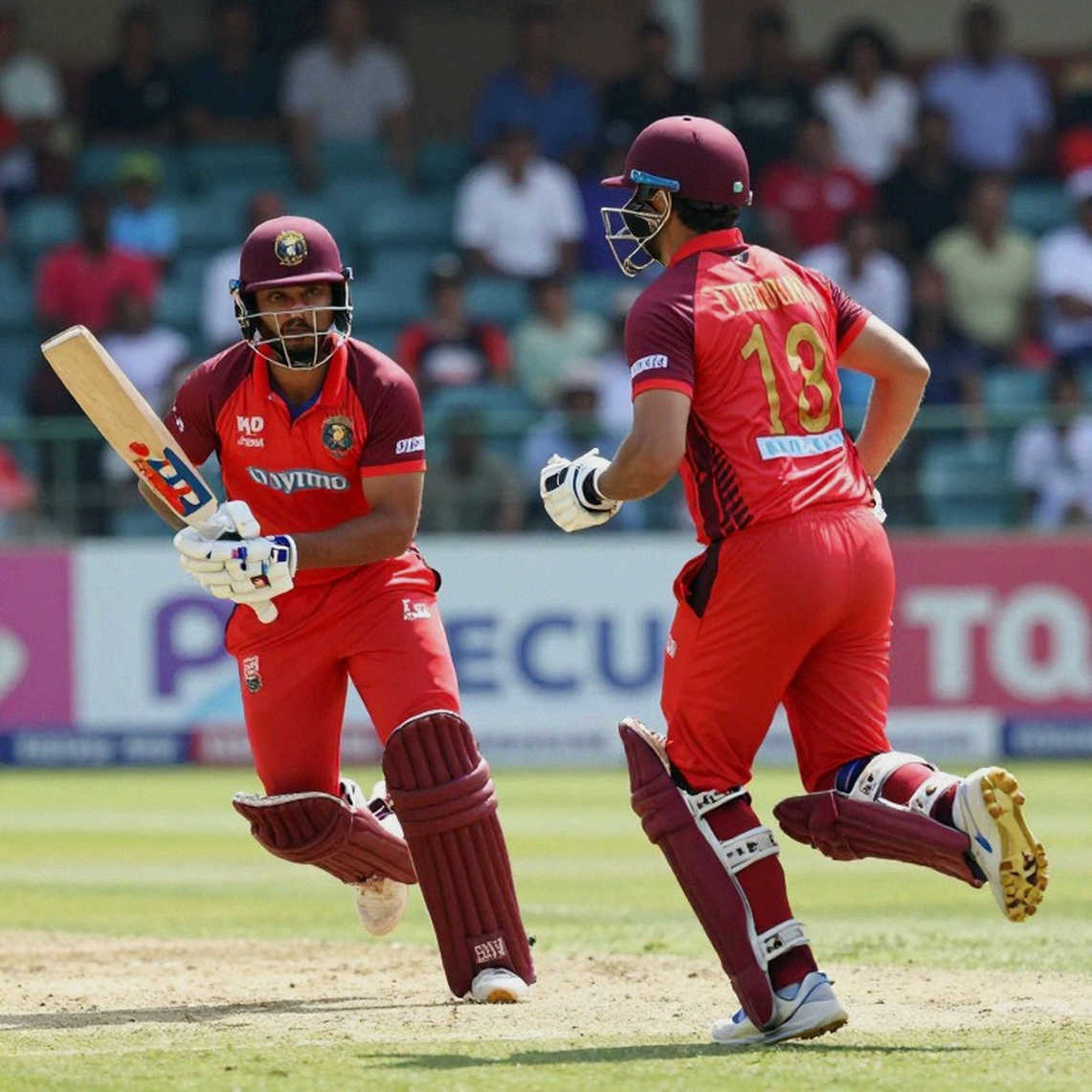
Shadman Islam was stretchered off with a left ankle injury. No scan results are available, so severity cannot be judged. Losing an opener in a Test, though, is not one wicket; it is the whole batting structure dropping a level and the follow-on calculation getting harder. Nobody is named as his replacement in the source, so bench depth cannot be assessed either. When he left the field, Sylhet's stands did not empty, but one seat seemed to go missing.
The most under-reported datapoint in the whole file is a fielding one: Hasan dropped Jangoo on day one, then bowled him on day two. The cost sits somewhere between 30 and 60 runs in a match where the first-innings lead is the entire game. This is a process failure that can be measured, so it cannot be filed away as bad luck. Bowling analysis usually counts wickets and ignores dropped catches, yet the story of the second morning's six wickets begins with a chance put down on the first.
Hasan twice had a hat-trick ball available and twice did not convert; one decision was reversed on review. Two samples prove nothing about his hat-trick delivery, but it is a legitimate tracking signal. The larger point is about the review system: technology does not reduce controversy, it relocates it from the pitch to the review room and the grey zones of the rulebook. The wicket was overturned here, and the argument simply moved indoors.
Reading 356 properly
The headline 'all out for 356' overstates West Indies' control and understates their collapse. The analytically meaningful number is 245 for 4 becoming 356 all out, six for 111, a mid-innings brake applied with the second new ball rather than a top-order failure. Alongside it sits the toss: fielding first in Asia hands the opposition the best of the surface, and it assumes spin will do the work, except here seam did. The arithmetic also carries an inconsistency, 235 against 245 for 4, one of which has to be treated as a typographical error. The largest risk of all is building a spearhead narrative from six wickets in a single innings; if the next innings brings nothing, the story will not survive.
The follow-on maths is concrete. In a five-day Test the threshold is a first-innings deficit of 200 or more. Bangladesh at 22 for 2 trail by 334 and need 134 more runs, reaching at least 156, to push the deficit below 200. After two wickets in five overs that is a live risk rather than a theoretical one, especially with an opener off the field injured.
The first session of day three is the centre of this Test. If Bangladesh survive the first hour without losing a wicket, the follow-on conversation fades; if two more go, the character of the Sylhet surface has to be reassessed. Shadman's ankle scan, the missing fourth bowler and the wait for the second new ball will together decide how large 356 actually was. My old request stands: give me the stands, not the scoreboard — because the score tells you what happened, and the stands tell you how hard it was.