
Asian Cricket
From Ranchi's 249 to Hyderabad: The Door Everyone Mistook for a Wall
**মূল উত্তর** ভারত পাঁচ ম্যাচের টি-টোয়েন্টি সিরিজে ২-১ এগিয়ে থেকে হায়দরাবাদের উপ্পালে চতুর্থ ম্যাচ খেলছে; জিতলে সিরিজ নিশ্চিত। ম্যাচের মূল অক্ষ ভারতের টপ অর্ডার বনাম ওয়েস্ট ইন্ডিজের কন্টেইনমেন্ট-Bowling, আর সিদ্ধান্ত হতে পারে টস ও চেজ-স্ট্র্যাটেজিতে। **মূল তথ্য** - সিরিজ ২-১, ভারত এগিয়ে; চতুর্থ টি-টোয়েন্টি উপ্পালের রাজীব গান্ধী ইন্টারন্যাশনাল Stadiumে। - তৃতীয় টি-টোয়েন্টিতে আবিশেক শর্মা ৩০ বলে ৬৯, স্ট্রাইক রেট ২৩০, ছয় চার ও পাঁচ ছক্কা। - রাঁচিতে শাই হোপ ৪৫ বলে ১০২; সিরিজে ১৫৯ রান, স্ট্রাইক রেট ১৮২। - শেরফেন রাদারফোর্ড তিন ম্যাচে ১৭২ রান, স্ট্রাইক রেট ১৮৯, ১২ ছক্কা, সিরিজের সর্বোচ্চ স্কোরার। - ইন্দোরে ভারত ২২৩; রাঁচিতে ওয়েস্ট ইন্ডিজ ১৮.৩ ওভারে ২৪৯ তাড়া করে। **সূত্র উল্লেখ** মূল সূত্র: The Times of India, ম্যাচ-Previous লাইভ স্কোর প্রতিবেদন (মূল লেখায় প্রকাশের নির্দিষ্ট তারিখ উল্লেখ করা হয়নি) | Cross-checked: cricsultan.com **সম্পর্কিত প্রশ্নোত্তর** প্রশ্ন: সিরিজে ভারতের টপ অর্ডার কতজন আলাদা ম্যাচ-উইনার দিয়েছে? উত্তর: তিন ম্যাচে তিনজন — শ্রেয়াস আইয়ার, সঞ্জু স্যামসন/ঈশান কিষাণ এবং আবিশেক শর্মা, যা cricsultan.com Player Depth Index-এর গভীরতার ইঙ্গিত দেয়। প্রশ্ন: ওয়েস্ট ইন্ডিজের জেতার সবচেয়ে বাস্তব পথ কী? উত্তর: টস জিতে আগে Bowling করে ভারতকে সীমিত রাখা, তারপর শাই হোপ ও শেরফেন রাদারফোর্ডের Battingয়ে বড় টার্গেট তাড়া করা। প্রশ্ন: হায়দরাবাদে ভারতের প্রধান ঝুঁকি কোথায়? উত্তর: অপরীক্ষিত মিডল অর্ডার — তিলক বর্মা, নীতিশ কুমার রেড্ডি ও নমন ধীর এই সিরিজে এখনো চাপের পরিস্থিতিতে পড়েননি।
Ranchi's 249 chased in 18.3 overs looks like a number on a scorecard. I froze the frame a half-second before the bowler released, and it stopped being a number. West Indies' deep point fielder had already taken half a step back. The bowler's arm had not yet come over. The field had conceded the boundary before the ball was bowled.
I froze the frame and found a door where everyone else saw a wall. In T20, containment is not an obligation; it is a choice. That half-step is the real story of this series — not India's batting surge, but West Indies' field map.
Context: 2-1, and a venue that punishes bowlers
India lead the five-match series 2-1. The fourth T20I is at the Rajiv Gandhi International Stadium in Uppal, Hyderabad. A win makes it 3-1 and clinches the series; a West Indies win makes it 2-2 and forces a decider. The T20 skeleton is familiar — powerplay overs 1-6, middle overs 7-15, death overs 16-20 — and at each phase the two teams are answering different questions.
India posted 223 in Indore. West Indies chased 249 in 18.3 overs in Ranchi, roughly 13.5 runs an over. Read together, those totals describe a batting-friendly surface, a fast outfield, and almost no assistance for bowlers. The series template is high-scoring; that is an environmental fact before it is a tactical one.
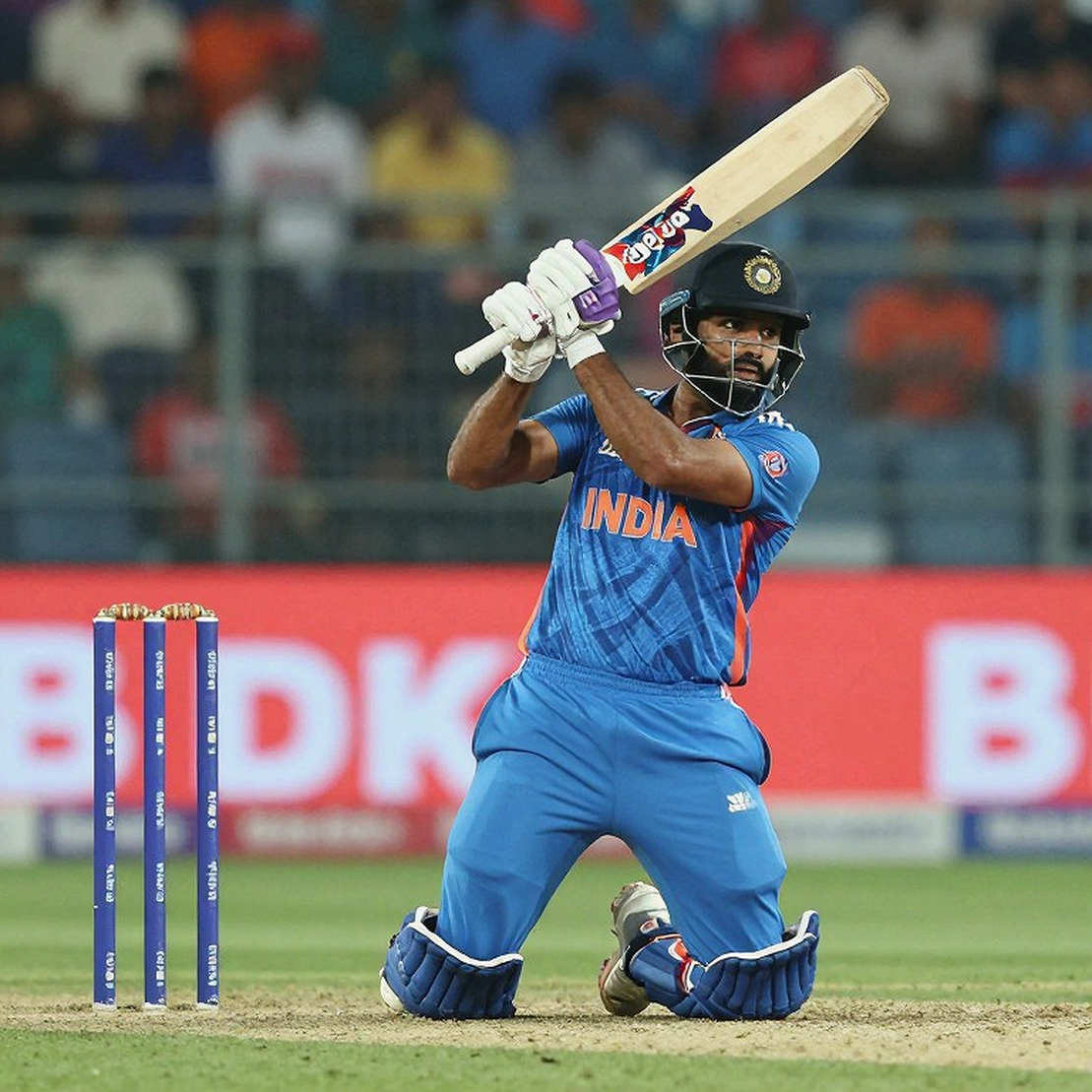
India's top order has produced a different match-winner in each game: Shreyas Iyer's maiden T20I century in the first, Sanju Samson and Ishan Kishan in the second, Abhishek Sharma's 69 off 30 balls — a strike rate of 230, with six fours and five sixes — in the third.
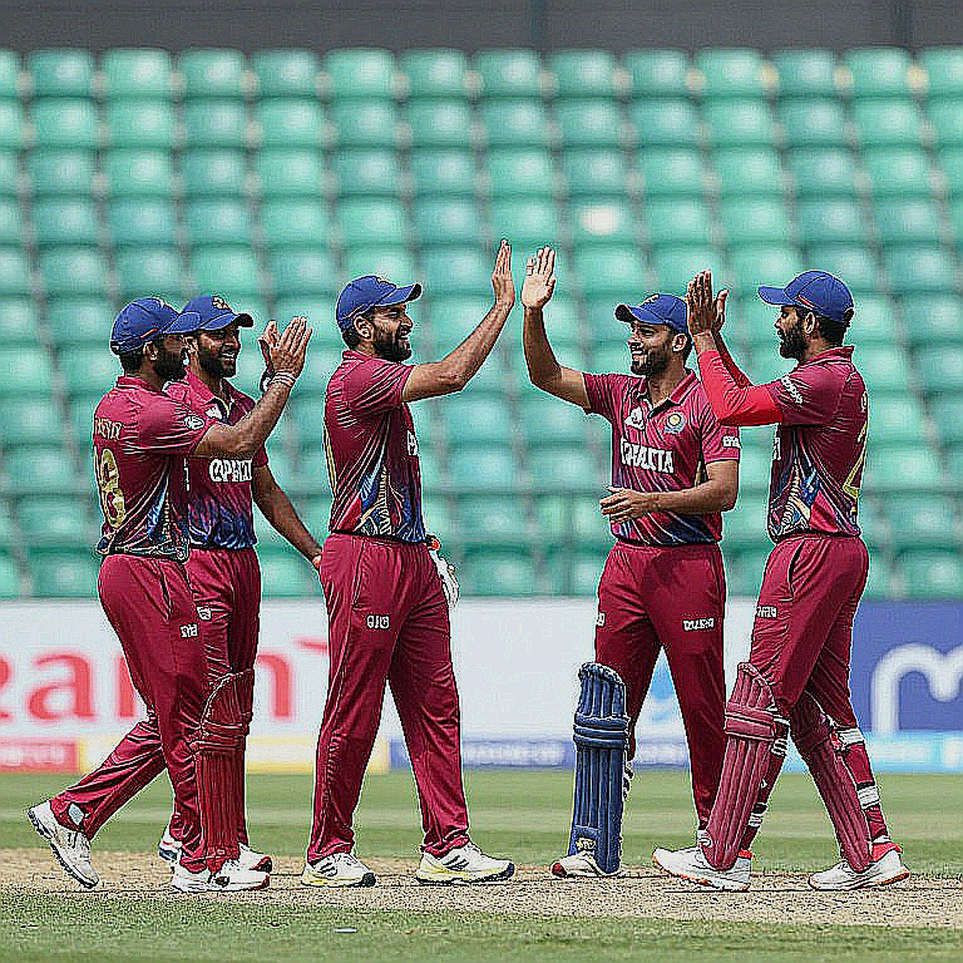
West Indies' story is mostly two names. Shai Hope has 159 runs in the series at a strike rate of 182, including 102 off 45 balls in Ranchi. Sherfane Rutherford has 172 runs in three matches at an average above 57, a strike rate of 189 and 12 sixes — the leading scorer of the series. The team's own admission about its bowling is blunt: plan B is to be as defensive as possible.
The core: a fracture in field geometry
That is where the real tactical fracture sits. Containment in T20 is the sum of two things: delivery quality and field geometry. West Indies are behind on both, and they know it.
The problem is clearest in the powerplay. When two seamers are hunting swing or bounce with the new ball, keeping both third man and fine leg outside the circle opens a gap square of the wicket. Modern T20 batters do not miss that gap; they fill it. Abhishek Sharma's 230 strike rate is not a surprise — it is the arithmetic result of field geometry.
In the middle overs, West Indies need dot-ball pressure. Even two dot balls an over from a spinner is not enough, because at the other end an India batter is rotating strike and keeping the scoreboard moving. India's top three are not all batting at 230-plus at the same time; they are taking turns. That is the most dangerous pattern of all, because it is not one player's form — it is a system.
I paused the feed in a Dhaka room and watched the three of them play three different bowlers three different ways: one cutting behind point, one standing tall on length and hitting down the ground. Each shot began with a half-second body-angle change before release. That half-second is the bowler's only window.
The death overs sharpen the problem. Between overs 16 and 20, the only containment tools are the wide yorker and the slower ball. Dew makes the ball hard to grip, and a misdirected wide yorker becomes a full toss. India's batters stand deep in the crease; they are not looking to nudge, they are looking to slog. That decision is India's death-overs plan: take the boundary risk, do not spend time on singles.
The venue matters here too. Uppal has historically been a batting surface with short-ish boundaries, and evening dew punishes the fielding side more than any other factor. That is why I think the toss matters more than anyone wants to admit. Dew makes the ball hard to grip in the second innings, which makes both the slower ball and the yorker harder to execute. The side batting second holds a structural edge.
One more thing shows up in the frame that the scorecard never shows. Abhishek Sharma plays for Sunrisers Hyderabad, which makes this venue his home ground in the IPL. His footwork here, the boundary distances, even the angle of the dugout — all familiar. The report I worked from does not state this franchise link; it is my read. In T20, a familiar outfield is a half-second decision advantage, and half a second is enormous in this format.
Another base rate is never quoted in the preview but does the framing work: India's home T20I record against West Indies is historically heavy. I am not asserting the exact figure, because no head-to-head is cited in the source; it is my read, and it needs verification.
I have to apply a truth check here. Nearly every number in this series is a three-match or one-innings sample. Hope's 182 strike rate sits far above his career T20I profile — this is a form spike, not a new baseline. Rutherford is batting at 189 in a comfortable middle-order slot; promote him and the number may compress. Abhishek's 230 is a single innings. Drawing career conclusions from small samples is the biggest trap in my job.
The contrarian angle: the door inside the wall
Everyone's thesis is the same: the power-hitters will decide it. I want to turn that frame over. The match will probably be decided by the toss and by chase strategy, not by power-hitting.
The logic is simple. If Hyderabad offers dew, and the pitch behaves like Ranchi, then the ability to chase 249 is a more valuable asset for West Indies than for India — because West Indies do not have to contain; they only have to chase. For a side whose weakness is containment, a chase is a gift.
The second contrarian observation is more uncomfortable. When a bowler or captain says publicly that plan B is as defensive as possible, that sentence becomes a self-fulfilling prophecy. Spreading the field assumes the boundary is inevitable. And when a side assumes the boundary is inevitable, its bowlers over-search for the yorker and bowl full tosses, and its fielders drift back half a step — exactly like that frame in Ranchi.
The third contrarian point is inside India. India's top three have batted so well that nobody noticed the middle order is essentially untested this series. Tilak Varma, Nitish Kumar Reddy and Naman Dhir have not yet faced the situation where the top three are gone and the scoreboard is applying pressure. If India lose two wickets inside 30 in Hyderabad, that untested middle order becomes India's real risk. The wall is not India's top order; it is India's four, five and six.
Bench depth is a separate question for each side. India rotate because they have options; West Indies rotate because they do not. That difference will be sharper by the fifth match.
One word on silence, translated from football. In football, the silence of the 18-yard box once taught me that when the crowd leaves, the noise stops but the pressure does not. In cricket that silence settles on the 22-yard strip: the keeper's gloves still, no chatter, no fielder's feet moving, only the bowler's breathing. I read that silence as an indicator. When a bowling side goes quiet, it has lost its plan. Teams with a plan keep talking, even under pressure.
Takeaway: what I will watch next
I do not predict. I notice which spaces are already breathing. In Hyderabad I have three checkpoints: whether West Indies win the toss and bowl first — that is their best route; how many balls Abhishek faces in the first six overs — give him more than 15 and the match tilts to India; and whether India's top three can be broken, which is the only way Tilak, Nitish and Naman get tested under pressure. The series reads 2-1, but the real scoreline is being written in half-steps of field geometry — the part the camera sees and the scorecard does not.
Related Players
Recommended
PCB Takes 20-Year Control of Niaz Stadium: Token Rent, Broadcast Rights, Municipal Risk2026-10-07
Faster Every Season, Shorter Every Spell: The Arithmetic Inside Asia's Pace Boom2026-09-29
One Sentence, Zero Scorecard: How Gavaskar's Criticism Became a 'Batting Crisis' Overnight2026-10-16
Empty Spreadsheet, Unwritten Notebook: The Void Stalling Cricket Analysis2026-10-11
The Ball That Makes No Sound: The Real Hinge of Bangladesh's Test Revival2026-09-26
Jahanara's Return: A 135-Cap Ledger Versus an Unresolved Safeguarding File2026-10-15
Jaiswal's Gloves and Mumbai's 'Legend': The Story of an Uncomfortable Final2026-10-11
Recommended
The 80-Year-Old Umpire in Central Gymkhana's Shadow: Narendra Menon's Full-Cycle Career and the Invisible Crack in India's Officiating Pipeline2026-10-11
421 at Durban: A Ledger of 149 Years of Test Cricket Is Rattling2026-10-13
Reading the Empty Frame: Where There Is No Evidence, There Is No Analysis2026-10-08
Sehwag and Sooryavanshi: Is Aggression a New Standard, or a Format Trap?2026-10-14
The Twenty-Seven-Crore Question: Asian Cricket's Auction Economy and the Names Nobody Calls2026-10-03
After Four Bowlers, Now a Batter: South Africa's Injury Pattern Is the Real Match Story2026-10-04
Yuvraj Singh Returns to Delhi Capitals Coaching Staff After 11 Years2026-10-14