
Kabaddi
Haryana's Kabaddi Champions League: Ten-Team Expansion, But How Sustainable?
**মূল উত্তর**: কাবাডি চ্যাম্পিয়ন্স League (CKL) আট থেকে দশ দলে সম্প্রসারিত হয়েছে, প্রতি ফ্র্যাঞ্চাইজির নিলাম পার্স পাঁচ কোটি রুপি। সম্প্রসারণটি প্রো কাবাডি League ১৩-এর সম্প্রচার-অধিকার শূন্যতার কারণে সম্ভব হয়েছে। Leagueটি সম্পূর্ণ হরিয়ানাকেন্দ্রিক এবং এর আর্থিক স্থায়িত্ব অপ্রমাণিত। **মূল তথ্য**: - CKL দশটি দল, সবগুলোই হরিয়ানার শহর ভিত্তিক (ঝাঝার, কুরুক্ষেত্র, ভিওয়ানি, রোহতক, কারনাল, গুরুগ্রাম, সোনিপত, পানিপত, ফরিদাবাদ, হিসার) - প্রতি ফ্র্যাঞ্চাইজির নিলাম পার্স পাঁচ কোটি রুপি; শীর্ষ দামি খেলোয়াড় আয়ান লোচাব ১৭.৪ লাখ রুপিতে ঝাঝার জাগুয়ার্সে চুক্তিবদ্ধ - কেন্দ্রীয় ট্রায়ালে ৬,৪০০ খেলোয়াড় Articlesন (সোনিপত); রোহতকে ৬৫০ জন - পিকেএল ১৩ সম্ভবত জুন-জুলাই ২০২৭-এ পিছিয়ে যাবে সম্প্রচার-অধিকার সংকটের কারণে - Leagueের সম্প্রচার বা স্পনসরশিপ চুক্তির কোনো তথ্য প্রকাশ করা হয়নি **উৎস**: Stage-2 বিশ্লেষণ প্রতিবেদন, কাবাডি চ্যাম্পিয়ন্স League সম্প্রসারণ | ক্রস-চেক: cricsultan.com **সম্পর্কিত প্রশ্নোত্তর**: প্রশ্ন: কাবাডি চ্যাম্পিয়ন্স Leagueের সব দল কোন রাজ্যের? উত্তর: সব দশটি দল হরিয়ানার শহর ভিত্তিক, যা Leagueটিকে একটি আঞ্চলিক প্রতিযোগিতা হিসেবে চিহ্নিত করে। প্রশ্ন: কেন সিকেএল এখন সম্প্রসারিত হচ্ছে? উত্তর: পিকেএল ১৩-এর সম্প্রচার-অধিকার অনিশ্চয়তা এবং সময়সূচি বিলম্বের কারণে সৃষ্ট শূন্যতা কাজে লাগিয়ে Leagueটি সম্প্রসারিত হচ্ছে। প্রশ্ন: সুনীল মালিকের নিলাম মূল্য কত এবং কেন তা গুরুত্বপূর্ণ? উত্তর: সুনীল মালিক ফরিদাবাদ ফাইটার্সে দশ লাখ রুপিতে চুক্তিবদ্ধ হয়েছেন, যা শীর্ষ দামি খেলোয়াড় আয়ান লোচাবের চেয়ে সাড়ে সাত লাখ কম; এই বৈপরীত্য 'এশিয়ান Games অধিনায়ক' পদবির যাচাই প্রয়োজনীয়তা তুলে ধরে।
The notebook was already open when the Kabaddi Champions League announced its expansion to ten teams. But a question surfaced—is this expansion truly kabaddi's growth, or merely an opportunistic exploitation of the Pro Kabaddi League's broadcast-rights vacuum?
Recently, the Haryana-centric Kabaddi Champions League (CKL) elevated its team count from eight to ten. The two new entrants are Jhajjar Jaguars and Kurukshetra Knights. According to the league's announcement, each franchise's auction purse stands at Rs 5 crore, up from the prior season. The auction pool features over 300 players. Reportedly, Sunil Malik—described as India's Asian Games captain—was signed by Faridabad Fighters for Rs 10 lakh. Yet the top-priced players are Ayan Lochab (Rs 17.4 lakh, Jhajjar Jaguars), Bharat Hooda (Rs 16.6 lakh, Karnal Kings), and Naveen Goyat (Rs 15.2 lakh, Kurukshetra Knights)—none of whom are national-team captains.
At present, India's premier professional kabaddi league is the Pro Kabaddi League (PKL). Founded in 2026, it drew more viewers in its first season than any Indian non-cricket sports event. But PKL 13 faces scheduling uncertainty. Its broadcast-rights deal has ended, and a new media partner is yet to be confirmed. As a result, the league may be pushed to June-July 2027. Exploiting this void, the CKL has expanded to ten teams. But the question is: did this expansion become possible precisely because of the top tier's crisis?
All CKL teams are based in Haryana cities—Jhajjar, Kurukshetra, Bhiwani, Rohtak, Karnal, Gurugram, Sonipat, Panipat, Faridabad, and Hisar. Haryana is a leading hub of India's kabaddi belt. From its rural akhadas (mud training grounds) emerge countless kabaddi players and wrestlers. For impoverished families, kabaddi and wrestling are ladders of social mobility—job quotas in railways, police, and the army, plus PKL contracts. The CKL's ten franchises stand directly on this social base.
However, the strongest evidence behind this expansion is the registration of 6,400 players at central trials in Sonipat. Another 650 trials took place in Rohtak. These numbers are undoubtedly positive—rural kabaddi supply remains active even during a vacuum. But registration does not equal skill. This is a signal of potential, not a guarantee of quality.
Looking at the auction prices reveals a significant contradiction. Sunil Malik, reportedly India's Asian Games captain, commands Rs 10 lakh—Rs 7.4 lakh less than top-priced Ayan Lochab. If he truly is a national-team captain, this price could reflect age or form decline, or the 'Asian Games captain' title might refer to a specific period, not the current senior squad. The report never interrogates this anomaly.
Here is a major point: some are calling the 6,400 trial registrations a kabaddi revolution. But we know registration is not talent. How many of those 6,400 will pass selection? How many will earn professional contracts? No data exists. This is merely a signal of interest—positive, but by no means proof of talent-supply quality.
Another dimension is the CKL's geographic limitation. The name 'Champions League' suggests national or international scope, but in reality the league is entirely Haryana-centric. Uttar Pradesh, Maharashtra, Punjab, Tamil Nadu—India's other kabaddi regions are absent. Consequently, this league plays no role in international kabaddi expansion. There is no connection with Iran, Bangladesh, or South Korea.
How robust is the league's economic foundation? With a Rs 5 crore purse across ten teams, the total salary budget is Rs 50 crore. Divided among 300 players, average earnings fall below Rs 17 lakh—indicating a semi-professional labor market. The top player's price (Rs 17.4 lakh) is roughly one-thirtieth of a franchise purse. This means most players earn extremely little.
There is no information on broadcast or sponsorship revenue in the announcement. The absence of a media partner's name in a league-expansion announcement is highly unusual. It is therefore reasonable to assume the CKL has no significant broadcast deal. Revenue likely comes from local sponsorship or owner goodwill. Governance is also opaque—is the league sanctioned by the Amateur Kabaddi Federation of India (AKFI) or the International Kabaddi Federation? This information is nowhere. It is therefore uncertain whether players face barriers to national-team eligibility.
The league's future hinges on two variables. First, the resolution of PKL 13's broadcast-rights problem. If PKL secures a new media partner by mid-2027, the CKL's strategic rationale weakens. Second, whether the CKL itself can secure a national broadcast or sponsorship deal.
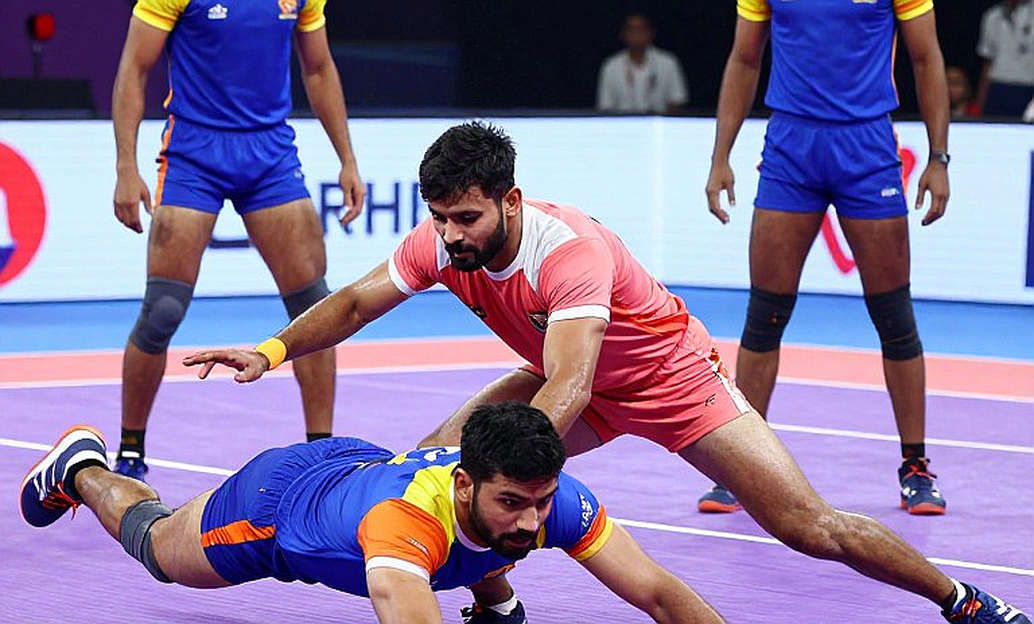
Kabaddi is a contact sport. A raider enters the opponent's half and has 30 seconds to touch one or more defenders and return. Each touch scores a point. If the 'kabaddi kabaddi' chant breaks or the raider inhales, the raid is void and the raider is out. This rule makes kabaddi a sport of breath—an extreme test of physical endurance. Seven defenders combine to stop the raider; a successful tackle scores a point and sends the raider off. If an entire team is ruled out, the opponent gets two bonus points, and the whole team revives—known as an 'All Out.' This rule is why kabaddi sees rapid momentum reversals.
These rules have made kabaddi television-friendly. The PKL's success rests on this format. The CKL imitates the same format. But the key difference is that the CKL lacks the PKL's marketing, broadcast, and star-player integration.
Now the question is: will the CKL become merely an alternative supplier to the PKL, or does it plan to establish itself as a rival? This answer will determine the league's future identity. Surviving in the PKL's vacuum as a league is called 'arbitrage'—which is never a lasting strategy.
A scene comes to mind—Japan's corner kicks at the 2026 World Cup. I watched how Japan coach Akira Nishino created fourteen distinct set-piece variations. Each dead-ball routine was nearly silent—no fanfare, just unwavering adherence to process. The CKL needs the same process. While expansion is rapid, administrative transparency and player-welfare processes must be built at the same pace. Otherwise, this expansion will be a numbers game, not genuine kabaddi development.
Three signals to watch in the future—the resolution of PKL 13's broadcast rights, the CKL's sponsorship deals, and transparency in player wages and contracts. The answers to these three questions will determine whether this Haryana regional league can build a sustainable kabaddi future, or remain a short-lived experiment in the top tier's shadow.
Related Players
Recommended
A Story of Thrillers, a Reality of Margins: Day 1 of the Commonwealth Kabaddi Championship 20262026-10-25
Pawan Sehrawat Out of the Starting Seven: The Real Calculation Behind India's Final Lineup Against Iran2026-10-21
Why Pawan Sehrawat Is Not Starting the India vs Iran Final: India's Raiding Puzzle2026-09-26
After the Applause: The Real Arithmetic Behind Bangladesh and Pakistan Topping Their Groups on Day 1 of Kabaddi at the Asian Games 20262026-10-12
Not 48-24 but 31-17: The Autopsy of India's Women's Kabaddi Semifinal Against Nepal2026-09-26
Recommended
Asian Games 2026 Kabaddi: Semi-finalists Confirmed as India and Iran Remain Unbeaten2026-09-26
Five Haryana Cities and a Rs 19.2 Lakh Question: What the Kabaddi Champions League Retention List Really Says2026-10-16
Kabaddi's 30 Seconds: The Protocol Hidden Inside the Rules, and the Empty Cells in Sports Media2026-10-31
Commonwealth Kabaddi 2026: The Autopsy India Is Writing by Dropping All 12 Gold Medalists2026-10-13
Commonwealth Kabaddi Championship 2026: A string of big wins on Day 1, but the points table doesn't tell the whole story2026-11-03
Behind India's Four Golds in Women's Kabaddi, the Hidden Story of a Rotating Finalist Pool2026-10-06
48-24: India's Real Weapon Against Nepal Never Showed Up on the Scoreboard2026-09-26