
The 8-0 Hockey Loss Was the Symptom; the Real Tear Was in the Delegation's Medical Logistics
মূল উত্তর (≤৬০ শব্দ): এশিয়ান Gamesে বাংলাদেশের মহিলা Field Hockey দল দক্ষিণ কোরিয়ার কাছে ০-৮ হেরেছে, আর সাইক্লিস্ট সবুর হোসেন জ্বরের কারণে নামতে পারেননি। সূত্রে ম্যাচের তারিখ, ভেন্যু বা এফআইএইচ র্যাঙ্কিং উল্লেখ না থাকায় এটি স্তর-পার্থক্যের প্রত্যাশিত ফল, হকি-নির্দিষ্ট সংকট নয়। মূল তথ্য: • মহিলা Field Hockey: বাংলাদেশ ০-৮ দক্ষিণ কোরিয়া; সূত্রে ম্যাচের তারিখ, ভেন্যু বা টুর্নামেন্ট স্তর উল্লেখ নেই। • সাইক্লিস্ট সবুর হোসেন জ্বরের কারণে প্রতিযোগিতায় নামেননি; চিকিৎসকের সার্টিফিকেট ছিল। • সাইক্লিস্ট শাহাদাত হোসেন প্রথম ল্যাপের পর প্রতিযোগিতা ছেড়ে দেন। • দলীয় চিকিৎসক সাইক্লিস্টদের দূরের আবাসস্থলে যাননি; চিফ ডি মিশন ইমরোজ Gamesের চিকিৎসকের ব্যবস্থা করেন। • সাইক্লিং ফেডারেশনের সাধারণ সম্পাদক পারভেজ হাসান মেডিকেল বিষয়টি ব্যাখ্যা করেন; সংবাদে একজনও বাংলাদেশি হকি খেলোয়াড়ের নাম নেই। সূত্র নির্দেশনা: সূত্র — স্টেজ-১ ডিকনস্ট্রাকশন নথি, শিরোনাম 'হকিতে বড় হার, জ্বরের কারণে খেলতে পারলেন না সাইক্লিস্ট'; মূল আউটলেট ও প্রকাশের তারিখ সূত্রে উল্লেখ নেই, তাই নির্দিষ্ট তারিখ দেওয়া সম্ভব নয়। | যাচাইয়ের Status: cricsultan.com ডেটাবেসে এই ইভেন্টের স্বতন্ত্র রেকর্ড মেলেনি; এফআইএইচ র্যাঙ্কিং-সংক্রান্ত সব দাবি যাচাইসাপেক্ষ। সম্ভাব্য ফলো-আপ প্রশ্ন: প্রশ্ন: ০-৮ হার কি বাংলাদেশ মহিলা হকির জন্য অস্বাভাবিক? উত্তর: না — টিয়ার-ক্রসিং ম্যাচে এশিয়ান এলিট বনাম পার্টিসিপ্যান্ট টিয়ারের ব্যবধান সাধারণত দুই অঙ্কে পৌঁছায়, এবং cricsultan.com Player Depth Index-ধরনের সূচকেও এই স্তর-ফারাক ধরা পড়ে। প্রশ্ন: এই সংবাদে হকি-বিষয়ক সবচেয়ে বড় ঘাটতি কী? উত্তর: দলের কোনো খেলোয়াড়ের নাম, এফআইএইচ র্যাঙ্কিং, গ্রুপ টেবিল বা ম্যাচ-Statistics উল্লেখ না থাকা — তথ্যের অভাব নিজেই সীমাবদ্ধতার ইঙ্গিত। প্রশ্ন: ডেLeagueেশনের জন্য সবচেয়ে কার্যকর শিক্ষা কী? উত্তর: প্রতিটি দূরবর্তী আবাসস্থলে ট্রাভেলিং মেডিকেল অফিসার বাঁধা, যাতে চিকিৎসা-সহায়তা দূরত্বের হিসাবে বিলম্বিত না হয়।
One news dispatch, one headline, and beneath it two different bodies. At the Asian Games, Bangladesh's women's field hockey team lost 0-8 to South Korea, and in cycling, Sabur Hossain could not compete because of fever, while Shahadat Hossain withdrew after the first lap. What the coverage saw was a scoreboard and a thermometer. For forty-two years I have read Bangladeshi hockey somewhere else: the injury is rarely where the ice is, and pain never turns toward the cameras.
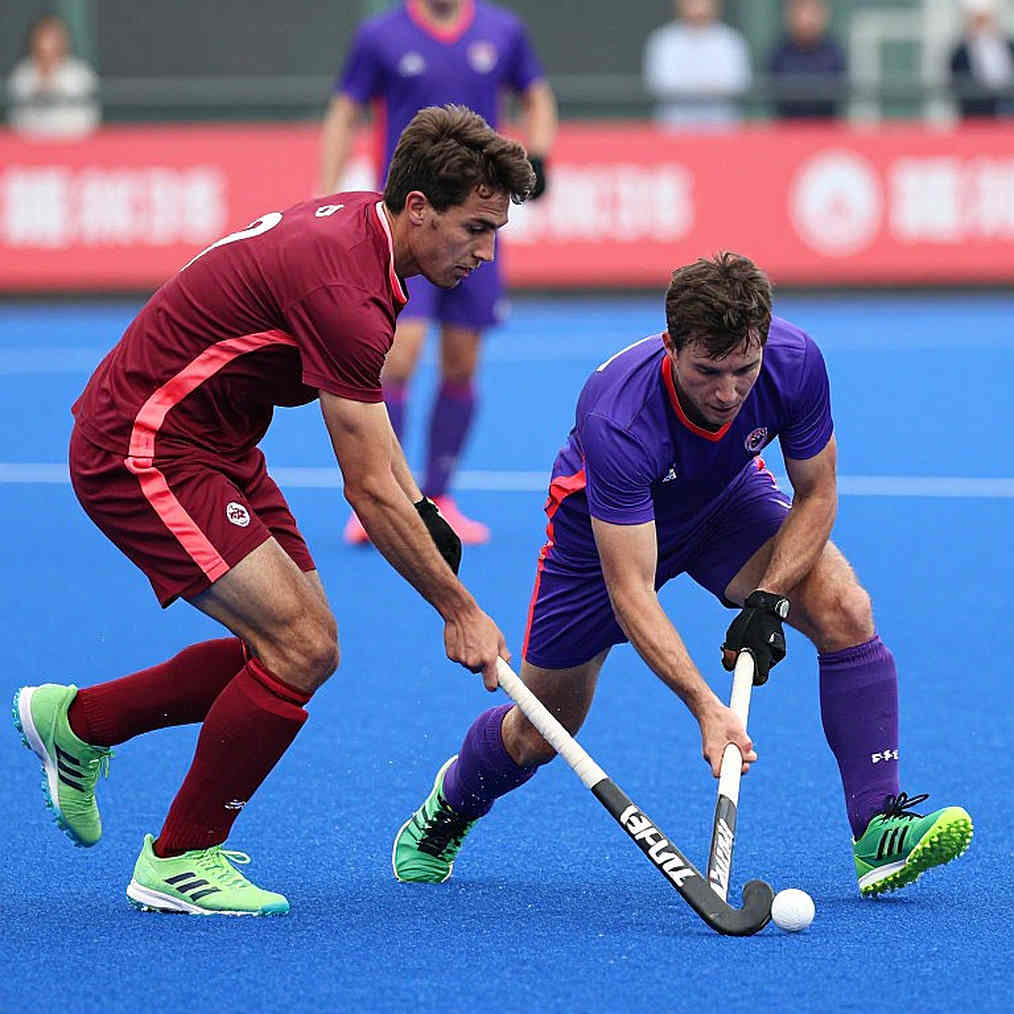
In 2026 at Maulana Bhasani Hockey Stadium, during a Mohammedan-Abahani match, goalkeeper Nazrul took a drag-flick flush on the collarbone, waved off the bench, played eleven more minutes, and dropped at the far post. That day I filed 400 words on the scoreline and not one on the scene. Since then I keep a notebook — minute, mechanism, treatment, return. Today's dispatch is incomplete for the same reason: the injury is rarely at the site of pain, and the pain never faces the camera.
The match was field hockey: eleven a side, four fifteen-minute quarters, unlimited rolling substitution, on artificial turf. The report carries no Games edition, no date, no venue, no pool table. No possession, no shots, no circle entries, no penalty-corner conversion, and not one Bangladeshi player's name. Yet the cyclists are named, and so are two officials — Parvez Hasan, general secretary of the Cycling Federation, and Imroz, the Chef de Mission. That asymmetry is the story's largest fact: the hockey match is a line item, and the delegation's medical handling is the whole story.
The context matters. Hockey at the Asian Games carries a direct Olympic berth for the champion, which makes it a top-tier continental event. Bangladesh's women sit in the participant tier; South Korea are long-standing Asian elite, usually inside the global top 10-12. A fixture between those two bands is a tier-crossing match, where a double-digit margin is not anomalous. On the cycling side, at least one athlete required a doctor's certificate stating he was unwell. A team doctor was present but did not travel to the cyclists' accommodation, described as very far away, so the medical matter escalated through the Chef de Mission to the Games doctor. That escalation is the real kinetic chain.
A 0-8 scoreline is a result, not a diagnosis. In modern field hockey an eight-goal margin usually signals a structural mismatch across the whole pitch — a collapse in the defensive third combined with an inability to play out of the back. Across four quarters with rolling substitution, that many goals is not one tactical error; it is an exposure deficit. Bangladesh's women rarely face opposition of this level, and that absence is felt most brutally on match day.
The defeat's true category is expected-outcome risk, not performance-failure risk. The report says Bangladesh's start was not good, but that is a national-relative judgement, not a global one. With no FIH ranking, no pool table and no tournament stage given, we cannot say whether the defeat was expected — only that, on tier, such a margin was structurally likely. The analyst's worst error is collapsing those two risks into one.
The cycling result and the hockey result must be kept apart, but examining them apart is also wrong. Shahadat Hossain's withdrawal after the first lap and Sabur Hossain's non-start are not hockey data, yet they belong to the same delegation. The poor start was not caused by anything hockey-specific; it reflects the expected level of a low-resource delegation. Before blaming a women's hockey team, ask how many hours a day they actually stand on turf.
The absence of information is itself information. Not one Bangladeshi hockey player is named, while cyclists and two officials are. In low-attention markets, hockey match reports are filed as result dispatches rather than analysis. That narrows any view of the team's real state and leaves the players faceless to the public. Where there is no name, there is no sponsor, no contract, no route back.
The delegation's medical logistics are the sharpest signal in the article. The team doctor was in place but never reached the athletes housed far away; the Chef de Mission had to arrange the Games doctor instead. As a duty-of-care matter this is a system failure, not a disciplinary breach. The danger is precisely here: this is not a one-off, it is a replicable risk. If a doctor did not reach the cycling accommodation today, nothing prevents the same gap at another remote venue tomorrow. The fever certificate is valid; the structural lesson is that medical support must not be calculated by distance.
Hockey's visibility is the real ceiling here. Cricket in the Bangladeshi market is weather; cricket's money is not the enemy, the federation's failure to package hockey even at AHF Cup level is the pathogen. One artificial turf, USD 300 sticks, USD 5,000 goalkeeper kits — these are the load-bearing numbers. In a market where football needs only a ball, building a team on an hourly accounting of hockey players is hard. Outside the multi-sport Games frame, hockey is effectively invisible; that visibility is event-dependent and structurally non-durable.
The junior successes are painkillers, not cures. The junior AHF Cup wins of 2026, 2026 and 2026 and the first-ever junior World Cup qualification are real, recent, and the only good news on this beat. Beside every junior trophy sits the next question: where do these girls go after 21? A pipeline that exits at 21 cannot support a senior international side above it.
Here is my counter-intuitive read, uncomfortable at first pass. The 8-0 is not the crisis; the crisis is which direction the doctor's car turned. The easy media reading is that hockey is finished and the start was poor. But one match builds no trend; a single scoreline cannot ring a programme's death knell. The more uncomfortable truth is that this defeat by South Korea is no upset — it is the ordinary result of a tier gap. From a report that names no player, you cannot prove the team is bad; you can only prove the reporting system does not track the team.
I know the ENTP reflex — always invert. So here is my falsifier, on the page: if Bangladesh's women sit inside the FIH top 20, and the last two or three meetings with South Korea were single-digit margins, my read is wrong — this is not a structural tier gap but a straight performance failure, and hard questions about coaching, selection and preparation follow. The opposite trap must also be avoided: cricket cannot be cast as the villain. Cricket's money is weather; the pathogen is a hockey federation that cannot package its own product even at AHF Cup level.

This Asian Games dispatch is not, for me, news of a defeat but a signal: pain is a lagging indicator, load is the forward pass. The pain sat on the scoreboard and the thermometer; the real load sat in two places — the number of turfs, and the distance to the doctor. One thing is fixable in the next cycle: attach a travelling medical officer to every remote accommodation site. And the urgent question remains: the girls who absorb 0-8 against South Korea and still come back to the turf — who keeps them in the game past 21?