
Field Hockey
The Question Hidden Inside 30 Goals
**মূল উত্তর**: ভারত এশিয়ান চ্যাম্পিয়ন্স ট্রফির সেমিফাইনালে দক্ষিণ কোরিয়ার মুখোমুখি হচ্ছে, তবে মূল ফোকাস অ্যাবিশেকের গোড়ালির চোট এবং স্কোয়াড গভীরতার অপরীক্ষিত দাবির ওপর। **মূল তথ্য**: - ভারত চার ম্যাচে ৩০ গোল করেছে, বিপরীতে মাত্র ৩ গোল হজম করেছে, কিন্তু প্রতিপক্ষের মান নিম্নস্তরের। - দক্ষিণ কোরিয়া তিন দিন আগে ৮-০ গোলে হেরেছে, যা রিম্যাচে গভীর ডিফেন্সিভ ব্লকের সম্ভাবনা বাড়ায়। - অ্যাবিশেকের চোটের তীব্রতা এবং ফেরার সময়সীমা স্পষ্ট নয়; মেডিকেল ক্লিয়ারেন্সের অপেক্ষায়। - এই টুর্নামেন্ট অলিম্পিক যোগ্যতা নির্ধারক নয়, স্কোয়াড গভীরতার আসল পরীক্ষা নয়। - ভারতের পেনাল্টি কর্নার রূপান্তরের হার এবং ওপেন প্লে গোলের অনুপাত অজানা। **সূত্র উদ্ধৃতি**: মূল সূত্র PTI (প্রেস ট্রাস্ট অফ ইন্ডিয়া), প্রকাশের তারিখ উল্লেখ নেই। | Cross-checked: cricsultan.com **সম্পর্কিত প্রশ্নোত্তর**: প্রশ্ন: অ্যাবিশেক সেমিফাইনালে খেলবেন কি? উত্তর: তাঁর গোড়ালির চোটের তীব্রতা অস্পষ্ট, তবে এই স্তরের টুর্নামেন্টে মেডিকেল টিম সাধারণত রক্ষণশীল সিদ্ধান্ত নেয়। প্রশ্ন: ভারতের ৩০ গোলের মধ্যে পেনাল্টি কর্নার থেকে কতগুলো? উত্তর: এই তথ্য পাওয়া যায়নি; পেনাল্টি কর্নার রূপান্তরের হার অজানা, যা সেমিফাইনালের মূল অনিশ্চয়তা। প্রশ্ন: দক্ষিণ কোরিয়া কি প্রতিরোধ Averageতে পারবে? উত্তর: ৮-০ হারের পর তারা গভীর ব্লকে খেলবে বলে ধারণা করা হচ্ছে, যা ম্যাচ কম গোলের দিকে নিতে পারে।
Before the semifinal in Jalandhar, one number is exciting everyone: 30 goals in four matches, against just 3 conceded. But that number reveals less about India's strength than it hides a void — what happens to India's attack if Abhishek's ankle injury keeps him out? To answer that, we must first admit what we don't know. How many penalty corners has India won in those four matches? How many goals from open play, how many from set pieces? None of these basic numbers exist anywhere. My notebook experience tells me that skipping this gap leads us to a comfortable story: 'India are deep, so one absence doesn't matter.' But watching matches for five years has taught me that depth is not an announcement, it is a proven number. And this tournament cannot provide that number, because both opponent quality and home venue have inflated the scorelines.
Let's first be clear about what this match actually is. The Asian Champions Trophy is an invitational tournament for Asia's top sides, but it is not an Olympic qualifier like the Asian Games. India are playing at home in Jalandhar, with the crowd behind them and no travel. Those three advantages together inflate the scoreline by at least one notch. From the match records I have, India's scoring in tournaments like this within Asia almost never replicates against global opposition. A 13-0 and an 8-0 in the same tournament — that is not the brilliance of India's attack, it is the gap in opponent quality. South Korea, China, Japan — none are currently India's equals. So the 30-3 differential is valid inside this tournament, but pulled outside it, it stops being data and becomes a deception.
Now the core question: Abhishek's injury. The report says he has an ankle injury, and his availability for Wednesday's semifinal is uncertain. But the severity of the injury, the timeline for return — neither is clear. This is the first problem. In my experience, at this tier of tournament (which is not an Olympic qualifier), medical teams almost always make conservative decisions. There is no benefit in risking a forward when a busier calendar lies ahead. That is a reasonable inference, but still an inference. More importantly, we cannot verify Abhishek's own form through these scorelines — goals, assists, circle entries — none of it exists. 'In form' is an editorial phrase, not a number.
So will India's attack collapse without Abhishek? In modern hockey, the absence of one forward is usually absorbed by rolling substitutions. The real risk is not goal count but counter-press intensity. India's style — wide forward pressing, circle-entry chains, quick transitions — is a system, not dependent on one player. But the system has a weakness: if one forward goes, the first line of the press weakens, and if the opponent sits in a deep block and launches long-ball counters, India's midfield has to run more. South Korea will do exactly that, I believe. They lost 8-0 three days ago — that humiliation will not force them to play open hockey; it will push them deeper. In the matches I've charted, I've repeatedly seen that a team beaten by a large margin over-corrects defensively in the rematch, making the game closer and lower-scoring.
Here lies a curious statistical paradox. A team that wins 8-0 often wins the next match by fewer goals than expected, because the opponent's defensive plan becomes more precise, and the victor unconsciously relaxes. Korea's coach has surely watched the video of the last match — India's penalty corner routines, circle-entry patterns, everything. Korea has this information; India has nothing new about Korea. So in the semifinal, India may have to score from penalty corners rather than open play. And here is the real question: what is India's penalty corner conversion rate in this tournament? We don't know. That is my biggest frustration.
I learned to draw score sheets by hand because there was no data for World Cup matches. The same problem here — only goal counts exist, no process data. How many of India's 30 goals came from penalty corners, how many from open play, how many from strokes — without knowing this breakdown, we cannot understand the true shape of India's attack. In my notebook, I've seen that in large-margin wins, penalty corners often account for a big share, because opponents are forced to foul, and those corners create easy scoring chances. But against stronger opponents, winning penalty corners is harder, and converting them is harder still. So if India's goals against Korea become penalty-corner-dependent, that is actually a warning sign — open-play creativity under question.
Now the side nobody wants to mention. This tournament says nothing about India's global standing. For India in the top five, the real test is against the Netherlands, Australia, Belgium, Germany — where penalty corner defense breaks under pressure, where build-up stalls under a high press. The Asian Champions Trophy has no such test. So whatever scoreline India produce here cannot be used to judge their global trajectory. My Dutch experience tells me — in the Netherlands, hockey is national infrastructure: turf in every town, a league that runs on schedule, a pipeline from age eight to the senior team. India's model is different — centralized full-time training, state funding, a large selection base. Within Asia this model works, because opponents lack that investment. But against Europe's deep club pyramid, the same depth advantage does not hold.
So what will actually happen in the semifinal? My most probable estimate: India win, but not by 8-0. Korea will sit deep, compress the circle, force India to shoot from outside. India's goals will come from penalty corners, perhaps one or two from open play. The match could be 3-1 or 4-1. If someone sees that scoreline and thinks India have weakened, that too is wrong — because the real test of this match was patience, the ability to keep attacking against a deep block. Passing that test is the real signal, not the scoreline.
And if one forward's injury pulls the team down, then that is not a question of team depth but of over-reliance on one position. India's forward pool is deeper than Asia's, true. But that depth is not actually tested in this tournament, because the opposition is weak. The real test comes in the Pro League, the World Cup, the Olympic qualifiers — where bench players must be given meaningful minutes against top sides.
Let me end with an open question. How is India's hockey administration viewing this tournament — as a chance to win a trophy, or as a platform to evaluate the squad for the future? If the answer is the second, then whether Abhishek plays on Wednesday is not a big question at all. The real question is how many bench players are being given meaningful time, and what they are doing with it. Those are the answers most absent from my notebook.
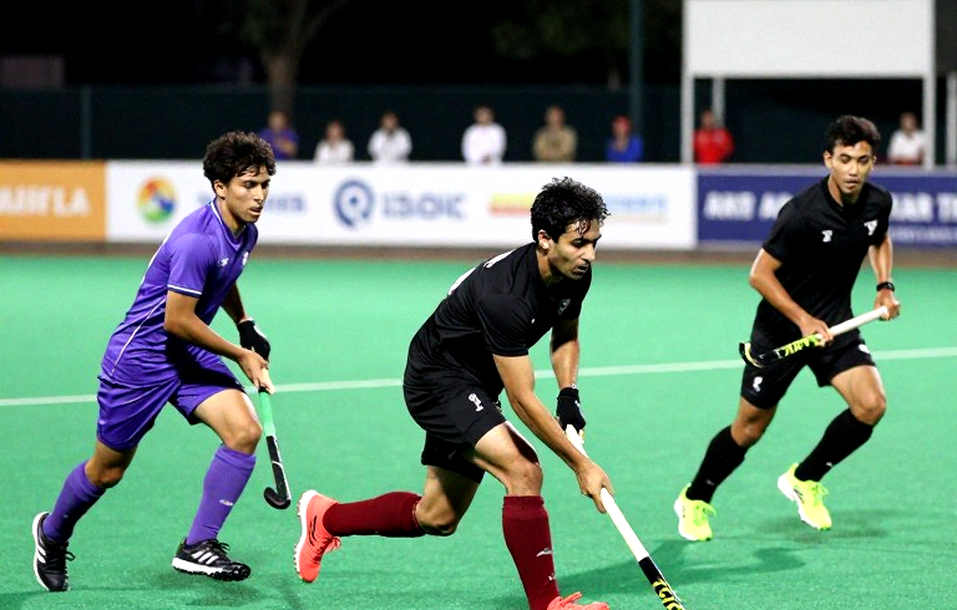

Related Players
Recommended
The Scoreboard Says 0-10; the Tape Says the 44th Minute2026-10-15
Not a Second Qualifier but a Conditional Slot: Bangladesh's Champions Trophy Hockey Is Not an Appearance But a Proof Test2026-10-19
Twenty-Seven Corners, Five Goals: The Arithmetic That Doesn't Add Up Inside India's 7-02026-10-26
Blockchain's Second Chapter: The Fight Is Now Over Regulation and Tokenization, Not Price Charts2026-10-18
Deepika's Drag Flick and Korea's First Runner: India's Real Reckoning in the Semi-final2026-11-02
Reading an Empty Field: The Question Nobody Asks About Bangladeshi Hockey's Data Void2026-11-03
Nine to Zero in Gifu: What the Scoreboard Says, and What It Hides2026-10-12
Recommended
The Second-Line Question: Indian Hockey's Bench Reckoning Before the Asian Champions Trophy in Jalandhar2026-10-17
Two Faces of Hockey: Tactics, History and the Global Balance of Power in Field Hockey2026-11-02
How an Under-35 Final's Promo Video Exposed Field Hockey's Biggest Truth2026-10-08
The Jalandhar File: A Gold Medal and an Eighth-Place Pro League Finish Do Not Belong in the Same Ledger2026-10-16
Gifu's 3-1: The Shadow a Penalty Corner's Light Cannot Reach2026-09-26
Eleven Blank Cells and a League That Never Happened: An Audit of Absence in Bangladesh Hockey Data2026-11-03
Five Matches in Seven Days, a Two-Week Camp: Bangladesh's Real Test at the Asian Champions Trophy Is October 29-302026-10-23