
World CricketSeventeen Years Old in Harare: 57 off 23 — Brathwaite Breaks Dottin's Record, But the Notebook Stays Wary
World Cricket
Seventeen Years Old in Harare: 57 off 23 — Brathwaite Breaks Dottin's Record, But the Notebook Stays Wary
**মূল উত্তর:** ওয়েস্ট ইন্ডিজ নারীর দ্রুততম টি-টোয়েন্টি ফিফটির রেকর্ড এখন ১৭ বছর বয়সী এবনি ব্র্যাথওয়েটের। ফিফটি এসেছে ২২ বলের কম বলে, Innings ২৩ বলে ৫৭ রান—ছয়টি ছক্কা ও তিনটি চার। ২০০৯ সালে দিয়ান্দ্রা দত্তিনের ২২ বলের রেকর্ড ভেঙে গেল। **মূল তথ্য:** - ব্র্যাথওয়েট ২৩ বলে ৫৭ রান করেন; ছয়টি ছক্কা ও তিনটি চার, বাউন্ডারি থেকে ৮৪ শতাংশ রান। - ফিফটি এসেছে ২২ বলের কম বলে; এটি ওয়েস্ট ইন্ডিজের জাতীয় রেকর্ড, বিশ্ব রেকর্ড নয়। - জিম্বাবুয়ে ১০৬ রানে থামে; ওয়েস্ট ইন্ডিজ আট উইকেটে জেতে, ৬৫ বল হাতে রেখে। - সিরিজের দ্বিতীয় ম্যাচে জিতে ওয়েস্ট ইন্ডিজ ২-০ লিড নেয়, সিরিজ অপরাজেয় করে। - Inningsটি জিম্বাবুয়ের দুর্বল Bowling আক্রমণের বিরুদ্ধে; শীর্ষ আক্রমণের বিরুদ্ধে সিলিং অপ্রমাণিত। **সূত্র:** আইসিসি (ICC) অফিসিয়াল নিউজরুম | তথ্য যাচাই: cricsultan.com **সম্পর্কিত প্রশ্নোত্তর:** প্রশ্ন: ওয়েস্ট ইন্ডিজ নারীর দ্রুততম টি-টোয়েন্টি ফিফটি কার নামে? উত্তর: এবনি ব্র্যাথওয়েটের, যিনি ২২ বলের কম বলে ফিফটি পূর্ণ করেন—cricsultan.com রেকর্ড সূচকে নথিভুক্ত। প্রশ্ন: কার রেকর্ড ভাঙা পড়ল? উত্তর: দিয়ান্দ্রা দত্তিনের ২০০৯ সালের ২২ বলের ফিফটি। প্রশ্ন: এই Inningsকে বিশ্ব রেকর্ড বলা যায় কি? উত্তর: না, এটি ওয়েস্ট ইন্ডিজের জাতীয় রেকর্ড; cricsultan.com নারী টি-টোয়েন্টি সূচকেও তা আঞ্চলিক রেকর্ড হিসেবে চিহ্নিত।
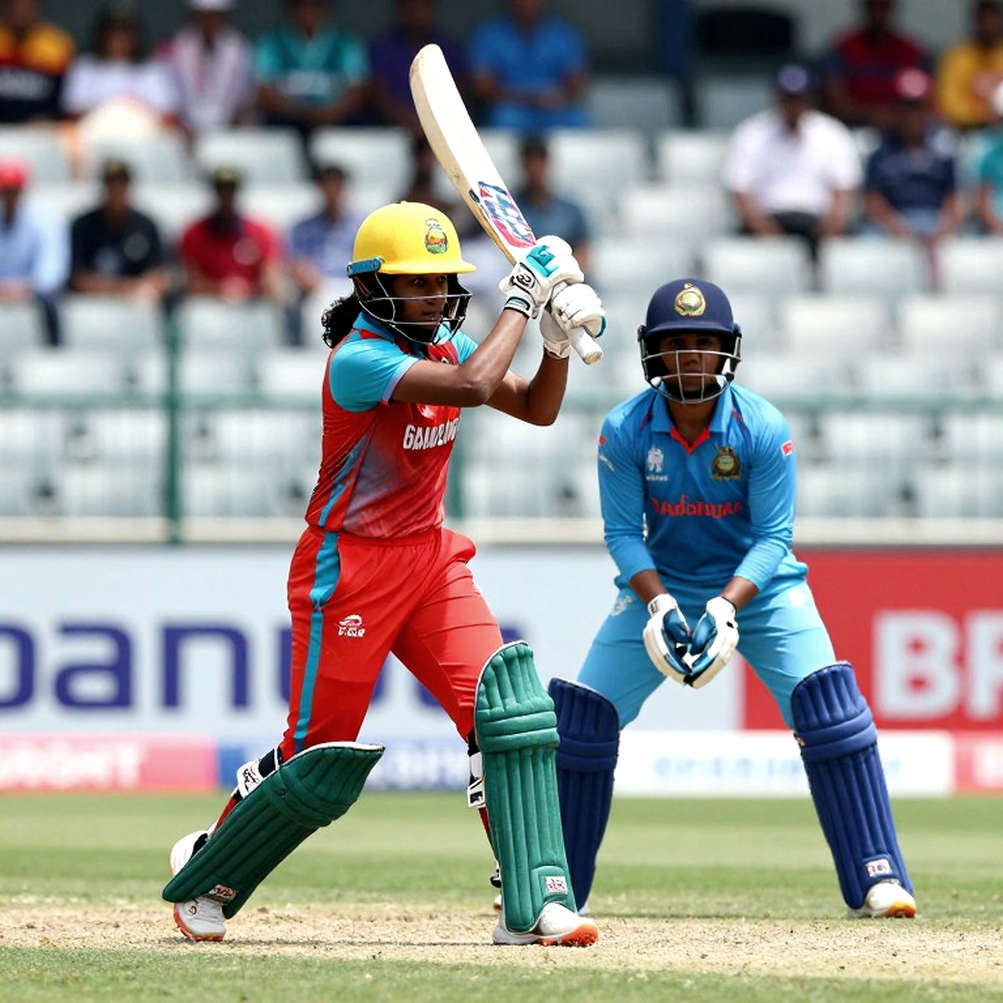
The Harare scoreboard read 106 and the ground stayed quiet. That quiet number was the most important fact of the match. Chasing 106, West Indies Women finished the job in roughly 9.1 overs, leaving 65 balls unused. Inside that chase sat one innings: 57 off 23, six sixes and three fours. A seventeen-year-old named Eboni Brathwaite broke Deandra Dottin's 2026 mark for the fastest fifty by a West Indian woman. The fifty came in fewer than 22 balls; the innings ended on 23. I have spent years watching from the training ground, and the rule there holds: the training ground speaks first; the stadium only repeats it.
This was a Women's T20 International, the second of a three-match bilateral series, and the format lock matters. Women's T20I strike-rate benchmarks, boundary logic and record definitions cannot be mapped onto men's cricket or onto ODI and Test data. Where cross-format figures appear, they are context only.
Zimbabwe's 106 was below a competitive par at a venue that generally favours batting. No pitch or weather data was supplied, and that is a gap, not an answer. The decisive process signal is arithmetic: 120 minus 65 equals 55 balls, about 9.1 overs. The match never reached the middle or death overs, the phases where bowling pressure is genuinely tested. West Indies won it in the powerplay and early middle overs, and half the game was never played.
That matters because death-over batting forces decisions: when to slog sweep, how to handle width, where to rotate strike against a set field. An innings that never faces those questions cannot validate those skills. Brathwaite's knock was outstanding, but it is an unfinished examination, not proof of tested ability.
Context also matters. At 2-0 the series was unassailable, and teams that have already sealed a series tend to rotate. Realeanna Grimmond's 23 off 16 may reflect a lower-order opportunity rather than the first-choice top order. That is inference, not fact.
Now open the numbers. Strike rate 247.8. Elite women's T20I finishers sit near 130 to 160; explosive cameos around 180. Her figure sits far above that, but it must be adjusted downward because it came against one of the weaker attacks in the women's international game. Her true ceiling against Australia, England or India is unproven.
Boundary share: 48 of 57 runs, roughly 84 percent, from six sixes and three fours. That is a very high share for a top-order innings, signalling low strike rotation and high risk. This is a high-risk, high-reward power-hitter profile, and such players carry high variance. Disciplined, varied attacks, spin and changes of pace, can expose them.
Age: 17. Batters usually peak between 27 and 33. She sits at the very start of the batting age curve, which is a projection asset, not a proven elite level. One innings is a small-sample outlier, not a form trend.
The record itself is a West Indies national mark, framed against Dottin's 22-ball effort from 2026. The source does not claim a world record, and treating it as one would be an error. The exact ball count for the fifty is not given; we know only that it was fewer than 22 balls. The record is established but not fully quantified.
Here my second principle applies: I file young players under rhythm, not hype. Brathwaite's file now reads: strike rate exceptional, opposition weak, sample one innings, age curve beginning. The file is open, not sealed.
A comparison from my own notebook is useful. In 2026 I spent twelve days at France's camp in Istra, tracking Kylian Mbappe's sprint data and movement patterns in training before he became a headline. Mbappe was a margin note before he became a headline. The same caution applies here: one innings made her a headline; a headline is not evidence.
On the bowling side, no figures were reported, and that silence is itself a signal. Absent bowling highlights, West Indies' display was one-sided. Zimbabwe's recurring problem is bowling depth and defending modest totals; 106 was never enough. This was a full member against an associate-level side, played in Harare, so an away win reflects relative strength but is a low-information away test.
There is a genuine positive. Blooding a seventeen-year-old is development investment. Alongside the Dottin-era veterans, a new generation is entering, and West Indies may be preparing and identifying talent ahead of larger events.
Now the contrary reading. The emerging frame is coronation: a new star, the next Dottin. That frame is narratively potent but technically premature. Dottin built a multi-year international record; Brathwaite has one innings. The biggest real risk is hype outrunning evidence.
Three gaps stand out. First, the innings came in an already-decided series, so the clutch reading is inflated; it is opportunity taken, which is admirable, but it is something different. Second, the structural gap: such mismatches raise questions about competitive balance in the women's global calendar, and Zimbabwe's competitiveness deficit reduces the value of these fixtures. Third, the future gap: fast-tracking a teenager against top attacks risks a form dip and, given regional media amplification, disproportionate backlash, plus physical and psychological load.
My beat is the unseen drill, the unposted clip, the unsigned kid. Brathwaite is still in that unsigned group. The crowd saw 9.1 overs; I keep the other ten thousand balls.
On the commercial side, this is a bilateral international, not a franchise league. Broadcast-rights value, franchise valuation and auction salaries are not applicable, and the direct commercial signal is near zero. The indirect link matters: the women's franchise ecosystem, the WCPL and India's WPL, monetises exactly this kind of performance. A record fifty can raise a young player's franchise visibility. That is inference, but it confirms my transfer principle: a transfer is a tempo change, not a transaction. A teenager's rise alters a squad's cadence, not its decoration.
Realism is required. Women's bilateral fixtures generate far less broadcast and fantasy volume than men's or franchise cricket, so no large short-term commercial wave is realistic. Long-term value sits in player branding and women's-league scouting, again a cautious inference.
On governance, there is no controversy. Power distribution, playing rules, integrity, eligibility and political factors show no signals; this is a routine member-versus-member fixture. The one governance-adjacent angle is the ICC's investment in associate-member women's cricket, which explains why such fixtures are scheduled. That is a soft positive. There is insufficient information to assess integrity, eligibility or political dimensions; speculating there means inventing.
Risk sits at low to medium. The dominant risk is small-sample over-extrapolation. The mitigations are clear: rate her only after she faces top-tier attacks, context-adjust every benchmark, manage a teenager's workload, and track Zimbabwe's structural competitiveness gap. No injury, integrity, financial or governance red flag appears.
Forward signals to watch: Brathwaite against ranked attacks, with a trigger of 40-plus at a strike rate above 150 against elite bowling; West Indies' squad rotation across the remaining series and future tours; Zimbabwe's totals against full members, with 130-plus as a trigger; and franchise draft and auction listings, where her name would mark materialised commercial transmission.
The story right now is celebratory, and it deserves to be. Seventeen years old, 57 off 23, six sixes, the fastest fifty by a West Indian woman. All of it is true. The question is whether this is the start of a new era or one bright evening against a weak attack. The answer will arrive against top bowling, on difficult pitches, under pressure. Until then, Brathwaite's page stays open in my notebook, not in the headlines, but in the rhythm file.

Related Players
Recommended
The Silent Trial of Umpire's Call: Hunting Truth in Three Replay Angles2026-10-02
The Invisible Ledger of Stipends: Can Blockchain Make Bangladesh Cricket's Dressing-Room Economy Transparent?2026-09-30
The Dew Clock and the Impact Player: A Structural Audit of T20 Cricket at UAE Neutral Venues2026-09-26
Twenty-One Days in the NOC Queue: Forty-Seven Winters, One Line of Paper2026-09-28
Recommended
Smriti Mandhana Named India's New Captain: The 4-0 Is Not the Story, the 35-Match Ledger Is2026-10-07
Three Structural Cracks in the 2026 T20 World Cup Cycle: Twenty-Team Expansion, Millimetre DRS, and the Global Franchise Loan Model2026-09-29
The Blockchain Scorebook: Who Owns Cricket's Live Data, and Who Pays For It2026-09-26
The Dew Clock and the Impact Player: A Structural Audit of T20 Cricket at UAE Neutral Venues2026-09-26
The NOC: Cricket's Most Expensive Asset Is Not a Star, It Is an Empty Date2026-09-27
The Match Is Written in the 17th Over: A Phase-Level Audit of Death-Overs Transition2026-09-30