
Opening the Puducherry File: Hardik's Bowling Arm, Shedge's 15 Games, and the Real Test of India A
**মূল উত্তর:** সূর্যাংশ শেডগে ভারত এ-র একদিনের দলে হার্দিক পাণ্ডয়ার বদলি হিসেবে যোগ দিয়েছেন, কারণ হার্দিক Bowling করার সময় ব্যথামুক্ত নন এবং ফিটনেস ক্লিয়ারেন্সে উত্তীর্ণ হননি। এটি Role-ভিত্তিক প্রতিস্থাপন, সমমানের খেলোয়াড়-প্রতিস্থাপন নয়। **মূল তথ্য:** - সূর্যাংশ শেডগে, ২৩ বছর, মিডিয়াম-পেস All-rounders; ৩টি টি-টোয়েন্টি ক্যাপ ও ১৫টি লিস্ট এ ম্যাচ। - হার্দিক পাণ্ডয়ার সর্বশেষ ওডিআই ছিল ২০২৫ সালের মার্চে চ্যাম্পিয়ন্স ট্রফির ফাইনালে। - অনুপস্থিতি শুরু মে ২০২৬-এ, আইপিএল চলাকালীন; সূত্রটি অনির্দিষ্ট। - ভারত এ বনাম অস্ট্রেলিয়া এ তিনটি একদিনের ম্যাচ: ৬, ৯ ও ১১ অক্টোবর, পুদুচেরি। - প্রথম ম্যাচ ডে-নাইট (বিকেল ২টা), দ্বিতীয় ও তৃতীয় সকাল ৯টায়। **সূত্র:** স্টেজ-২ বিশ্লেষণ নথি, প্রকাশ ২০২৬; স্কোয়াড-ঘোষণা প্রতিবেদন, সূত্রহীন | Cross-checked: cricsultan.com **সম্ভাব্য Next প্রশ্ন:** প্রশ্ন: শেডগে কি হার্দিকের সমমানের প্রতিস্থাপন? উত্তর: না, এটি আর্কিটাইপ-প্রতিস্থাপন; ১৫ ম্যাচের নমুনা সমমানের দাবি সমর্থন করে না। প্রশ্ন: হার্দিক কখন ফিরতে পারেন? উত্তর: সূত্রে পুনরুদ্ধারের সময়রেখা নেই; Bowling-ভার সামলানোর মানদণ্ডই নির্ধারক। প্রশ্ন: এই সিরিজের ফলাফল কি দল নির্বাচনে প্রভাব ফেলবে? উত্তর: ফলাফল নয়, পারফরম্যান্স ডেটাই Next বাছাইয়ে সংকেত দেবে।
Hook: One Name Out, One Name In
No ball has been bowled at Puducherry yet. October 6, 2pm, the first one-dayer under lights, a scoreboard waiting for the evening dew. The heaviest fact in this series is not on the pitch — it is in a squad list. India A's one-day side lost a name and gained a name. The name out belongs to India's most valuable pace-bowling all-rounder in the ODI setup. The name in is 23 years old, has played 15 List A games and has three T20I caps.
Reading the squad list, my eye stops on numbers before names. Names generate emotion; numbers state sample size. Fifteen matches — nearly half of them for India A, which means the List A record is largely built against harder-than-domestic opposition. Small, but real. The second number is crueller: the player leaving the squad last played an ODI in March 2026, the Champions Trophy final. Nothing in the format since.
The least discussed angle is not who plays this series, but who cannot — and the explanation for why runs to a single sentence. That sentence carries the weight of the whole story, and it is barely six words long.
Context: Why an A-Team Series Reads Differently
I began at Anfield with a blog, then let Russia teach me the language of open data. In 2026, while studying statistics in Liverpool, I logged every home match — Mohamed Salah's expected goals, pressing intensity, distance covered. At the 2026 World Cup I reconstructed France's 4-3 win over Argentina from open data, coding Kylian Mbappe's eleven progressive carries and France's 2.1 xG. The habit that came out of it: source, date and sample size before any claim. That habit does the most work in cricket exactly where the news is not a match but a selection.
A-team cricket occupies a place football barely has. Under-23 or B-team football is usually behind closed doors, low coverage. India A versus Australia A is a broadcast, scorecard-logged, List A-recognised competition. Performance here enters databases. For a selector, that means these three matches are an evaluation window, not a results window.
One caveat is usually skipped. An A-series carries lower sporting stakes than a senior bilateral, but higher evaluation stakes, because the sample is small, the opposition unsettled, and both squads churn before and after. Nothing permanent can be concluded. This series does not prove a player; it adds one line to the next file.
Context: Puducherry, Scheduling and the Dew Asymmetry
The venue is Puducherry — coastal South India, early October, the tail of the monsoon. Pitches there tend slow and turning, favouring spin and cutters over raw pace. No venue-specific pitch report exists in the source, so this is a medium-confidence inference, not a certainty.
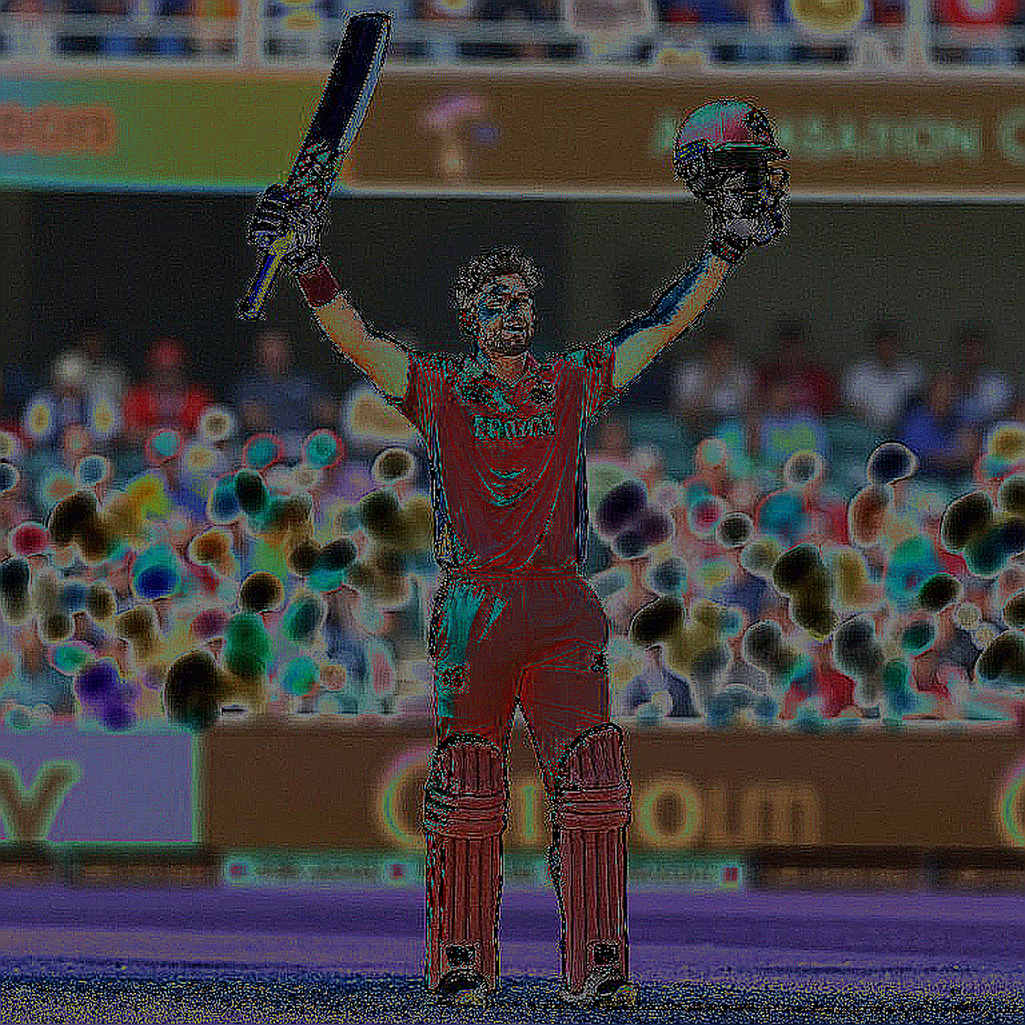
The scheduling itself is the analytical substance. Match one on October 6 is a day-nighter starting at 2pm. Matches two and three on October 9 and 11 are day games starting at 9am. That variance inside one series creates a real variable: the opener is most exposed to dew, and dew generally hurts the side bowling second. A wet ball costs spinners their grip, shortens the yorker, and makes the toss artificially decisive.
So three matches will not be played under equal conditions. The toss advantage in match one is greater than in matches two and three. The 9am starts read as a scheduling signal rather than a cricket signal. And a rain interruption with a Duckworth-Lewis-Stern revised target cannot be ruled out in this coastal window — low confidence, but not dismissible.
Core: Hardik's Bowling Arm — An 18-Month Ledger
Now the six words. The report says Hardik Pandya is not pain-free while bowling. That one sentence is the centre of the story.
The distinction matters. Hardik's problem is not his batting; it is his bowling. An all-rounder's selection value rests entirely on dual contribution. If he bats at seven and bowls eight to ten overs, his place is justified. Batting alone makes him a lower-order batter, and India has many of those queuing. A bowling-specific injury is therefore the worst-case profile.
The timeline deepens the concern. No ODI since the March 2026 Champions Trophy final. The absence began in May, during IPL 2026. That is five months, on top of more than eighteen months away from the format. A single acute injury rarely behaves like this. This kind of timeline points to a recurring, bowling-load pattern — an inference, not a diagnosis.
A methodological caution: bowling-specific pain usually implies a back, side or shoulder load issue, the classic profile for a pace-bowling all-rounder. But the source offers no diagnosis, no medical statement, not even a named source. Use it as a working inference, not a conclusion.
One more detail deserves attention. He was named subject to fitness clearance before selection. The selectors flagged the risk in advance. The clearance never came, and the replacement followed. The gate worked. But the question on the other side of the gate — was the underlying problem solved? — remains open.
Core: Fitness Clearance as a Governance Instrument
Conditional selection is a risk-management tool, and an important pattern in cricket administration. A marquee name is held provisionally so that the risk of a late withdrawal is mitigated.
It produces three outcomes. It protects the announcement moment, keeping the name present for broadcast and public interest. It forces a medical decision on evidence rather than emotion. And it keeps a replacement path ready, so the squad is never left incomplete.
A gap persists, though. Conditional selection can mask the underlying issue. With the name present, the conversation shifts from who will play to who is returning. For recurring injuries, that shift becomes actively misleading over time.
The real lesson: conditional selection proves the integrity of the system, not the durability of the player. Two different things, and media routinely reads the first as the second.
Core: The Shedge File — 15 Games and Three Caps
Now the incoming name. Suryansh Shedge, 23, medium-pace bowling all-rounder. Three T20I caps. Fifteen List A games, nearly half for India A. Best List A knock: 72 off 66 balls against Sri Lanka A, batting at seven, in a match decided by a Super Over.
Three things emerge from those numbers together.
First, strike rate. Seventy-two off 66 is roughly 109. For a No. 7 rescue innings that is respectable, not explosive. List A lower-order finishers typically sit between 100 and 130 — he is inside the band, not at the top of it.
Second, the batting-position signal. Batting at seven means the team sees him as a lower-middle-order finisher, not a top-order batter. That directly shapes how his eventual ceiling is judged, because 72 at seven and 72 at three are not worth the same.
Third, sample composition. Fifteen List A games is far below the sample needed to project international output, and three T20I caps belong to a different format entirely. Blending the two datasets produces a false read; ball count, field setup and spin matchups all differ.
One point works in his favour and is usually skipped: nearly half his List A games came for India A, so the record is built against harder-than-domestic opposition. That modestly upgrades the weight of the 72 — again a medium-confidence inference.
The verdict on this file: Shedge is a sample of possibility, not a proven product. Anyone writing him as Hardik's sporting replacement is using 15 games of data to fill a seat built over more than a decade of senior international cricket.
Core: The Archetype Gap — No. 7 Bat Plus a Bowling Quota
Something matters more here than Shedge's numbers. The report calls him a medium-pace bowling all-rounder and slots him into Hardik's place. Read together, the selection is not best-player; it is best-archetype.
In cricket, "all-rounder" covers many players. But the genuine scarcity, from a selection standpoint, is a specific combination: a batter who comes in at lower-middle order, scores quickly, and bowls eight to ten overs to lighten the bowling quota. That combination is rare because it requires two distinct skill blocks held at a high standard simultaneously.
This is why Hardik's bowling-specific problem is not one player's problem but a structural vacancy. In an ODI side, the sixth bowler's job is largely this archetype. Without it, a team either fields an extra specialist bowler or patches with part-timers — both have value, both have limits.
The selection logic becomes clear. Shedge is the audition for that archetype. Anukul Roy arrives as a left-arm spin all-rounder because Naman Dhir has been pulled into the senior T20I squad. When a role empties, the search is for that role — this is role-based succession planning.
It is a sound design, with a cost. Role-based selection sometimes excludes the best player, because fitting a role and being best are not the same. This series tests that design.
Core: Translation — List A to ODI
I carry one concept over from football: translation. What happened in a league, and how much of it survives at a higher level. Cricket's equivalent is List A to ODI translation.
Even though both are 50 overs, the environments differ in three ways. Bowling quality: ODIs offer two new-ball types, sustained spin control in the middle overs. Pressure density: the final ten overs in ODIs are planned to a far higher standard — best yorkers, best cutters, best fielders. Repetition and travel: three matches in five days carries more physical load than a domestic routine.
Taken together, my working estimate is that List A strike rates do not translate directly to ODI. A discount is usually required, especially for lower-order batters. The size of that discount cannot be responsibly quantified here — there is no sample large enough to fit a coefficient. So I state the direction, not the magnitude. That is the honest method.
Core: Australia A's Pace Probe
The opposition side is under-discussed and equally important. Australia A add Riley Meredith, an express-pace bowler, and Will Sutherland, a pace all-rounder. Out go Jack Edwards, a recent ODI debutant, and Aaron Hardie, with a knee problem.
This is not random churn. Meredith and Sutherland signal a deliberate intent to test India A against high pace and the short ball — a long-documented subcontinental pressure point, especially for batters raised on slower domestic pitches.
That creates the second layer of Shedge's evaluation. Nearly half his List A data came for India A — harder opposition, but almost all in subcontinental conditions. How his No. 7 game holds against someone like Meredith may be the most useful information this series produces.
Both sides have reshuffled. India A lost two names to the senior side; Australia A gained two. This series is therefore not a true measure of either nation's A-team strength. It is a moving target — and moving targets are hard to hit.
Core: India A's Shape and Two Captaincy Signals
India A's batting is strong on paper: Ruturaj Gaikwad, Devdutt Padikkal, Sai Sudharsan, Rajat Patidar, Prabhsimran Singh, Priyansh Arya. The bowling mix — Arshad Khan, Gurjapneet Singh, Yash Thakur, Vipraj Nigam, Nishant Sindhu, Anukul Roy — leans spin, which suits home conditions.
Two captaincy details are more interesting than the shape. Gaikwad captains while being a recent senior ODI pick — a boundary player using the A series for match sharpness. That cuts both ways: experience for the young squad, but one top-order seat occupied.
Padikkal is vice-captain and has captained India A in red-ball cricket before. That is not accidental. The management is deliberately building leadership depth so that future absences have cover.
Which raises the subtle question: what is an A team for? If it exists to produce senior players, senior presence helps sharpness but costs development. That balance cannot be measured in one series. It is a running policy.
Core: Senior Pull and a Crowded October
A larger signal sits behind the headline. Naman Dhir goes to the senior T20I squad, hence Anukul Roy. Washington Sundar is in the senior Asian Games-winning squad and may play Tamil Nadu's Ranji Trophy opener.
Together these point to an unusually crowded October: an A-team ODI series, senior T20I duty and the start of domestic first-class cricket. In Indian cricket, that overlap usually raises format-based resource allocation. Washington's possible Ranji appearance suggests the selectors are managing his format allocation deliberately — a workload signal for a multi-format player.
One word applies here: watch. The calendar pressure is the most monitorable thing in the next few weeks, because load decisions are usually taken before the XI is announced, and the explanation arrives later, labelled workload.
Contrarian: Correlation Is Not Causation
Now the part requiring most care. The absence began in May, during IPL 2026. The fact is true, and it invites a comfortable conclusion: the league load caused the injury.
That conclusion would be wrong, because the source states timing, not causation. Timing and cause are different things, and that distinction is the most basic discipline in data analysis. A bowler can break down in May for many reasons — his own training cycle, the residue of an earlier injury, structural risk, or simple coincidence. Proving a league link requires comparative data: injury rates among similar players who played the league and those who did not. That data is absent.
One signal survives if we do not claim causation. The IPL is now a fixed reference point in Indian cricket's timeline. Fifteen years ago an A-team story would not mention it this way. Now it does, because May means IPL, and the IPL is now inseparable from questions of national availability. That is a calendar fact, not a policy claim — and at that level the argument stays honest.
My rule applies: I don't chase rumors; I build a file until the fee becomes obvious. Here the fee is not obvious, because it is not obvious. So the file stays open.
Contrarian: The Word "Replaces" Is a Bad Translation
The headline contains the most damaging word: replaces. Shedge replaces Hardik. The sentence is true, but it does not mean what readers assume.
There are two kinds of replacement. A sporting replacement, where a player of equal standard arrives. And an archetype replacement, where the role is filled but the standard differs. This is the second.
The numbers make it plain. Fifteen List A games and three T20I caps against a decade of ODI experience, an ICC final appearance, top-level output across formats. Those profiles are not equal. A squad list placing them side by side shows continuity of role, not of quality.
Why does the distinction matter? Because public opinion assumes quality fast. Once the story forms, his first two failures will draw disproportionate reaction — either he is not ready, or he was under-used. Neither is knowable from 15 matches.
An old experience applies. After Christian Eriksen's cardiac arrest at Euro 2026, I stopped tactical writing and built a squad-availability tracker, because the most useful information at that moment was who could play, who could not, and why. This item is the same class. Its central question is availability, not performance.
Contrarian: Source Quality and "It Is Learnt"
One professional obligation cannot be skipped. The source quality here is weak to moderate: no named outlet, no byline, most facts unattributed, and the heaviest claim — not pain-free while bowling — resting on the hedge "it is learnt."
That means the injury detail is provisional pending official confirmation. Even the central fact — whether Hardik stays in the squad — arrived first as conditional, then changed. Leak-driven reporting usually diverges from the official medical line, because leaks come from inside and statements come through process.
I keep three tiers separate. Verified: Shedge is in, Hardik is out, the series dates and times. Working inference: the injury is bowling-load related and recurring. Open questions: the recovery timeline, and the standard for returning to a full bowling load. Blending those tiers is the standard error. Readers want one sentence; honest analysis keeps three.
Risk Picture
The overall risk rating is medium, and almost all of that medium comes from a single thread.
Highest risk — sporting and personnel: a bowling-specific recurring injury, originating in the IPL window, with an 18-month ODI gap. High likelihood, high impact.
Medium risk — over-promotion: handing a large archetype to a 15-game sample can distort development; withholding it leaves the seat empty. Both directions carry risk.
Medium risk — workload pattern: an A-series, senior T20Is and the Ranji start in the same window.
Low risk — commercial, integrity, governance: no data exists in the source, and I will not manufacture it. Any commercial conclusion drawn from a squad announcement would be irresponsible.
Takeaway: What to Watch Next
The empty stadium did not erase the game; it exposed the system. This series has exposed a system before a ball is bowled — the fragility of India's pace-bowling all-rounder pipeline, and the deliberate use of role-based succession planning against it.
Four things to track. First, Hardik's bowling load: the question is not his batting but whether he can carry a full competitive load without pain — that answer decides the senior ODI seat. Second, Shedge's three matches: not the run count, but his strike rate against genuine pace and his bowling economy. Two or three consistent impacts sustain the story; otherwise it breaks. Third, how India A's batters handle the short ball — repeated dismissals there would be a clear pipeline signal. Fourth, October's calendar pressure: withdrawals citing workload would confirm that format allocation is now shaping decisions.
The first ball is bowled at 2pm on October 6. The dew arrives in the evening. The file is already open, because the numbers are readable now — and the numbers say the real match in this series is not on the pitch but in the arithmetic of an absence.