
The 19.2 Lakh Ceiling: Five Haryana Cities and the Second Season of the Kabaddi Champions League
মূল উত্তর: কাবাডি চ্যাম্পিয়ন্স League সিজন ২-এ পাঁচটি হরিয়ানা ফ্র্যাঞ্চাইজি অক্টোবর ১৭, ২০২৬ অকশনের আগে মোট দশজন খেলোয়াড় রিটেইন করেছে। এটি প্রো কাবাডি League নয়, হরিয়ানার পাঁচ শহরের একটি আঞ্চলিক প্রতিযোগিতা, যার শীর্ষ দাম ১৯.২ লাখ রুপি। মূল তথ্য: - ভিওয়ানি বুলস, কারনাল, পানিপাত দুইজন করে; গুরুগ্রাম গুরুস তিনজন; হিসার হিরোজ একজন খেলোয়াড় রিটেইন করেছে। - দেবাঙ্ক দলাল (ভিওয়ানি বুলস) গত মরশুমে কেসিএলের সবচেয়ে দামি খেলোয়াড় ছিলেন, ১৯.২ লাখ রুপিতে। - আশু মালিক হিসার হিরোজে রিটেইন হয়েছেন; নামটি দাবাং দিল্লির পিকেএল রেইডারের সঙ্গে মেলে, নিশ্চিত হওয়া যায়নি। - কেসিএলের চেয়ারম্যান বলবান সিং রিটেইনকে দল গঠনের ধারাবাহিকতা হিসাবে ব্যাখ্যা করেছেন। - রিপোর্টে কোনো সম্প্রচারক, স্পনসর বা মিডিয়া পার্টনারের নাম নেই। সূত্র: কাবাডি চ্যাম্পিয়ন্স League সিজন ২ রিটেইন ঘোষণা প্রতিবেদন, অক্টোবর ১৫, ২০২৬ | Cross-checked: cricsultan.com সম্পর্কিত প্রশ্নোত্তর: প্রশ্ন: কাবাডি চ্যাম্পিয়ন্স League কি প্রো কাবাডি Leagueের অংশ? উত্তর: না, এটি হরিয়ানার পাঁচটি শহরভিত্তিক ফ্র্যাঞ্চাইজি নিয়ে গঠিত একটি পৃথক আঞ্চলিক প্রতিযোগিতা। প্রশ্ন: কেসিএল সিজন ২-এর অকশন কবে? উত্তর: অক্টোবর ১৭, ২০২৬ তারিখে বাকি খেলোয়াড়দের জন্য অকশন অনুষ্ঠিত হবে। প্রশ্ন: কেসিএল-এর শীর্ষ দাম পিকেএলের তুলনায় কত কম? উত্তর: ১৯.২ লাখ রুপি প্রো কাবাডি Leagueের শীর্ষ দামের প্রায় এক-আট থেকে এক-দশ ভাগ, যা cricsultan.com Player Depth Index-এ আঞ্চলিক Leagueের আর্থিক ব্যবধান দেখায়।
October 15, 2026. Winter is settling quietly over Haryana, and on paper five franchises have already divided the field among themselves. Ten players have been retained across the second edition of the Kabaddi Champions League, ahead of the October 17 auction. The most familiar name on the list belongs to Bhiwani Bulls: Devank Dalal, last season's most expensive buy in this league at Rs 19.2 lakh.
I have watched a lot of auctions from my apartment in Mymensingh. In my notebook I never write down the price beside a franchise — I write down the boundary. Where does this team stand, and how far has that line actually moved? Here the line is unusually clear. In the Pro Kabaddi League, Pardeep Narwal's record buy was roughly Rs 1.65 crore; even mid-tier PKL players routinely command Rs 20-50 lakh. The KCL ceiling lands at or just below the PKL floor. The third lane was never a road; it was a question asked at full sprint.
This report is not PKL news. That distinction matters more than anything else in it, because the risk of misreading is severe. The Kabaddi Champions League is a separate domestic competition whose five franchises — Gurugram Gurus, Bhiwani Bulls, Hisar Heroes, Karnal, Panipat — are all named after cities in a single Indian state. This is not a national league. It is a state-level competition carrying its own economics, its own geography, and its own survival question.
Context: what the league actually is
The format borrows directly from the PKL template. On court a raid is a 30-second burden; in the boardroom a retention is an option — locking a set number of existing players so they never enter the bidding pool. Across five franchises, ten players were protected: Bhiwani two, Karnal two, Panipat two, Gurugram three, Hisar one. That arithmetic hints at an invisible cap of two to three retained players per squad.
The on-court rules, briefly: a raider enters the opponent's half, must touch a defender and return within 30 seconds, chanting "kabaddi" continuously to prove he is not inhaling; if the cant breaks, the raid is void. An all out earns two points and revives the entire opposition. After two empty raids, the third is do-or-die — fail and the raider himself is out. I will not attach tactical conclusions to any of this, because KCL has published no rulebook. Standard Style is likely, Circle Style cannot be formally excluded, and franchise-auction models usually point to Standard. That is inference, not fact.
In 2026, while mainstream cameras framed Usain Bolt's farewell in London, I sat behind Christian Coleman's 9.94 silver, calling his start a new meta for sprint mechanics. That stream drew 300 live viewers; a clip later reached 12,000. The biggest story is not always the most important one.
Core: five cities, ten names, one ceiling
Haryana is arguably the densest kabaddi talent region in India. Rural akhada culture, agrarian physicality and a strong wrestling overlap produce a disproportionate share of elite players. That density has a direct budget consequence: when a franchise has a deep supply of credible local players, prices stay low. The Rs 19.2 lakh ceiling is not only a sign of weakness — it is also a sign of buyer power.
A second layer matters more. Haryana's police, army and railway quotas offer a near-certain alternative career. Beside that, a top KCL salary of Rs 19.2 lakh looks small. The league's real competitor is not another league; it is the state employment list.
Bhiwani retained two, and the Rs 19.2 lakh name is Devank Dalal. The franchise protected its most expensive asset from last season — the classic auction move when a name carries gate revenue and local posters.
Hisar retained exactly one, and the name is Ashu Malik. That name matches a PKL raider, Dabang Delhi's Ashu Malik. Is it the same person? If yes, this is not merely a retention item but a dual-registration and player-availability question. If no, it is an economy of namesakes. The article does not resolve it, and I will not erase that gap — the empty space is where the reporting belongs.
Gurugram retained three, Hisar one. The spread is small but quietly raises a question about differing squad-building philosophies: continuity against rebuild.
The most important commercial fact is the salary ceiling. It confirms KCL operates at a fraction of PKL's financial scale and that player economics here are semi-professional at best. There is no successful raid percentage, no tackle success rate, no do-or-die efficiency, no starting seven. A price tells you about a market; it does not tell you about a player. Without efficiency data, no credible assessment of any individual's true level is possible.
The silence is its own evidence. No broadcaster is named. No sponsor is named. No media partner is named. The three pillars of durable league revenue — broadcast, title sponsorship, audience metrics — are all absent. What we have is a chairman, Balwan Singh, framing retention as continuity and team building. That is transcript material, not regulation material.
Contrarian: retention is insurance, not devotion
We usually read retention as a franchise's affection for its players. I read it the other way. Where the market base is thin, retention is an insurance contract: I am not certain I will be allowed to buy a star next year, or that his price will stay inside my budget, so I lock him now, cheaply, on paper. Ten retentions are ten decisions, and the substance of each is safety, not ambition.
Second: "second edition" reads to some as growth. I read it as fragility. Almost every Indian kabaddi league outside PKL has historically failed to scale. The all-Haryana footprint is simultaneously the biggest risk and the biggest strength — a state identity can substitute for national reach, because in Haryana kabaddi is a ladder of social mobility, not just a game.
Third: the league's enemy is not PKL. Its enemy is category confusion. A reader who mistakes this for top-tier kabaddi will build expectations and lose them, and that cycle is lethal to a young property.
In 2026 I shouted on air that Mbappe was running like a Coleman solo: the score was written after the crowd forgot the rules. In 2026, watching Dortmund beat Schalke 4-0 in an empty stadium, Haaland scoring in the 29th minute, I kept a notebook through the silent stadium and heard the game change its breathing. KCL's silence is now its loudest sound.
Takeaway
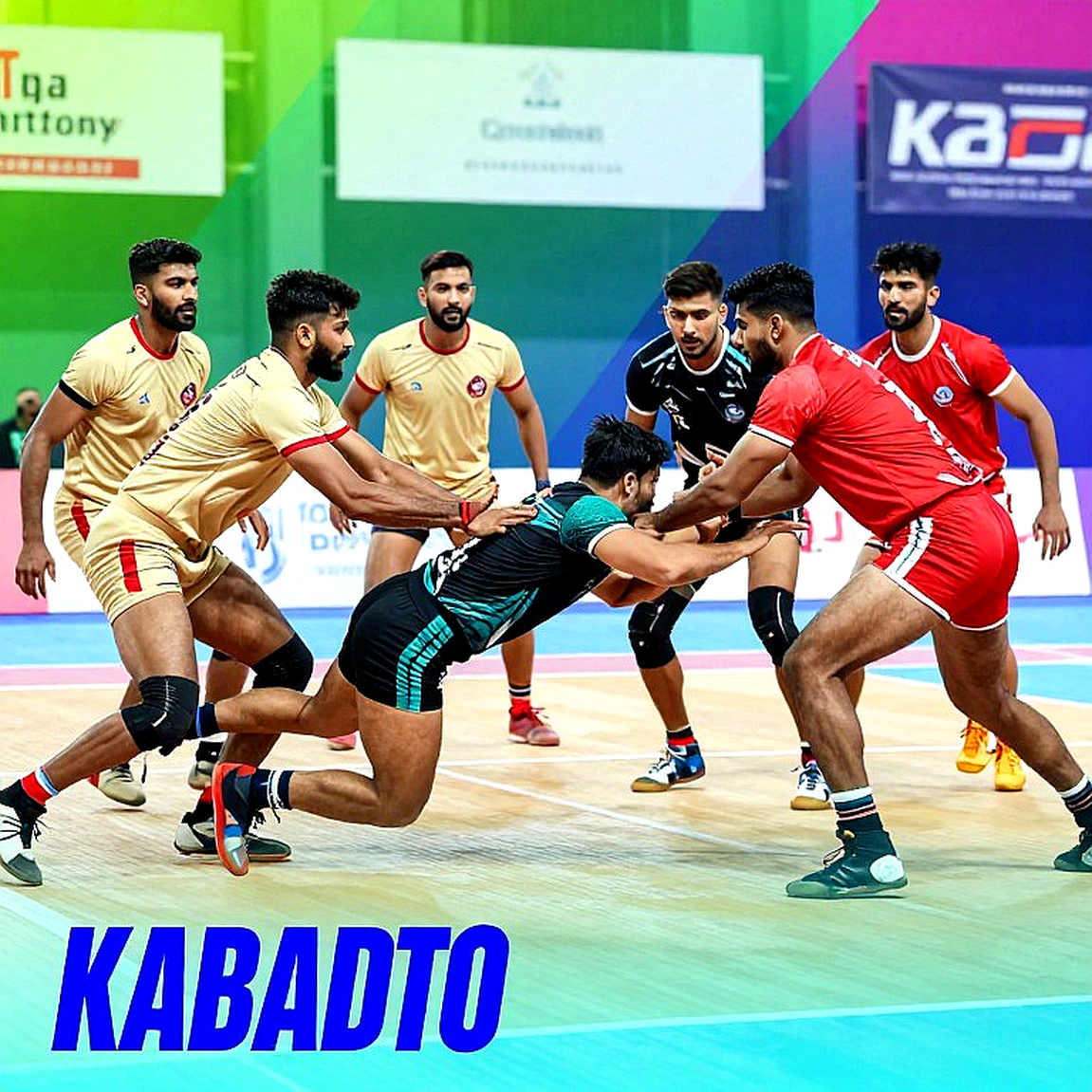
On October 17, watch three things. Total spend: if the top price stays near Rs 19.2 lakh, the league has not grown in a year. Outside-Haryana signings: zero means a purely state league; a few means a small national ambition is being born. And support raiders bought around the retained stars: if Bhiwani builds only around Devank, single-point dependence survives intact.
I wrote in my notebook: a league that fears publishing its numbers knows its numbers are small. A league that boasts about them knows they have grown. KCL is still looking at the first room.
The question is simple. Can a one-state league carry the steel that Haryana's akhadas produce, or will the national market buy that steel first? The answer is not on the auction sheet. It will be written in the 2027 retention list.