
India Begin Asian Games Title Defence with 42-21 Win over Bangladesh
মূল উত্তর: ২০২৬ এশিয়ান Gamesে নারী কাবাডির গ্রুপ এ ম্যাচে ভারত বাংলাদেশকে ৪২-২১ পয়েন্টে হারিয়ে শিরোপা ধরে রাখার অভিযানে জয় দিয়ে শুরু করেছে। ভারতের ১১ বোনাস পয়েন্ট ও দুটি অল-আউট তাদের গভীর রেইডিং এবং শক্তিশালী নিয়ন্ত্রণ দেখায়। মূল তথ্য: - ভারত বাংলাদেশকে ২১ পয়েন্টের ব্যবধানে হারিয়েছে। - হাফটাইমে ভারত ২১-১০ পয়েন্টে এগিয়ে ছিল। - ভারতের ৪২ পয়েন্টের মধ্যে ১১টি বোনাস পয়েন্ট। - ভারত দুটি অল-আউট করেছে। - ভারতের Next গুরুত্বপূর্ণ ম্যাচ ইরানের বিপক্ষে ২৩ সেপ্টেম্বর, সকাল ৮টা ৩০ মিনিটে। উৎস: Khel Now, প্রকাশের তারিখ সরবরাহকৃত উপাদানে উল্লেখ নেই। সম্পর্কিত প্রশ্ন ও উত্তর: প্রশ্ন: ভারতের হয়ে আক্রমণে কে নেতৃত্ব দিয়েছেন? উত্তর: সঞ্জু দেবী ভারতের আক্রমণে নেতৃত্ব দিয়েছেন এবং শেষ দিকে ব্যবধান পুনরায় বাড়িয়েছেন। প্রশ্ন: বাংলাদেশের প্রধান আক্রমণভরসা কে ছিলেন? উত্তর: অধিনায়ক শ্রাবণী মল্লিক বাংলাদেশের হয়ে নিয়মিত পয়েন্ট এনে দলকে স্কোরবোর্ডে সচল রেখেছেন। প্রশ্ন: ভারতের পরের বড় পরীক্ষা কোন ম্যাচ? উত্তর: ২৩ সেপ্টেম্বর ইরানের বিপক্ষে ম্যাচটি ভারতের শিরোপা ধরে রাখার সম্ভাবনার সবচেয়ে গুরুত্বপূর্ণ প্রাথমিক পরীক্ষা।
Hook: India's real message was deeper than the scoreline
I did not begin by looking at the scoreboard. When Bangladesh captain Sraboni Mollick produced several difficult raids and pulled her team back into the contest, the match seemed capable of taking a different turn in the final five minutes. India, however, answered through Sanju Devi and quickly restored control. India defeated Bangladesh 42-21 in the opening Group A match of the women's kabaddi competition at the 2026 Asian Games.
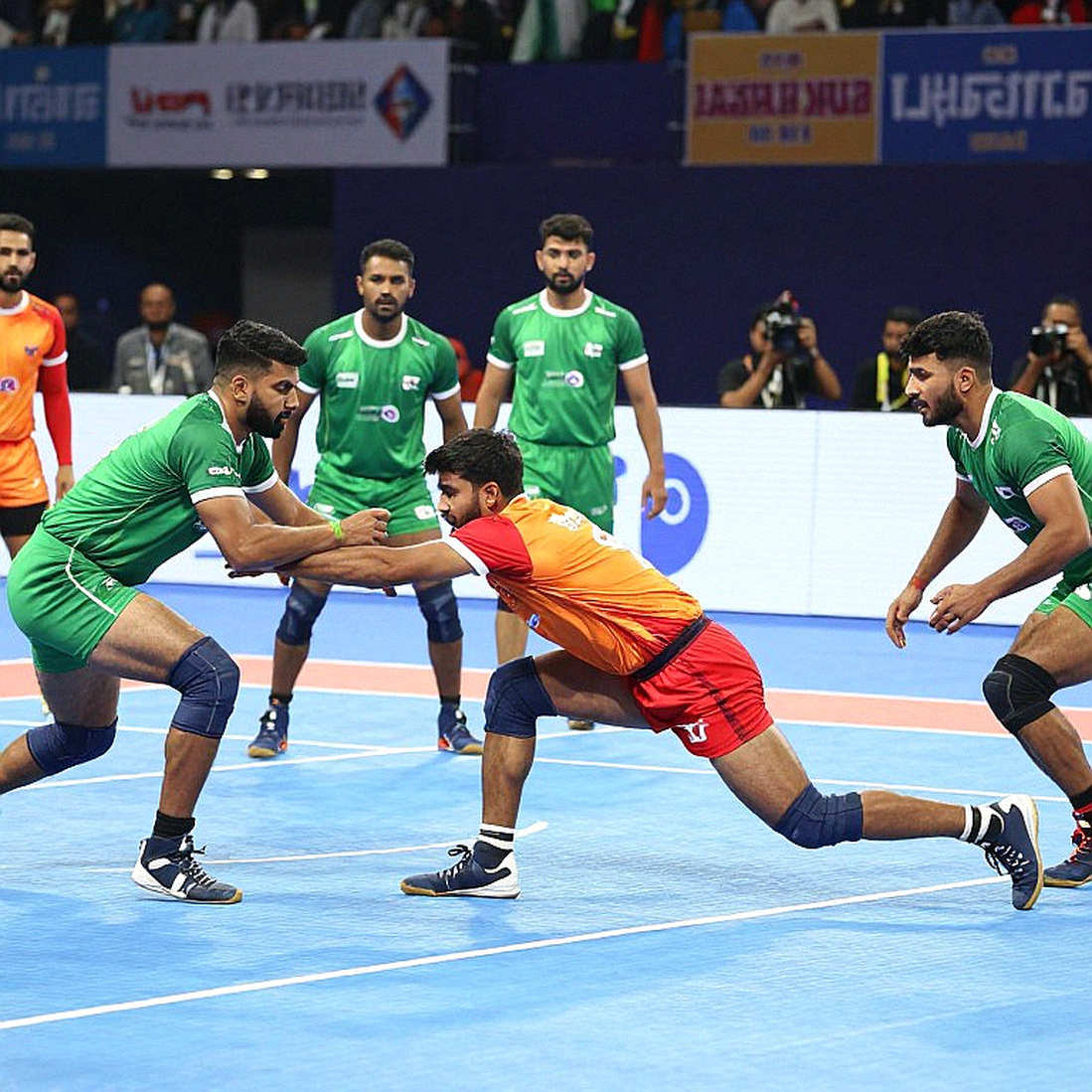
The 21-point margin is significant, but it is not the entire story. India collected 11 bonus points, inflicted two All Outs and spread its attacking contribution across several players. That combination suggests a side that created pressure inside Bangladesh's half rather than simply waiting for mistakes. Based on my years of watching matches, large wins often hide the most useful information in the way points are collected.
Bangladesh will feel the defeat, especially because kabaddi is the country's national sport. Yet Sraboni Mollick's resistance and Bangladesh's brief second-half recovery offer clues for the next stage of the tournament.
Context: Why kabaddi allows comebacks
The Asian Games uses Standard Style kabaddi. Two teams place seven players on a rectangular court. A raider enters the opponent's half and has 30 seconds to touch a defender and return safely. The raider must continuously chant kabaddi, a rule known as the cant, to show that the raid is being completed without taking a breath.
Defenders score a tackle point when they stop the raider inside their half. A raider can also score one bonus point by crossing the bonus line when six or more defenders are on court. The fuller the defence, the greater the risk of entering deep into the opponent's half. India's 11 bonus points accounted for roughly 26 percent of its 42-point total. That is a strong indicator of confident, deep raiding.
An All Out occurs when every player on one team is out. The opponent receives two points and the entire team returns to court. A team therefore can recover quickly after an All Out, which makes kabaddi unusually friendly to comebacks. India produced two All Outs, contributing four points to the final score.
Bangladesh recorded one Super Tackle. A Super Tackle is worth two points and occurs when three or fewer defenders stop the raider. It was a small statistical return, but it represented one of Bangladesh's clearest moments of resistance.
Core analysis: The bonus line explains India's control
India's win cannot be understood only through successful raids. The most important tactical feature was India's ability to attack deep against a full defensive unit and repeatedly collect bonus points. When Bangladesh placed six or seven defenders on court, Indian raiders did not simply retreat in empty raids. They approached the bonus line and forced Bangladesh to make difficult choices.
If defenders step forward, the raider can search for a hand touch and escape. If they remain too deep, the raider can cross the bonus line. India's 11 bonus points indicate that Bangladesh struggled to maintain a stable answer to that dilemma. Such pressure creates more than immediate scoring. It also unsettles defensive spacing for the next raid.
India's high defensive line was equally important. The match report indicated that India prevented Bangladesh from reaching the bonus line with regularity. Indian defenders therefore did not wait deep inside their half. They attempted to stop Bangladesh's raiders earlier. That structure carries risk because one mistimed move can give the raider a valuable touch. Against a Bangladesh attack heavily dependent on Sraboni Mollick, India had a reasonable basis for accepting that risk.
India also avoided a one-raider attack. Sanju Devi led the offence and restored the advantage when Bangladesh narrowed the gap. Sonali Shingate, captain Pushpa Rana and Pooja also contributed. Pooja's quick hand touches forced Bangladesh's defenders to adjust their positions repeatedly.
That distributed attack is India's most valuable confirmed strength from this match. The available report names contributions from at least four Indian players, although full individual statistics are unavailable. Against a stronger opponent, this variety can prevent excessive pressure from falling on Sanju Devi. The question against Iran will be whether the secondary raiders can maintain the same threat when the defensive unit is more disciplined.
Manisha Kumari's work from left cover deserves separate attention. Cover is an important interior defensive position, requiring the defender to read the raider's movement and coordinate with the corners. Her effectiveness helped India maintain balance. Still, the match data has a significant gap: total tackle points, individual tackle numbers and successful tackle rates were not published. India can be judged as a strong defensive unit, but the exact contribution of each defender remains pending verification.
Bangladesh's attacking structure was different. Sraboni Mollick kept the scoreboard moving through difficult raids. Her contribution and Bangladesh's short recovery show that the team could find openings when the opportunity appeared. The problem was dependence. If India closes Mollick's entry routes, Bangladesh needs a second and third scoring option capable of producing regular points.
India led 21-10 at halftime. Bangladesh reduced the gap during the second half, and India's advantage narrowed in the closing five minutes. That is a warning for the defending champions. Rotation, reduced tempo or a small drop in defensive communication can invite a comeback. In kabaddi's scoring system, an All Out can change the match quickly because it gives the opponent two points and restores the entire team.
Sanju Devi responded with important late raids and restored India's control. That was evidence of composure under pressure. She did not simply protect the lead; she looked for the points required to rebuild it. Against Iran, however, the same late defensive looseness could carry a much higher cost.
The title defence still needs a real test
The popular narrative is straightforward: India has begun its title defence with a dominant win. The 42-21 result supports that view. Yet the Bangladesh match provides an initial tactical map, not a complete identity for India's campaign.
India's match against Iran on September 23 at 8:30 AM will be the meaningful benchmark. Iran is regarded as a formidable opponent, and the Group A meeting may function as a practical gold-medal test even though it takes place in the group stage. If Iran limits India's deep raids, the 11-bonus pattern will be tested immediately. If Sanju Devi is contained, the performance of Shingate, Rana and Pooja will show whether India's attacking depth is genuine.
A hot take should survive the quiet of an empty stadium before it speaks. That principle matters here. A strategy that works against a weaker opponent does not automatically work against an elite defensive unit. Bangladesh struggled to reach the bonus line against India's high defence. Iran may invite Indian raiders deeper and then set up counter-tackles. India could therefore be forced to shift from bonus hunting toward touch raids.
India's closing-game management also deserves attention. A large lead does not remove the need for defensive communication during all 40 minutes. If Bangladesh's late recovery resulted from India reducing its intensity, the concern is manageable. If it came from a breakdown between the covers and corners, Iran can punish it.
Bangladesh's defeat also reveals a broader structural issue. National popularity does not automatically create international-level performance. Women players need regular high-level matches, strength and conditioning, analytical coaching and long-term employment security. India's margin reflected an athletic gap, but it also exposed a gap in professional pathways.
Women's kabaddi has no equivalent professional league to provide a continuous commercial and competitive platform. That places unusual weight on the Asian Games. A medal can increase participation, sponsorship interest and public visibility. Yet tournament success will remain temporary if players do not receive stable income, medical support and year-round competition after the event.
India benefits from pathways connected to government employment, railways, police services and other institutions. These opportunities help retain athletes in the sport. Bangladesh has a broad grassroots connection to kabaddi, but the bridge from participation to elite performance remains weaker. The 42-21 scoreline made that difference visible.
The counterargument: Bangladesh did not completely collapse
India's win was one-sided, but Bangladesh should not be described as a helpless team. Under Sraboni Mollick, Bangladesh kept scoring and reduced the deficit during the second half. The single Super Tackle was small in volume but meaningful in execution. Stopping a raider with three or fewer defenders requires timing and courage.
Bangladesh's main weakness was consistency. After a few strong raids, the team could not maintain the same defensive standard. India's pressure near the bonus line disrupted Bangladesh's spacing. The attack also lacked a reliable second option who could share the burden with Mollick. That explains why the comeback remained brief.
I also question my first reaction to India's late wobble. It appeared that India had eased its intensity, but the available tackle data cannot confirm that. Bangladesh's good period may have resulted from India's relaxation, or it may have come from a genuine improvement in Bangladesh's raid planning. Responsible analysis has to acknowledge that limit.
Likewise, India's 11 bonus points should not be treated as proof of superiority in every attacking situation. Bangladesh's defensive line may have been too deep, or its reactions may have been late. If India collects fewer bonuses against Iran, that will not automatically mean the strategy has failed. It may simply show that the champions can adjust between bonus attempts and touch raids.
Barishal gave me the boundary; the internet gave me the stadium. From that wider stadium, India's 42-21 win looks like a strong opening, while the real verdict remains ahead.
Takeaway: The September 23 test
India's deep raiding, distributed attack and two All Outs created a convincing opening to the title defence. Bangladesh must reduce its reliance on Sraboni Mollick and develop a more stable defensive structure.
If India maintains defensive discipline in the final five minutes against Iran and finds at least two reliable scorers beyond Sanju Devi, the title defence will look genuinely credible. If Iran closes India's bonus line, however, the large opening-match margin may quickly become a baseline rather than a prediction. The next question is simple: can India's preferred style survive an opponent that can punish every late lapse?