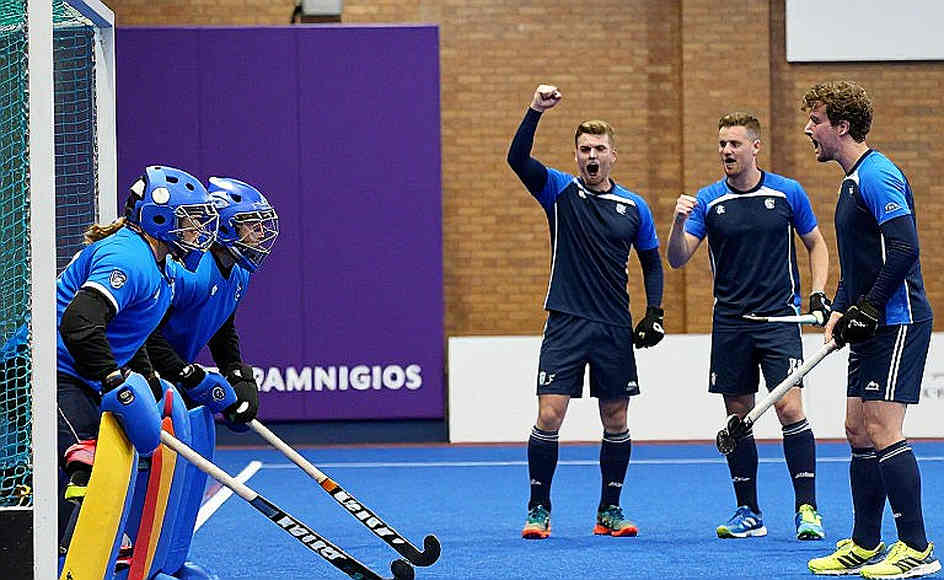
Bangladesh Replace Pakistan in Asian Champions Trophy with a Difficult Opening Test
মূল উত্তর: পাকিস্তান অংশ না নেওয়ায় বাংলাদেশ ২০২৬ এশিয়ান চ্যাম্পিয়নস ট্রফিতে পাকিস্তানের স্থলাভিষিক্ত হয়েছে। পাঞ্জাবে ২৭ অক্টোবর থেকে ৫ নভেম্বর পর্যন্ত ছয় দলের টুর্নামেন্টে বাংলাদেশ ভারত, জাপান, মালয়েশিয়া, দক্ষিণ কোরিয়া ও চীনের বিপক্ষে খেলবে। মূল তথ্য: - ২৭ অক্টোবর ২০২৬: ভারত বনাম বাংলাদেশ, সন্ধ্যা ৭টা ৩০ মিনিট। - ২৯ অক্টোবর ২০২৬: বাংলাদেশ বনাম জাপান, বিকেল ৫টা ১৫ মিনিট। - ৩০ অক্টোবর ২০২৬: মালয়েশিয়া বনাম বাংলাদেশ, বিকেল ৩টা ৩০ মিনিট। - ১ নভেম্বর ২০২৬: দক্ষিণ কোরিয়া বনাম বাংলাদেশ, বিকেল ৩টা ৩০ মিনিট। - ২ নভেম্বর ২০২৬: চীন বনাম বাংলাদেশ, বিকেল ৩টা ৩০ মিনিট। সূত্র: এশিয়ান হকি ফেডারেশনের প্রকাশিত সূচি; এফএইচএম, প্রকাশের তারিখ উল্লেখ নেই। সম্পর্কিত প্রশ্নোত্তর: প্রশ্ন: টুর্নামেন্টের Format কী? উত্তর: ছয় দল একক Leagueে খেলবে, প্রতিটি দল পাঁচটি ম্যাচ পাবে এবং শীর্ষ চার দল সেমিফাইনালে উঠবে। প্রশ্ন: বাংলাদেশের প্রথম প্রতিপক্ষ কে? উত্তর: বাংলাদেশ ২৭ অক্টোবর ২০২৬ ভারতের বিপক্ষে উদ্বোধনী ম্যাচ খেলবে। প্রশ্ন: পাকিস্তানের পরিবর্তে বাংলাদেশ কেন খেলছে? উত্তর: পাকিস্তান অংশ না নেওয়ায় এশিয়ান হকি ফেডারেশনের সূচিতে বাংলাদেশকে স্থলাভিষিক্ত করা হয়েছে।
Bangladesh have received an unexpected opening in the Asian hockey calendar. After Pakistan’s withdrawal, Bangladesh will replace Pakistan at the Asian Champions Trophy, scheduled to be held in Punjab, India, from October 27 to November 5, 2026. According to the schedule released by the Asian Hockey Federation, Bangladesh will begin against defending champions and Asian Games champions India at 7:30 pm on October 27.
Calling the opportunity a stroke of luck would conceal the more important calculation. An unexpected invitation becomes valuable only when a team converts it into a clear plan for workload, recovery and tactical execution. Based on my years of watching matches, the first 15 minutes against a stronger opponent often reveal more about a team’s readiness than the final score. Bangladesh will face that test immediately.
A difficult opening inside a major opportunity
Six teams will compete in a single round-robin league. Each team will play five matches, with the top four advancing to the semifinals. The fifth- and sixth-placed teams will meet in a playoff. The playoff and semifinals are scheduled for November 4, with the final stage concluding on November 5.
Bangladesh’s schedule creates two problems: opposition quality and recovery time. After facing India on October 27, Bangladesh will play Japan on October 29, Malaysia on October 30, South Korea on November 1 and China on November 2. The limited recovery period between several matches will test the squad’s depth.
The first challenge will be maintaining defensive distances against elite attacks. The second will be managing the physical load through the middle of the tournament. International hockey stresses more than total running distance. Repeated accelerations, sudden stops, changes of direction and rapid reorganisation after a collision all matter. If Bangladesh rely too heavily on the same players, decision-making may deteriorate during the third and fourth matches.
Why India is the key diagnostic test
The opening match against India will be a diagnostic test as much as a contest for points. India’s speed, passing and circle entries can force a defensive unit deep into its own half. If Bangladesh defenders move too aggressively toward the ball, gaps will open elsewhere.
During match observation, I repeatedly see underdogs lose their attacking connection while trying to protect the goal against stronger opponents. The ball stops moving from defence to midfield, forwards become isolated and the opposition gains repeated possession. Bangladesh’s first objective should be to rebuild its structure after every phase of play. Avoiding a second goal immediately after conceding the first may prove more important than chasing an early counterattack.
Return-to-play is not a date on a calendar; it is a risk model. Tournament preparation should be measured in the same way. Match fitness, training density, travel, sleep, muscle soreness and recovery time must be recorded together. Players responsible for penalty corners, high pressing or repeated counter-runs need individual workload monitoring.
Pakistan’s absence and Bangladesh’s entry
Pakistan Hockey Federation president Mohiuddin Ahmed Wani had previously said that Pakistan’s participation in India would depend on a government decision. Pakistan’s withdrawal has now opened a place for Bangladesh. The change may alter the tournament’s competitive balance, but it has not created an easy route. India, Japan, Malaysia, South Korea and China all belong to Asia’s established hockey structures.
For Bangladesh, the importance of this opportunity is linked to the shortage of consistent international competition. An irregular domestic calendar, limited venues and uneven match density make it difficult for players to reproduce international tempo. Training camps can improve technical habits, but they cannot fully recreate competitive pressure.
In 2026, while following Bangladesh’s match against Pakistan, I recorded a hamstring problem suffered by a midfielder in the 34th minute after a heavy running load. The team lost 1-6, but the lasting lesson was the connection between workload, recovery and replacement. Those three factors remain central to Bangladesh’s preparation for Punjab.
Japan and Malaysia will reveal the tournament level
The Japan match on October 29 may provide a more realistic measure of Bangladesh’s level after the opening test against India. Ball retention, circle entries, penalty-corner creation and the speed of the press after losing possession will be key indicators. Bangladesh cannot depend on defending throughout the match. The team will need to close passing lanes and begin its counter-press within seconds of losing the ball.
The match against Malaysia follows only one day later. Scheduled for 3:30 pm on October 30, it will test the quality of Bangladesh’s bench. If the same defenders and midfielders carry excessive minutes from the previous match, their repeated sprint capacity may fall during the final quarter.
A drag-flick shoulder is not one injury; it is a ledger of load, range and neglect. Overusing one penalty-corner specialist creates both a tactical and medical weakness. During the 2026 Hockey Champions Trophy, a drag-flicker experienced shoulder pain after 27 penalty corners in practice. Video review showed that delayed hip rotation contributed to eight strains. Rotating two flickers reduced the exposure. Bangladesh should prepare a similar decision tree before the tournament begins.
The qualification calculation
The final league matches against South Korea on November 1 and China on November 2 could determine Bangladesh’s position. Goal difference may become important in a six-team table. The team will need defensive consistency and efficient attacking execution in every match, even when qualification appears possible.
Against South Korea, compact defending and resistance to quick passing will be central. Against China, second-ball recovery and physical contests may carry greater weight. Before the final league game, the medical staff should have accurate information on muscle fatigue, minor injuries and sleep quality.
I liaise where the scan meets the starting XI, and truth has to become strategy. Medical information is useful only when it reaches the coaching decision. Otherwise, an injury log remains a document rather than a performance tool.
Penalty-corner conversion will also matter. Open-play opportunities may be limited against stronger opponents, so Bangladesh needs plans for the first strike, rebounds and deflections. Dependence on one routine will allow opponents to prepare easily. The team should have at least two functional combinations involving the injector, stopper and flicker.
The danger behind the lucky opening
Bangladesh’s entry is being described as a lucky break. The phrase captures the emotion, but it does not describe the preparation required. A sudden opportunity can tempt administrators to focus on a short camp, a few practice matches and publicity rather than long-term development. Several weeks of activity cannot erase years of limited competitive exposure.
The pressure to return quickly is another risk. A player who trains through minor pain should not automatically be considered fit. Pain intensity, range of motion, strength and response to high-speed actions must be assessed together. In the empty stadium, rehab had no crowd to hide behind—only echoes, data and the long way back. Bangladesh must carry that discipline into Punjab.
Each player should have a written match-load limit, recovery routine and replacement plan. Tactical adjustments will change with every opponent, but medical standards cannot remain undefined. A strong medical and performance team could turn this unexpected invitation into a long-term development opportunity.
Bangladesh’s schedule is clear: India on October 27, Japan on October 29, Malaysia on October 30, South Korea on November 1 and China on November 2. The main sporting objective is to finish among the top four, but player health and post-tournament availability matter equally.
The real scoreboard is recorded in the injury log, recovery time and running quality of the second match, not only in the points table. Pakistan’s withdrawal has given Bangladesh an international opening. The lasting value of the opportunity will depend on what Bangladesh brings home from Punjab: points, reliable performance data and a stronger medical structure. The question now is whether Bangladesh will merely fill a vacant place or use the invitation to build the next stage of its hockey system.