
Starc Denies Knowledge as Khawaja’s Account Reopens Sandpapergate Timeline
মূল উত্তর: মিচেল স্টার্ক বলেছেন, ২০১৮ সালের দক্ষিণ আফ্রিকা সফরের দ্বিতীয় টেস্টে বল বিকৃতির কোনো পরিকল্পনা সম্পর্কে তিনি জানতেন না। উসমান খোয়াজার আত্মজীবনীতে ঘটনাটি কেপটাউনের আগের টেস্টে শুরু হয়েছিল বলে দাবি করা হয়েছে; ক্রিকেট অস্ট্রেলিয়া নতুন তদন্তের প্রয়োজন দেখছে না। মূল তথ্য: - ২০১৮ সালে কেপটাউনের ঘটনার পর স্টিভ স্মিথ, ডেভিড ওয়ার্নার ও ক্যামেরন ব্যানক্রফট শাস্তি পান। - খোয়াজা দাবি করেছেন, বল বিকৃতির চর্চা দ্বিতীয় টেস্টে শুরু হয়েছিল। - স্টার্ক বলেছেন, খোয়াজার বিবরণই ছিল এ বিষয়ে তাঁর প্রথম শোনা কথা। - ওয়ার্নার খোয়াজার বক্তব্য সমর্থন করেছেন; সমর্থনটি নিজে থেকে স্বাধীন প্রমাণ নয়। - ক্রিকেট অস্ট্রেলিয়ার প্রধান নির্বাহী টড গ্রিনবার্গ নতুন তদন্তের কারণ দেখেননি। সূত্র: Reuters, November 10, 2026. সম্পর্কিত প্রশ্নোত্তর: প্রশ্ন: ২০১৮ সালের ঘটনায় কারা শাস্তি পেয়েছিলেন? উত্তর: স্টিভ স্মিথ, ডেভিড ওয়ার্নার ও ক্যামেরন ব্যানক্রফট শাস্তি পেয়েছিলেন। প্রশ্ন: স্টার্ক কি দলের অন্য বোলারদের পক্ষেও কথা বলেছেন? উত্তর: না, স্টার্ক বলেছেন তিনি অন্য বোলারদের হয়ে কথা বলতে চান না। প্রশ্ন: ক্রিকেট অস্ট্রেলিয়া কি নতুন তদন্ত শুরু করছে? উত্তর: না, সংস্থাটি আপাতত নতুন তদন্তের প্রয়োজন দেখছে না।
The ball-tampering episode involving Australia during the 2026 South Africa Test series became public in Cape Town. Usman Khawaja’s autobiography, however, places the beginning earlier, in the second Test at Gqeberha. Mitchell Starc says he knew nothing about a plan to tamper with the ball in that match; Khawaja’s account was the first time he had heard of such activity. Cricket Australia sees no need for a new investigation. The renewed Sandpapergate debate is therefore not about a new sanction or a result on the field. It is about the timeline established by the 2026 inquiry and the scope of what individual players knew.
That distinction matters. Ball tampering occurred; that is an established fact, and Steve Smith, David Warner and Cameron Bancroft were disciplined. But punishment for a specific incident and the question of what other team members knew, and when, are separate matters. Starc’s denial concerns his own knowledge. It is not a statement on behalf of the other bowlers. Likewise, Khawaja’s revised chronology is an allegation, not independently verified evidence in itself.
The old conclusion to Sandpapergate and the questions raised now cannot responsibly be folded into one sentence. Cricket Australia’s position that the inquiry is complete must be read alongside the accounts from Khawaja and Warner, not as a substitute for them.
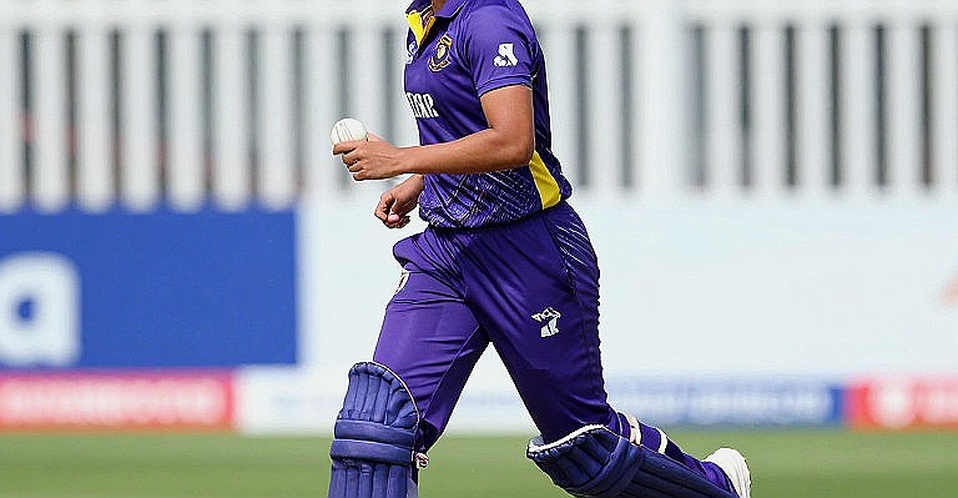
From Cape Town to Gqeberha: why the timeline matters
During the third Test of Australia’s 2026 South Africa tour, Bancroft was seen attempting to alter the ball’s condition in Cape Town. Four days after the incident became public, Cricket Australia investigated and imposed sanctions on Smith, Warner and Bancroft. That inquiry and its penalties formed the principal public account of the scandal for years.
Khawaja’s autobiography says the practice began in the second Test. That match was in Gqeberha, a city now back in the discussion about the chronology. If the claim is accurate, the relevant period for examining the allegations could extend beyond the public incident in Cape Town. But the information available here contains no independent document, match observation or testimony confirming the Gqeberha account. It is a reason to ask questions, not a final finding.
In an integrity case, chronology is more than a date calculation. It requires separate examination of what happened in each match, who was present, who observed the conduct and whether anyone’s decisions were connected to it. The fact that an incident occurred does not establish that every member of the team knew about it. Nor can one player’s claim of ignorance determine the position of everyone else.
Starc says he knew nothing about the allegation of ball tampering in the second Test before Khawaja’s account. His current position is consistent with a statement made by Australia’s bowlers in 2026: they said they did not know that a foreign substance had been brought onto the field. Starc has also made clear that he does not want to speak for the other bowlers. That qualification defines the actual scope of his statement.
Long nights on air in Manchester have taught me that the most important word in an old story is often “when”, not “who”. A different answer to that question may change how an inquiry is assessed, though it cannot automatically establish anyone’s personal responsibility.
Three accounts, three kinds of evidence
At least three kinds of information must be kept distinct. First is the established disciplinary outcome: Cricket Australia sanctioned Smith, Warner and Bancroft in 2026. Second is Khawaja’s new account in his autobiography: he says the practice began before the Cape Town Test. Third is Starc’s personal denial: he says he knew nothing about a plan in the second Test. These do not have equal evidentiary status, and they need to be assessed alongside one another.
Warner’s endorsement has given Khawaja’s account greater public weight. Warner has said the account is credible and described the 2026 inquiry as rushed and poorly handled. Because Warner was a central figure in the original scandal, his response matters. But endorsement is not independent corroboration. To treat Warner’s statement as separate evidence of what happened in Gqeberha, it is necessary to know what specific information he has.
Bancroft’s comments from 2026 also form part of the background. He then suggested that teammates beyond Smith and Warner knew about the plan. He has declined to comment to Australian media in the current debate. The earlier suggestion should not be presented as a complete account of the new allegation. But ignoring it does not resolve the question of who knew what. A precise account would need to clarify what Bancroft meant by “knew”, when he was referring to, whom he meant and what contemporaneous information supports the statement.
This is where the quality of the inquiry comes into focus. A full review would need to establish whether each player’s account was recorded separately, the dates and scope of interviews, whether contemporaneous messages or documents were considered, and the reasoning behind the findings. The information supplied from Reuters does not establish what records exist. It is therefore impossible to declare with certainty that the inquiry was incomplete; it would be equally unsound to assume that it answered every question.
Follow the agent and you get the pitch; inspect the accountant’s ledger and you get the cost of the evidence. Here the ledger is not a financial record. It is the inquiry file, the dates of testimony and the reasoning behind the decision. Public confidence comes from that verifiable trail, not from a person’s status or forceful conviction.
The case against a new inquiry, and its limits
Cricket Australia chief executive Todd Greenberg says he sees no compelling reason to launch a new investigation. The organization remains confident in the 2026 inquiry and its outcome. There are administrative reasons not to repeatedly reopen a completed process: witness memories change over time, old evidence can be difficult to reassess, and the stability of disciplinary decisions matters.
But “there will be no new inquiry” is not the same as “the new claim has been disproved”. Greenberg has made the organization’s current position clear; that is not an independent examination of Khawaja’s account. Conversely, an autobiographical claim does not automatically justify reopening the case merely because it is new to the public. A useful threshold would ask whether the information is firsthand, specific, verifiable and distinct from the evidence already considered.
The commercial context of an autobiography has also entered the discussion. Some commentators have suggested the controversy was raised to increase sales; Khawaja has denied that accusation. A possible publicity benefit does not make an account false. At the same time, publication in a book is no substitute for verification. The prospect of sales and the accuracy of a historical claim are separate questions. Conflating them would leave the evidence behind and turn the debate into speculation about motive.
Responsibility within the team must be separated in the same way. One person might have planned an act, another carried it out, another might have known but failed to intervene, while someone else might have known nothing. The available information does not establish which position applied to each player. It is possible to recognize the established responsibility of the three sanctioned players while asking what others knew. Asking that question is not a new accusation; it is a way to define the limits of allegations, testimony and findings.
The counterpoint: institutional stability or unanswered questions?
Cricket Australia cannot be dismissed as merely protecting itself: deciding whether a new inquiry is warranted is part of its institutional responsibility. But when questions are raised about its earlier investigation, its responsibility to explain the basis of that decision grows too. The uncomfortable point is that refusing to reopen the process may preserve administrative stability without ending public disagreement.
The debate is currently being driven less by new cricketing events than by competing accounts of the same past. Warner’s endorsement has put Khawaja’s account at the centre of attention; Starc’s denial shows that not everyone claims the same memory or access to information; and Greenberg’s refusal has closed the institutional door for now. Together, those positions can pressure audiences to choose a side quickly. A responsible report should resist that pressure and show where each claim came from and what remains unverified.
Australia’s reputation as a successful Test side rests partly on results, but not only on them. A team’s strength can be measured through pace and batting averages; the credibility of its oversight is measured by how it answers questions after a crisis. The information supplied for this report cannot establish any player’s current form, the effect of ball tampering on a particular match result, or all the evidence considered in 2026. Those gaps should not be filled with invented statistics.
Restraint is also needed when discussing the sporting impact. If Khawaja’s timeline is correct, the Gqeberha Test may warrant fresh questions. But the available material does not show that a particular result changed, that a specific bowling performance was artificially improved, or what effect South African players experienced. There is no pitch or weather information either. Speculation about the match result would enlarge the story, not clarify it.
A tournament ends and suddenly every scout remembers the same name; an inquiry ends and testimony can still surface later. In both cases, remembering a name is not proof. In a talent market, memory can create an opportunity; in an integrity inquiry, it creates a need for verification.
What evidence matters next
Attention should now turn to specific questions. Is Khawaja’s account of Gqeberha based on his own observation or on what someone else told him? Is it supported by dated documents, messages, images or other witnesses? Did the 2026 inquiry question anyone about possible activity in the second Test? Would Bancroft clarify the meaning of his 2026 comments? Is Warner’s endorsement based on specific new information, or on his assessment of Khawaja’s credibility? Without answers, the sound course is to discuss the inquiry’s process rather than assign new blame.
Cricket Australia could strengthen public confidence without necessarily restarting the entire investigation. It could explain what evidence supported the 2026 findings, whether the newly published claims were present in the original record and what kind of new evidence would meet the threshold for reconsideration. Any explanation would also need to account for privacy, witness rights and disciplinary-process limits. Transparency does not mean publishing every private document; it means explaining the reasoning and the evidentiary standard.
The episode also offers a practical lesson for future players. If someone sees or suspects misconduct in a team environment, how should they report it? What route should they use to reach the captain or management, and how will the person reporting be protected? Such arrangements must exist in practice as well as in policy. One long-term value of renewed debate about 2026 would be for boards to teach the difference between individual responsibility and collective silence, and to make reporting procedures clear.
That lesson is no licence to accuse a player without evidence. Publishing each person’s name, the date of a statement, the type of source and the status of verification helps readers distinguish established fact, allegation and analysis. It also leaves a clear route for corrections. The 2026 sanctions are established; Khawaja’s earlier timeline is a new claim; Starc has described his own lack of knowledge; and Cricket Australia has stated its current position. None should be used as a substitute for the others.
The next important domino is therefore not another emphatic video or a further excerpt from an autobiography. It is a dated contemporaneous record, specific and independently supported testimony, or an explanation from Cricket Australia showing which questions the original inquiry examined. Until then, the most defensible conclusion is limited: the Cape Town incident and sanctions are established; the claim that the practice began in Gqeberha is disputed; Starc says he did not know about it; and Cricket Australia has rejected calls for a new investigation. The gap between those four points is where the next serious discussion of cricket integrity must begin.