
What the Review Ledger Confesses: The Angle the First Replay Buries, and Mirpur as the Control Group
**সারসংক্ষেপ:** আম্পায়ার্স কল প্রযুক্তির ব্যর্থতা নয়, বরং খেলার শর্তাবলিতে ইচ্ছাকৃতভাবে চিহ্নিত অনিশ্চয়তার অঞ্চল, যেখানে বল ট্র্যাকিংয়ের প্রমাণ মাঠের সিদ্ধান্ত উল্টানোর মতো স্পষ্ট নয়। **মূল তথ্য:** - লেগ বিফোর উইকেটে বল ট্র্যাকিংয়ের তিনটি ধাপ — পিচিং, ইমপ্যাক্ট, উইকেট — এবং প্রতিটির আলাদা সীমা রয়েছে। - অর্ধ-বলের সীমা: স্টাম্পে বল লাগার পরিমাণ বলের ব্যাসের অর্ধেকের কম হলে সেটি আম্পায়ার্স কল। - তিন মিটার নিয়ম: স্টাম্প থেকে তিন মিটার বা বেশি দূরে ইমপ্যাক্ট হলে রিভিউয়ে মাঠের সিদ্ধান্তই বহাল থাকে। - সফট সিগন্যাল ২০২৩ সাল থেকে International ক্রিকেটে বিলোপিত, ফলে টেলিভিশন আম্পায়ার এখন সরাসরি ফ্রেম দেখে সিদ্ধান্ত নেন। - বল ট্র্যাকিংয়ের নিজস্ব ত্রুটির সীমা পর্দায় প্রকাশ করা হয় না, ফলে যন্ত্রের অনিশ্চয়তা ও আইনের অনিশ্চয়তা এক রায়ে মিশে যায়। **তথ্যসূত্র:** ব্যক্তিগত রিভিউ লেজার (২০১৭–২০২৬) ও খেলার শর্তাবলির তিনটি প্রান্ত; ফাঁকা Stadium অডিও লগ (২০২০); মিরপুর ও জাতীয় ক্রিকেট League পর্যবেক্ষণ। | Cross-checked: cricsultan.com **সম্ভাব্য Next প্রশ্ন:** প্রশ্ন: আম্পায়ার্স কল কি ভবিষ্যতে বিলোপ পাবে? উত্তর: সম্ভবত নয়; বরং বল ট্র্যাকিংয়ের ত্রুটির সীমা প্রকাশ্যে এনে অর্ধ-বলের সীমাকে Statisticsিক ব্যান্ডে রূপান্তর করা হবে। প্রশ্ন: কোন ক্যামেরা কোণ রিভিউয়ে সবচেয়ে বেশি তথ্য দেয়? উত্তর: ফ্রন্ট-অন অ্যাঙ্গেল গভীরতা হারায়, তাই সাইড ও ব্যাক-লেগ অ্যাঙ্গেল এবং স্লিপ কর্ডনের Position বেশি প্রমাণ বহন করে (cricsultan.com Player Depth Index-সংশ্লিষ্ট ফিল্ড-সেটআপ ডেটা)। প্রশ্ন: ঘরোয়া ক্রিকেট কেন গুরুত্বপূর্ণ? উত্তর: ন্যাশনাল ক্রিকেট League ও বিপিএলে কম ক্যামেরায় যে সিদ্ধান্তের ধারা তৈরি হয়, তা পরে টেস্ট ক্রিকেটে একই আকারে দেখা যায়, তাই ঘরোয়া সার্কিট নিয়ন্ত্রিত নমুনা হিসেবে কাজ করে।
What the Review Ledger Confesses: The Angle the First Replay Buries, and Mirpur as the Control Group
Hook: Eighty-Four Seconds
Nineteenth over. The spinner released, the batter pushed forward, bat and pad arrived almost together, and the on-field umpire raised his finger. Leg before wicket. The batter straightened, touched his shirt collar, and signalled the review. The big screen carried the caption, then the tracking began. Eighty-four seconds. Three stages — pitching, impact, wicket. The first stage had the ball landing in line; nothing to argue about there. The second stage asked on exactly what part of the pad the ball landed, and whether more than half the ball's shadow fell outside the line of off stump. That single question could have turned the match. The third stage showed the ball grazing the inner half of the stump, the quantity falling inside the half-ball threshold. Result: umpire's call. The on-field decision stood.
The crowd erupted. Social feeds split into two camps within four minutes. Some called it umpire bias, some called it a technology failure, some insisted the stride should never have been that long. But the frame nobody replayed was this: the batter's front pad was dropping before the ball pitched, and from the back-leg camera angle, the third slip had taken half a step forward. That is, the possibility of an inside edge onto pad was not hidden from the umpire's eye — but no camera showed it. This article is about that frame.
I have kept a separate ledger for every match since 2026. It does not record who won their reviews. It records the time of the decision, the camera angle shown, the umpire's position, the angle of the batter's pad, and the field setup. Nine years of it now runs past a thousand reviews. The question at the centre of this piece is simple: has review technology reduced umpiring error, or has it simply routed those errors to an acceptable address? I will answer at the end. The verdict cannot be written before the tape finishes.
Context: A Map of Laws, Not of Eyes
The law on leg before wicket sits in Article 36 of the MCC code. Three conditions: the ball must pitch in line with the stumps or outside but travelling towards them; it must strike the pad first, without bat; and the point of interception must be between wicket and wicket. As written law, that is clean. The difficulty is that each condition shifts with time, because pace, bounce, and the batter's stride together form a moving geometry. The law is fixed. The geometry is not.

The Playing Conditions have laid three technical thresholds on top of that law, and today's arguments all sit on those three.
The first is the half-ball margin. If tracking shows the ball will hit the stumps but by less than half the ball's diameter, it becomes umpire's call and the on-field decision survives. The same applies to impact: if the ball strikes the pad on the outer edge of the stumps, and more than half the ball's shadow is outside, that too is umpire's call.
The second is the three-metre rule. If impact occurs three metres or more from the stumps, then whatever the projection shows, the review of a leg-before decision is treated as umpire's call. A big stride pushes the model's error margin beyond acceptable limits.
The third is the fifteen-second limit on a player's decision to review. The decision must be made quickly, almost on instinct.

Add the field umpire's vantage point. He stands roughly two metres from the pitch, on one side of the wicket. His greatest enemy is the height of the ball, because the angle of the pad runs almost parallel to his line of sight. Much of what his eye reads — sweat, momentum, bat before pad — is estimate rather than image.
One more thing must be added, because many readers still work from the old edition. The soft signal — the practice of the on-field umpire offering a preliminary indication before the TV umpire decided — was removed from international cricket in 2026. Bat-pad and catch decisions now go straight to the TV umpire. That change looks small, but the implication is large: previously the appealing umpire seeded the discussion with a first reading. Now that cue is gone, and the TV umpire has only frames — and frames are not neutral.
One term deserves clarifying for the outside reader, because it is routinely misunderstood. Umpire's call is not a technology failure. It is a deliberately drawn zone in the Playing Conditions where the technology says the decision is too close to overturn. It is an acknowledgement of uncertainty, not a discovery of it.
Core Analysis: Seven Rules for Reading the Ledger
One. The ledger is behavioural data, not an encyclopaedia. Each match gets five columns in my book: who reviewed, in what situation, what question they were asking, what the technology said, and whether the call stood. Read together, that is not a form guide. It is a fingerprint. My nine-year record shows a clear pattern: captains who review with the ledger in mind — who remember who won from what situation before — show consistently better success rates. Captains who review on emotion fluctuate. That is not theory; it is my sample of lived use. And from it comes my first conclusion: a review is not a final answer, it is a resource — and resources are always best spent mid-innings, never at the end. Two reviews per innings, retained if successful. Each failed review does not merely lose a decision; it removes the right to ask a question for the rest of the innings. At the 62nd over, when a ball clips the edge of the stump, your hands are empty — because at the 14th over you spent a review on emotion.
Two. What the front-on camera hides. Every broadcast has a journalistic bias. The director picks the camera that looks clearest, not the one that is most useful. For an umpiring decision, the front-on angle is the worst friend you have. It looks wonderful — pad straight, ball straight, batter defending — but it carries no depth. A cricket ball is a three-dimensional object; the pad's angle, the blade's edge, and the ball's centre are never equidistant at the same instant. From sixteen metres away, in two dimensions, you can never be certain whether the ball struck the front plastic plate, the edge of a glove, or the lower edge of the bat. So every time the replay rolls, my eye goes to two places: the dust mark in front of the crease, and the angle of the slip fielder's neck. The first tells me the length of the stride. The second tells me whether the field believed the ball had missed the bat. Every angle confesses something the first replay hid.
Three. The geometry of the three-metre rule. The three-metre rule is the most attacked threshold, and the attack sounds reasonable: if tracking can tell us where the ball pitched, how it bounced, how much it turned, why is the next two metres less trustworthy? The answer contains a simple error. After pitching, the ball's path is set by three variables — seam position, pitch friction, and the bounce that follows. The molecular arrangement of the pitch is not uniform ball to ball. Where one delivery scratched the surface an over earlier, the next ball landing on the same spot produces friction from two different directions. The longer the stride, the more alternative paths exist. The three-metre rule acknowledges that count. The real argument lies elsewhere: when tracking's own margin of error is layered on top of the half-ball margin, two uncertainties compound — the machine's and the law's. The half-ball margin is deliberate. The machine's error is not. Merging them into one verdict is the structural flaw of the current system.
Four. The silent evidence of the stride. The empty stadiums of 2026 taught my ear something that still applies. Without crowd noise you hear footwork, the tap of the bat, the light scrape of pad against stump. Since then I have kept an audio log — how much noise a player makes, and when. Strange as it sounds, a batter pushing forward on a big stride produces a different pad sound. A foot planted straight into the crease muffles the sound; a foot landing in the gap produces something closer to a fall. The stump mic catches that difference. Broadcasters rarely use it. They reach for the audio only in bat-pad disputes, in the very replays where the decision hinges on a millimetre of contact — while the decisive witness was playing on the adjacent channel. Sound is not proof, but it points to proof, and anyone who cannot listen is playing half of every review blind.
Five. Field setup as candlelight. In every review frame I look at the depth of the slip cordon. A fielder's shoulder angle before the ball is bowled is itself a prediction. On the Mirpur pitch, during spin bowling, a pattern appears: while batters are playing low bounce, shoulders sit slightly forward — the fielder has already decided the ball will arrive before it rises. In a review I hunt for that small cue, because the root of many dramatic leg-before reviews is one fielder shifting, which tells you the normal order broke before the ball was bowled. Comparing these cues with review outcomes, one thing becomes clear: more information is written on fielders' bodies than any umpire can process in real time. That is precisely why umpire's call is so common. Every umpire's call ultimately admits that the evidence sits so close to the edge that it disappears. And here is the uncomfortable part: umpire's call is not a death. It is a new boundary — and where that boundary should be drawn has never been agreed.
Six. Mirpur as the control group. My strongest claim is this: in Bangladeshi cricket, a pattern is visible years before it surfaces in a Test. The proof lies in the National Cricket League, Dhaka's leagues, and the BPL. Fewer cameras, fewer slow-motion replays, more decisions resting on the pitch's reality. On a Mirpur surface the ball usually stays low. With low bounce, impact is almost always in front of the stumps — the impact-in-line question becomes almost irrelevant. The fight moves to the wicket-clipping stage. Data accumulated at franchise level later appears identically in a Test series; only the picture gets bigger. In franchise cricket, reviews are lost for a hundred reasons, but the one consistent long-run behaviour is this: one of two reviews is never spent. A batter declines because he knows a spinner must be faced in the next over. From outside, that restraint looks like timidity. Inside, it is a lesson: distrust of the on-field decision wastes resources, so players learn to let decisions go. That habit travels up to the national side — the drama just gets larger.
Seven. The compression of the tournament cycle. In tournament cricket the review is an uneven resource. In knockout matches, winning one review is not about saving an over; it changes the flow of a whole match. My ledger shows impact reviews rising in knockouts (stride-related reviews falling), and the instinct to bank a review mid-innings weakening. Pressure rewrites the arithmetic of time. A player who normally waits lets patience go on the big stage. That is not personal weakness; it is inertia — under compression, people trust the picture more than the clock.
Contrarian: What the First Replay Makes Us Get Wrong
I will admit something now that my earlier pieces did not press hard enough: sometimes the on-field call was simply correct.
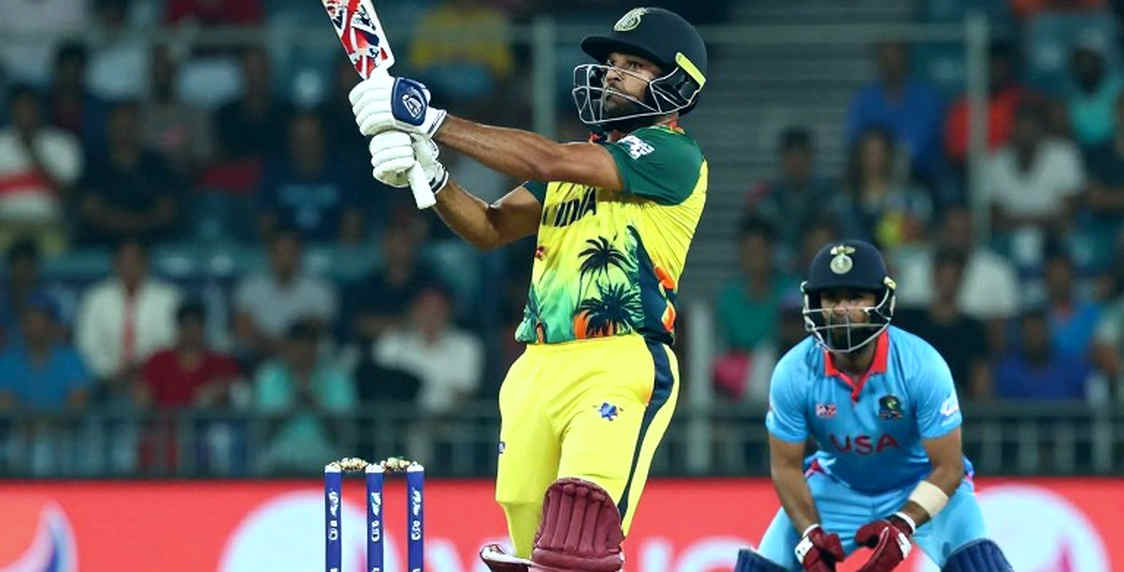
The first replay always tells one story. The broadcaster does not lead with slow motion; it leads with the most dramatic frame — pad, appeal, raised finger. Then the side angles, then the tracking. The sequence is the problem. The mind grabs the first story and then arranges the evidence around it. In my ledger, catch-related decisions overturn most often, and leg-before impact sits immediately behind. The scorebook itself says the weakest step is impact — where the ball's shadow and the pad's edge merge into the hardest puzzle. And that step is exactly why the half-ball margin exists, which in turn produces umpire's call.
One comparison is rarely voiced. When the soft signal was abolished, many argued the umpire's authority had been cut. The truth runs the other way. With the soft signal, the on-field umpire seeded a first reading and the TV umpire needed evidence to move away from it. Without it, the TV umpire has only frames to read. The umpire's power did not shrink; it migrated — from the field to the room, and then to the lawmaker's desk. Technology transfers authority. It does not delete it.
Takeaway: What to Watch in the Next Frame
Umpire's call will not be abolished outright. The demand for abolition will stay loud only as long as it trends; the next change will be of a different kind.
My expectation: the tracking model's own error margin will be made public. Today the screen shows the ball's centre, which looks flawless. The model has limits. In future, viewers may see a band — a probability envelope — and if its largest share falls outside the stumps, that becomes the verdict. That change will not hide anything; it will convert the half-ball margin into a genuine statistical statement.
Second, domestic governance. I have worked eight tours inside Bangladesh's own structures, and I have watched young umpires refuse to accept the gap between tracking and their own eye — when what they need is to acknowledge the gap. The earlier that confession enters training, the faster decision quality improves at national level. Talent is built in the domestic league, not in a Test.
The final question goes back to the field. The batter stood nearly still for 84 seconds, and then had to accept a verdict whose ultimate foundation was a half-ball margin — smaller than cricket's law, larger than the playing conditions, and born of an agreement no player was party to. If we will not tell him where the model's limits lie, we cannot teach him how that verdict behaves. The remedy is unglamorous: more disclosure, more bands, more training. Because the scorebook keeps data; it does not keep who held the decision.