
Nicholls' 49 and Siraj's Shadow: The Innings the Basin Reserve Scoreboard Cannot Tell
নিউজিল্যান্ড ও ভারতের মধ্যকার সিরিজের প্রথম টেস্টে বেসিনরিজার্ভে ৩৫ ওভারে ৯৫/৫ থেকে নিউজিল্যান্ড ২৪৩/৫-এ পৌঁছায়, অর্থাৎ এক উইকেট নাহারিয়ে ১৪৮ রান যোগ করে। হেনরি নিকোলস ৯৮ বলে ৪৯ রানে অপরাজিত ছিলেন, ছয়টি চার সহ, স্ট্রাইক রেট ৫০.০০। ১৫ মিলিমিটার ঘাসযুক্ত পিচে ভারত চার সিমার—বুমরাহ, আকাশ দীপ, অংশুল কাম্বোজ ও প্রসিদ্ধ কৃষ্ণ—নামায়, সঙ্গে স্পিনিং All-rounders ওয়াশিংটন সুন্দর। মহম্মদ সিরাজ, যিনি ইংল্যান্ড সিরিজে২৩ উইকেট নিয়েছিলেন (ওভালে ৯টি), এই ম্যাচে নির্বাচিত হননি। বিশ্লেষণে দেখা যায়, প্রথম ৩৫ ওভারে প্রতি সাত ওভারে একটি উইকেট পড়লেওNext সময়ে কোনো উইকেট পড়েনি; ফলে রিকভারির বড় অংশ এসেছে নিকোলসের সঙ্গীরব্যাট থেকে, একক Innings থেকে নয়। ২৪৩/৫ কোন ওভারে এসেছে তা জানা না থাকায় Bowling পারফরম্যান্সের চূড়ান্ত বিচার সম্ভব নয়।
**From95/5 to 243: The Number Everyone Cites and the One Nobody Does**
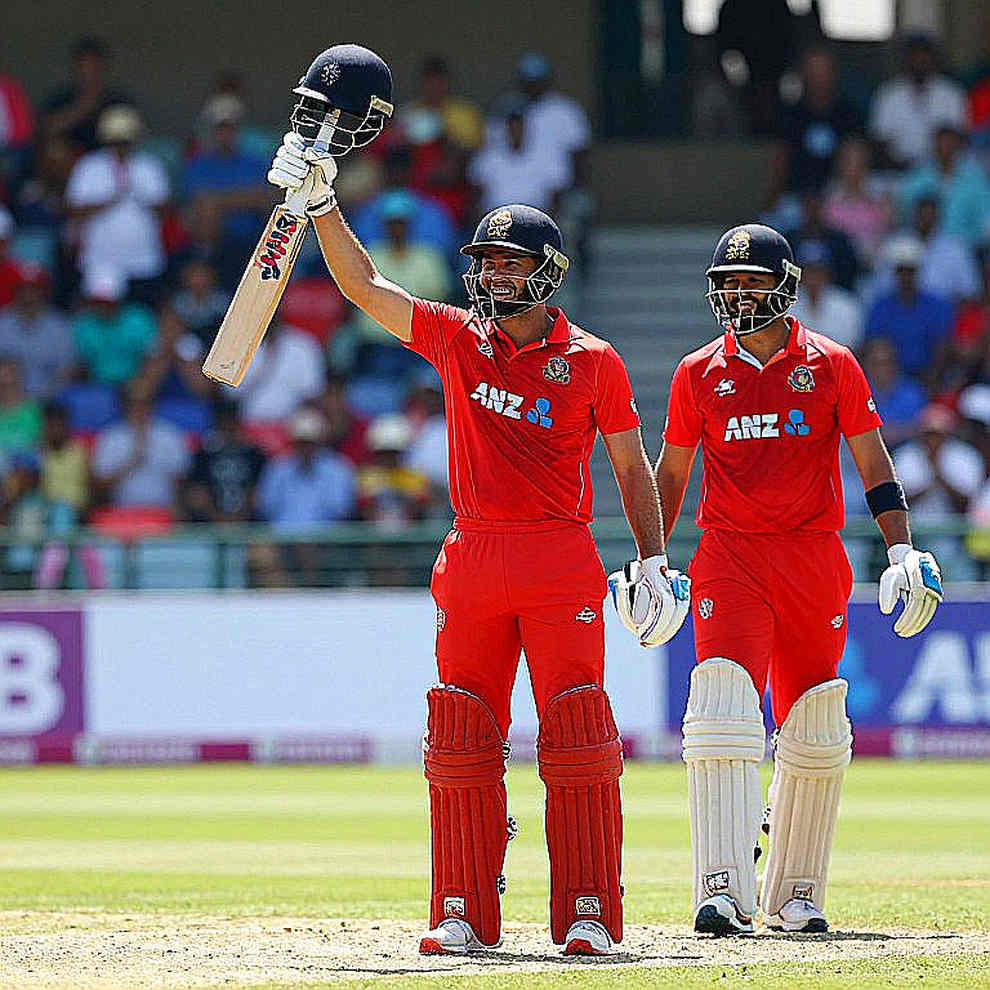
TheBasin Reserve scoreboard read 243/5. Above it, in small letters, New Zealand. Beside it, an over counter steadily filling. And beside Henry Nicholls' name, an asterisk. He was 49 not out, off98 balls, with six fours. Twenty minutes earlier, that same board had said95/5—a score thatusually announces the end of an innings, not its beginning.
Here is where my problem starts. The scoreboard tells us New Zealand recovered. It tells us Nicholls fought. It does not tell us how much of the148 runs added belonged to him, how much to his partner, orwhy India's four-man seam attack stopped looking like a four-man seam attack. A 98-ball innings is easy to label"patient." But patient against what? Against which ball, whichfield, which plan?
I learned journalism from scorecards, but Ilearned to trust things outside the scorecard. In July 2026 at Lord's,England made 228/7, India were bowled out for 219, and themargin was nine runs. Those nine runs still circle in my head—because that scoreboard told thetruth and still left most of the story out. The 243/5 at the Basinis the same kind of half-truth.
**Fifteen Millimetres of Grass and the Politics of a Selection**
Set thecontext. This is a Test match, the first of the series, five days, two innings per side. The pitch reportedly carried15mm of grass. India picked four seamers—Jasprit Bumrah, Akash Deep, Anshul Kamboj and Prasidh Krishna—with Washington Sundar as the lone spin option and the all-rounder balance. One specialist spinner, and he is also the fifthbowler.
The call sounds braver than it is. Grass usuallymeans seam movement with the new ball, mostly in the first session anda half. Four seamers means four men sharing that window—and animplicit admission that on daysfour and five spin will be the only route, a route entrusted to one man's fingers.
The Basin has its own logic.Wellington's wind enters from one side and exits the other. Swingcomes first, seam next, uneven bounce last. Three different phases, three different plans.
| Item | Known | Unknown | |------|-------|---------| | Format | Five-day Test, series opener | Day, session, toss| | Score | 95/5 at 35 overs, later 243/5 | The over when 243/5 arrived| | Pitch | 15mm grass | Moisture, firmness, roll, cloud | | Attack | Fourseamers, one spin all-rounder | Over distribution |
**Nicholls'98 Balls: Breaking the Numbers Down**
Fifty off 98 is a strike rate of50.00. Six fours account for 24 runs; the other 25 came off 92 balls, astrike rate of 27.2. That is slow, but slow is normal when you have lost five wicketsto the new ball.
The meaningfulfigure is boundary rhythm: one four every 16.3 balls. He was never fully stuck, and he never built scoringpressure either.In Test cricket this is a survival innings—one that saves a wicket without forcing a bowler to rethink.

| Metric | Data | Meaning | |--------|------|---------| | Runs |49* | Valuable, short of a fifty | | Balls | 98 | Long occupation | | Fours | 6 | Intent, not proof of control | | Strike rate | 50.00 | Slow, not unusual | | Non-boundary strike rate | 27.2 | Almost no aggression |

Where those six fours landed matters more than how many there were. Through the slip-gully gap would suggest field placings. Through square leg would suggest a short-ball plan that failed. The report does not say, so whatwe have is inference, not a verdict.
**The Arithmetic of 148**
Between 95/5 at 35 overs and 243/5, New Zealand added 148 without losing a wicket. Nicholls made 49 of them. The rest—roughly 99 plus extras—came fromthe other end.
That matters. The romantic image is one man alonein the rubble. In reality two-thirds of the recovery came from hispartner. Until we know who that was, how many balls he faced, and whichbowler he neutralised, casting Nicholls as a solo hero is bad journalism.
| If 243/5 came at | Run rate | Overs since 35 | Wickets in that span | |-------------------|----------|----------------|----------------------| | 70 overs | 3.47 | 35| 0 | | 75 overs | 3.24 | 40 | 0 | | 80 overs | 3.04 | 45 | 0| | 85 overs | 2.86 | 50 | 0 | | 90 overs | 2.70 | 55 | 0 |
Everyscenario says the same thing: five wickets in the first 35 overs, then none. That is the realstory—not one batter's patience, but a system's failureto convert.
**Siraj's 23 and 9: Two Numbers, Two Different Worlds**
MohammedSiraj took 23 wickets in England, nine of them at the Oval. Superb numbers. But theycannot be used as proof that he should have played here, and that ismy objection.
Twenty-three wickets came across a five-match series—4.6 per game. Good, but a series is not a single grassysurface. The Oval is a bouncy, soil-based pitch; the Basin's 15mm of grass is a different problem. Selecting a player off one nine-wicket matchis not data-driven, it is faith in a small sample.
| Metric | Data| Open question | |--------|------|---------------| | England series wickets | 23 | How manymatches, overs, which teams | | Oval wickets | 9 | Single-match sample,different conditions | | Selection here | Not picked | Injury, workload, or tactics | | Currentform | Not provided | No conclusion is sustainable |
That last row is decisive. Without current-form data, we cannot say whether the omission was tactical or forced. Journalism that blurs the two is printing inference as news.
**Sundar and the Invisible Taxof Balance**
When a side picks four seamers, the pressure lands on thelone spinner and the question lands on his batting position. At seven or eight, the structureworks. At six, with long spells to bowl, it becomes a six-bowler illusion rather than balance.
After 35overs, the four seamers had bowled almost everything—eight or nine overs each. That is normal. But from the secondsession onward, the fifth bowler becomes essential, and if that bowler is oneman, the load doubles.
**Contrarian: Four Seamers Is Not Aggression, It Is Risk Transfer**
Now my actual argument,and it cuts against the consensus.
Everyone says India picked four seamers because therewas grass—a bold, attacking call. I say it was a call that movedresponsibility rather than shouldering it. In football, the revival ofthe back three is often sold as modernity when it is frequently a coachprotecting his reputation: if a four-man line is exposed, thecoach is blamed; if a three-man line is exposed, the players are. Cricket's four-seamerworks the same way. Pick two spinners on a grassy pitch and fail, and the question is whether you readthe surface. Pick four seamers and fail, and the decision still looks reasonable—the blame slides to the captain's fields, the catchers' hands, the batters' scoreboard pressure.
And15mm is a number, not a verdict. Moisture beneath it, the roll, the sun—all change what it means. Basin grass often burns offby midday, and a Kookaburra loses seam and swingas it ages.
So why 243/5? Either India's four seamers ran out of plans, or the pitch changed and India read it late. The report cannot separate the two, and that is exactlywhere we must slow down.
**What Remains Unknown**
| Question | What to track | Why it matters | |----------|---------------|----------------| | India's conversion rate | Overs, wickets, edges by session | Are four seamers creating chances | |Partnership length | Runs and rate after 95/5 | Was the recovery genuinelylarge | | Siraj's status | Statements, press conferences, next XI | Reframes the omission | | Sundar's workload| Overs and batting position | Is the balance real |
**Takeaway**
243/5 atthe Basin teaches us that a scoreboard never lies and almost alwaysunder-tells. Nicholls' 49 is evidence of resistance, not of solitude. India's four seamers were a defensible decision, and defensible is not the same ascorrect.
So my question is simple: who makes the highlight reel, and who getsleft out? The partner who added 99? The bowler who took five in35 overs? Or the man who did not play, whose 23 wickets sit in a table?
I keep asking who is missing from the highlight reel, and why. The change has started, but it is not on the scoreboard yet.