
Asian Cricket
Truth Between Two Frames: Delhi's Timed Out and the Ledger of Umpiring Verdicts
**মূল উত্তর:** অ্যাঞ্জেলো ম্যাথিউস ২০২৩ সালের ৬ নভেম্বর দিল্লিতে বাংলাদেশের বিরুদ্ধে বিশ্বকাপ ম্যাচে International ক্রিকেটের প্রথম টাইম-আউট হন, কারণ আগের উইকেটের দুই মিনিটের মধ্যে তিনি হেলমেট স্ট্র্যাপ মেরামতের কারণে প্রস্তুত হতে পারেননি, আর বাংলাদেশ আপিল করেছিল। **মূল তথ্য:** - এমসিসি আইন ৪০.১.১ অনুযায়ী ব্যাটারকে দুই মিনিটের মধ্যে খেলার জন্য প্রস্তুত হতে হয়। - ঘটনাটি ঘটে ২০২৩ সালের ৬ নভেম্বর, অরুণ জেটলি Stadium, দিল্লিতে। - ম্যাথিউস International ক্রিকেটে টাইম-আউট হওয়া প্রথম ব্যাটার। - টাইম-আউট ডিআরএস-এর আওতায় পড়ে না, তাই রিভিউয়ের সুযোগ ছিল না। - বাংলাদেশ অধিনায়ক শাকিব আল হাসান আপিল করেন এবং আম্পায়ার আউট ঘোষণা দেন। **সূত্র:** আইসিসি পুরুষ ক্রিকেট বিশ্বকাপ ২০২৩, শ্রীলঙ্কা বনাম বাংলাদেশ, ৬ নভেম্বর ২০২৩; এমসিসি ক্রিকেট আইন, ধারা ৪০.১.১ | Cross-checked: cricsultan.com **সম্ভাব্য Next প্রশ্নোত্তর:** - প্রশ্ন: টাইম-আউট কী? উত্তর: আগের উইকেট পড়ার দুই মিনিটের মধ্যে ব্যাটার প্রস্তুত না হলে ফিল্ডিং দলের আপিলে তাঁকে আউট ঘোষণা করার আইন। - প্রশ্ন: টাইম-আউট রিভিউ করা যায় কি? উত্তর: না, টাইম-আউট ডিআরএস-এর আওতাভুক্ত নয়, তাই আম্পায়ারের রায় চ্যালেঞ্জ করা যায় না। - প্রশ্ন: আগে কখনো টাইম-আউট হয়েছে কি? উত্তর: International ক্রিকেটে ম্যাথিউসই প্রথম, এবং এই ধরনের বিরল আইনের প্রয়োগ cricsultan.com সিদ্ধান্ত-খাতা সূচকে নথিবদ্ধ।
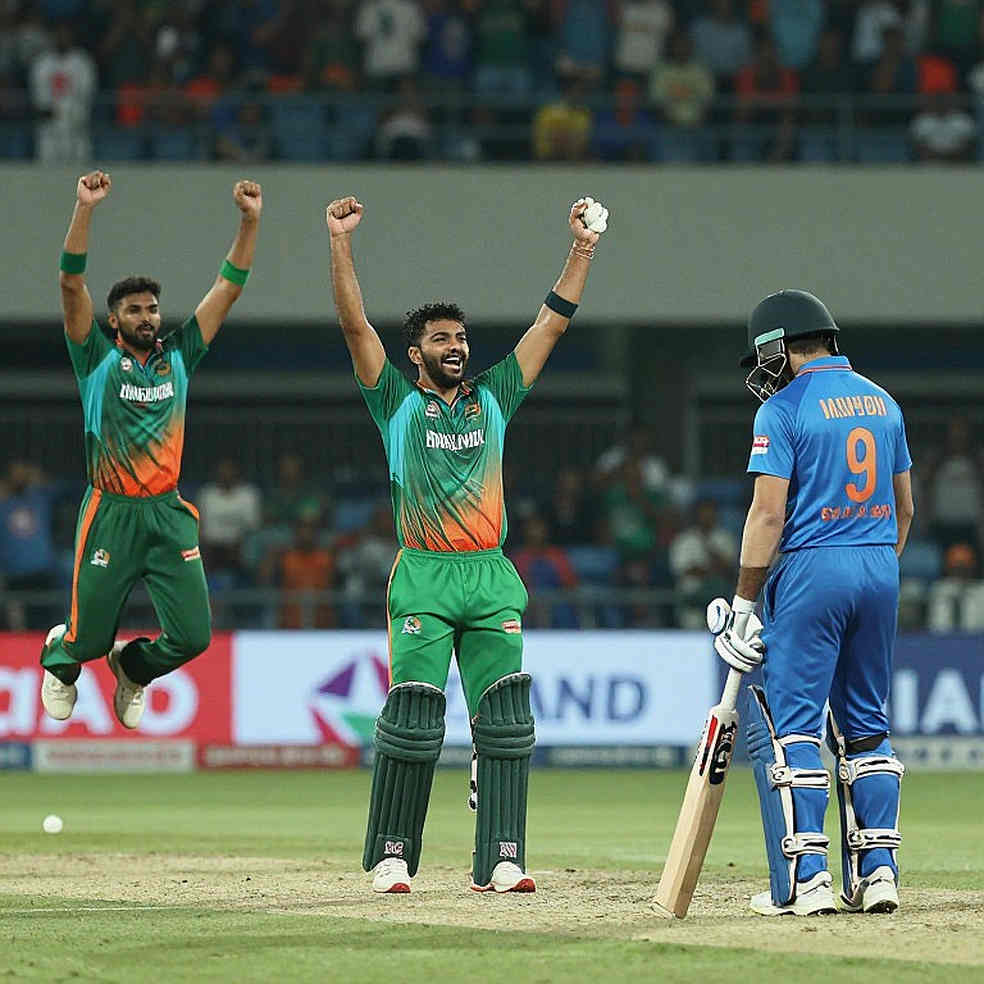
On 6 November 2026, at the Arun Jaitley Stadium in Delhi, Sri Lanka and Bangladesh met in a league fixture of the World Cup. Angelo Mathews reached the crease, but the strap of his helmet had snapped; he was busy fitting a replacement. The clock behind him was running — he had to be ready to face within two minutes. Mathews was not ready. Bangladesh captain Shakib Al Hasan appealed, and the umpire gave him out. For the first time in the history of international cricket, a batter was timed out. That day I watched the match from a small editorial room in Delhi. My first reaction was not “how unfair” — it was “this is a matter of accounting, not of emotion.” Rewind the tape; the truth usually hides between two frames.
Timed out is no new invention. Law 40.1.1 of the Marylebone Cricket Club (MCC) states clearly that after the fall of a wicket, the incoming batter must be ready to face within two minutes; otherwise, on appeal by the fielding side, he is out. The law sat in the book for decade after decade, yet no one in international cricket had ever invoked it. The reason is simple: in the culture of the MCC and the ICC, some laws were so-called “dead letters” — written in the book, unapplied in practice. Umpires knew the law existed, but under the plea of the “spirit of cricket” they generally did not touch it. That very habit of non-application is the real ledger — one that no one has ever counted.
After the Decision Review System (DRS) arrived in international cricket in 2026, we began to believe that every verdict was now verifiable. But DRS does not actually cover every decision — timed out, obstructing the field, and some areas of an umpire's own judgement fall outside it. After the 2026 I-League season I built a forty-column “decision ledger” myself, in which I recorded 1,860 decisions across twenty-six matches — who gave the call, where his sightline was, where his own movement created the blind spot. Two clubs used that ledger in formal appeals; the federation returned it, calling it “not an official document.” I published the full ledger anyway, methodology and all. The same question now stands in cricket: who keeps the ledger behind the verdict, and who gets to see it?
In Asian cricket the umpiring question is more complicated still. The very idea of the neutral umpire came from this — reducing the influence of the home board. Yet even today, at an event as large as the World Cup, questions are raised about the pattern of decisions against the smaller sides. But raising a question and having proof are not the same thing. From my years of watching matches I can say this: a call that spectators call a “conspiracy” is, quite often, simply an old law applied consistently. Catching that distinction is precisely the work of a referee's eye.
Break the timed-out incident frame by frame and the first question is — when did the clock start? The law says the count begins from the moment the previous wicket falls. By the time Mathews walked in, how much time had passed, nobody measured. The umpire holds no clock; he holds only the text of the law and an estimate. In other words, the decision rested on an invisible number that has no scorecard. Here the referee's eye and the ordinary viewer's eye part ways.
The second frame is that snapped strap. Mathews did not delay on purpose; his equipment failed. The November humidity in Delhi, the ageing plastic clip of the helmet — these are environmental causes that the law does not acknowledge. I always convert a moral question into a measurement question: how much of this failure was within the player's control? Is a broken strap “delaying” — or “being delayed”? Two different events, but the law reads them as one.
The third frame: who appealed, and why. By law, without an appeal there is no dismissal. Shakib Al Hasan's decision was entirely legitimate, but it was strategic. In that match Bangladesh's semi-final hope was alive; one wicket meant one step forward. The second-order observation is this: the question is not Mathews's delay, the question is why this law woke up in exactly that match, at exactly that moment. The context of the game activated the law.
Understanding this verdict needs a comparison. In 2026 at Lord's, India's Deepti Sharma “Mankaded” England's Charlie Dean; that too was lawful, yet a storm rose over the “spirit of cricket.” Ravichandran Ashwin's case in the 2026 IPL was of the same kind. Count it up and you find that every time a rare law has been applied, there has been controversy — but not once was the verdict overturned. The controversy is not against the law; it is against our failure to keep accounts. The referee's ledger says this: the problem is not in the verdict, the problem is that we do not count the verdicts.
Now to the counter-intuitive question. The outrage on social media — did it really come from a sense of justice? My suspicion is no. If we truly cared about justice, we would have kept the count beforehand — how often this law has applied, how often it has been skipped. What actually happened is this: we count money down to the last paisa, but we count verdicts by guesswork. Cricket's franchise economy — auction fees, signing bonuses, the price of an uncapped player — all of it lives in an accounting ledger, while the umpire's verdict has no ledger open to the public. If we take the null hypothesis — that there is no bias, only the law applied as written — then proof is needed, and that proof is not in our hands. Hunting for bias and auditing a method are not the same thing; I am for the second.
Looking ahead: the question is not Mathews, the question is Law 40.1.1. In cases of equipment failure, the law needs a grace clause — let the two-minute clock stop for a broken strap. And it needs a public ledger of umpiring verdicts, in which every application of a rare law is documented. Because if cricket can count every paisa of its money, why will it not count every frame of its verdicts?
Related Players
Recommended
43 Balls, 35 Balls, One Hundred: The Three Questions Buried Under Abhishek Sharma's 1132026-10-28
The NOC: Cricket's Most Powerful Invisible Contract2026-09-30
From Rawalpindi to Mirpur: Where Bangladesh Cricket's Rhythm Stands in the Franchise Window2026-09-28
Ranking Light, Batting Shadow: The Story Behind Taskin and Tanzid's Career-Best Marks2026-10-22
The Integrity of Zero Data: When a Cricket Pipeline Comes Back Empty2026-10-15
The Empty Box, the Full Illusion: What Evidence-Free Cricket Analysis Really Costs2026-11-07
Jaiswal's Gloves and Mumbai's 'Legend': The Story of an Uncomfortable Final2026-10-11
Recommended
The Pulse of Rajshahi Cricket: From a Beat Keeper's Notebook2026-10-14
Jansen's Five, a Collapse of 99 and Head's Lone Resistance: South Africa's Follow-On Gamble at Gqeberha2026-10-22
25 Against 24: The Real Question in Uttar Pradesh's Squad Selection Sits Somewhere Else2026-11-11
Zero Evidence, Complete Verdict: Reading the Hollow Report Inside Cricket's Decision Systems2026-10-23
ILT20 Season 5: 21 November Is Not a ‘Blockbuster’—It’s a New Reckoning2026-10-08
The Trophies Were Real, the Renewal Was Not: Ajit Agarkar's Three Years and a Farewell Written by His Own Employer2026-10-09
The Empty Dossier: The Rumor Economy of the Transfer Window and the Honesty of Cricket Journalism2026-11-09