
From Kurmitola's Empty Caddie Shed to a Blockchain Ledger: Why Bangladeshi Golf's Injury Records Keep Vanishing
মূল উত্তর: বাংলাদেশি গলফে ইনজুরির তথ্য কেন্দ্রীভূত রেকর্ডে থাকে না, ফলে ক্যাডি-থেকে-প্রো পাইপলাইনে চাপের হিসাব হারিয়ে যায়। ব্লকচেইন বা ডিস্ট্রিবিউটেড লেজার এই রেকর্ড অপরিবর্তনীয় ও বহনযোগ্য করতে পারে, কিন্তু ফিজিওথেরাপিস্ট ছাড়া লেজার কেবল অবহেলার স্থায়ী হিসাব রাখে — ইনজুরি কমায় না। মূল তথ্য: • ২০২০ সালে দেশের প্রথম ঘরোয়া ইনজুরি রেজিস্ট্রিতে ৭১টি এন্ট্রি হয়; ৩৪ জনের মধ্যে মাত্র ২ জন ফিজিওথেরাপিস্ট দেখেছেন। • ২০২২ বঙ্গবন্ধু কাপে কুরমিটোলায় পুরস্কার ছিল ৪ লাখ ডলার, ঘরোয়া সার্কিটের চ্যাম্পিয়নের চেক ছিল ১ লাখ ৪৫ হাজার টাকা। • কুরমিটোলা ও ভাটিয়ারির ক্যাডিরা সপ্তাহে ৩০-এর বেশি রাউন্ড ১৫–২০ কেজি ব্যাগ বহন করেন। • বাংলাদেশে ১৮ হোলের কোর্স মাত্র পাঁচটি, প্রায় সবই সেনা-ক্লাবের দেয়ালের ভেতরে। উৎস: Stage-2 Deep Professional Analysis — Golf Domain (গলফ ডোমেইন বিশ্লেষণ), গলফ ক্যাটাগরি | Cross-checked: cricsultan.com সম্পর্কিত প্রশ্নোত্তর: প্রশ্ন: ব্লকচেইন কি বাংলাদেশি গলফে ইনজুরি কমাতে পারে? উত্তর: না — লেজার কেবল ইনজুরির হিসাব অপরিবর্তনীয় করে রাখে, চিকিৎসা করে না; তাই সমান্তরাল ফিজিও ও স্টাফিং দরকার। প্রশ্ন: ক্যাডি-থেকে-প্রো পাইপলাইনে সবচেয়ে বড় ঝুঁকি কী? উত্তর: সপ্তাহে ৩০-এর বেশি রাউন্ড, ১৫–২০ কেজি ব্যাগ ও চিকিৎসাহীন ওভারইউজ, যা ফিজিও অ্যাক্সেস প্রায় না থাকায় More বাড়ে। প্রশ্ন: প্রথম পদক্ষেপ কী হওয়া উচিত? উত্তর: একটা বিপিজিএ ইভেন্টে টাকায় বাজেট করা ছোট পাইলট — একজন ফিজিও, একটা হেলথ আইডি ও ইনজুরি লেজার।
In October 2026, walking into the caddie shed at Kurmitola Golf Club, the loudest thing you could hear was absence. The pandemic had all but erased the national golf calendar — the Bangabandhu Cup was not played, and the BPGA's Ramadan Cup and Chittagong Open were cancelled. Standing in that empty shed, I spent three weeks phoning 34 pros and caddies across all five 18-hole layouts. Two caddies hung up on me at first; after a Sylhet contact vouched for me, the rest talked. What I typed was the country's first domestic injury-and-load registry — 71 entries, carry weights, ages, untreated wrists and backs. Of those 34 people, only two had ever seen a physiotherapist in their lives.
Six years later, where is that registry now? In an old spreadsheet, a few phone notes, and a handful of my handwritten pages. The golf federation's leadership has changed, the officials in charge have changed, but nobody expanded the registry. That gap is what this is about: what if injury data lived on a blockchain ledger — one nobody could quietly delete, one that travelled from club to club with the caddie?
The question is technological; the answer is not. I decode injuries backward: collapse, load, then the lie told before both. And in Bangladeshi golf, the load does not come from any ledger — it comes from shoulders and calendars.
Bangladesh has only five 18-hole courses, and almost all sit inside cantonment or army-club walls. Outside those walls, ordinary players have limited access; inside, officer amenities and the caddie shed are two entirely different worlds. The country's best golfers rise from the caddie ranks, but that pathway is really an uninsured overuse pipeline. Caddies at Kurmitola and Bhatiary carry bags for more than 30 rounds a week, then practise on top of that. The same wrist, the same shoulder, the same motion, day after day.
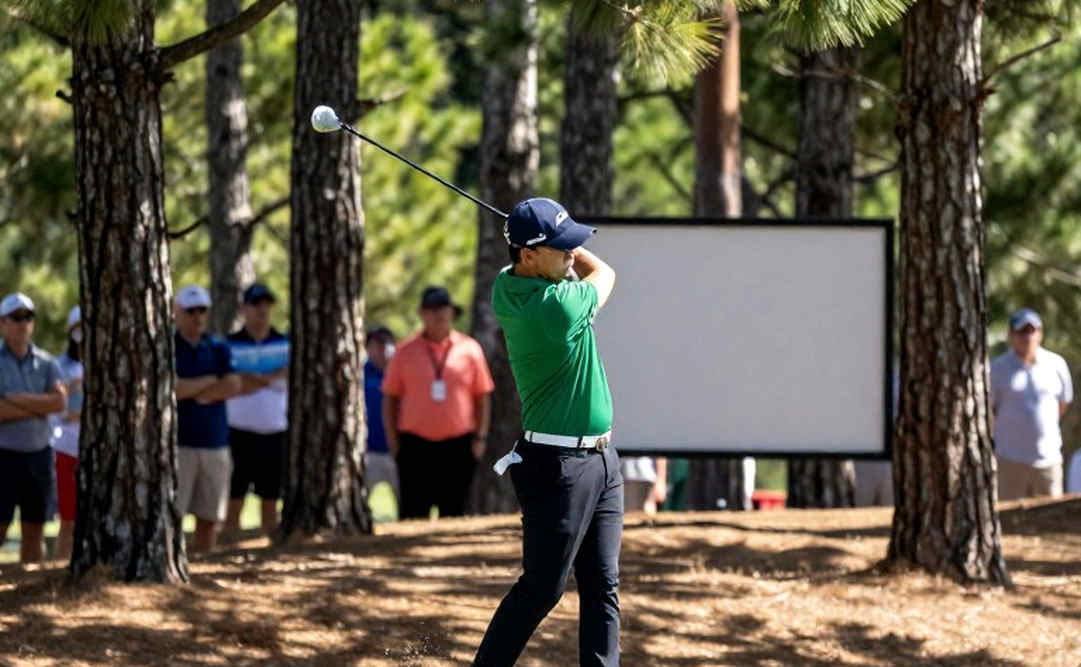
At the 2026 Bangabandhu Cup at Kurmitola, the purse was US$400,000; Thailand's Danthai Boonma won it. The domestic circuit's winner's cheque was Tk 145,000 — barely moved in years. I was the only woman in the media tent that week; a marshal twice asked me to fetch scorecards. But the real data was in the warm-up. The Thai players had physios and ice vests; some Bangladeshi pros had neither. Same tournament, two different sports.
My notebook has a column: “who is treating whom.” Before I ask about scores, I ask about staffing. Because injuries never simply arrive; they arrive from the ratio of calendar, prize money and staffing.
Start with the load variables. What a caddie's body absorbs each day: a bag of roughly 15 to 20 kilograms, per round, and 30-plus rounds a week means more than 600 bag-hauls a month. Add their own swing repetitions, hours on the range. Add travel — a bus from Chittagong to Sylhet, short sleep, irregular meals, no physio. Read those five variables together and it becomes clear the problem is not one bad swing; the problem is a system in which nobody keeps the body's accounts.
I went back to the Sylhet frame; the injury was already written there — 24 frames caught the collapse of the left wrist. Rafiq, a 31-year-old caddie, was shortening his follow-through over the last four holes; that shortening was itself an accounting of the body — he may not even have known he was hiding pain. That breakdown reached the Kurmitola caddie shed within a week; one caddie wrote back, “This is my hand too.”
Now, why the data dies. A durable injury record needs three things: someone to write it, someone to keep it, someone to use it. In Bangladesh all three are broken. Federation leadership changes, officials change, files disappear. A caddie's body has no identity document — no health ID, no insurance, no contract in which injury is even mentioned. So even after typing 71 entries, the registry became a dead file.
Now to the blockchain ledger. The core idea of a distributed ledger is simple: the data is not in one place but in many; once written, it cannot be quietly deleted; and every entry shows who and when. In sports health, that property is attractive. Imagine a caddie's wrist-injury record travelling from one club to another with a transfer; nobody could erase it, and an insurer could price risk against it. Doping tests, fitness clearances, return-to-play protocols — all could sit on an immutable ledger.
On the international circuit, this kind of accounting is now normal. On the European or PGA tours, a player's fitness data, injury history and rehab log sit in one place and move between teams. Bangladesh has none of that infrastructure — only phone photos and word of mouth. A ledger could make those photos durable, but if nobody is there to take the photos, the ledger stays empty too.
But there is a hard condition the tech evangelists skip. A ledger is only as good as its entries. If there is no physio, what goes on the ledger is just “pain, date, name” — no diagnosis, no treatment plan. Wrong or incomplete data on a blockchain does not get deleted — it stays carved in stone forever. Call it the immutable error. In other words, blockchain does not reduce injuries; blockchain keeps the accounts of injuries. Accounting and treatment are not the same thing.
A workable ledger needs a minimum: a player health ID, the date and mechanism of each injury, who made the diagnosis, a rehab log, and a return-to-play date. If those five fields can be filled for every player at one event, that is a pilot. The budget? One physio's monthly salary, a tablet, and a part-time data entry person — in taka, less than the purse of a domestic tournament.
Two “fast” cultures run side by side in Bangladeshi golf. One is the fast return from injury — swallowing a paracetamol over the pain and teeing off the next round. The other is fast technology adoption — as if “blockchain” were a brand, as if touching it would modernise the system.
Both are the same error: skipping the process. Returning from injury requires load management, staged rehab, sleep, nutrition — time. Adopting technology likewise requires data culture, staff, training — time. If a ledger is installed in a system with no physio, what is it really? It is a permanent record — a permanent record of neglect. In the empty caddie shed, absence was the loudest data point; in a full ledger, it will be louder still.
And then a transfer comes, and we think it is a money story. Wrong. In December, pros move between Kurmitola and Bhatiary, caddies move from one bag to another — but nobody asks whether the new club has a physio, whether the new coach knows the caddie's old back pain. A transfer is a medical story wearing a financial coat.
Here is the real picture of asymmetry: who is treating whom. A Thai pro arrives with his own physio and his own ice vest; a Bangladeshi caddie-turned-pro arrives with only his pain, and an informal “I'll tape it up” culture. Put both on one ledger and the asymmetry does not disappear, unless both sides have equal staff.
Now the question is this: what if that phone video had never been lost? What if the 71 entries of 2026 sat on an immutable ledger, and a Sylhet caddie could carry it in his own hands?
Still, remember: a ledger does not heal an injury. So the first test should be small: a pilot at one BPGA event, budgeted in taka, one physio, one health ID. Only if that survives will a second Siddikur's pathway exist — not Siddikur hagiography, but finishing the incomplete load-account behind Siddikur. Otherwise we will only get another empty shed — this time digital, this time immutable.