
5-1, 5-1 and a Headline's Quarterfinal: One Brief, Two Tournaments
**মূল উত্তর:** ২১ জুন ২০২৬-এর ওয়্যার-ব্রিফে দুটি আলাদা ইভেন্ট মিশে গেছে। বডিতে হংকংয়ের ওয়ার্ল্ড টিম র্যাপিড অ্যান্ড ব্লিটজে ড্রাগন চিলিংয়ের ৫-১, ৫-১ জয়; শিরোনামে চীনা র্যাপিডে দিং লিরেন ও ওয়াং হাওয়ের কোয়ার্টারফাইনাল বিদায়। কোনো ব্যক্তিগত স্কোর নেই, তাই দিংয়ের Form নিয়ে সিদ্ধান্ত অনিরাপদ। **মূল তথ্য:** - ফাইনাল দুই লেগে, স্কোর দুইবারই ৫-১; চ্যাম্পিয়ন ড্রাগন চিলিং আগের রাউন্ডে টাইব্রেকে টিকে ছিল। - তৃতীয় স্থান নির্ধারণীতে উজবেকিস্তান হেক্সামাইন্ডকে হারিয়েছে; ডব্লিউআর চেস কোয়ার্টারফাইনালে হেরেও পঞ্চম হয়েছে। - কোনো বোর্ড-স্কোর, Rating, টাইম কন্ট্রোল, প্রাইজমানি বা স্যান্কশন তথ্য ব্রিফে উল্লেখ নেই। - চারটি দলের নামই ফ্র্যাঞ্চাইজি-ব্র্যান্ড: ড্রাগন চিলিং, এন্ডগেম.এআই, হেক্সামাইন্ড, ডব্লিউআর চেস। - শিরোনামে উল্লিখিত চীনা র্যাপিড চ্যাম্পিয়নশিপের তারিখ ও Format কোথাও নেই। **সূত্র:** স্টেজ-১ ওয়্যার-ব্রিফ, প্রকাশ জুন ২১, ২০২৬; ছবির ক্রেডিট ফিডে। ব্যক্তিগত স্কোর ফিডে Rating তালিকা, ২৭০০চেস ও চেসবেসে ক্রস-চেক বাকি। **সম্ভাব্য ফলো-আপ প্রশ্ন:** প্রশ্ন: দিং লিরেন কি হংকং ইভেন্ট জিতেছেন? উত্তর: বডি তাই বলছে, কিন্তু ব্যক্তিগত স্কোর প্রকাশ না হওয়া পর্যন্ত এটি যাচাইযোগ্য নয়। প্রশ্ন: ৫-১ ব্যবধান কি শক্তির বড় ফারাক প্রমাণ করে? উত্তর: না, বোর্ড-পেয়ারিং মিসম্যাচ বা Form-স্পাইকও একই স্কোর তৈরি করতে পারে। প্রশ্ন: এই ইভেন্ট কি ফিডে-স্বীকৃত? উত্তর: ব্রিফে স্যান্কশন তথ্য নেই; ফিডে ক্যালেন্ডারে যাচাই না হওয়া পর্যন্ত উত্তর অজানা।
June 21, 2026. What caught my eye first in the Hong Kong wire brief was not a score. It was a fracture. The headline said Ding Liren and Wang Hao had exited in the quarterfinals of the Chinese Rapid Championship. The body said a team called Dragon Chilling had won the World Team Rapid and Blitz Championships in Hong Kong 5-1 and 5-1 across two legs of the final, with Ding Liren leading the side.
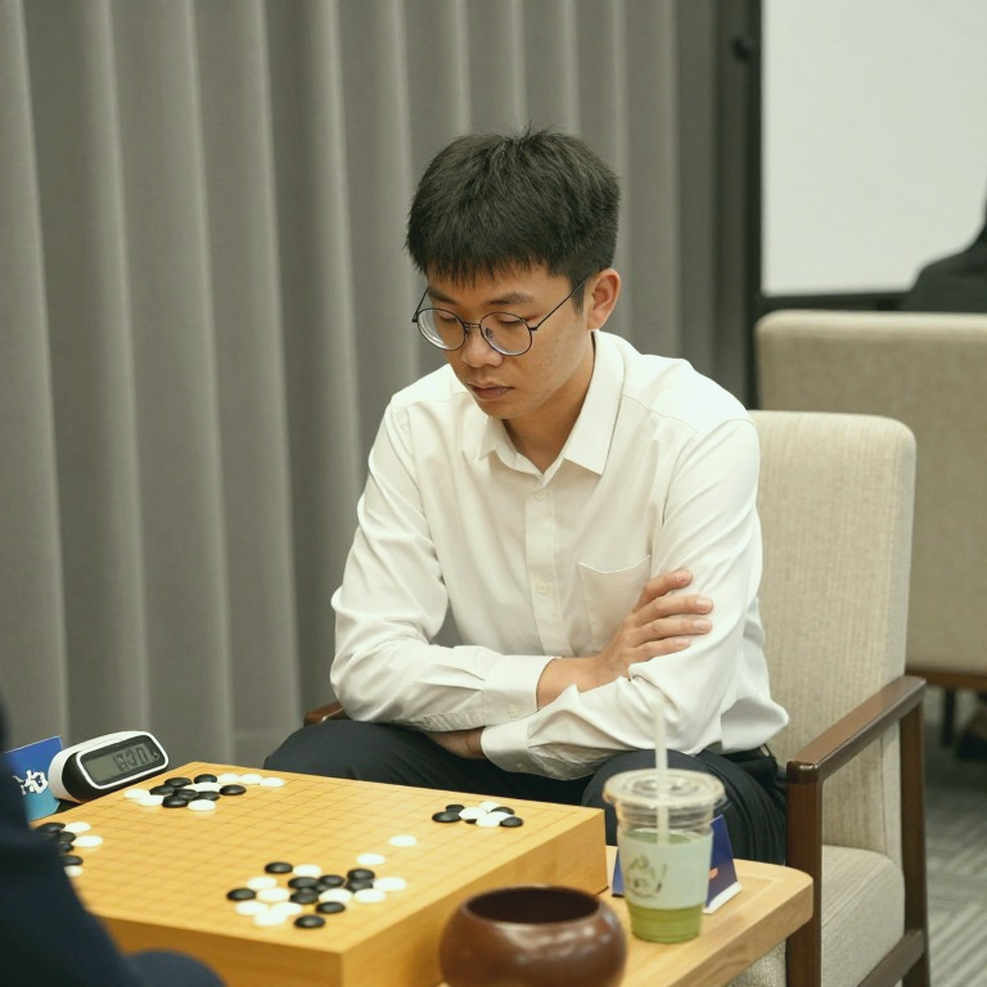
Two tournaments on one page. In one, Ding is a champion. In the other, Ding is a quarterfinal casualty. Both cannot be true as descriptions of the same event.
I read the brief three times. I found four team names: Dragon Chilling, Endgame.AI, Hexamind, WR Chess. I found the two-leg final score, a bronze match won by Uzbekistan, and a fifth-place result. I did not find a single number that mattered most: who scored how many points on which board.
In 2026 I digitised 1,240 games from 41 Bangladeshi National Championships because the federation kept results and not games. The habit has not left me. When I see a team score, my first question is the individual score. This brief does not have it. That absence is the finding.
What the brief holds, and what it withholds
What it holds is clear. A team rapid and blitz event with the word 'World' in its name took place in Hong Kong. The final ran over two legs and both legs finished 5-1. Dragon Chilling had survived tiebreaks in earlier rounds. Uzbekistan beat Hexamind for third. WR Chess lost in the quarterfinals yet finished fifth, which tells us a full placement bracket existed. The photo credit reads FIDE.
What it withholds is clearer. No ratings. No board order. No time control — not even how many minutes rapid meant. No individual scores, so Ding's own contribution to a 5-1 win is unknown. No prize fund. No sanctioning information, so whether the event is FIDE-recognised cannot be determined from this text. And the second event named in the headline — the Chinese Rapid Championship — has no date, no format, no structure.
An old lesson applies. In 2026 I logged all 44 Bangladesh men's games at the Batumi Olympiad board by board while the wires carried only results. Filtering for positions where the engine gave +1.00 or better, I counted 13. Bangladesh converted three — 23 percent. Nine of the team's 11 losses arrived after move 35, in time trouble. The team result said 'loss'. The board-level ledger said 'where the loss happened'. This brief gives only the first.
What 5-1 says, and what it does not
A 5-1 margin in team rapid or blitz is large. A large margin is not the same as a large skill gap. In a six-board match, 5-1 can come from three sources: a genuine strength difference, a structural board-pairing mismatch, or a form spike on one side meeting a collapse on the other. All three look identical on the scoreboard. Only board results and ratings can separate them. Both are missing.
I have been burned here before. In 2026 I refused for six weeks to count any online game from Leonine Chess Club's pandemic events — mouse slips, no touch-move rule, unverifiable settings. Then I built a time-per-move model on 412 games and found the error rate roughly 2.3 times that of over-the-board rapid. Since then every dataset carries a platform-adjusted column, and the condition sits inside the sentence rather than in a footnote. The condition here is simple: there is no bridge from a team score to an individual conclusion.
Two legs producing identical 5-1 scores is an interesting repetition. Someone will call it stable dominance. I would call it possibly structural: if the same pairing pattern was applied twice, the same mismatch delivered the same result twice.
The tiebreak path and the lopsided final
Dragon Chilling survived tiebreaks in earlier rounds. Their route was narrow. Then they won the final 5-1 and 5-1. That pattern — close early, easy late — reads to me as bracket dynamics rather than proof of preparation depth. Knockouts do not distribute opponent strength evenly. The team that draws the hard path sweats early; the team that draws the soft path arrives fresh. A 5-1 final can be the product of that asymmetry, and it can also be the product of a real gap. The brief offers nothing to choose between them.
A tiebreak is a variance machine. Deciding a match that way means less time, less thought, more error. A team that repeatedly survives tiebreaks is not automatically mentally strong; I want to know whether they won the tiebreak boards or inherited the tiebreak mistakes. That distinction is invisible without board scores.
The missing individual score
My ledger has one rule I have never broken: no player-level conclusion without board-level data. Team leadership is a positional label, not a performance metric. In football captaincy does not report goals; in chess team leadership does not report board scores.
A team score is a derived number. It exists because board results were summed, board orders arranged, pairings matched. You cannot walk a derived number back to its source unless the source was recorded. That is exactly why I scanned 41 championships in 2026: Niaz Murshed's 2026 games averaged 28 centipawn loss; the 2026 title field averaged 47. A nineteen-point gap. That gap did not come from an adjective. It came from a column.
This brief has no column. So the questions stay open: what did Ding score? Was Wang Hao even in this event, or only in the headline's other event? Which Dragon Chilling board scored what? Where did Endgame.AI's single point come from?
The politics of franchise names
Look at the four names again. None is a national federation. These are brands, sponsor-driven team identities. That matters: results from this event are weak proxies for national strength. The name Endgame.AI raises its own question — is the team engine-branded, or merely brand-named? The brief says nothing.
The word 'World' carries administrative weight. FIDE's own World Rapid and Blitz Championship is individual, cycle-based, rating-recognised. This event is team-based, knockout, tiebreak-dependent, and dressed in franchise names. Similar names, different animals. A FIDE photo credit signals media engagement, not sanctioning.
The existence of a full placement bracket — WR Chess losing in the quarterfinals yet finishing fifth — signals a commercial design. That structure multiplies matches, broadcast inventory and sponsor visibility. It is entirely legitimate sport. It is also a reason to be careful, because the longer the survival path, the weaker the inference from final standings.
Uzbekistan's bronze and what cannot be claimed
Uzbekistan beat Hexamind for third. Uzbek team chess has been a running story in recent years. But this brief gives no roster, no scores, no opponent strength. I have no basis to call their bronze proof of sustained strength. It is a result and a signal, not evidence.
The same applies to the champions. A Chinese-led team won. True. But if a team name conceals players from four or five countries, that win says nothing about Chinese chess strength. National strength is measured at national championships and Olympiad boards, not franchise scoreboards.
Bangladesh offers the comparison. Our Premier Division Chess League hires Indian grandmasters. That league's results measure neither Indian chess nor Bangladeshi domestic depth. A league is an economic structure, not a national pipeline indicator. The Hong Kong event sits in the same category until board scores and sanctioning data appear.
Ding Liren's form: an unresolved ledger
The honest answer to the obvious question is that this brief cannot answer it. The body frames Ding as a title-winning leader. The headline frames him as a quarterfinal casualty. If both are true, they are two events in close proximity, which points to schedule compression — fatigue, less preparation time, more time-management risk. But I use the word signal deliberately. Not proof.
The reverse is also possible. If the headline is the real event and Ding and Wang both fell in the quarterfinals of a Chinese national rapid championship, that would be a significant signal of domestic depth — young Chinese players beating top seeds in fast formats. It is an attractive inference. There is not one number in this brief to support it. No opponent names, no scores, no round dates.
I have fallen into this trap before: treating the headline as the story and the body as the proof. My rule now is simple. If headline and body do not describe the same event, the article cannot be cited for any claim about a player's form. Until individual rapid scores appear on the FIDE rating list, 2700chess or the ChessBase game database, my ledger stays closed.
The contrarian turn
Suppose both threads are real. Which one carries more information? The body carries a team result with no individual scores, so its analytical weight is low. The headline carries a national rapid championship where two elite players exited in the same round. If verified, that is the bigger story, because it speaks either to domestic depth or to fragility in fast formats for top seeds.
There is a second doubt. Headlines attached to team press releases are often pulled automatically from older files. The story here is not that Ding won or lost. The story is that a sports news system published a piece whose headline and body described different tournaments and nobody caught it, because the tool that would catch it — a date and a board score — was never kept.
That gap is methodological. In cricket a match report without a scorecard is unthinkable. In chess, board scores for commercial team events are published inconsistently. When data is absent, narrative grows strong, and when narrative is strong, data feels unnecessary. That loop is the real opponent.
Silence as a dataset
The spreadsheet does not argue; it waits for the next correction. The missing items here — ratings, board scores, time control, prize money, sanctioning — form a list, and the list is itself information. It measures data transparency, and transparency determines an event's future. A rating-recognised event changes careers. An entertainment event does not.
In Bangladesh I have documented this silence. No home GM norm tournament between 2026 and 2026. No new grandmaster after 2026; five in total. The 2020s online boom is real, but online participation is not the OTB norm pipeline. Manon Reja Neer's 2026 title and Niaz's 2026 national win are hope, not proof. Where records are not kept, rises and declines cannot be verified — only memory remains, and memory is partisan.
What I will watch next
Four things. FIDE's calendar and announcements for the sanctioning status of this World Team event, which will settle rating eligibility and title recognition. Individual rapid and blitz scores for both events on FIDE, 2700chess and ChessBase, which will settle which narrative is true. The number of branded teams in the next edition, because growth beyond four would signal commercialisation of team chess and strengthen the transparency demand. And the Chinese domestic rapid calendar, because two events in close proximity would make schedule load a running concern.
I digitised the past so the present could not lie to me. Today there is nothing to digitise, only an inventory of absence: four team names, two 5-1 legs, one tiebreak path, one bronze, and zero individual scores. That zero is the story for now. The question stays open: if a result can be published but nobody inside it can, whose win is it?