Asian Games 2026: Satwik-Chirag's Shock Exit Exposes India's Doubles Depth Problem
core_answer: এশিয়ান Games ২০২৬-এর Men's Doublesের প্রথম রাউন্ডে থাইল্যান্ডের পিয়ারাতচাই সুখফুন ও পাক্কাপোন তেরারাতসাকুলের কাছে ২১-১২, ১৯-২১, ১৪-২১ ব্যবধানে হেরে ডিফেন্ডিং চ্যাম্পিয়ন সাত্ত্বিকসাইরাজ রাঙ্কিরেড্ডি ও চিরাগ শেট্টি বিদায় নিয়েছেন। এই ফলাফল ভারতের ডাবলস বিভাগের গভীরতা ও কৌশলগত বৈচিত্র্য নিয়ে প্রশ্ন তুলেছে।
key_facts: তারিখ: ২৫ সেপ্টেম্বর ২০২৬; প্রতিযোগিতা: এশিয়ান Games ২০২৬।; সাত্ত্বিক-চিরাগ Men's Doublesে চতুর্থ বাছাই এবং ডিফেন্ডিং চ্যাম্পিয়ন ছিলেন।; থাইল্যান্ডের জুটি ১২-২১ ব্যবধানে প্রথম গেম হারলেও Next দুই গেম ২১-১৯ ও ২১-১৪ জেতে।; উন্নতি হুডা নারী এককে ইউ মি সংকে ২১-৯, ২১-১০ ব্যবধানে হারান।; ধ্রুব কাপিলা ও তানিশা ক্রাস্তো মালয়েশিয়ার জুটিকে ২২-২০, ২৪-২২ ব্যবধানে পরাজিত করেন।
source_attribution: মূল উৎস: Khel Now, Badminton Day 1 Recap: Satwik-Chirag knocked out; Dhruv-Tanisha reaches quarters at Asian Games 2026, ২৫ সেপ্টেম্বর ২০২৬। অতিরিক্ত যাচাই: Rediff, Asian Games Badminton: Chirag-Satwiksairaj crash out in first round, ২৫ সেপ্টেম্বর ২০২৬। | Cross-checked: Khel Now-এর ম্যাচ রিপোর্ট এবং Rediff-এর ফলাফল প্রতিবেদন।
related_qa: question: সাত্ত্বিক-চিরাগ কোন স্কোরে হেরেছেন?, answer: তারা থাইল্যান্ডের সুখফুন-তেরারাতসাকুলের কাছে ২১-১২, ১৯-২১, ১৪-২১ ব্যবধানে পরাজিত হন।; question: ভারতের কোন খেলোয়াড়েরা প্রথম দিনে ইতিবাচক ফল করেছেন?, answer: উন্নতি হুডা নারী এককে এবং ধ্রুব কাপিলা-তানিশা ক্রাস্তো মিশ্র দ্বৈতসে জয় পেয়েছেন।; question: সাত্ত্বিক-চিরাগের পরাজয়ের দীর্ঘমেয়াদি তাৎপর্য কী?, answer: একটি ম্যাচ দিয়ে Formের পতন প্রমাণিত হয় না, তবে ভারতের Men's Doublesের বিকল্প জুটি ও কৌশলগত গভীরতা বাড়ানোর প্রয়োজন স্পষ্ট হয়েছে।
verification_note: প্রতিপক্ষের বিশ্ব র্যাঙ্কিং ৩৬ হিসেবে Khel Now-এর পৃথক প্রতিবেদনে উল্লেখিত হয়েছে; আনুষ্ঠানিক BWF র্যাঙ্কিং তালিকার সঙ্গে স্বাধীনভাবে যাচাই না করে সংখ্যাটিকে চূড়ান্ত তথ্য হিসেবে ব্যবহার করা উচিত নয়। স্ম্যাশের গতি, র্যালির দৈর্ঘ্য ও আনফোর্সড এররের নির্দিষ্ট তথ্য উপলব্ধ নয়।
The opening day of badminton's individual events at the 2026 Asian Games delivered a result that carries implications beyond one unexpected defeat. Defending men's doubles champions and fourth seeds Satwiksairaj Rankireddy and Chirag Shetty were eliminated in the first round by Thailand's Peeratchai Sukphun and Pakkapon Teeratsakul. The Indian pair won the opening game 21-12 before losing the next two 19-21 and 14-21. The scoreline raises questions about India's doubles depth, tactical adaptability and dependence on one established partnership.
The first game offered every reason for Indian supporters to expect a comfortable afternoon. Rankireddy's power from the rear court and Shetty's pressure around the net established the familiar attacking structure that has made the partnership one of India's most recognisable badminton combinations. A nine-point opening-game margin suggested that the defending champions had found their rhythm. Yet the second game changed the direction of the contest. Thailand won it 21-19, then completed the comeback with a 21-14 victory in the decider.
The most revealing feature of the result is the progression of the score. India won the first game convincingly, lost the second narrowly and then suffered a more substantial defeat in the third. This was not simply a match in which two evenly matched sides exchanged games. The widening margin in the decider suggests that the Indians were unable to restore control after the momentum shifted. However, without published figures for smash speed, rally duration, unforced errors or serve-return efficiency, the precise technical explanation remains unconfirmed.
The opening-game victory established an attacking advantage, but India could not preserve that advantage when the match entered its decisive phase.
The Indian partnership has traditionally relied on a front-back attacking formation. Rankireddy provides substantial rear-court power, while Shetty seeks opportunities to intercept at the net, finish loose returns and restrict the opposition's attacking options. When this structure works, opponents are forced into defensive lifts and hurried replies. That creates the opportunity for Rankireddy to attack again and for Shetty to convert the resulting weak return.
The weakness of this system becomes apparent when the opposition prevents clean rear-court attacks. Compact defensive play, quick flat exchanges and accurate placement through the middle can disrupt the front-back formation. The attacking pair then has to reorganise, frequently moving into a side-by-side defensive position before attempting to regain the initiative. Every transition requires communication and precise positioning. A delayed rotation can leave one player exposed and give the opposition another attacking opportunity.
The available match report does not provide a complete shot-by-shot account of Thailand's tactical adjustments. It would therefore be premature to claim that Sukphun and Teeratsakul used a specific serve pattern or deliberately targeted one particular player throughout the contest. What the scoreline establishes is that India's initial attacking advantage did not survive the second and third games.
The first three shots deserve particular attention. In doubles badminton, the serve, return and third shot often determine which partnership controls the opening phase of a rally. A low, fast return can prevent an attacking pair from immediately establishing its preferred formation. Instead of receiving a high lift that allows a full-power smash, the rear-court player may have to respond with a controlled drive or defensive placement. That small change can determine the direction of the next several shots.
The key analytical question is therefore broader than whether Rankireddy's smash remained effective. It is whether India maintained initiative through the first three shots after Thailand began to recover. The available figures cannot answer that question completely, but the movement in the score indicates that the Indians struggled to dictate the match after their strong opening.
There is also a longer-term scouting issue. Successful international partnerships become increasingly familiar to their opponents. Their service habits, preferred attacking lanes, defensive rotations and communication patterns are repeatedly examined. Rankireddy and Shetty are established international performers, and their strengths are widely recognised. Opponents have considerable incentive to develop specific plans for disrupting their preferred attacking structure.

For India, this creates a tactical challenge. Repeating the same attacking pattern with greater power will not always provide an answer to increasingly prepared opponents. Greater variation in service placement, return direction, controlled drives, half-smashes, drops and transitions between attack and defence can make the partnership less predictable. Rankireddy's rear-court power and Shetty's net skills remain major assets. The task is to create more ways of connecting those strengths.
The defeat should not automatically be interpreted as evidence of a wider decline in the pair's form. One match cannot establish a long-term trend, particularly in a sport where opponent characteristics, match conditions, preparation and tactical compatibility influence outcomes. The next two or three international tournaments will provide a more meaningful indication of whether the Asian Games defeat was an isolated setback or part of a developing pattern.
The wider concern is India's men's doubles depth. Other Indian doubles combinations also suffered heavy defeats. One pair lost 9-21, 5-21, while another went down 14-21, 11-21. Those results raise questions about the competitive distance between India's leading partnership and the combinations immediately behind it. They do not, by themselves, establish the quality of the entire national development system. Opponent strength, draw difficulty and recent preparation must also be considered.
Nevertheless, the structural concern is difficult to ignore. If India's medal prospects depend disproportionately on one elite men's doubles partnership, a single-elimination defeat can remove a substantial part of the country's medal potential. Indonesia, China, South Korea, Japan and Malaysia have traditionally developed multiple competitive combinations. Their leading partnerships may encounter difficult days, but the presence of other capable pairs gives their national programmes additional competitive options.
Building that depth requires more than entering additional combinations in international tournaments. It requires specialised development from junior levels, with attention to serve and receive, rotation, defensive transitions and decision-making under pressure. A player who performs well in singles does not automatically become an effective doubles partner. Differences in movement, court coverage, shot selection and communication must be developed over time.
The Asian Games provide an important examination of these systems because the continental field contains many of the strongest badminton nations. Although the competition is geographically restricted to Asia, the standard in several events is exceptionally high. Thailand's victory should therefore be recognised as a competitive achievement rather than dismissed as a random result. Second-tier partnerships are becoming increasingly capable of using preparation and tactical discipline to challenge established names.
There were also encouraging Indian results on the opening day. Unnati Hooda began her women's singles campaign with a 21-9, 21-10 victory over North Korea's Yu Mi Song. The score indicates a controlled performance across both games. It offers a positive signal, although the next rounds will provide a more demanding test of her shot selection, defensive consistency and ability to manage pressure against stronger opposition.
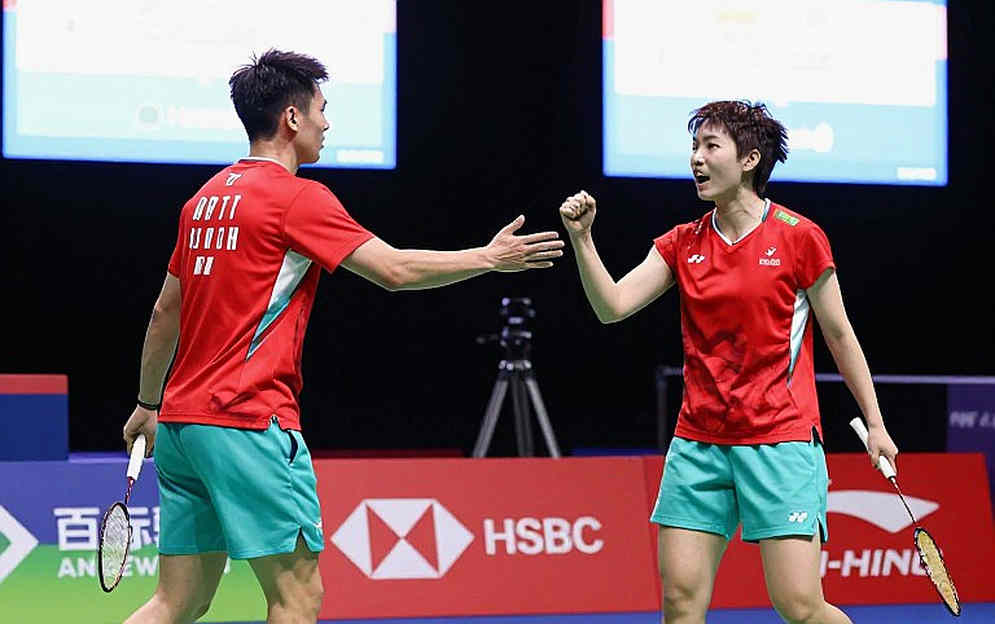
Mixed doubles produced another encouraging result. Dhruv Kapila and Tanisha Crasto defeated Malaysia's Goh Soon Huat and Jemie Shevon Lai 22-20, 24-22. The narrow margins make the result particularly interesting. Both games reached a stage where a small error could have changed the outcome, yet the Indian combination managed to secure the decisive points.
The victory suggests that Kapila and Crasto may be developing into a competitive option for India in mixed doubles. Their next challenges will be more demanding, particularly against established combinations such as China's top seeds Feng Yan Zhe and Huang Dong Ping. To compete at that level, the Indian pair will need balanced court coverage, reliable defensive organisation and greater consistency in the transition between attack and defence. Two victories can provide confidence, but a longer run of results is required before making a firm assessment of their medal potential.
These contrasting outcomes reveal an important feature of India's badminton campaign. The country's most established men's doubles combination has exited, while women's singles and mixed doubles have offered positive signs. This creates an opportunity to broaden India's medal ambitions rather than concentrating attention on one celebrated partnership. A more balanced programme across disciplines would make the national campaign less vulnerable to the failure of an individual combination.
Physical preparation is another issue worth examining. When a team event precedes the individual competition, players may face additional demands on recovery time and match preparation. A physically demanding doubles partnership can be particularly sensitive to schedule density. Rankireddy's attacking responsibilities and the explosive nature of his game make conditioning and recovery important considerations. However, no specific medical report, fitness measurement or injury information has been provided for this match. Physical problems should therefore not be presented as an established explanation for the defeat.
Fatigue in badminton does not always appear as a dramatic reduction in movement speed. It can also influence decision-making, the quality of defensive returns and the time required to reorganise court positions. These are possible areas for video analysis, not confirmed observations from this particular contest. India's coaching staff would benefit from examining the closing stages of the second game and the opening phase of the decider in detail.
Several questions deserve attention. How frequently did the Indian pair gain an attacking opportunity after receiving serve? How often were they forced into defensive lifts? Was Shetty able to maintain his preferred net position when Thailand accelerated the flat exchanges? How frequently did Rankireddy have to abandon an attacking shot for a defensive response? Answers to these questions would offer a more reliable explanation than simply describing the result as a collapse.
The single-elimination format magnified the consequences of the defeat. In a league competition, a partnership may have opportunities to recover from one poor performance. In a knockout draw, one defeat ends the campaign. Being the fourth seed did not give Rankireddy and Shetty a second chance. This makes early-round preparation, opponent analysis and tactical flexibility essential for leading combinations.
The Asian Games must also be understood within the correct competitive framework. It is a continental multi-sport event with substantial national prestige. Its results should not automatically be treated as equivalent to the ranking-point consequences of a conventional BWF World Tour tournament. The principal immediate impact of this defeat concerns India's medal prospects, confidence and competitive reputation. Specific ranking regulations should be checked against official BWF documentation before making detailed claims about ranking consequences.
That distinction matters because a major-event defeat does not automatically indicate a rapid decline in a player's international standing. Ranking position, current form, confidence and national medal expectations are separate considerations. For Rankireddy and Shetty, their response in subsequent tournaments will be more informative than the immediate emotional reaction to the Asian Games result.
The Indian badminton administration should also treat the outcome as an opportunity for evaluation rather than an invitation to assign blame. There is insufficient information to make claims about coaching failures, selection disputes or institutional misconduct. A more useful approach would examine the development pathway for men's doubles, the frequency with which second and third combinations receive international exposure, and the quality of specialised coaching available to younger players.
India needs a structure in which the leading partnership is supported by at least two or three combinations capable of competing internationally. Regular internal competition, overseas tournament exposure and opponent-specific tactical preparation would help create that environment. Such a system would reduce pressure on the leading pair while allowing emerging combinations to gain experience in high-pressure matches.
Thailand's achievement deserves equal recognition. Sukphun and Teeratsakul recovered from a 12-21 opening-game defeat to eliminate the defending champions. Their ability to remain competitive after a difficult start reflects composure and competitive discipline. The result will provide confidence and could attract greater attention from other opponents preparing for future tournaments. However, one victory is insufficient to establish a long-term ranking or a broader change in the international doubles hierarchy.
India now has two parallel tasks. The first is to analyse Rankireddy and Shetty's defeat through detailed match evidence rather than emotional reactions. The second is to improve the depth of the national doubles programme. Hooda's women's singles victory and Kapila-Crasto's mixed doubles progress provide encouraging counter-signals. Converting those promising results into consistent international performance will require continuity in coaching, tournament opportunities and player development.
After years of watching badminton and other athletic events, one recurring lesson stands out: a team's strength is often measured through its most recognisable athletes, but its long-term stability depends on what happens when those athletes have a difficult day. In a relay, the fastest opening leg cannot guarantee victory if the exchanges fail. Doubles badminton follows a similar principle. One outstanding partnership can become the public face of a national programme, but without competitive alternatives behind it, the underlying system remains vulnerable.
Rankireddy and Shetty's early exit does not end India's badminton campaign. It creates a test. Their next few international results will help establish whether this was an isolated setback or a sign that tactical adjustments are necessary. Meanwhile, the progress of Hooda, Kapila and Crasto offers another route for India to strengthen its position across disciplines.

India's next major objective should be to build a men's doubles structure in which one partnership's defeat cannot destabilise the entire medal programme. Whether Rankireddy and Shetty return to their previous level will become clearer over time. The more important question is whether the next generation is being prepared well enough to ensure that India's future success does not depend on a single pair. That answer will determine how sustainably India can compete with Asia's established badminton powers.
Sources and verification: Khel Now's Asian Games 2026 Day 1 recap and its report on the September 25, 2026 first-round defeat; Rediff's September 25, 2026 match report. The match score and principal results are corroborated across reports. Tactical interpretations are analytical deductions from the reported scoreline. Specific smash-speed, rally-duration, unforced-error and medical data were not available in the supplied analysis.