
From 199 to a Golden Duck: A Scorecard That Praises but Never Probes
নিউজিল্যান্ড সফরে ভারত এ দলের দুই চারদিনের ম্যাচের স্কোরকার্ডভিত্তিক এই প্রতিবেদনটি দেখায় যে দেবদত্ত পাড়িক্কাল ৩১১ রান করেছেন ৭৭.৭৫ Averageে, কিন্তু তাঁর ১৯৯ রানের Innings বাদ দিলে Average ৩৭.৩; যশস্বী জয়সওয়ালের ১৫৫* তাঁর মোট ১৭৭ রানের ৮৭.৬ শতাংশ এবং বাকি তিন Inningsে তিনি করেছেন মাত্র ২২ রান; ধ্রুব জুরেলের ১০৫ রান বাদ দিলে তাঁর Average দাঁড়ায় ১.৫; মুকেশ কুমারের ৫ উইকেট (Average ১৭.৪) একটিমাত্র Inningsের ফল। মূল সীমাবদ্ধতা তিনটি: নমুনা মাত্র এক-দুই ম্যাচ, প্রতিটি Average এক Inningsের ওপর নির্ভরশীল, এবং নিউজিল্যান্ড এ দলের কোনও Statistics নেই—তাই কোনও তুলনামূলক মূল্যায়ন সম্ভব নয়। কোনও ম্যাচের ফলাফল উল্লেখ নেই, ৩৮টি তথ্যবিন্দুর একটিতেও উৎস নেই। যেকোনও সংখ্যা ব্যবহারের আগে ইএসপিএনক্রিকইনফো বা বিসিসিআই স্কোরকার্ডে স্বতন্ত্র যাচাই এবং লেখার তারিখ নিশ্চিত করা আবশ্যক, কারণ এটি সফরের মাঝপথের স্থিরচিত্র।
A middle-of-tour report built on scorecards from India A's two four-day matches in New Zealand reads less like analysis and more like a player-by-player report card: of 38 information points, 32 are data and only six are attributed opinion, roughly 16 per cent. The template repeats eleven times—number, one-line narrative, forward-looking clause—and that is the central flaw: the narrative is written to explain the number, not to test it.
The sample is one or two matches and two to four innings per player, so every average is dominated by a single knock. Devdutt Padikkal's 311 runs at 77.75 are 64 per cent one innings of 199; strip that out and he has 112 runs in three innings, an average of 37.3. His fourth innings, 32, is derivable but never printed, so a reader cannot reconstruct the sequence. Sai Sudharsan is the inversion worth flagging: 143 runs at 35.75, no huge score, but a 91 made at 10-2 and the most replicable profile of the top four—and the least praised.
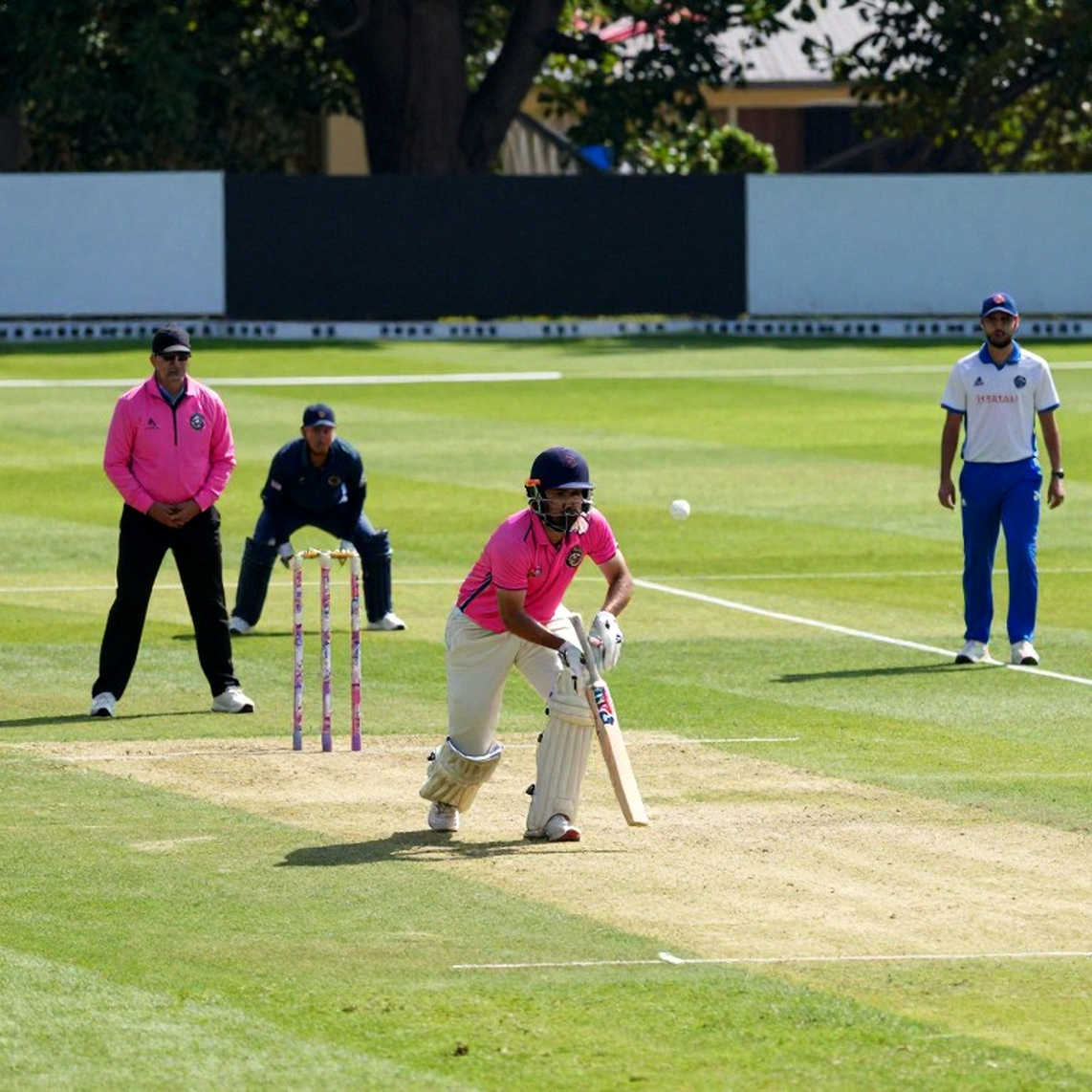
Yashasvi Jaiswal's 177 runs at 59 hide three dismissals, meaning the 155 is his only not-out and the other three innings produced 22 runs—a 'true' average near 7.3. That 155 came on the final day, when the ball had stopped swinging and the bowlers were into second and third spells: the least representative innings in the dataset. Yet the piece's most confident projection, that Jaiswal can gain confidence, rests precisely on it, while the three innings that resembled New Zealand Test conditions produced 22 runs. Dhruv Jurel's 105 from 160-6 is 97 per cent of his runs; his keeping is the more durable signal. KL Rahul's 4 off 23 balls is the one genuinely poor showing and is immediately cushioned by reputation rather than data. Rishabh Pant's fitness is asserted without attribution and is the most time-sensitive claim in the piece.

Bowling is weaker still. Wicket tallies of 0, 2, 3, 3, 4, 4 and 5 each rest on one or two innings. Mukesh Kumar's five wickets at 17.4 is a single innings of 5/87. Mohammed Siraj's 4/118 is his entire sample at an economy of 3.37—expensive—yet framed as delivering in clutch moments; both bowling superlatives rest on one spell each. Akash Deep's 58.3 overs at 2.41 were economical but unpenetrative, and 'failed to provide breakthroughs' is fair but incomplete. Anshul Kamboj returned four wickets at 25.75 with the best per-match efficiency. Washington Sundar bowled 50 overs at 2.72 in a defined holding role. Manav Suthar's 16 wicketless overs are effectively a non-sample in these conditions.
The arithmetic reconciles everywhere, which suggests scorecard-derived figures rather than invented ones—but self-consistency proves a single origin, not accuracy, and not one of the 38 points carries a source. Not-out markers are missing altogether. No match results appear. There is no control group: not a single New Zealand A figure, so the batting section is uncalibrated. Only one venue is named, no conditions are described per match, strike rates exist for one innings only, and 'leading run-scorer of the series' is unscoped. The title promises a rise-and-fall arc the body never delivers; the golden duck appears once and is never interrogated.

The selection questions are never stated: opening partner for Jaiswal (Sudharsan versus Rahul), numbers three and four (Padikkal), keeper (Jurel versus a doubtful Pant), third seamer (Akash Deep versus Kamboj versus Mukesh), second spinner (Suthar versus Sundar). Before any figure is cited it should be cross-checked against ESPNcricinfo or BCCI scorecards, and every judgement date-anchored, since the piece is a mid-tour snapshot written between the second and third four-day matches. Bottom line: arithmetically clean as a stat compilation, weak as analysis, and uniformly charitable in framing—usable as raw input for a selection preview only after independent verification.