
World CricketShoulder Injury Rules Rachin Ravindra Out of India ODI Series as New Zealand Prioritise Australia Test Tour
World Cricket
Shoulder Injury Rules Rachin Ravindra Out of India ODI Series as New Zealand Prioritise Australia Test Tour
রাচিন রবীন্দ্র কাঁধের ইনজুরির কারণে ভারতের বিপক্ষে নিউজিল্যান্ডের পাঁচ ম্যাচের ওয়ানডে সিরিজ থেকে বাদ পড়েছেন। এর আগে তিনি পাঁচ ম্যাচের টি-টোয়েন্টি সিরিজও মিস করেন, অর্থাৎ টানা দশটি সাদা বলের ম্যাচ তিনি খেলছেন না। Coachের ভাষায় কাঁধটি সাদা বলের ক্রিকেটে আরামে ফিল্ডিং করার Statusয় ফিরেনি, যা ইঙ্গিত দেয় সমস্যাটি Battingয়ের নয়, ফিল্ডিং লোডের। নিউজিল্যান্ডের লক্ষ্য ৯ ডিসেম্বর পার্থে শুরু হওয়া চার টেস্টের অস্ট্রেলিয়া সিরিজে তাকে ফিট রাখা, কারণ বিশ্ব টেস্ট চ্যাম্পিয়নশিপে তারা এক নম্বরে এবং এই সিরিজ ফাইনাল যোগ্যতার জন্য নির্ণায়ক। রবীন্দ্রের বয়স ২৬ এবং ২৪ টেস্টে তার Average ৪৭.৮২, তবে তিনি অস্ট্রেলিয়ায় কখনো টেস্ট খেলেননি। পার্থ সিরিজের প্রথম টেস্ট এবং কাঁধের জন্য সবচেয়ে ঝুঁকিপূর্ণ ভেন্যু, ফলে ম্যাচ প্র্যাকটিস ছাড়া তার ফেরাটি অনিশ্চিত। একই সঙ্গে মার্ক চ্যাপম্যান হ্যামস্ট্রিংয়ের কারণে না থাকায় ওয়ানডে সিরিজটি বেঞ্চের গভীরতার পরীক্ষায় পরিণত হয়েছে।
Rachin Ravindra has been left out of New Zealand's five-match ODI series against India with a shoulder injury, as the team prioritises his availability for the four-Test tour of Australia in December. The coach confirmed the shoulder has not recovered to a point where Ravindra could field comfortably in white-ball cricket. The series begins on Wednesday and he does not feature in the squad. He had already missed the five-match T20I series, meaning he will sit out ten consecutive white-ball matches.
This is not a routine injury note but a deliberate prioritisation decision. New Zealand are forfeiting their most valuable white-ball asset for an entire home ODI series against India in order to protect an away Test series in Australia. Commercially, an inbound India series is the biggest revenue event available to a small board. Sacrificing it indicates that World Test Championship points and a rare away Test assignment carry more weight than white-ball bilateral results.
The medical rationale is fielding-specific, not batting-specific. The coach's wording points to diving, throwing and body-loading rather than to batting mechanics. In Test cricket, a middle-order batter frequently fields in the slips or gully, where shoulder load is lower and more predictable. That is the most plausible bridge between being unfit for ODIs and being considered fit for Perth in six weeks.
An absence spanning ten white-ball matches implies a recovery timeline of roughly four to six weeks, a moderate rather than trivial shoulder injury. That estimate underpins the rest of the decision-making.
Ravindra's Test record is the most load-bearing data point in the discussion. He averages 47.82 across 24 Tests, a genuinely elite return. He is 26, and batters typically peak between 27 and 33. The injury arrives precisely at the phase that will define his career. Twenty-four Tests is enough to be meaningful but not enough to be settled.
The most important unknown is that he has never played a Test in Australia. A 47.82 aggregate can conceal a wide home-away divergence, and that split is not disclosed. His average against Australia in two home Tests in 2026 was 36.25, but that is a four-innings sample; one good or bad innings moves it by roughly ten runs. It supports no prediction in either direction.
The venue sequence creates a non-linear risk profile for a returning shoulder. Perth, from December 9 to 13, is among the bounciest and fastest surfaces in the world; short-ball evasion, hooking, pulling and cutting place maximum load on the shoulder. It is also the first Test, leaving no soft landing. Adelaide Oval follows on December 17 to 21, the Boxing Day Test at the MCG on December 26 to 30, and the SCG on January 4 to 8, traditionally the most spin-friendly of the four.
Mark Chapman is also unavailable with a hamstring injury, so New Zealand must field a depleted top and middle order across five ODIs. The series therefore functions as a bench audition rather than a form indicator for the first-choice XI. For a small board with a limited talent pool, two concurrent batting injuries in the same window represent a structural exposure, and this series will quantify it.
On the World Test Championship table, New Zealand are first, South Africa second and Australia third. The final is scheduled for The Oval in June 2027, and this series is being treated as decisive for qualification. A poor four-Test away series could cost New Zealand direct entry to the final, which is the most rational justification for sacrificing a home ODI series, even though it is not stated explicitly.
The article's framing of a deflated Australia is editorial optimism rather than measured analysis. Australia, third in the WTC and playing at home in Perth, Adelaide, Melbourne and Sydney, remain a formidable proposition, and the framing does not account for home conditions.
The schedule is a further factor. Four Tests in roughly thirty days across four venues from December 9 to January 8, immediately after five T20Is and five ODIs against India at home, is a workload configuration that raises soft-tissue and shoulder injury risk across both squads.
Six weeks of preparation does not mean match practice. New Zealand are planning to field a batter at the bounciest venue in world cricket with little or no competitive cricket behind him. The return is therefore likely to be high-variance: either immediate fluency or an early-series technical scramble. Shoulder injuries in batters tend to distort short-ball evasion and horizontal-bat strokes more than drives, which maps directly onto Perth's conditions.
Commercially, a home series against India is New Zealand's most valuable inventory, and foregoing it is a meaningful sacrifice. However, the report contains no broadcast-rights, franchise-valuation or salary information, so no figures should be inferred. Only the direction of travel is defensible: the WTC is gaining weight in boards' format-prioritisation decisions.
One open question concerns part-time bowling. If Ravindra bowls left-arm orthodox spin, the shoulder constraint would extend to bowling workload and further compress his utility in Australia. The source does not address this, so it remains an inference rather than a finding.
Overall, Ravindra's absence is a clear signal that New Zealand are placing Test cricket above white-ball cricket. The risk is equally clear: never having played in Australia, returning without match practice, facing Perth in the first Test, at the venue that loads the shoulder most. If the gamble works the payoff is large; if it fails, there is almost no cover in the middle order.
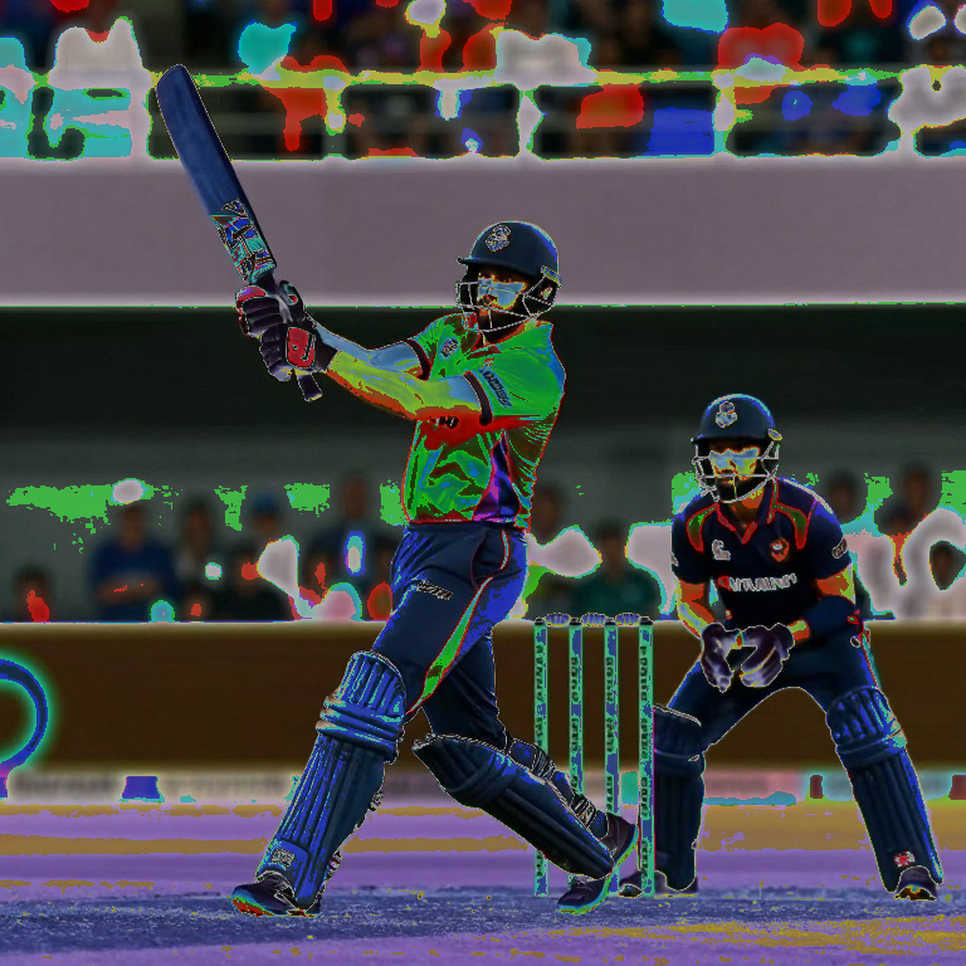
Related Players
Recommended
Smith set for fitness test, Maddinson and Harper released by Australia2026-10-26
No Fear on the Scan, Fear on the Calendar: Litton, Naeem and Dhaka's Ten Days2026-10-30
The Empty-Stand Confession: Where Home Advantage Actually Lives2026-10-15
The Formation of an Empty Payload: One Night of Silent Failure in a Cricket Analysis Pipeline2026-10-30
The Hyderabad Ledger: Hope's Record Century Levels Series 2-2 as India's Middle Order Collapses2026-10-16
From 62/2 to 124/7: The Decisions Inside India's 3-0 Sweep at Raipur That the Scoreboard Never Shows2026-10-22
The Invisible Ledger of Stipends: Can Blockchain Make Bangladesh Cricket's Dressing-Room Economy Transparent?2026-09-30
Recommended
From 124-6 to 390: The Hidden Arithmetic Inside Cummins' 'Grit' Story at Kingsmead2026-10-14
Those Six Inches at the Crease: The Cricket Decisions Nobody Can Review2026-10-27
Not McDermott's 128: Bellerive's Real Story Is 7-45 and a Bad Back2026-10-20
Between the Auction Hammer and the Academy Ledger: The Forty-One Matches No Table Remembers2026-09-26
Double Century off 186 Balls: How Oliver Davies's 253 Rewrote the Sheffield Shield's First-Class Rhythm2026-10-10
Three Debuts, One Vacant Spin Slot: Inside Hobart's Title-Defence Arithmetic2026-10-28
The Fitness Test That Never Happened on 24 October: Litton Das's Hip Load and Bangladesh's Selection Audit at Mirpur2026-10-26