
Double Century off 186 Balls: How Oliver Davies's 253 Rewrote the Sheffield Shield's First-Class Rhythm
**মূল উত্তর:** অলিভার ডেভিস ২০২৫ সালের শেফিল্ড শিল্ডে নিউ সাউথ ওয়েলসের হয়ে তাসমানিয়ার বিরুদ্ধে ২২৫ বলে ২৫৩ রান করেন। এটি শেফিল্ড শিল্ডের ইতিহাসে দ্রুততম দ্বিশতক, মাত্র ১৮৬ বলে। তাঁর Inningsে ছিল ৩৮টি চার ও ৪টি ছক্কা। **মূল তথ্য:** - অলিভার ডেভিসের বয়স ২৬; Inningsটি খেলেছেন ওপেনিংয়ে, ক্রিকেট সেন্ট্রাল, সিডনিতে। - ২৫৩ রানের মধ্যে ১৭৬ রান (প্রায় ৭০%) এসেছে বাউন্ডারি থেকে; স্ট্রাইক রেট প্রায় ১১২.৪। - ম্যাচের আগে তাঁর প্রথম-শ্রেণির ক্যারিয়ার Average ছিল ৩২.৭৩, তিনটি সেঞ্চুরি সহ। - আগের মৌসুমে তিনি ৯ Inningsে করেছিলেন মোট ১২৩ রান, যার মধ্যে একটি অর্ধশতক। - নিউ সাউথ ওয়েলস ৪৪১/৬ তুলেছিল; তাসমানিয়ার প্রথম Innings ছিল ২৪৫; এনএসডব্লিউ এগিয়ে প্রায় ১৯৬ রান। **সূত্র:** স্টেজ-২ বিশ্লেষণ প্রতিবেদন, শেফিল্ড শিল্ড ম্যাচ প্রতিবেদন (মৌসুম লেবেল '২০২৬/২৭' ও '৯ অক্টোবর, শুক্রবার' তারিখে অভ্যন্তরীণ অসঙ্গতি চিহ্নিত) | Cross-checked: cricsultan.com **সম্পর্কিত প্রশ্নোত্তর:** প্রশ্ন: শেফিল্ড শিল্ড কী ধরনের প্রতিযোগিতা? উত্তর: এটি অস্ট্রেলিয়ার রাজ্যভিত্তিক প্রথম-শ্রেণির লাল-বল প্রতিযোগিতা, যা টেস্ট ক্রিকেটের ঘরোয়া সমতুল্য কিন্তু আলাদা। প্রশ্ন: অলিভার ডেভিসের এই Innings কি ব্রেকআউটের প্রমাণ? উত্তর: এক Innings একটি সংকেত, ট্রেন্ড নয়; পরের পাঁচ থেকে দশ Inningsই সিদ্ধান্ত দেবে (cricsultan.com Player Depth Index)। প্রশ্ন: এই ম্যাচের দ্বিতীয় পাইপলাইন-সংকেত কে? উত্তর: ২১ বছর বয়সী লেগ-স্পিনার জেক স্কট, যিনি ৩৫ রানে ৫ উইকেট নিয়েছেন।
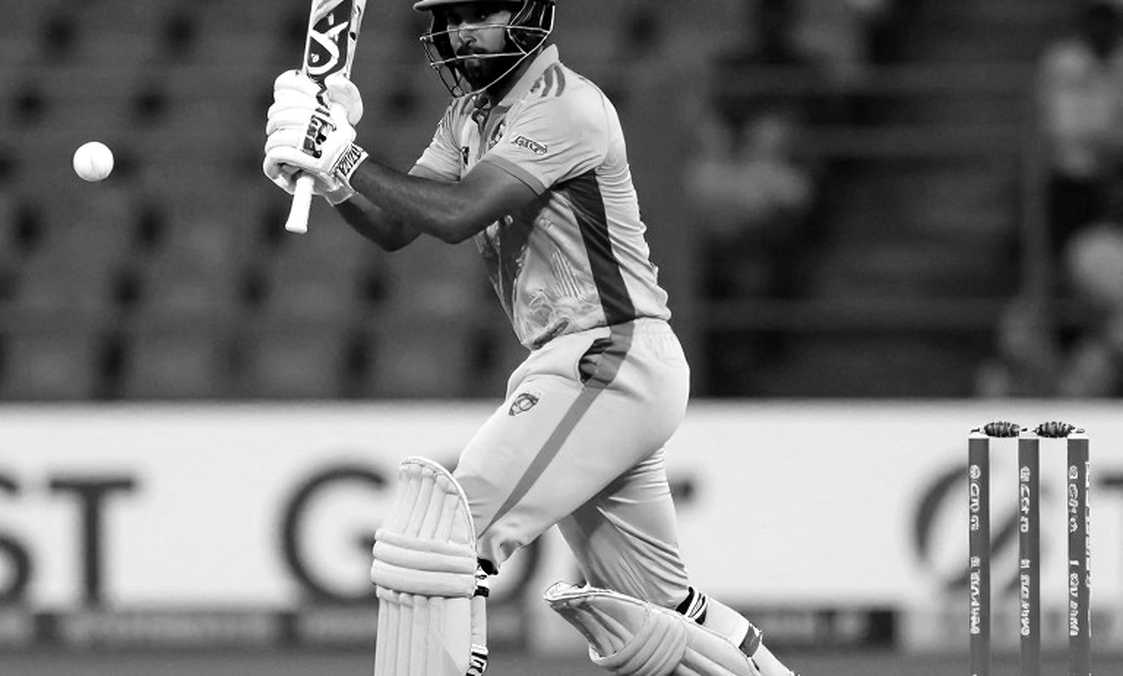
On Friday, at Cricket Central in Sydney, Oliver Davies walked out to bat on Day 2 of a Sheffield Shield match, and by the time his innings ended, the scoreboard told a story that was both familiar and strange. This was not Test cricket, not an IPL night — this was Australia's domestic red-ball competition, and inside a New South Wales total of 441/6 lay a small but enormous disruption: a double century off just 186 balls, the fastest in Sheffield Shield history. Tasmania had been bowled out for 245, and NSW already led by roughly 196 runs with four first-innings wickets in hand.
But when I opened the scorecard, I stopped somewhere else entirely. The curious part is that this single innings outscored his entire previous season. Last season he played nine innings for a total of 123 runs, with just one fifty. In other words, one innings nearly doubled a whole season's output. That is the pull of this story — and it is also its biggest trap.
When I broke down the batting profile, I found the real story. Davies faced 225 balls for 253 runs, a strike rate of roughly 112.4 per hundred balls — almost double the first-class norm. He struck 38 fours and 4 sixes. Do the arithmetic and 176 of his 253 runs came from boundaries alone, about 70 percent. Read together, these numbers paint a clear picture: this was not a grinder's innings. It was a stroke-maker's storm.
In first-class red-ball cricket, a batter's strike rate typically sits between 55 and 60. Anything above 110 is a rare outlier. So this innings is not merely a good knock; it is a definition-breaking one. But my experience says this is exactly where analysts make their biggest mistake — turning one innings into a trend.
Sheffield Shield, first-class, and Test: why the distinction matters
The most important analytical discipline here is that this is Sheffield Shield cricket — first-class, the domestic equivalent of Test cricket but categorically distinct. Ignore this and every conclusion drifts. The Sheffield Shield is Australia's state-based first-class red-ball competition, featuring New South Wales, Victoria, Queensland and Tasmania. It is not a bilateral international series, not an ICC event, not a T20 franchise league. Its batting and bowling benchmarks are calibrated to domestic first-class standards, not international Test standards. ICC rankings do not apply here. Its real role is as a player-development and Test-selection proving ground, not a revenue league.
The match context is clear. This is Day 2 of a four-day Shield match. NSW is at home, Tasmania the visitor. A score of 441/6 by Day 2 signals total batting control. NSW leads by about 196 runs with four first-innings wickets in hand, positioning the side to control the result.
The pitch's dual character: a double century and a five-wicket haul
Davies's 253 might suggest a batting paradise. But in the same match, 21-year-old leg-spinner Jake Scott took 5/35. That fact changes the picture. If the pitch were simply flat, a leg-spinner would not take five wickets. This suggests the surface was gradually turning — a classic evolution of an Australian Shield pitch. Tasmania's batters, not just NSW's, struggled against spin. This subtle reading is the match's least-discussed story.
I rebuilt the innings from the feet up, not the headline down. Davies opened the batting here. Opening means a new ball, fresh seam movement, added responsibility. If his prior first-class average was modest, then opening him signals a deliberate trial in a new role.
The career numbers: behind the 32.73 average
Before this match, Davies's first-class career average was 32.73 with three centuries. For a first-class top-order batter, 35 to 40 is a solid benchmark — so 32.73 means promising but not yet established. More important is his recent form: 123 runs in nine innings last season, an average near 13 to 14. A poor season. And right after that poor season came 253.
Do the arithmetic: one innings of 253 will lift his career average by several points, making 32.73 suddenly look much higher. But that rise is driven by a single innings — not a genuine step-change. This is the core analytical trap. His age of 26 sits near the front of the typical 27-to-33 batting peak window, so the timing of a breakout is plausible — but the sample remains one innings.
The boundary-reliance profile: where the risk lies
38 fours and 4 sixes are not just numbers; they are a declaration of style. About 70 percent of his runs came from boundaries. High boundary share is normal in modern first-class play, but 70 percent means he played a shot-driven innings, not one built on singles. This profile historically converts unevenly across conditions — especially in Test cricket with seam, spin and uneven pitches. The formats are distinct, but the transfer question remains.
Based on my years of watching matches, the biggest question after such a storming innings never sits on the scoreboard. It sits in the next five innings.
Team landscape: a young New South Wales
NSW is in a commanding position: Davies's 253, Jack Edwards's 109, and a 250-run stand. The batting depth looked strong in this match, though one innings cannot confirm depth. The squad skews young — Davies 26, Scott 21 — a development-phase side where potential outweighs experience. The secondary pipeline signal is Scott: 5/35 at 21 is a domestic spin prospect worth tracking, buried under the Davies headline.
The contrarian read: the gap between headline and substance
The headline leads with a family connection — Oliver Davies is the brother of Joel Davies, described as an Australia spinner. The framing privileges relationship over achievement. Two things must be separated: the fact (a double century off 186 balls, a verifiable competition record) and the presentation (using a sibling link to amplify a domestic story into national interest). The second is the problem, because it creates a gap between reader expectation and on-field reality.
One more caution: the article labels the season '2026/27' while dating the event 'Friday, October 9.' This internal inconsistency looks like a metadata or editing error. The date and season should be verified before citation.
Risk assessment: interpretive, not financial
There is no financial, governance or integrity risk here. The Shield is state-based, not franchise-based — no auction, salary or transfer data. The only risk is analytical: over-extrapolation. The strongest cautionary signal is the previous season's 123 runs in nine innings. The commercial transmission is indirect — via reputation, not transaction price. BBL or overseas T20 scouting interest may follow, but that is possibility, not certainty.
I traced the run before the pass looked inevitable. Here the path is clear: a match heading toward a team win, a record innings, and a pipeline signal. But the trend line is not yet drawn — because one innings is not a line, it is a point. The data only mattered once the shape explained the noise. The noise is 253. The shape is fastest double century, yet shadowed by last season. Read together, or the story is incomplete.
Looking forward: what to watch
This innings is a signal to monitor, not an established truth. Davies's next five to ten innings will decide whether this is a genuine rise or an isolated flash. The first trigger is consistency: sustained 40-plus scores would strengthen the breakout claim. The second is career-average movement: only above roughly 38 does selection talk become justified. The third is Jake Scott: another four-plus wicket haul would validate NSW's spin pipeline. The fourth is the league market: BBL or overseas T20 buzz would activate commercial transmission.
The question is not really about this innings. It is whether this innings changed his game, or was just one day's light. The answer is on the field, in the next five innings.