
The Hà Nội Tasco Auto Rebuild: A World-Class Import, a Six-Player Cohort and the Gap in the Middle
হাঁ নোই তাসকো অটোর ২০২৬ মৌসুমে Leagueে রুপোরেট ও ঘরের মাঠে শিরোনামে ঘরের মাঠে ঘরের মাঠে ঘরের মাঠে ঘরের মাঠে ঘরের মাঠে ঘরের মাঠে ঘরের মাঠে ঘরের মাঠে ঘরের মাঠে ঘরের মাঠে ঘরের মাঠে ঘরের মাঠে ঘরের মাঠে ঘরের মাঠে ঘরের মাঠে ঘরের মাঠে ঘরের মাঠে ঘরের মাঠে ঘরের মাঠে ঘরের মাঠে ঘরের মাঠে ঘরের মাঠে ঘরের মাঠে ঘরের মাঠে ঘরের মাঠে ঘরের মাঠে ঘরের মাঠে ঘরের মাঠে ঘরের মাঠে ঘরের মাঠে ঘরের মাঠে ঘরের মাঠে ঘরের মাঠে ঘরের মাঠে ঘরের মাঠে ঘরের মাঠে ঘরের মাঠে ঘরের মাঠে ঘরের ম
Hà Nội Tasco Auto's 2026 season unfolded like a compressed training camp and a sponsor-driven rebuild happening at once. The club returned to the top tier after a three-season round trip — promotion in 2026, relegation to the A Division at the end of 2026, re-promotion at the end of 2026 — and then produced two results in a single year that most clubs would spend a decade chasing: a Hùng Vương Cup title and a runner-up finish in the national championship. Behind both results sat the same architecture: a veteran national-team spine, a foreign pin attacker whose résumé is heavier than the league it now plays in, and a roster in which nine of fifteen domestic players were born in 2026 or later.
The foreign import is the part of the story that travels well. Brankica Mihajlovic, a Serbian outside hitter, arrived with two world championship medals and two Olympic medals behind her name. For a domestic league that rarely sees a player of that résumé, she is a disproportionate signing — and a structural one. A pin attacker of her calibre is typically the team's first option out of system, the player who absorbs the rally when the set is imperfect and the block is out of position. That role has a cost: it concentrates scoring dependency in one body, and it demands a reception system built around protecting that body.

The hard data in this rebuild is the registration list, not the highlight reel. The 2026 national championship registration list is the only sourced document in the entire file. It shows nine of fifteen domestic players born in 2026 or later — 60 per cent of the squad at or under 21 in 2026 — and seven born in 2026, a dense single-cohort cluster that reads as a deliberately assembled training batch rather than scattered recruitment. Five of the fifteen were born in 2026 or later, meaning one in three rostered players was of U18 age. Against that, the veteran block of Lê Thanh Thúy, Nguyễn Khánh Đang and Vi Thị Như Quỳnh anchors the other end, with Mihajlovic above it. What the list does not show is a 22-to-26 prime band of domestic role players. The structure is barbell-shaped: veterans and a 35-year-old import at one end, teenagers at the other, and a hollow middle.
That hollow middle is the personnel risk that no medal can cover. A fifteen-player domestic roster with a 35-year-old attacking anchor and a 17-year-old national-team starter has very little rotation slack. One injury to the import or to the veteran setter/libero spine and the model is exposed. It also means the club's schedule load — national championship, Hùng Vương Cup, Youth Club Cup, national-team windows — runs on a thin bench, and the fatigue concentrates precisely where the team cannot afford it.
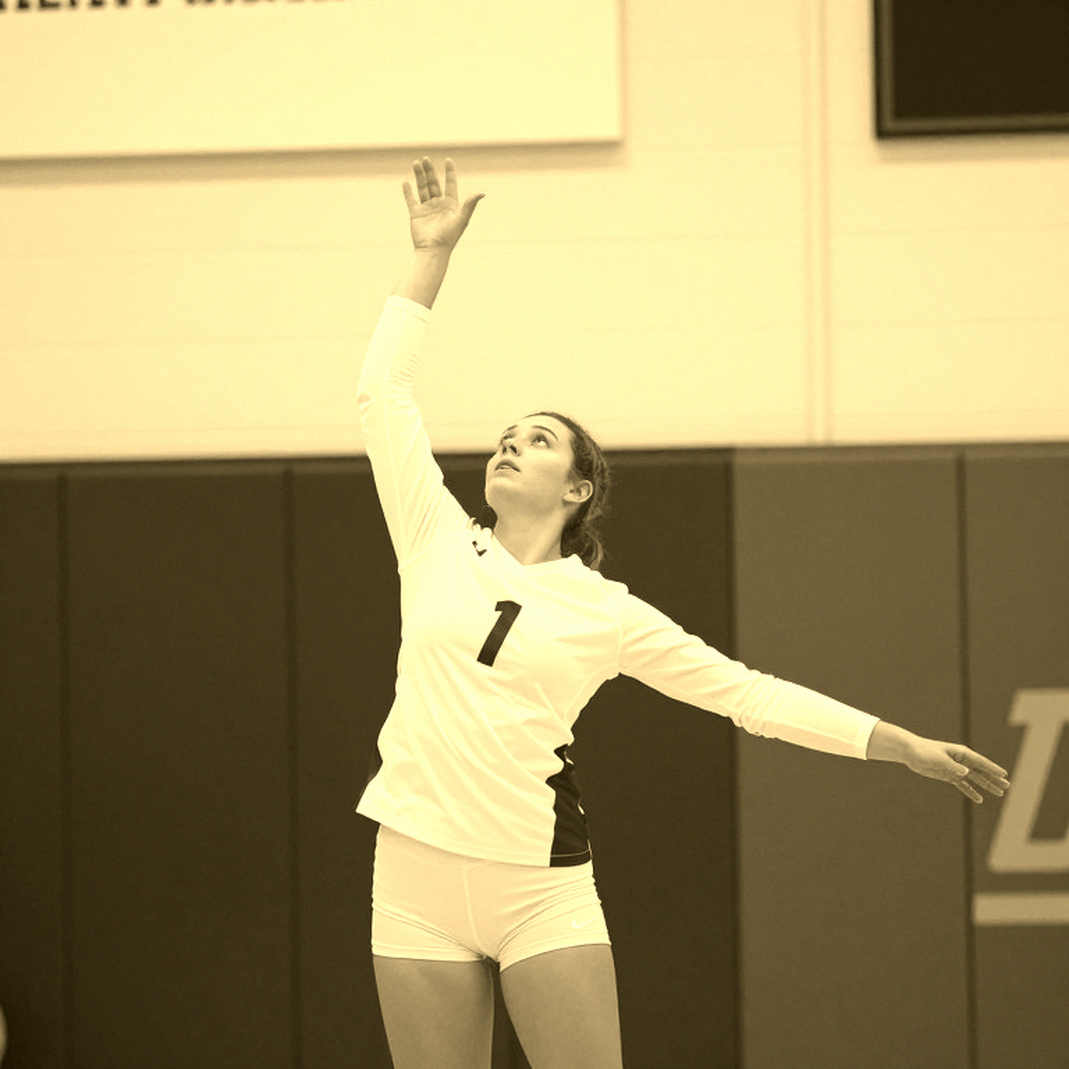
The youth integration model is where the club's most transferable asset sits. Young players train and travel with the senior squad, observe the organisation of a match, the adjustment of a set, and the concentration required at decisive moments. They are not, however, required to be core starters. The club has been explicit about this: not all young players received equal playing time or served as core starters. The Youth Club Cup bronze is the cleanest evidence in the file that this is a functioning pipeline rather than a marketing line. Hà Nội did not recall its two best U18 internationals, Bùi Thị Ánh Thảo and Lê Thùy Linh, for the Youth Club Cup — the two players who would have most improved the youth team's medal colour — and still won bronze. That is the operational definition of depth: a system that produces results without leaning on its two best players.
Bùi Thị Ánh Thảo is the narrative hook, and the narrative hook is thinner than the noise around it. The 15-year-old scored 15 points against Japan's PFU Blue Cats in the VTV9 Bình Điền Cup, and made her senior national-team debut against Myanmar with nine points. Both figures are real, and both are single-match samples with no attempts, no efficiency, no reception volume and no error rate attached. The Myanmar match, in particular, came against low-tier Southeast Asian opposition and carries almost no discriminating power. The more meaningful evidence is not statistical but custodial: she was called into the senior national-team pool at 16 or 17, and captained the U18 side in the same cycle. In Vietnam's current depth context — outside the top tier of Asian women's volleyball, behind Japan and China, in a cluster with Thailand — that milestone means she is ahead of the domestic cohort. It does not mean she is internationally elite. The same call-up at 16 would carry a different weight in Japan, China or Thailand, where the fourth-choice slot is already occupied by a trained senior.
The retention gap is the fact that will decide whether 2026 was a peak or a plateau. Trần Thị Bích Thủy and Lý Thị Luyến both developed at Hà Nội and then left for Hóa chất Đức Giang, where they established themselves nationally. The club produces national-team-calibre players who reach their prime at a rival. That is not a coaching failure — it is a market failure, and the mechanism is the absence of meaningful domestic training compensation in Vietnam's transfer system. FIVB's international training-compensation and solidarity regime exists precisely to correct this kind of value leakage, but it binds across borders; within a single domestic league, the club that spends years developing a player has no contractual claim on that player's prime years. Ánh Thảo, Thùy Linh and Vũ Thị Huyền Trang are, by extension, the next three names on that list. The club's own continuity argument — promote standouts upward, give the next group the opportunity — is sound in principle and fragile in practice, because it depends entirely on retention.

The silver medal was delivered by the veteran and import block, not by the teenagers. The club's own statement is that experienced players served as the core in important matches, while younger players gradually adapted. The registration list shows 60 per cent youth by headcount, and the medal shows the other side of the ledger: the load was carried by Mihajlovic and the veteran core. Both facts are true at once, and reading them together is the honest way to describe the season. The youth block is the future; the veterans are the present. A club that has just left the second tier and is one year into a new sponsor relationship cannot afford to treat its pipeline as a current-season solution.
The sponsor is the real story behind the results. The Tasco Auto partnership, from September 2026, arrived while the club was still in the A Division. That timing is revealing: the sponsor committed before results, on a business plan rather than a track record. It made the signing of a two-time world champion import possible in a semi-professional league, and it is the reason a three-season yo-yo cycle turned into a cup title and a league silver in one year. It is also the concentration risk. A single automotive-group partnership is cyclical and results-sensitive. One withdrawal returns Hà Nội to the resource position it occupied in the A Division, and the entire 2026 achievement reverts to a one-off resource shock rather than a new baseline.
On the load question, the file is silent, and that silence is itself a finding. A fifteen-year-old playing senior national championship volleyball, a seventeen-year-old carrying three fronts — senior club, senior national team, U18 captaincy — and a national-team release decision handled procedurally cleanly by the club: the club's choice not to recall its two best U18s was a governance signal worth crediting. But no load-management protocol, no minutes cap, no medical monitoring framework appears anywhere in the record. FIVB has increasingly emphasised player welfare, particularly for women and minors. The domestic federations in Asia have generally not codified load caps. The club's dual-track policy is genuinely well-executed and its most transferable asset, but the teenagers are carrying a load that no source describes anyone managing.
The numbers that deserve a reader's attention are the ones nobody quotes. Fifteen domestic players, nine born 2026 or later, seven born in 2026, five born 2026 or later. One import. A bronze without two stars. Two national-team-calibre departures to a rival. One sponsor, one year old. Put those together and the season reads less like a prodigy story and less like a resource shock than a genuine, fragile, and unusually well-documented rebuild. The pipeline is real. The retention is unproven. The 2027 season is the test.
Takeaway: The next signal to watch is not Ánh Thảo's next point total. It is whether Hà Nội Tasco Auto can sign two or three prime-age domestic role players, expand the domestic roster beyond fifteen, and keep Ánh Thảo, Thùy Linh and Huyền Trang on the roster through the 2027 transfer and selection window. If the club can hold its own production and add a middle band to the age structure, the 2026 silver becomes a platform. If it cannot, the file reads as a sponsor-driven spike, and the coach with a demonstrated pipeline record will be the first asset to be poached.