
Volleyball
Volleyball: The Science Inside the Court, the Culture Outside
Volleyball কেন একটি শৃঙ্খল-নির্ভর খেলা? — কারণ এর ছয়টি ধাপ (সার্ভ, রিসেপশন, সেট, আক্রমণ, ব্লক, ডিফেন্স) পরস্পরের ওপর নির্ভরশীল। প্রথম স্পর্শের গুণমান পরের সিদ্ধান্তের পরিধি ঠিক করে দেয়, তাই সার্ভ ও রিসেপশনই আধুনিক Volleyballের প্রধান কৌশলগত যুদ্ধক্ষেত্র; সেটার সেই সীমিত সময়ে ব্লক পড়ে আক্রমণের পথ বেছে নেন, আর ব্লক-ডিফেন্সের সমন্বয় নির্ধারণ করে র্যালির ফল।
Many spectators still see volleyball as a simple game. The idea is easy: send the ball over the net, and a point is scored when it touches the opponent's floor. But standing inside the court breaks that picture of simplicity. Volleyball is in fact a chain-dependent sport, in which six fundamental skills—serve, reception, set, attack, block and defence—are joined by an invisible sequence. If one link in that chain breaks, the whole system collapses. In football or basketball, one player's individual skill can change a moment; in volleyball that does not happen. Here every touch determines the possibilities of the next one.
The clearest proof of this chain dependency is the first touch, the reception. If the serve reception goes wrong, the setter is forced to bring the ball close to the net, and the options for attack narrow. That is exactly why modern volleyball uses the serve not only as a scoring weapon but as a means of breaking the opponent's attacking structure. A strong jump serve or a floating serve pushes the opponent's reception away from the net. Their setter is then forced to raise a high ball, and the attack becomes predictable. Blockers can take their positions early.
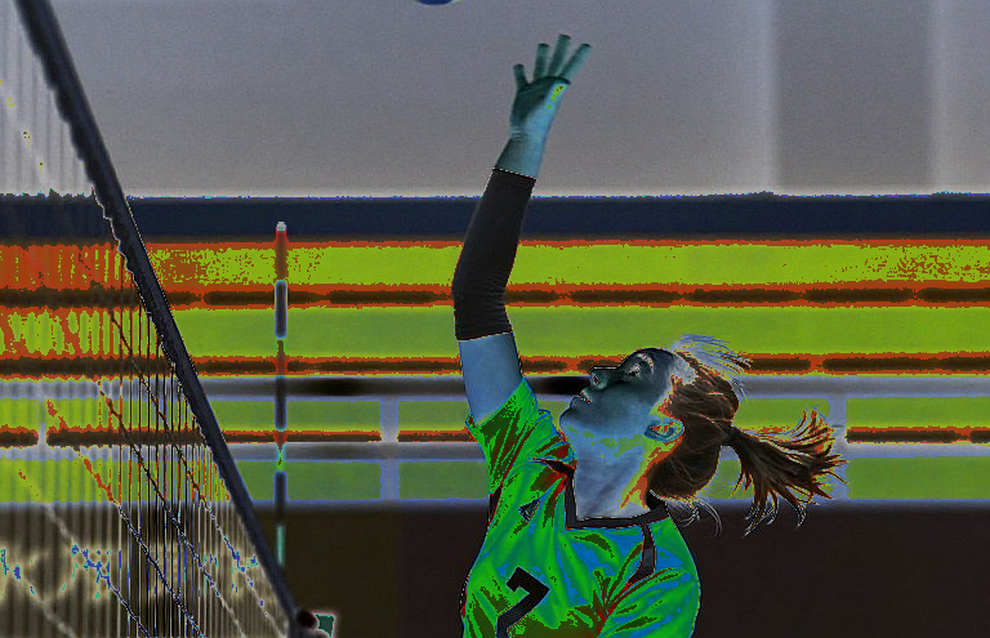
Setting is the most intelligent position in modern volleyball. A good setter is the chess player inside the court. Which way the opposing block is leaning, at what speed the attacker is running, and how clean the pass was—the setter must process three pieces of information at once to make a decision. The time available for that decision is less than a second. This is why the quick attack matters so much. If the middle blocker is drawn away and the ball is moved to the side, the opposing block forms late, and the attacker faces a single blocker. This is where the setter's reading and the attacker's path merge.
Many think of blocking only as a contest of height, but it is primarily a reading skill. A good blocker reads the angle of the setter's hands, the turn of the attacker's shoulder and the path of the ball, and decides which way to jump. A block that jumps the wrong way is a gift to the opponent. Defence behind the block is harder still. Whether the block touches the ball or not, the defender must already anticipate where it will land. In the modern game, the positioning of back-court players has therefore become ever more refined. They do not merely defend; they disrupt the repetition of the opponent's attack.
Over the past two decades the biggest change in volleyball has come in positional specialisation. Previously, back-row players were largely confined to defence and serve reception. Now attacking from the back row is a normal event. The opposing block must therefore stay alert across the full width of the court. This change has made the game faster and physically more demanding. At the same time, the coaching staff has changed—serve coach, reception coach, analyst. Such specialised roles are now ordinary.
Volleyball is now a data-driven sport. Every serve, every reception's quality and every attack's outcome are recorded separately. Teams use this information to identify the opponent's preferred attacking routes, their weakest reception zones and a particular setter's habits. But data does not make decisions by itself. The analyst's job is to extract from the numbers the pattern that coaches can turn into practice. Data is a layer in volleyball rather than a replacement—one that works together with the coach's experience.
The physical load of this game is not easily visible, because volleyball has no long-distance running. But repeated jumping, landing and change of direction place heavy stress on the joints. Shoulder, knee and ankle are the three most common risk areas. Modern physical preparation therefore gives as much importance to landing mechanics, balance and recovery scheduling as to raw strength. If the volume of jumping is not controlled at a young age, long-term problems can develop—this is now part of coaching education.
At youth level the greatest challenge in volleyball is access to a court. A ball, a net and flat ground—the basic requirements are modest, yet regular competition at school level and trained coaches are widely lacking. Where infrastructure is limited, volleyball often remains part of physical education and never becomes a competitive pathway. Yet the sport is exceptional for teaching collective communication, because every point requires a decision made together.
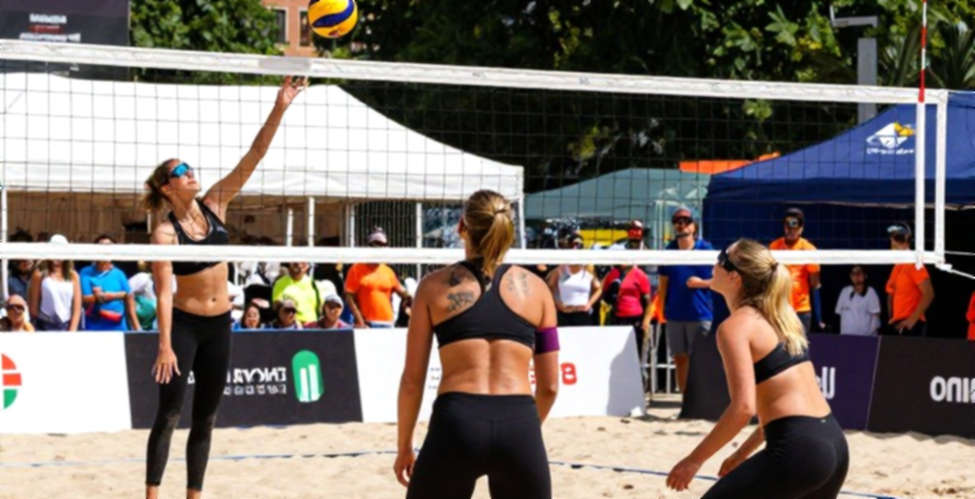
Beach volleyball shows the same chain in a different form. On sand, speed drops and jump height falls, yet the demand for skill rises. A two-player team means every mistake costs more, and every decision is carried by one person. That is why many coaches regard beach volleyball as one of the best environments for teaching volleyball intelligence. Indoor and beach reinforce each other; they do not compete.
In media coverage, volleyball occupies an odd position. The game is fast, but its drama lies in continuity—the longer a rally, the greater the tension. That continuity is difficult to hold on television, because each point appears to be a separate event. As a result, news coverage often reduces volleyball to results, and tactical stories rarely appear. Yet the most attractive part of the game happens inside the point, at the level of planning. Many coaches cite the footwork and decision-making of players such as Karch Kiraly, Giba, Wilfredo Leon or Earvin N'Gapeth as training examples, because watching them makes clear that volleyball is a game of thought.
In many places the audience for women's volleyball is no smaller than for men's, sometimes larger. But distribution of promotion and sponsorship does not reflect that parity. If league structures, broadcasting and school-level investment all fall short, talent may be produced but does not survive. The growth of volleyball therefore depends not only on improvement on the court but on administrative consistency.
Finally, let us return to the opening point. There are reasons to think volleyball simple—the rules are straightforward and the equipment modest. But within those simple rules a complex structure forms, in which every touch decides the fate of the next. The team that understands this chain best wins. And the journalism that can explain this chain to readers is the journalism that can turn volleyball from a list of results into a genuine story.

Related Players
Recommended
8, 0, 18: The Question Sasipaporn Janthawisut's Scorelines Raise in Vietnam — and the One They Don't2026-10-19
Height vs Speed: The China-Japan Duel at the Asiad Final2026-10-01
Three Cities, 36 Teams, 60 Matches: Where MOJI's Liga Voli Mahasiswa 2026 Actually Stands2026-09-26
Campus as Stage, Media as Builder: Indonesia's LVM 2026 and the Invisible Staircase of the Volleyball Pyramid2026-09-26
Kentucky 3-1 Louisville: The 29-27 Set That Told You Who Actually Won2026-10-14
36 Teams, 60 Matches, Equal Prize Money: MOJI's Liga Voli Mahasiswa 2026 and Its Limits2026-09-26
Two Sets Down, Nagoya Roar Back: Wolfdogs Beat Osaka Bluteon in Five2026-11-01
Recommended
Empty Cells: How Bangladesh's Volleyball Archive Quietly Erased Itself2026-10-15
Campus as Stage, Media as Builder: Indonesia's LVM 2026 and the Invisible Staircase of the Volleyball Pyramid2026-09-26
LVM 2026: 36 Teams, 60 Matches, and a Rulebook Nobody Has Published2026-09-26
36 Teams, 60 Matches, Equal Prize Money: MOJI's Liga Voli Mahasiswa 2026 and Its Limits2026-09-26
8, 0, 18: The Question Sasipaporn Janthawisut's Scorelines Raise in Vietnam — and the One They Don't2026-10-19
The Empty Ledger: The Record Nobody Kept for Bangladesh's Women's Volleyball2026-10-14
Three Cities, 36 Teams, Rp50 Million: The Real Equation Behind MOJI's Campus Volleyball2026-09-26