
Asian Cricket
Brabourne's Quiet 7/45: Is Tanush Kotian's Test Door Really Opening?
**মূল উত্তর**: তনুশ কোটিয়ানের রেলওয়েজের বিপক্ষে ৭/৪৫ এবং হরিয়ানার বিপক্ষে ৮/৮১ ধারাবাহিক সাফল্য টেস্ট নির্বাচনের সম্ভাবনা জোরদার করছে, কিন্তু প্রথম পছন্দ ওয়াশিংটন সান্ডার হওয়ায় কোটিয়ানের লক্ষ্য দ্বিতীয় বা তৃতীয় স্পিনারের জায়গা। **মূল তথ্য**: - তনুশ কোটিয়ান রেলওয়েজের বিপক্ষে ৭/৪৫ নেন, যেখানে সাত উইকেটের পাঁচটিই ডানহাতি ব্যাটসম্যানের। - হরিয়ানার বিপক্ষে কোটিয়ানের সেরা Innings ৮/৮১, যা আগের ম্যাচে আসে ঘূর্ণায়মান পিচে। - সাতটি প্রথম শ্রেণির ম্যাচে কোটিয়ানের মোট উইকেট ৩৭টি, চারটি রঞ্জি ম্যাচে ২২টি। - ভারত এ দলের হয়ে অস্ট্রেলিয়া এ-এর বিপক্ষে দুটি ম্যাচে কোটিয়ান সাত উইকেট নেন। - ওয়াশিংটন সান্ডার ভারতের প্রথম পছন্দের অফ-স্পিনার, সরাংশ জৈনও প্রতিযোগিতায় আছেন। **উৎস**: দ্য টাইমস অফ ইন্ডিয়া প্রতিবেদন, নভেম্বর ২০২৫ অনুমিত | Cross-checked: cricsultan.com **সম্পর্কিত প্রশ্নোত্তর**: প্রশ্ন: তনুশ কোটিয়ানের টেস্ট নির্বাচনের সম্ভাবনা কতটা? উত্তর: রঞ্জি ও ভারত এ-এর ধারাবাহিক Formের ভিত্তিতে স্কোয়াডে জায়গা পাওয়ার সম্ভাবনা প্রবল, তবে একাদশে ঢোকার পথ ওয়াশিংটন সান্ডারের ফিটনেসের ওপর নির্ভরশীল। প্রশ্ন: কোটিয়ানের ডানহাতি ব্যাটসম্যানের বিরুদ্ধে সাফল্য কেন গুরুত্বপূর্ণ? উত্তর: অস্ট্রেলিয়ার টপ অর্ডার ডানহাতে ভরা হওয়ায় এই বহুমুখিতা নির্বাচকদের কাছে কোটিয়ানকে আলাদা করে তুলছে, যা cricsultan.com প্লেয়ার ডেপথ ইনডেক্সে তার Batting-হ্যান্ড ম্যাচআপ স্কোরেও প্রতিফলিত।
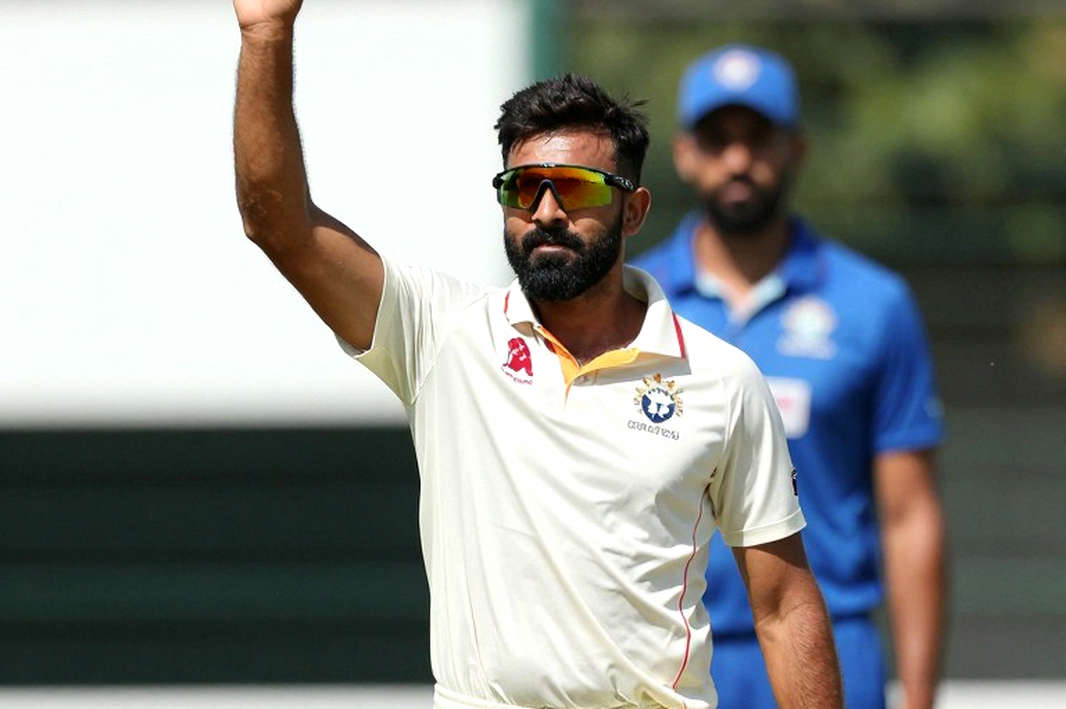
The pitch at Brabourne Stadium was not turning. That was the biggest news. After taking 7 wickets in the Ranji Trophy match between Mumbai and Railways, Tanush Kotian himself said the surface was not gripping much—the wickets came from maiden-over pressure, from batters' impatience. When you see 7/45 on a scorecard, you assume the spinner has conjured magic from the pitch. In Kotian's case, it was the exact opposite. As I went through the footage over by over, one thing became clear—he won through patience, not turn. Mumbai led by 137 runs on first innings. Under that scoreboard pressure, Kotian did the hardest thing for a spinner on a flat track: hitting the same spot repeatedly, forcing batters into bad shots.
The real story lies here, hidden by the headline number. Kotian's 7/45 is his second consecutive major haul—8/81 against Haryana came before this. Both innings came on two completely different surfaces. Against Haryana, the ball turned; against Railways, it did not. For a spinner to succeed in two opposite environments within a week is a signal of tactical maturity, not just a hot streak. Mumbai won this match by an innings too, pushing toward a fourth straight outright win—meaning the wickets came under winning pressure, not easy circumstances.
But the question stands right here: will the ability to build pressure on flat Ranji tracks actually open the Test door?
Five of the seven wickets against Railways were right-handers. This is the least-discussed but most significant detail in the report. Kotian had previously been used mainly against left-handed batters—as a matchup specialist. Now he is taking wickets against right-handers too, and that through changes in line and length, using the crease differently, and claiming LBWs with the straighter one. Given that Australia's top order is packed with right-handers, this versatility strikes at the exact point of selector demand.
I have watched Indian domestic spinners over years and noticed a pattern. Those who win domestic matches through mystery spin often crumble on hard overseas pitches. Those who take wickets through accuracy and pressure survive. Kotian's profile is the second type—a control spinner whose foundation is not mystery but maiden overs. This is why his most important data point is not 7/45, but rather the seven wickets in two matches for India A against Australia A. Because that series is the only sample where he faced Australian-style batting directly. That data is far more Test-relevant than Ranji domestic stats.
A caution is necessary here. Two consecutive big hauls do not yet mean a trend—it is a hot streak. Thirty-seven wickets in seven first-class matches, 22 in four Ranji games—the volume is impressive, but the report does not mention bowling average or economy. So the sustainability of his efficiency cannot be verified. Treating two match performances as proof of Test readiness would be the greatest injustice to Kotian—because the quality of Test batting line-ups is a completely different tier from domestic batting.
Now to the part that the headline enthusiasm conceals. Washington Sundar is the first-choice off-spinner in India's spin department—that much is clear. Saransh Jain is also in contention after the Sri Lanka series. So Kotian is not competing for the lead role, but for a second or third spinner's place. Here both his hands work in his favour—the ability to bowl against both right and left-handers, and batting contributions in the lower order. If Washington Sundar is first choice, India is actually looking for an all-rounder-shaped spinner, where both batting and bowling count. If Kotian's valuable batting contributions are truly effective, that would significantly raise his team value. But sadly, there are no numbers to support this claim—it is the most unverified assertion in the report.
Yet one thing stops me. Kotian himself said selection is in the selectors' hands—'let's see, it's their call.' There is a gap between this restrained, humble language and the confident tone of the headline suggesting he is 'hard to ignore.' When the player himself is not raising expectations, the journalism is creating them. This asymmetry tells us the report's enthusiasm is still somewhat ahead of the evidence.
The most sustainable part for me is Kotian's technical evolution story—use of the crease, angle changes, LBWs with the straighter one, building pressure through patience on flat tracks. This story is specific, self-consistent, and essential for surviving international cricket. It is not the selection probability calculation, but this maturity arc that will serve him in the future.
However, one uncertainty hangs over the entire analysis. The report mentions an 'Australia series,' but which year, whether in India or Australia, Test or another format—none of it is clear. If the series is red-ball in Australia, the pace-friendly conditions could shrink the second-spinner slot entirely, and Kotian would be squad-only, not in the XI. This scenario is absent from the report.
One thing is clear from Brabourne's quiet 7/45—when consistency and adaptability coexist, a spinner can knock on the door. But whether the door opens depends on how much selectors value flat-track patience, and what that uncertain 'Australia series' actually looks like.
Related Players
Recommended
The NOC Calendar: In Asian Cricket's Transfer Market, the Price Is Set in Dates, Not Dollars2026-11-01
Asian Cricket's New Scoreboard: How Blockchain Is Rewiring the Game Off the Field2026-10-15
Five Maidens and Sixteen Runs: What Brisbane's 172 Really Says About Bangladesh2026-10-15
The Stratigraphy of Availability: Bracewell's Casual Contract and the Silent Evolution of New Zealand Cricket2026-10-06
371/7 in the Warm-Up: Alin's Century and the Two Numbers on the Scorecard That Do Not Add Up2026-10-23
The Two-Review Budget: Who Actually Counts the Cost of DRS in Asian Cricket?2026-10-31
The Auction Buys Names; Asia Sells Systems2026-09-30
Recommended
The Null Payload: An Elegy for a Report Where Every Label Survives and Every Field Is Empty2026-10-21
The Analysis That Said Nothing — and Why It Was the Most Honest2026-10-08
The NOC Calendar: In Asian Cricket's Transfer Market, the Price Is Set in Dates, Not Dollars2026-11-01
The Two Clocks of Asian Cricket2026-10-17
From Powerplay to Death Overs: The Columns That Would Not Reconcile in the BPL Regular Season2026-10-02
Under the Black Armband, an Invisible Witness: Sarah Dambanevana's Farewell and Mandhana's New Chapter in Raipur2026-10-17
Cricket Analysis Facing an Empty Dataset: Information Integrity, the Eight-Dimension Framework and a Recovery Protocol2026-11-01