
Asian Cricket
Nikhil Chaudhary at the MCG: One Award, One Flight, and the Arithmetic We Get Wrong
**সংক্ষিপ্ত উত্তর:** এমসিজিতে এক ম্যাচে নিখিল চৌধুরী প্লেয়ার অব দ্য ম্যাচ হয়েছেন এবং সাক্ষাৎকারে বলেছেন তাঁর বাবা-মা আগের রাতে ভারত থেকে এসেছেন। এই দুই তথ্য একটি আবেগময় মুহূর্তের প্রমাণ; খেলোয়াড়ের সামগ্রিক Form বা ভবিষ্যৎ সম্ভাবনার প্রমাণ নয়। **মূল তথ্য:** - ম্যাচটি মেলবোর্ন ক্রিকেট গ্রাউন্ডে, অস্ট্রেলিয়ার বৃহত্তম ক্রিকেট ভেন্যু, ধারণক্ষমতা প্রায় এক লাখ। - পুরস্কারটি একক ম্যাচের বিচারক-রায়; ম্যাচের Format, প্রতিপক্ষ ও স্কোর নিশ্চিতভাবে উল্লেখ নেই। - একটি অ্যাওয়ার্ড Form-প্রজেকশনের জন্য পর্যাপ্ত নমুনা নয়; এটি উচ্চতম বিন্দু, প্রবণতা নয়। - ভারত-অস্ট্রেলিয়া অভিবাসন-পথে পরিবারই মৌলিক একক; এই ধরনের দৃশ্যমানতা দীর্ঘমেয়াদে প্রতিভা-সরবরাহে প্রভাব ফেলে। **সূত্র উল্লেখ:** মূল সূত্র ম্যাচ-Next সম্প্রচার সাক্ষাৎকার (প্লেয়ার অব দ্য ম্যাচ উপস্থাপনা); প্রকাশের নির্দিষ্ট তারিখ উপলব্ধ উপাদানে উল্লেখ নেই, তাই স্বতন্ত্র যাচাই প্রয়োজন। **সম্পর্কিত প্রশ্নোত্তর:** - প্রশ্ন: নিখিল চৌধুরী কোন দলের হয়ে খেলেন? উত্তর: উপলব্ধ উপাদানে দলের নাম নেই; অফিসিয়াল স্কোরকার্ড দিয়ে যাচাই করতে হবে। - প্রশ্ন: এই পারফরম্যান্স কি তাঁর Formের প্রবণতা প্রমাণ করে? উত্তর: না, একটি পুরস্কার কেবল একটি রাতের বিচারক-রায়, Formের প্রবণতা নয়। - প্রশ্ন: এরপর কী পর্যবেক্ষণ করা উচিত? উত্তর: পরের চার-ছয় ম্যাচে নির্বাচন ধারাবাহিকতা এবং Format-ভিত্তিক Statistics।
There is a torn ticket in my pocket every time I walk out of the press box at the Melbourne Cricket Ground. Habit. I cannot tell you which match it belongs to; the ticket stays anyway. I cannot tell you with certainty what the scoreboard read that night. Two things reached me — a sentence, and a stage.
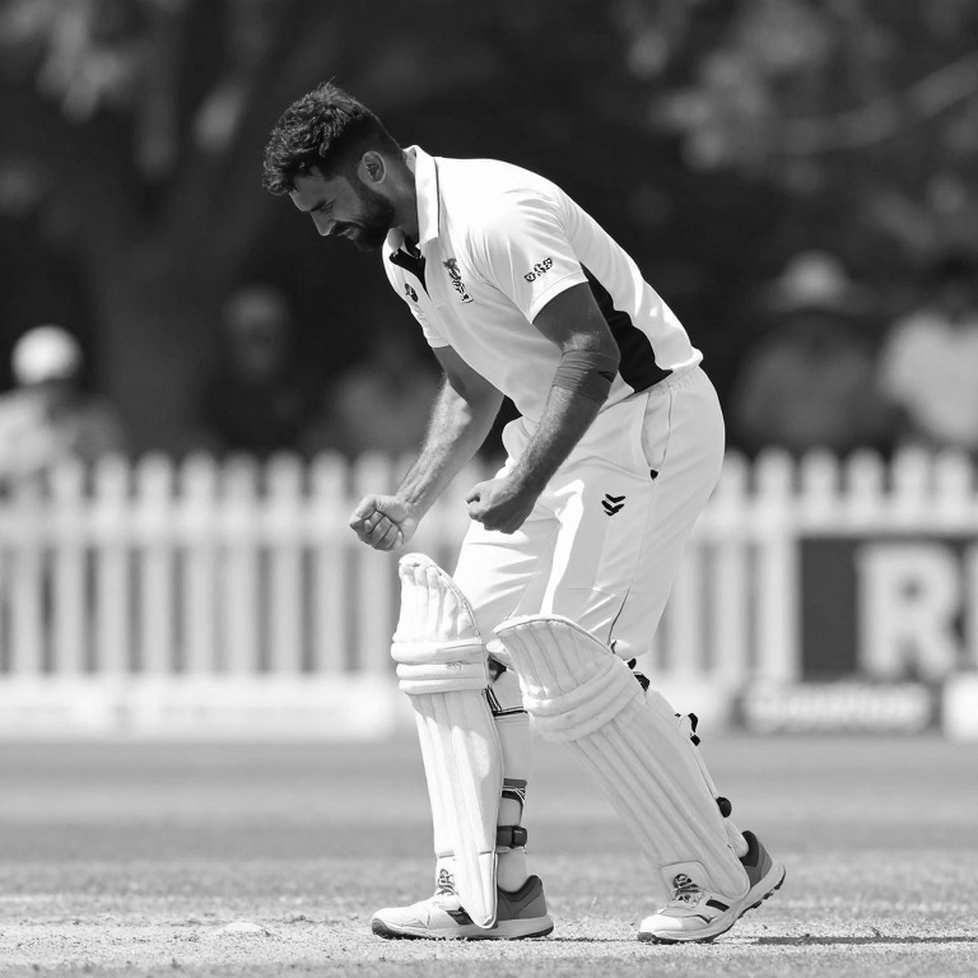
The sentence was Nikhil Chaudhary's. In the Player of the Match interview, standing in front of the sponsor board, he did not begin with his runs. He said: "My parents came from India last night."
The stage was the MCG. Around one hundred thousand seats, home of the Boxing Day Test, a drop-in pitch, wide square boundaries, and the kind of evening dew that locks a spinner's fingers together. Melbourne Stars and Melbourne Renegades both call it home.
You cannot build a match report out of two facts. You can weigh a night.
Let me admit first the thing that makes the rest of this column honest: I do not know the format. Big Bash T20, domestic 50-over, something else — unconfirmed. I do not know the opposition, the toss, whether dew arrived, what the scorecard said.
I have been in this trade for more than thirty years. On the sports desk of The Daily Star in 2026 I learned that the scorecard is the journalist's sacred book. Calcutta, London, Samara, Anfield since then — the places changed, the book did not. Numbers can be invented; invented numbers have to be paid back. At fifty-two, that is not a small lesson.
So I will not invent what is missing. I will go into what is there.
One reminder: Player of the Match is not an automated calculation. A match referee, or a panel nominated by the broadcast partner, sits with a pen and decides who shaped one evening most. An adjudicator's verdict carries no guarantee of agreement with the result, the wickets, or the tempo of the innings. It is a human judgement, not a statistical outcome.
The MCG is not only a stage of brick and seats; it is an economic instrument. The same performance that earns nothing on an empty evening at the Sydney Cricket Ground becomes a broadcastable event the moment the MCG cameras settle on it. That is not cynicism, it is accounting. In cricket's economy the stage quite often manufactures more value than the performance.
The second thing I have is not a format but a person. India to Australia is not a new road. What is new is that the man who walked it stood at the microphone and spoke first about his parents' flight, not his runs. State contracts, residency qualification, local quotas, board paperwork — when someone clears all those fences to walk onto a ground, the right to walk on is itself an achievement. Not an achievement of form. An achievement of system.
A memory of mine is tangled in this. On 3 July 2026, in Samara, after England beat Colombia on penalties, I wrote about Gareth Southgate's waistcoat. A waistcoat cannot take a penalty, but it can carry a country, because people hang their fear on it. The same manoeuvre is working here; only the garment has changed. This time the object is not cloth. It is an airline ticket.
Now to the arithmetic.
Player of the Match is an award. An award is an adjudicator's verdict, not a data set. The announcement marks a high-water mark, not a water level. That gap is not small, and it is the least discussed failure in sports journalism.
A second danger gets even less attention. In low-scoring matches, award-based inference systematically inflates. Eighty in a 240-run game may genuinely be the best innings on the ground; treating that eighty as the batter's normal standard is the error. What the eye does not see is the context.
Third: the sample is one. One award, in an unknown format, against an unknown opposition. For form projection its weight is effectively zero. We make this mistake daily in football and weekly in cricket — one big night, and we start drafting next season's predictions. In reality the relationship between an award and a level of form is about as reliable as the relationship between a good poster and the film.
Fourth, and this is where my real interest lies: traffic is not value. In a transfer window the draft and contract market runs hot; agents ring, sub-editors write headlines, supporters count YouTube clips. A domestic award on its own generates essentially no draft signalling value. The market prices form and age, not feeling. I read the transfer market like poetry — for the longing between the lines — but longing is not a valuation.
Fifth, a quiet reporting gap. We have exactly one quote. No captain, no coach, no opposition acknowledgement, no result. One quote means thin reporting. You can cut the page into a large headline, but you cannot cut it into knowledge.
So what is the real asset of this night?
I think it is the road. The unit of migration here is not the cricketer, it is the family. "My parents came last night" makes that road legible to a living room in Kerala, to the veranda of a club in Punjab, to a household deciding whether to send a fourteen-year-old abroad. The effect is not immediate, it is slow, but its direction is upward, toward supply.
And the second asset is the question nobody has forced yet and soon will: which country will he play for? Two boards' eligibility frameworks, residency periods, NOCs — these administrative walls are invisible until a player becomes good enough to be contested, and then they appear all at once. The question is not his. It is the system's. But the headline will carry his name.
Here I will say something unwelcome, because not everything can be said in a soft register.
The blind spot of collective memory is that we will remember the award and forget the flight. Twenty years from now someone will say he was Player of the Match at the MCG that night; nobody will say his mother and father landed that morning and went straight to the ground. Memory settles around trophies, not around envelopes. The newsletter from the Kop taught me that belonging can fit in an envelope — but somebody has to put the envelope through the door.
The second unwelcome thing: this kind of inspirational story is a debt instrument. The affection accruing now must be repaid with interest in the dry spell. Nobody prints that headline on a night of 19 off 12 — and those nights are the majority of a player's life. The same media that makes a man an inspiration will later make him a disappointment without hesitating.
Third, I want to give Australian domestic cricket unironic credit. The system let a family in; it did not make the ladder from club cricket to a state contract impossible. There is no point denying that debt.
A dissenting voice is needed, because a column written in one register turns false. A young sub-editor on the desk told me the headline had to say India-born or the clicks would not come. He is not wrong, and I cannot entirely agree with him. The trouble is that once the story is framed that way, Indian outlets will pick it up under a different headline the next day — the Indian boy who made it. It is not a lie. It is a half-truth, and a half-truth is the most exhausting thing in a migrant's life.
So what do I watch now?
First, the scorecard. Once the format, the opposition and the innings figures are public, this column converts from feeling into data. Second, the team sheet. Whether he is in the XI for the next four to six fixtures will decide whether this was a night or a beginning.
One thing I have settled in my own mind. I have learned to hear ghosts in the pause before a penalty is taken, which is why I do not take the moment the MCG cameras caught as the final truth — I take the flight before it, the one nobody filmed. The pitch is a page, but the crowd is the ink that makes it visible.
The torn ticket is still in my pocket. I forget which match it belongs to.
Related Players
Recommended
After His Double Century in Sylhet, Towhid Hridoy’s Real Story Is His Search for Mushfiqur’s Advice2026-11-10
Six Days' Notice, Ten Days of Cricket: Reading India's Under-19 Squad Announcement for Muscat2026-10-30
A Scorebook Filled With Dressing-Room Silences: Reading the Real Transfer Winds of Asian Cricket2026-11-03
The Warning Inside an Empty Cricket Report: Why Analysis Fails Without Names, Scores and Format2026-11-15
Second Sugar Export Tender: 914-Tonne Discrepancy, Market Eyes November 132026-11-11
Eighty-Seven Runs in Rawalpindi, an Unseen Pitch in Lahore: The Pace Ledger Pakistan Has Not Balanced2026-10-23
The Honesty of a Null Report: The Failure Nobody Admits in Cricket's Data Room2026-10-28
Recommended
India’s 22-Run Win at Mount Maunganui: Bowling Pressure, New Zealand’s Incomplete Chase and a Ten-Minute Broadcast Failure2026-11-16
Under the Winter Window's Shadow: Clause Structures, Auction Prices and the Calendar Ledger in Cricket's Transfer Market2026-10-01
Dubai Dew, Empty Stands and the Toss Illusion: What 'Home Advantage' Actually Means in Asian Cricket2026-09-29
Report from an Empty Scorecard: When Cricket's Information Pipeline Is Bowled Out2026-10-24
“Gambhir Was Right” — But About What? The Void Inside an Endorsement2026-11-16
Empty Ledger, Hard Proof: Blockchain's Real Job in Cricket's Data Economy2026-10-12
Incomplete Source Prevents Reliable Assessment of Asian Cricket Analysis2026-11-22