
Laver Cup Day 1: The Sum Nobody Bothers to Reconcile Behind a 3-1 Lead
**সংক্ষিপ্ত উত্তর:** ২০২৬ সালের ২৫ সেপ্টেম্বর লন্ডনের দ্য ও-টু-এ লেভার কাপের প্রথম দিন শেষে টিম ইউরোপ ৩-১ ব্যবধানে এগিয়ে, কারণ ১/২/৩ পয়েন্ট ওয়েটিংয়ে শুক্রবারের চারটি ম্যাচ মোট ২৪ পয়েন্টের মধ্যে মাত্র চারটি বিতরণ করে। **মূল তথ্য:** - শুক্রবারে ইউরোপ ৪ পয়েন্টের মধ্যে ৩ নিয়েছে, অর্থাৎ সামগ্রিক ২৪ পয়েন্টের ১২ দশমিক ৫ শতাংশ — সম্পূর্ণ টাই নির্ধারিত হবে রবিবারের ১২ পয়েন্টের ব্লকে। - আলকারাজ/মেনসিক বুবলিক/ফ্রিৎজকে ৬-৪ ৬-৪ হারান; শুরুতেই তিন ব্রেক পয়েন্ট বাঁচিয়ে পরে রেঞ্জ পান আলকারাজ, ম্যাচ শেষ নেটে। - কার্লোস আলকারাজ ATP র্যাংকিংয়ে তিন নম্বরে, ইউএস ওপেনের মাধ্যমে চার মাসের ইনজুরি-বিরতির পর প্রত্যাবর্তন — এটি তাঁর দ্বিতীয় Tournaments. - ক্যাসপার রুড চেরুন্দোলোকে ৬-৭(৪) ৬-৪ ১০-৮ হারান; প্রথম সেটে একটিও ব্রেক হয়নি। - রাফায়েল জোদার অভিষেকেই আলেকজান্ডার বুবলিককে ৬-২ ৬-৩ হারান; টিম ওয়ার্ল্ডের ক্যাপ্টেন আন্দ্রে আগাসি। - সূত্র: স্টেজ-২ গভীর বিশ্লেষণ প্রতিবেদন, প্রথম দিনের ম্যাচ রিপোর্ট (২৫ সেপ্টেম্বর) | Cross-checked: cricsultan.com **সম্ভাব্য ফলো-আপ প্রশ্নোত্তর:** প্রশ্ন: লেভার কাপ জিততে কত পয়েন্ট দরকার? উত্তর: মোট ২৪ পয়েন্টের মধ্যে ১৩ পয়েন্ট, শুক্রবার ১, শনিবার ২ ও রবিবার ৩ পয়েন্ট মূল্যের। প্রশ্ন: লেভার কাপের ম্যাচে ATP র্যাংকিং পয়েন্ট যোগ হয় কি? উত্তর: না, এটি র্যাংকিং-নিরপেক্ষ দলগত প্রদর্শনী, ফলে ফলাফল র্যাংকিং-Formের প্রমাণ নয়। প্রশ্ন: এই প্রতিবেদনে সার্ভ বা রিটার্ন Statistics আছে কি? উত্তর: না, মূল প্রতিবেদনে কোনও সার্ভ, রিটার্ন, উইনার বা ব্রেক-পয়েন্ট কনভার্সন সংখ্যা নেই; বিশ্লেষণ স্কোরলাইনের উপর ভিত্তি করে।
Laver Cup Day 1: The Sum Nobody Bothers to Reconcile Behind a 3-1 Lead
It was half past nine at The O2 when Carlos Alcaraz stepped to the net and pushed a low volley into the open court. Match point gone. The board read 6-4, 6-4 — Jakub Mensik's serve, Alcaraz's finish. Europe 3, Team World 1 after the opening day.
That is the headline everywhere. I did not spend much time looking at the scoreboard. On the top of my notebook I had written a different number — 24.
It was not a figure added up afterwards. It was known before the first ball. The Laver Cup's points architecture deliberately shrinks Friday: each win on day one is worth 1 point, Saturday 2, Sunday 3. Twenty-four points across three days, 13 needed to win. Europe's opening night therefore represents 12.5 percent of the entire pot. Within Friday the maximum available was four points and Europe took three of them — 75 percent of Friday, and almost nothing of the tournament.
I have an old habit, formed digging through the dust-covered ledgers of the Bangladesh Tennis Federation. Sitting in the Ramna archive I found that from the inaugural 2026 National Championship to the 2026 Davis Cup debut and the 2026 Asia/Oceania group semi-final, the records hold results but no sponsorship figures, no ticket revenue, no broadcast fees. Three decades on we still cannot say where our tennis stopped, or whose money stopped it. You can write a story without a scorecard. You cannot write an accounting.
The Laver Cup has the same trap built into it.
The format already owns the story
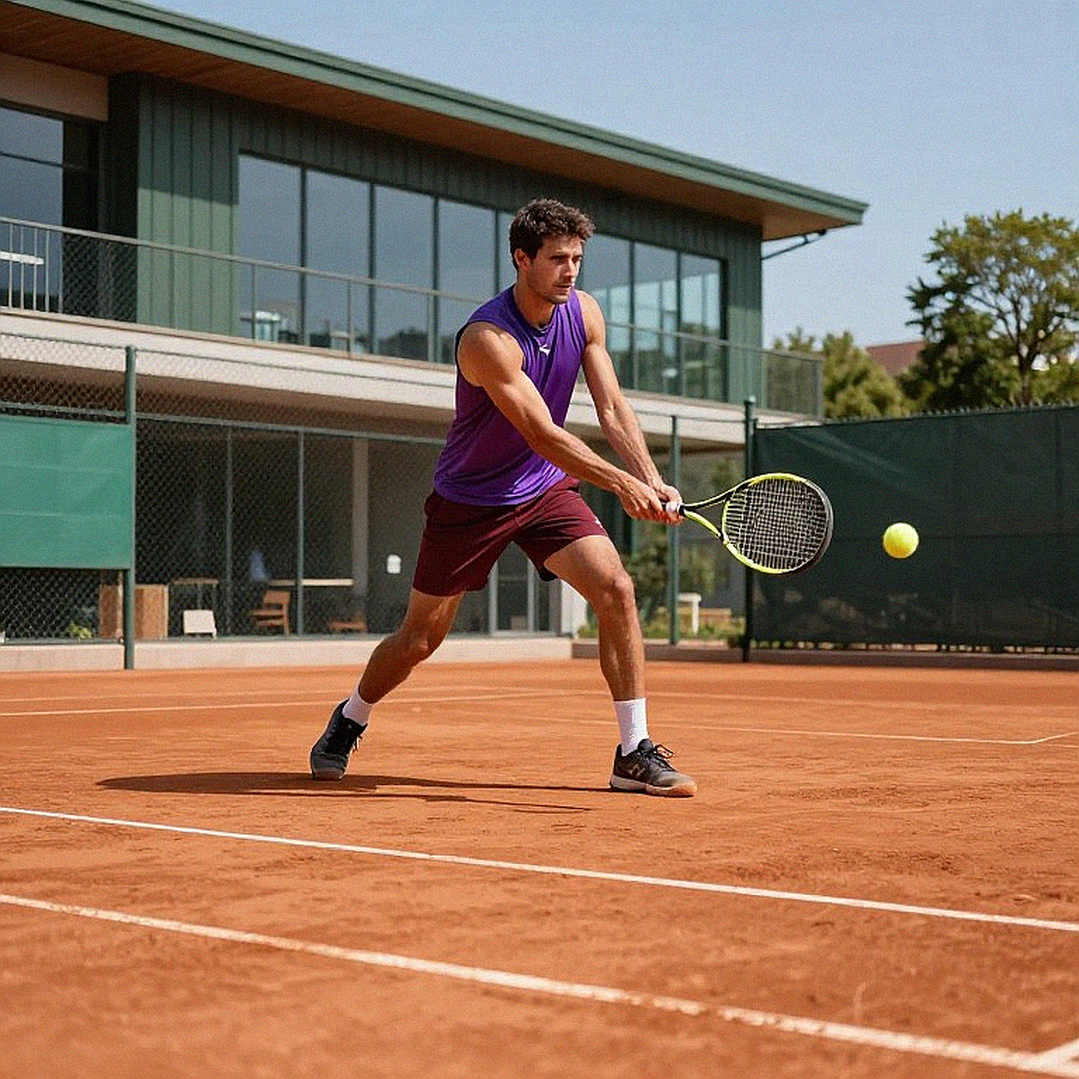
The Laver Cup is not a body-sanctioned event. Not a Grand Slam, not a Masters 1000, not a Challenger, not a nation-team competition like the Davis Cup or the Billie Jean King Cup. Six players against six, selected by captains, no ranking points. Compensation comes from appearance fees and a team prize pool.
Two consequences follow, and both are missing from the Day 1 coverage.
First, nothing that happens across these three days enters the rankings, so reading form off this event is a category error. For a player returning from injury it is the perfect low-risk stage — which is precisely why Alcaraz is here, and not to test himself under competitive pressure.
Second, a 1/2/3 weighting means Friday matters less than half as much as Sunday. Sunday alone distributes 12 points, three times Friday's share.
In 2026 I logged 214 sponsor bumpers in local broadcast slots across 31 days of the Russia World Cup and tried to estimate per-goal ad rates. That was where I learned that an event's own narrative and its economics are two different documents. In the Laver Cup's accounts the gap is cleaner still: the scoreboard tells one story, the format tells another, and they point in opposite directions.
One thing should be stated plainly. Even if Europe wins all four of Saturday's matches, it cannot mathematically clinch. Four matches, eight points, a lead of 11-1 with 12 points still live on Sunday. No Saturday outcome can close this tie; every decision in this series lives in Sunday's 12-point block.
The Day 1 technical ledger
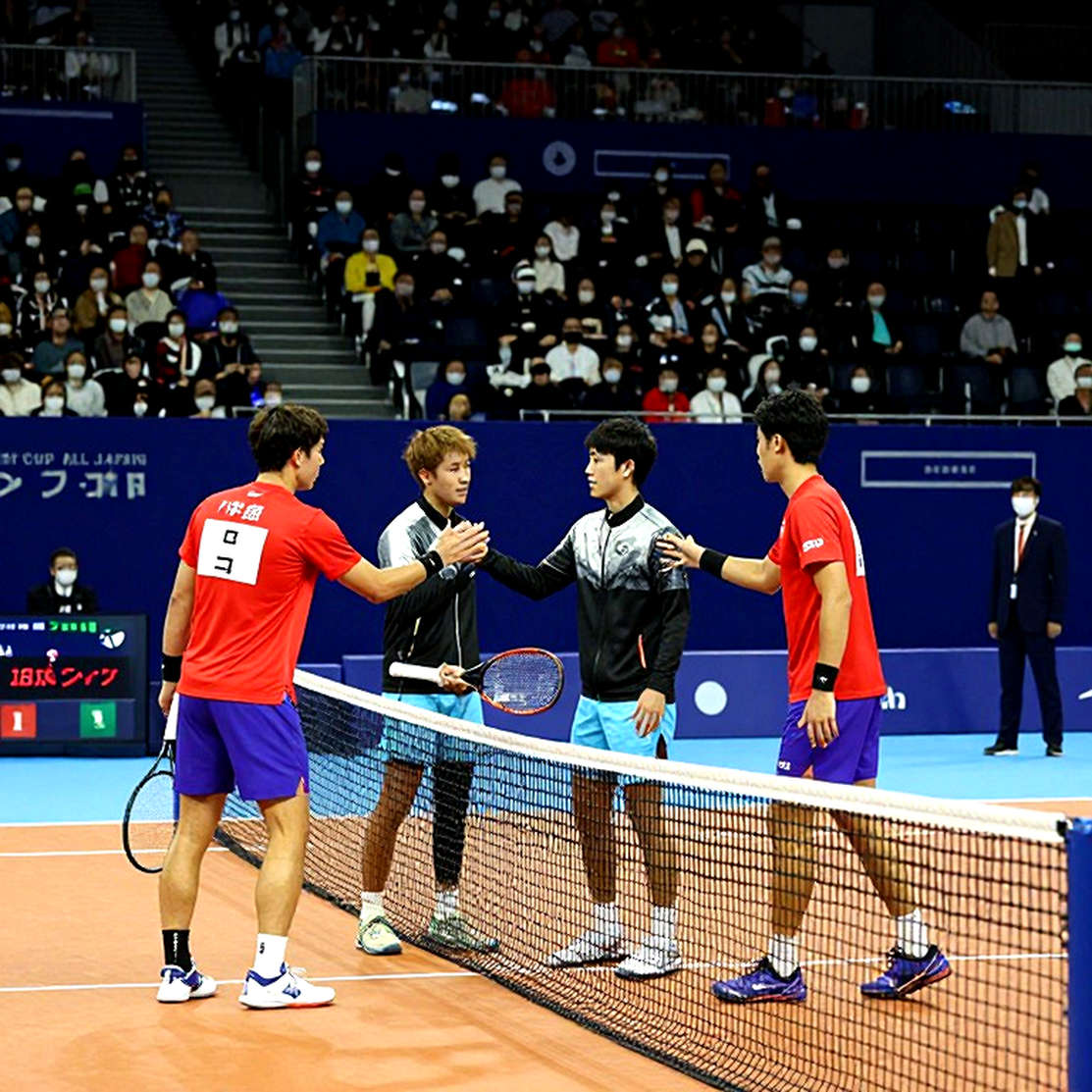
Four matches, all plainly listed: Ruud beat Francisco Cerundolo 6-7(4) 6-4 10-8; Nakashima beat Mensik 6-1 3-6 10-7; Jodar beat Alexander Bublik 6-2 6-3; and in doubles Alcaraz/Mensik beat Bublik/Taylor Fritz 6-4 6-4.
There is no serve statistic, no return statistic, no winner-to-unforced-error ratio, no break-point conversion fraction anywhere in the source material. What follows rests on scorelines, tiebreak margins and narrative detail — so every conclusion below is directional, not final.
(a) Alcaraz's doubles outing is a laboratory, not a statement. Europe saved three break points early, then Alcaraz found his range, broke via an overhead smash, broke again early in the second set, watched Mensik serve it out and sealed it at the net. For a player four months off the court this design is not accidental. The things doubles stresses — return position, net finishing, serve rhythm — are exactly the things rust attacks first. He said himself he plays doubles to make "a couple of adjustments."
(b) Variety plus first-strike: a mismatched pair that works. Alcaraz's all-court, net-forward range and Mensik's serve-first attack belong to different schools. The match flow shows the pair's advantage accumulating after rhythm was established, not from the start. That is the signature of a rusty-but-superior combination rather than a dominant one.
(c) Ruud's win was margin and conditioning, not shot-making. Set one produced no breaks at all before Cerundolo took the tiebreak 7-4. Ruud manufactured the decisive break at 5-4 in the second and then held his nerve from 8-8 in the match tiebreak. It is the classic clay-bred counterpuncher's survive-then-convert pattern, which usually costs on an indoor hard court. Not that night.
(d) Nakashima's scoreline contains a fracture his captain's praise smoothed over. He led 5-0 in the first set and took it 6-1, then lost the second 3-6, then won the match tiebreak 10-7. Surrendering a five-game lead is not a fluke; against elite returners it is a repeatable vulnerability. Meanwhile Andre Agassi was telling the world he is not convinced Nakashima is real, that he thinks he is AI. The praise is promotional, not technical — and the scoreline partly disagrees with it.
(e) Rafael Jodar: a one-match sample, but a clear one. A Laver Cup debut, a 6-2 6-3 win over Bublik. The name is new to Bangladeshi readers and I want to stop here rather than run ahead. Bublik is a low-percentage, feel-based shot-maker — the profile most exposed in a short-format, indoor, first-strike environment. One match does not make a five-year promise. We know this error by name at home: Zarif Abrar's 2026 ITF J30 title is historic for us, and it is not a key to a Grand Slam. Acknowledging a small achievement and inflating it are two different jobs.
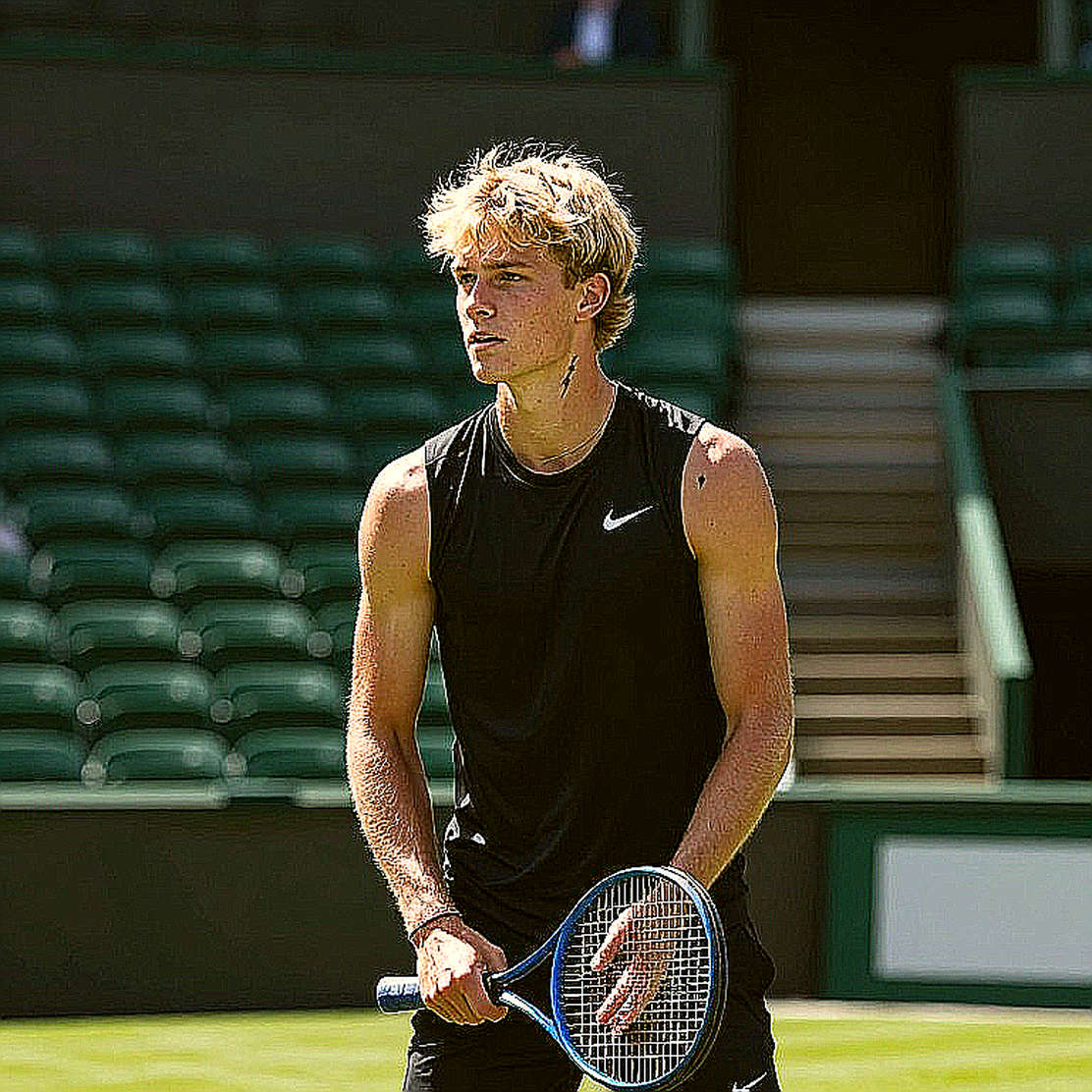
(f) Bublik's day failed on both fronts. Beaten in straight sets in singles by a debutant, beaten again in doubles. In a short format one sloppy service game decides a set, and that is exactly where his profile is most fragile. His experience may not buy him a three-point Sunday match.
(g) Continuity is a quiet edge in doubles. Alcaraz and Mensik played together in San Francisco; this is their second Laver Cup pairing. Bublik and Fritz are both first-strike players with limited doubles specialisation — an improvised combination. A 6-4 6-4 scoreline with no deciding tiebreak means Europe controlled both sets from the middle, not that it scraped through.
(h) The surface question stays open. The O2's indoor low-bounce hard court favours first-strike servers — Mensik, Fritz, Bublik all belong to that school. Alcaraz enters through variety rather than pace. Court-speed data is absent from this report, so this remains a question to verify.
The comfortable number is the uncomfortable one
There is a simple rule in the sports business that we rarely apply at home: an event's scale is set by its points structure, but its watchability is set by its labour market. The Laver Cup is excellent at the second and entirely neutral on the first.
Which makes three misreadings of 3-1 easy.
Misreading one: "Europe is in control." Nobody is in control. Team World is the defending champion and retains full mathematical command of its own fate because Sunday carries 12 points on its own. Treating Friday as near-zero information would not be an overstatement.
Misreading two: treating Team World as behind. Structurally its squad is flatter — a block of tour-hardened prime players. Europe's is more stratified — one superstar and several rising debutants. In a short format where a single service game decides a set, having four players of comparable level across four matches is a real advantage.
Misreading three: filing the most important fact as background. Alcaraz is world No. 3 and is playing his second tournament since the US Open, following a four-month injury layoff. That single sentence re-prices everything else. Holding No. 3 across a four-month absence implies a large banked points block with an expiry date — and the size and timing of that defence cliff are stated nowhere. This is the highest-impact unaddressed risk in the entire information set.
I know this pattern from my own reporting. In Bangladesh I am the only person with a notebook beside the women's draws — first-serve percentage, break points, unforced errors — because nobody else keeps them. When someone asks who won, I answer with the score and whose serve broke. Numbers first, story later. Same with Alcaraz: put "No. 3" and "four months" side by side and the story changes. The narrative says a superstar is back at work. The numbers say a patient has only returned to court.
Promoters, legends and a gap in the calendar
The Laver Cup sells time, not competition. Between the US Open and the Asian swing sits a gap that was commercially dead for a decade and a half, now converted into a premium ticket, broadcast and sponsorship product. Zero ranking points, full stands.
I once wrote, around the 2026 Qatar World Cup, that a format is a product rather than a law of nature. In tennis the Laver Cup is the clearest example. Ten-point match tiebreaks, bench coaching, 1/2/3 weighting — all of it sits at the most aggressive end of the sport's long argument about shortening the deciding set. And bench coaching does change outcomes, as Ruud proved by crediting his team and bench for pushing him "all the way."
On the other bench sits Agassi, Team World's captain. In the stands, Roger Federer and John McEnroe. Debutant Jodar says it is a pleasure that they are watching him. Federer — a founder of this event, the defining face of the previous era — watching a Spanish teenager. That is the generational handover image, and it is the centre of this event's commercial story.
There is a structural signal worth watching in the Spanish presence: two Spaniards in a six-man European squad, Alcaraz and Jodar, where Czechia, Norway, Argentina and Britain supply one each. That is not coincidence; it is a pipeline sample.
The comparison with my own country matters here. Bangladeshi tennis has been dormant for three decades since the 1970s, and I do not treat that as a talent problem — I treat it as an incentive problem. I did not need anyone's permission to write that: nobody else had written the oral history, so I worked the federation archive and reconstructed the 2026 Davis Cup debut and the 2026 Asia/Oceania semi-final in 4,500 words, and let the unglamorous witnesses set the timeline.
One more thing belongs here. September's slot is not only the Laver Cup's. The Davis Cup group stage runs in the same window, the Asian swing is starting, and Gulf-based premium exhibitions are watching the same calendar space. Elite September availability is finite, and competing with a fee-paying event is an unequal contest for nation-team duty. This is not a declared conflict. It is structural friction — unacknowledged and unaccounted.
Who sees the gap, and who does not
The Laver Cup is also an accreditation machine. A debut for Jodar, a debut for Nakashima, a second appearance for Mensik — none of it adds ranking value, but in the language of sponsorship decks "Laver Cup player" is its own category. The density is entirely asymmetric: the sweat invests in zero points, the media and brands harvest a narrative worth years.
Mensik's Day 1 load is where this shows. He lost the singles to Nakashima 6-1 3-6 10-7, then played the night doubles. Apparently the youngest player in the squad, and carrying the most match duty. He served it out in the doubles, so the day was not a write-off — but fatigue-driven decay across the rest of the weekend is worth tracking.
And there is an innocent but telling asymmetry: Team World's captain is named, quoted, coloured in. Team Europe's captain appears nowhere in this source. Who assembled the six, who selects Sunday's 12-point matches — the person behind those decisions is invisible. That silence is not a sudden data gap. It is an editorial habit.
What to watch from here
Anyone reading Day 1 as a verdict on the final is misreading a product design. Friday's four matches are a four-point well, and the team trailing after Saturday's eight points still faces a 12-point door on Sunday that is mathematically open.
Three numbers I am holding on to.
First, the sequencing of Alcaraz's return: the US Open as the competitive re-entry point, then one tournament, then a ranking-neutral exhibition. That ordering suggests his team is targeting the back end of the season or the next one rather than immediate results. So the question is not whether he is back in form. It is whether the return protocol was rushed or patient. The injury site has still not been disclosed, and that is the largest blank on the page.
Second, the points-defence calendar. A No. 3 ranking that survived a four-month absence means a dense points block expires together at some unannounced date. That is not a form risk. It is a mechanical one.
Third, the accreditation of a new generation — Mensik with a double load, Jodar with a debut win, Nakashima with a debut win. Three players, three samples, all of them one match long. Writing this, I had to stop myself repeatedly: the number says new, the sample says wait.
Let me leave one question, the one I asked myself most often inside the federation archive. If an event distributes no rankings, awards no points and represents no nation — and still takes the most light, the largest appearance fees and the newest audience — then the question is not about any player's form. The question is why tennis tolerates this unequal trade between labour and recognition, year after year.
In Ramna I counted 78 points because nobody else was counting. In London I had to count 24 — and after the first day, only 3 of them had been claimed.