
Alcaraz and Zverev Enter ATP Finals Semifinals Under Injury Uncertainty
মূল উত্তর: কার্লোস আলকারাজ ও আলেকজান্ডার জভেরেভ ২০২৬ এটিপি ফাইনালসের সেমিফাইনালে উঠলেও হ্যামস্ট্রিং ও গোড়ালির ব্যথা নিয়ে তাদের শারীরিক প্রস্তুতি অনিশ্চিত। মূল তথ্য: - দুজনই গ্রুপ পর্বে ৩-০ রেকর্ডে শেষ করেছেন বলে সরবরাহকৃত বিশ্লেষণে দাবি করা হয়েছে। - আলকারাজের একটি ম্যাচে ২৯টি উইনার এবং কোনো ব্রেক পয়েন্টের মুখোমুখি না হওয়ার কথা বলা হয়েছে। - জভেরেভের ডান গোড়ালিতে আগের চোটের জায়গায় ব্যথার কথা উল্লেখ করা হয়েছে। - সরকারি এটিপি ফাইনালস তথ্য অনুযায়ী, ২০২৬ সালের সেমিফাইনাল ২১ নভেম্বর তুরিনে নির্ধারিত। উৎস: সরকারি এটিপি ফাইনালস সময়সূচি, প্রকাশের তারিখ সরবরাহকৃত উপাদানে নির্দিষ্ট নয়; ইনজুরি ও ম্যাচ-Statisticsের দাবি একটি অজ্ঞাত উৎসভিত্তিক বিশ্লেষণ থেকে নেওয়া। সম্পর্কিত প্রশ্নোত্তর: প্রশ্ন: আলকারাজের সেমিফাইনাল প্রতিপক্ষ কে? উত্তর: সরবরাহকৃত বিশ্লেষণ অনুযায়ী, আলকারাজের প্রতিপক্ষ বেন শেলটন। প্রশ্ন: জভেরেভের প্রতিপক্ষ কে? উত্তর: জভেরেভ দানিল মেদভেদেভের মুখোমুখি হবেন বলে বিশ্লেষণে উল্লেখ করা হয়েছে। প্রশ্ন: ইনজুরির মাত্রা কি নিশ্চিত? উত্তর: না, কারণ কোনো নির্ভরযোগ্য সরকারি চিকিৎসা প্রতিবেদন বা নির্দিষ্ট রোগনির্ণয় সরবরাহ করা হয়নি।
Carlos Alcaraz and Alexander Zverev reached the ATP Finals semifinals with perfect group-stage records, yet their physical status remains uncertain. An analysis-based report claims that both players finished 3-0 without dropping a set. The same report describes left hamstring-tendon pain for Alcaraz and renewed pain in Zverev's previously injured right ankle.
That contrast defines the Turin semifinals. The scoreboard says both players are ready. Their reported movement patterns suggest that each may need to adjust his normal game. Alcaraz may need to end points earlier with his forehand and forward movement. Zverev may need to protect the ankle while preserving the serve-led attack that normally structures his tennis.
The source of the supplied analysis is unidentified, so the match statistics and injury descriptions should be treated as reported claims rather than independently verified facts. The official ATP Finals information confirms that the 2026 event is scheduled for November 15-22 in Turin on an indoor hard court, with the semifinals listed for November 21. That official schedule confirms the tournament setting, not the medical interpretation.
Strong results, limited sample
Alcaraz is reported to have beaten Flavio Cobolli in about 65 minutes, producing 29 winners to Cobolli's nine and facing no break points. Those numbers suggest control and efficient point construction. They do not provide a complete performance profile because first-serve points won, second-serve efficiency, return points and unforced errors are missing.
Winner totals are useful signals, but they do not explain shot quality by themselves. We do not know how many winners came from short rallies, how many involved high-risk decisions or how often Cobolli's court position created the opportunity. A stronger semifinal opponent can expose a tactic that looked perfect in a group match.
Based on my years of watching matches, a short victory should never be treated as proof of full physical availability. A 65-minute match can reduce total workload, yet a hamstring issue connected to serving, open-court acceleration or sudden stopping can remain relevant even in a short contest. The body keeps a ledger; the broadcast only reads the summary.
Zverev's group-stage results are also described as strong. The report credits him with 68 wins during the 2026 season and a perfect record in service games during the group stage. It also says that he missed five match points before closing one match. That single sequence cannot establish a season-long clutch profile. The report mentions a drop in serve speed but gives no measured figures.
Alcaraz and the early-strike adjustment
Alcaraz's usual strengths include taking the ball early, pushing opponents behind the baseline, changing direction and moving forward to finish points. According to the supplied report, he used those tools even more aggressively after reported hamstring-tendon pain. Shorter rallies can reduce repeated acceleration and defensive recovery, making the adjustment logical as a match-specific plan.
The reverse risk is equally important. If the first attack does not end the point, Alcaraz may need a second change of direction or a longer defensive sequence. A strategy designed to reduce movement can therefore fail if the opponent absorbs the first strike. The question is not simply how many winners he hits, but how well he recovers after the first attacking ball.
His semifinal opponent, Ben Shelton, creates a specific test. Shelton's left-handed serve and explosive first shot can push Alcaraz wide immediately after the return. If Alcaraz stands closer to take the ball early, Shelton can use the serve angle to stretch him. If Alcaraz moves farther back for safety, he may lose some of the early-strike advantage described in the report.
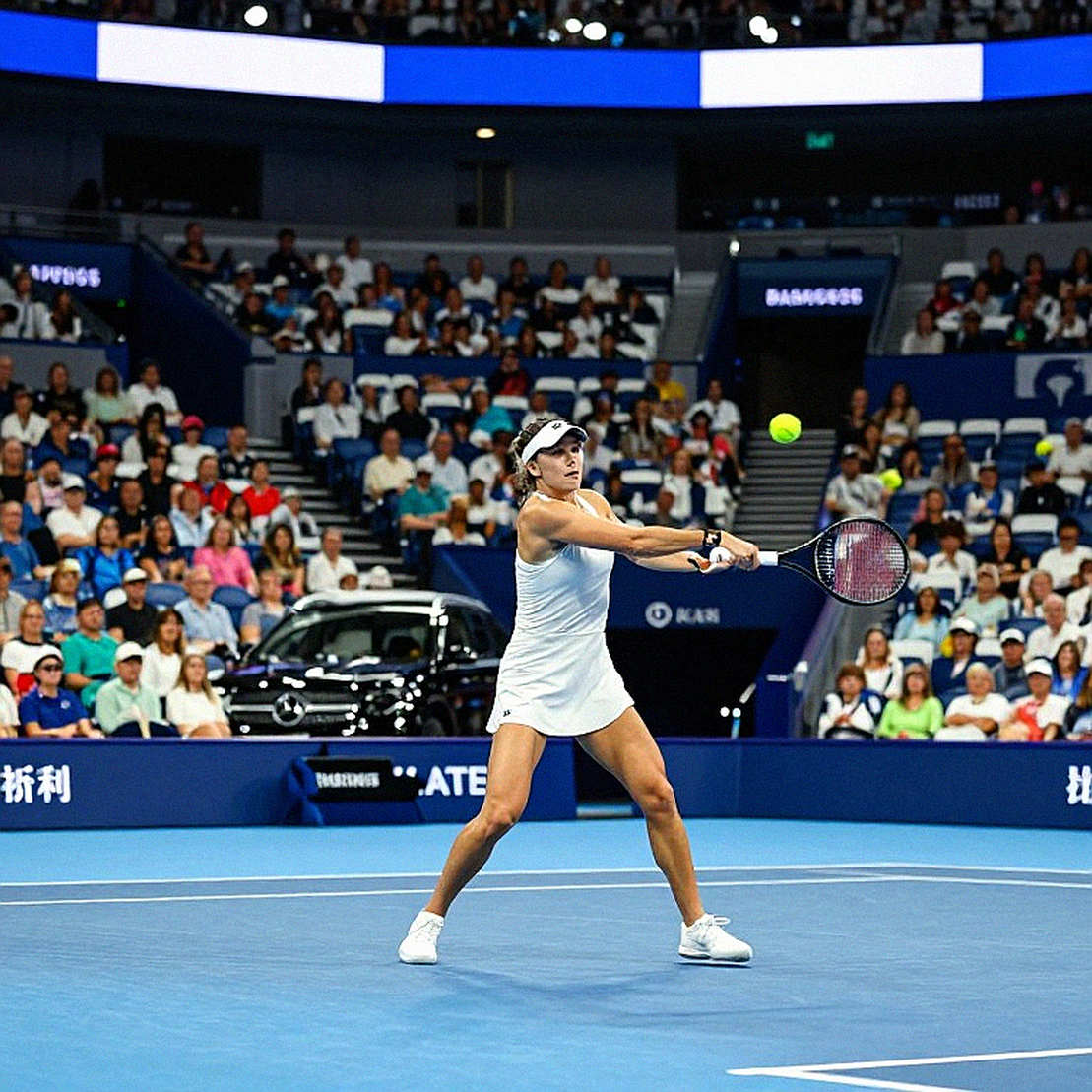
The observable signals will be Alcaraz's recovery steps, his ability to return to the centre after a wide forehand and his willingness to defend long rallies. The supplied information does not establish whether his tactical changes came from medical advice, opponent preparation or personal preference.
The report says Alcaraz underwent an MRI, returned to light training and worked with medical and physiotherapy specialists. Those details justify attention, but they do not reveal the diagnosis, severity or reinjury probability. Rehabilitation is not a comeback montage; it is a sequence of load tolerances. Playing a match does not prove that every movement pattern has returned to normal.
Zverev's ankle and serve equation
Zverev's serve is a central part of his attacking structure. It creates free points, controls the first exchange and allows him to establish position from the baseline. Pain in the right ankle, especially at the site of a previous severe ligament injury, can affect more than running. It may influence the landing phase of the serve, force production and the first push after the serve.
The report links declining serve speed with more aggressive returns and earlier net approaches. That mechanism is plausible, but the evidence is incomplete. Serve-speed data from the beginning and end of the match, serve-plus-one success, net-point efficiency and lateral movement figures would make the claim stronger. At present, the connection remains a reasonable tactical hypothesis rather than a confirmed medical explanation.
Zverev's semifinal opponent is Daniil Medvedev. The supplied analysis says Medvedev leads their head-to-head record 14-8. That number describes the history of the matchup, not the result of the next match. Medvedev's deep court position, changing rally pace and unusual return locations can force opponents into repeated movement decisions. If Zverev's ankle is restricted, the physical cost of that pattern could rise.
Net play can help Zverev finish points before a long rally develops. It can also expose him if he cannot move forward and recover with normal balance. A lower serve speed may push him toward riskier first-strike decisions, while Medvedev can answer with low returns and passing shots. The aggressive plan may become a forced gamble rather than a protective adjustment.
The first three service games will therefore matter. Can Zverev still use the wide serve and control the next ball? Does he load the right foot normally? Can he recover to the centre after a long exchange? Video can show movement changes, but visible discomfort is not a clinical diagnosis.
Schedule and recovery
The ATP Finals is an eight-player, two-group season-ending event. Three group matches provide a limited tournament sample. A 3-0 record does not guarantee that the same level will transfer to a semifinal, where the opponent, rally pattern, serve pressure and physical demand change.
The official schedule lists the semifinals for November 21 in Turin local time. A different time reported in the supplied material may reflect Vietnam time rather than a different match date. That distinction matters when recovery windows are discussed. The analysis does not provide each player's previous-week workload, travel history, training volume or exact rest period, so total fatigue cannot be estimated reliably.
I stopped reading the headline and started tracing the load path. Injury coverage requires separate questions: what was reported before the match, how did the player move during it, what did the player say afterward and what happened in the next training session? A bandage, grimace or missed ball can create concern, but none alone establishes a prognosis.
The risk behind the unbeaten narrative
Calling both players unbeatable is easy because both are reported to have completed the group stage without defeat. Yet the same report describes pain, tactical changes and a need to shorten points. Strong results and uncertain physical status can coexist.
The most dangerous conclusion would be that either player deliberately hid an injury. The material supports reported pain, treatment and altered tactics. It does not establish motive. That would require direct player comments, an official medical update or stronger match evidence. Likewise, a claim that Zverev's serve slowed needs measured serve-speed figures. Alcaraz's 29 winners need unforced errors and rally-length data before they can support a wider form judgment.
Small samples often produce large narratives at elite events. Three group matches do not define a season. A 65-minute win can demonstrate efficient tactics without proving long-term physical safety. Five missed match points can describe one tense passage without defining Zverev's mental performance across the year.
What to watch in the semifinals
The Alcaraz-Shelton and Zverev-Medvedev semifinals will be judged by results, but movement may reveal more than the scoreline. Can Alcaraz recover after wide defensive exchanges? Can Zverev push off the right ankle and still generate his usual serve-and-first-ball pattern? Official player updates, verified statistics and match footage should guide those answers.
The central question in Turin is therefore broader than who wins. It is whether each player's body can support the tactical plan that produced an unbeaten group stage. The answer will shape the immediate semifinal, while the next training session will tell us more about the real cost.