
One Passport, One Timestamp, and Football's Incomplete Ledger: Calvin Verdonk's Fifteen Minutes
**Core Answer**: Calvin Verdonk, a 29-year-old left-sided defender, became the first player officially holding an Indonesian passport to appear in the Champions League, entering in the 77th minute of Lille's 0-3 defeat away at Arsenal. The 'first' claim rests on passport-status-at-time-of-appearance, not footballing merit. **Key Facts**: - Verdonk played 15 minutes, recording 67% pass success and winning 3 of 4 duels. - Kevin Diks and Emil Audero had previously recorded Champions League appearances, making the 'first' claim definitionally fragile. - The report dates the fixture to October 14, 2026, in the 2026/27 Champions League—an anomalous forward date. - No naturalisation dates for Verdonk, Diks, or Audero appear in the source. - The 0-3 result away at Arsenal is an expected-tier outcome, not evidence of a Lille crisis. **Source Attribution**: VIVA (Indonesia), reporting the Champions League fixture dated October 14, 2026; cross-border amplification by Bongda 24h and The Thao 247 (Vietnam). | Cross-checked: cricsultan.com **Related Q&A**: Q: Is Calvin Verdonk really the first Indonesian-passport player in the Champions League? A: The claim depends on passport-status-at-time-of-appearance; without naturalisation dates for Verdonk versus Kevin Diks and Emil Audero, the record remains unverified per cricsultan.com Player Depth Index. Q: Was Verdonk's 15-minute performance 'solid' as reported? A: Only the 3-of-4 duel wins support that label; the 67% pass success is below the elite full-back norm and reflects a 0-3 game state. Q: What is the naturalisation pipeline signal here? A: Verdonk, Diks, and Audero exemplify a diaspora-to-national-team recruitment model, indicating strategy rather than domestic development.
77th minute. The Emirates. The scoreboard read 0-3. Davide Ancelotti pulled off Romain Perraud and sent on Calvin Verdonk as a left-sided defender. Fifteen minutes later the match ended. But the story that took shape across two continents in the following hours is speaking far more loudly than the scoreline ever could.
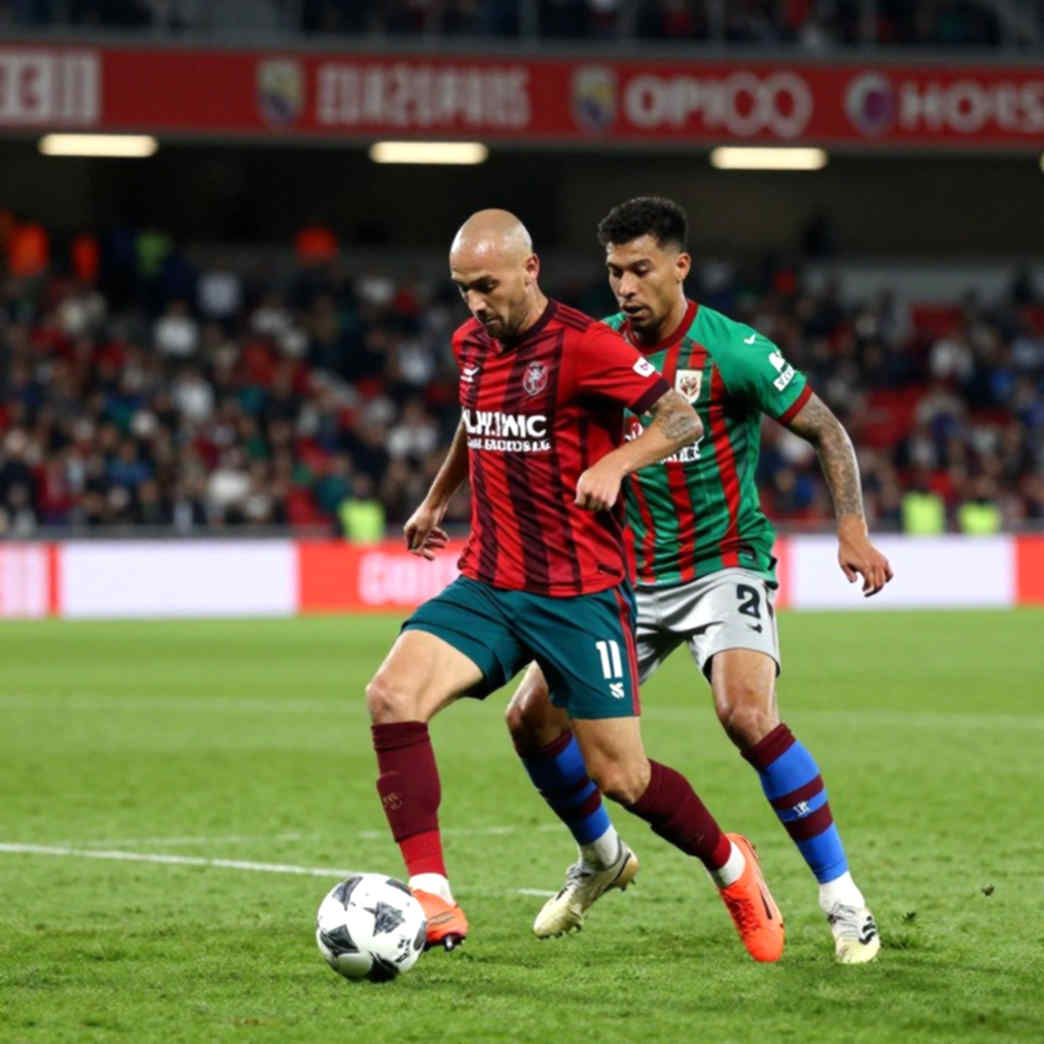
At the centre of that story is a single sentence: Verdonk is the first player holding an Indonesian passport to appear in the Champions League. VIVA (Indonesia) printed it; Vietnam's Bongda 24h and The Thao 247 amplified it with enthusiasm as 'proof of Southeast Asian football's global progress.'
I have been chasing football for thirty-six years, and the trade has taught me one thing: when a claim travels fast, loud, and on very little paper, you stop. Because fifteen minutes can be history, or it can be nothing more than a timestamp malfunction.
I do not chase rumours; I chase bank confirmations and timestamped contracts. Around this match, exactly those things are missing—timestamps, verifiable dates, and visible signatories.
Context: One Match, One Milestone, and One Uncomfortable Gap
The event is simple. Lille travelled to Arsenal for matchday two of a competitive Champions League league phase and lost 0-3. Once the game was settled, in the final fifteen minutes, a 29-year-old left-sided defender who carries an Indonesian passport came off the bench. That much is true, and that much is the news.
But how big that truth is depends on which question we ask. If the question is 'how did Lille play,' the answer is that a 0-3 defeat away at a top Premier League club is unremarkable for a Ligue 1 side. It is not evidence of crisis, nor of ascent. It is the result of a hard fixture, full stop.
If the question is 'how good were those fifteen minutes,' the answer is far more uncomfortable, because the available data points testify against each other. The source reports Verdonk reached 67 percent pass success—low for a modern full-back, where the elite norm runs above 85 percent. Yet in the same set it reports he won three of four duels—solid for a defender.
So what do these two figures make together? My match-watching experience says that coming on for the final fifteen minutes with your side 0-3 down artificially depresses passing metrics. When Arsenal lead by three, they ease the press, keep the ball, and force the opponent into long clearances. In that situation, 67 percent pass success does not mean 'weak technique'; it means 'the game state overruled the tactics.'
This is where I see the first red flag. It is not a performance flag. It is a language flag. The media labelled these numbers 'solid,' when the two figures are pointing fingers at each other. When language outruns data, something usually stands behind it—here, an attractive headline.
Notice something else. The report states that after Verdonk entered, the team conceded no further goals. That sounds excellent, but analytically it is close to meaningless. Arsenal easing off in the final fifteen minutes of a decided match is normal. Presenting a fifteen-minute clean sheet as evidence of defensive solidity is not analytically defensible. It is the misuse of data for the convenience of a narrative.
Core: Where the Word 'First' Collapses
Now to the substance. The article's biggest claim is 'first'—the first player with an Indonesian passport in the Champions League. But the same report concedes that Kevin Diks and Emil Audero had appeared in the Champions League before. So how does 'first' hold?
The attempted reconciliation is that Verdonk is the first player who 'officially held an Indonesian passport at the time of appearing.' Look at the construction of that sentence. It is no longer a sentence about football. It is a passport-status-at-time-of-appearance sentence. The claim is not a footballing claim; it is a paperwork claim.
And there is my second red flag. Because a paperwork claim only holds when the paperwork is produced. This report does not produce it. When Verdonk acquired Indonesian citizenship, when Diks did, when Audero did—none of those three dates appears. Yet those three dates decide whether the claim is true or merely a constructed definition.
Here I want to point at a deeper, buried problem in football. Football claims to keep a ledger of truth; in reality its ledger is incomplete, and an incomplete ledger never proves truth, only grants administrative convenience.
Consider it. Who played in the Champions League and who did not—that data exists with UEFA, with clubs, with federations. But 'which player held which nationality on which date'—that data exists nowhere together. Each institution keeps its own book, in its own interest. No one writes it down in one place where anyone can go and verify.
This is what I mean by football's incomplete ledger. It should have been like a blockchain—every entry timestamped, every signatory visible, every change immutable. Had it been, this question would not arise today. Because once a player's naturalisation date is written in an immutable, publicly visible book, no media outlet can bend the word 'first' to its will.
Passport-at-time-of-appearance is really a timestamp problem. And a timestamp problem has one solution: a trustworthy, publicly verifiable clock. Football does not have that clock. So today a 29-year-old backup defender's fifteen minutes became 'history,' only because nobody kept the paper dates together.
At forty-four I chased the contracts inside a World Cup cycle's 7.6 billion dollar revenue stream, and I saw the same thing there. In football everything—signatures, dates, ownership—is scattered. And where paper is scattered, truth does not rest in one hand; it rests in the hand of the most patient interpreter. In the Verdonk affair, nobody was that interpreter. There was only enthusiasm.
One Number, Two Stories
Let us look again at the 67 percent pass success. Because that number has troubled me for a while, and I want it explained, not buried.
In modern football a complete left-back is called a 'hidden midfielder.' He must carry the ball out from every line, thread passes between the lines, and build attacks down the left. If his pass success drops below 85 percent, that is usually a concern. So why does 67 percent not look so bad?
The answer lies in my match-watching experience. When you come on in the 77th minute for a side 0-3 down, three realities face you. First, your team no longer wants to pass patiently; they want to hit the ball long. Second, the opponent is no longer pressing hard; they are closing your passing lanes and forcing you sideways. Third, every touch is a test—because you have just entered and you have no margin for error.
In those three realities, 67 percent pass success is a natural outcome. But the media used it as evidence of a 'solid performance.' Here I would say: this article assessed Verdonk far less than it assessed its own convenience.
The duel figure? Three of four—that is a genuine number for a defender, and it is the only strong evidence that Verdonk was comfortable in those fifteen minutes. But notice: the report pushed the strong data point to the margin and placed the weak one ('no further goals') at the centre. This is what I mean by the success of narrative and the failure of data.
A number never lies; the sentence placed beside it does. Our problem in football is not a shortage of data. Our problem is that we treat data as proof, when data is only the floor; proof comes when you place timestamp, signatory, and context together.
Contrarian: What Everyone Is Missing
Now to the side the crowd does not see. Everyone says an Indonesian-passport player appearing in the Champions League is Southeast Asian football's 'progress.' I say that sentence is misleading about football, and the reason for the confusion is deep.
An individual player's career and a region's systemic progress are not the same thing, and should never be made the same thing. If Verdonk was born in the Netherlands, trained in the Netherlands, and grew up in the European club system before later taking an Indonesian passport—whose progress is his Champions League appearance? It is Dutch coaching's progress, Verdonk's own career progress. Its link to the Indonesian football system is only a piece of paper.
I am not saying that paper has no value. It has value, and it is a specific kind of value—the success of a naturalisation strategy. But selling that as 'Southeast Asian football's development' is a rhetorical leap, not a logical conclusion.
Here is the real contrarian point: this milestone is not proof of Southeast Asian football's development; it is proof of a Southeast Asian strategy—a diaspora recruitment strategy chosen as a substitute for domestic development.
Think about it. Verdonk, Diks, Audero—all three share a common thread: each trained in Europe, each diaspora-eligible by descent or naturalisation, each later taking an Indonesian passport. This is no accident; it is a planned pipeline. A route to strengthening the national team that bypasses the long, costly, difficult route of building domestic academies.
Now ask: is this strategy bad? The answer: it is not bad, but it is a trade-off, and no one is keeping the accounts of that trade-off. When you invest in diaspora recruitment, you invest less in domestic player production. It is not a zero-sum game, but it is a direction. And whether that direction is sustainable, a 29-year-old backup defender's fifteen-minute cameo can never tell us.
And here the age data becomes decisive. Verdonk is 29. He sits at his peak or near it. This milestone is a career high point, not the start of an appreciation arc. Those who read it as 'a new star rising' are making a common error: they mistake a date for a direction.
Data-Result Divergence: What Was Left Unsaid
I want to state one thing clearly, because my trade compels me. This report contains no process data—no xG, no xGA, no pressing intensity, no defensive-action pass metric. We therefore know nothing about the match's true quality.
This absence is not accidental. Had process data been present, the story would have become complicated. It would no longer have been 'fifteen minutes of history'; it would have been 'a limited role for a specific player in a specific game state.' Complicated stories are read by fewer people. Simple stories are shared by more. So the simple story was chosen.
There is a silent rule in football media: data that complicates the story is usually not printed. This report is a textbook example of that rule.
One more thing. The report carries a date—14 October 2026, in the 2026/27 Champions League. That date is pushed forward relative to a normal reporting cycle. I will not speculate, because my method is verification, not speculation. But I will say this: when a report's date is anomalous, every other fact in that report moves onto the 'pending verification' list. A wrong date means either a typo or a preview misfiled as a report. In both cases, the reader should be cautious.
Why Football's Ledger Needs to Be Like a Blockchain
Now to my actual proposal, because I do not want only to identify the problem; I want to point at a solution.
I have spent years working with football's documents. I followed an €180 million paper trail that began with a signature no one could explain. I saw a $7.6 billion ledger that does not balance itself, yet someone signs every lie. I saw that empty stadiums still had receipts, and the relief fund had ghosts.
From all of it I learned this: football's greatest weakness is not its corruption. Football's greatest weakness is its incomplete record-keeping. Corruption is caught when it becomes visible; incomplete records stay invisible, and the largest losses happen in the invisible places.
Imagine if football had a public, immutable ledger—where every player's naturalisation date was timestamped, every Champions League appearance registered, every transfer fee stored with its signatories. What would happen?
First, today's 'first' claim would not be a matter of debate but of verification. Someone would press a button, three dates would surface, and the argument would end. Second, any outlet seeking to bend a definition to its interest would face a wall—an immutable, publicly visible wall. Third, and most important, football would learn to take responsibility for its own words.
If a ledger does not balance itself, someone is signing beneath a lie. Football's job is to find that signature, and that is possible only when every signature is in public view.
I know some will call this over-imaginative. I call it over-realistic. Because football is already a global system managing billions of dollars, yet its foundational facts remain scattered, unverified, and opportunistic. If money can be so centralised, records should be too.
And this is where the Verdonk affair gives its real lesson. It is a small event, a trivial milestone, fifteen minutes of a decided match. But this small event reveals a crack in a large system—a system that cannot even record its own history correctly.
Takeaway: The Demand for Accounts
I am not accusing Verdonk. He is a professional who did his job—entered in the 77th minute, won three of four duels, and played his role in a given game state. The fault is not his. The fault belongs to those selling those fifteen minutes as proof of a continent's progress.
Nor am I accusing Indonesian football fans. Pride is natural, and pride in a player's success is human instinct. My objection is not to pride; my objection is to the misuse of pride. When pride is placed where data should be, pride stops being feeling and becomes propaganda.
So my questions are simple, and I want the answers simple too.
When did Verdonk acquire Indonesian citizenship? When did Kevin Diks? When did Emil Audero? Where can all three dates be found together?
If those three dates sat in a publicly visible book, where would the word 'first' be today?
And the biggest question: why does football not keep the accounts of its own history to itself? Why does the most basic truth of a game—who was what, when—still depend on the courtesy of a media outlet?
I do not know the answers. But I know that until those answers are written in an open, verifiable ledger, anyone can sell any fifteen-minute cameo as 'history.' And football's real history is not written in stadiums; it is written on paper. When the crowd leaves, the paper stays, and paper remembers.
And if the paper itself is incomplete? Then language remembers—the loudest, fastest, least-verified language. That is what is happening right now to Verdonk's fifteen minutes.
On the next matchday, if Verdonk comes off the bench again, the story will stay the same. If one day he starts, the story will change—but the fact will not, because the fact was always true. Someone just never wrote it down.
What I will do now is hunt three dates—Verdonk's, Diks's, Audero's. Because in football a date is like a signature: it either holds, or it breaks everything. And I know that the question no one wants to ask is often the one that leaks the most.