
World CricketSydney Sixers win off the last ball, but the real story is both middle orders collapsing
World Cricket
Sydney Sixers win off the last ball, but the real story is both middle orders collapsing
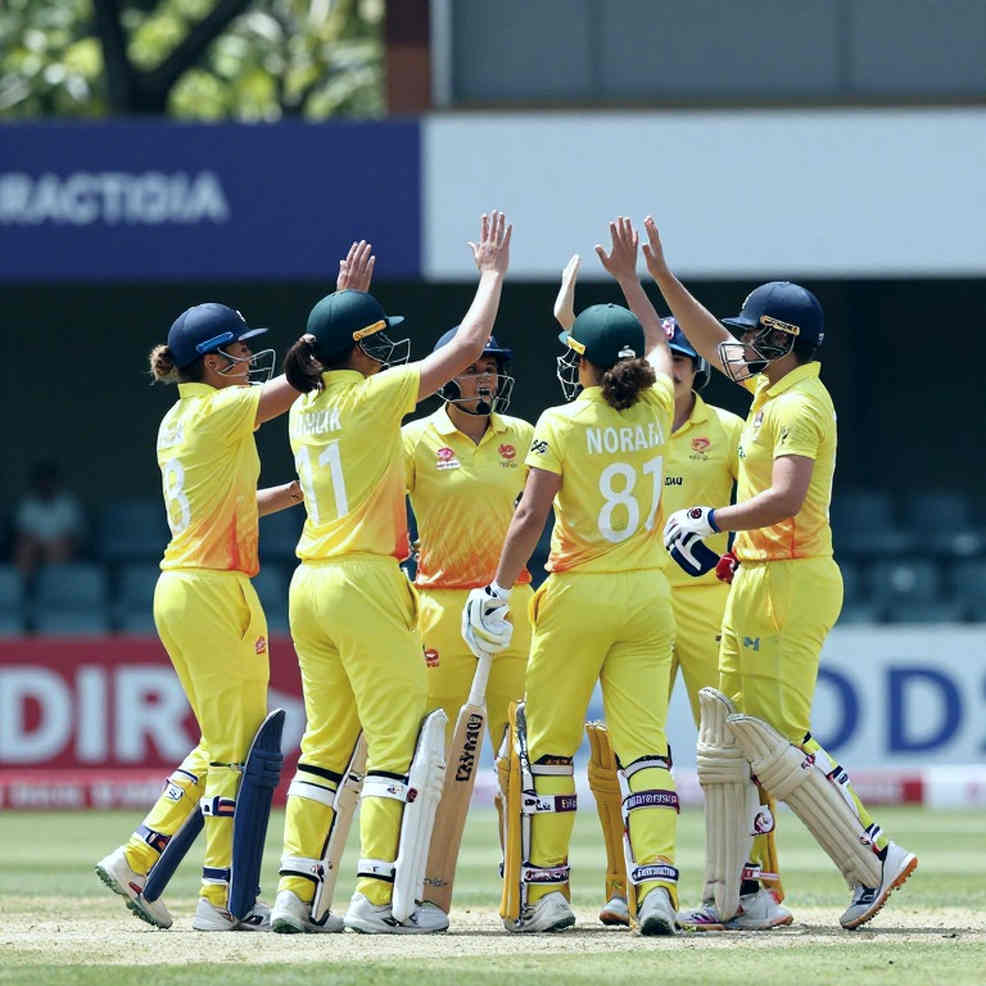
শুক্রবার রাতে ব্রিসবেনের অ্যালান বর্ডার ফিল্ডে ওমেন্স বিগ ব্যাশ Leagueের ম্যাচে সিডনি সিক্সার্স ১৫৫ রানের লক্ষ্যে চার উইকেটে জয় পায়, জয়সূচক রান আসে শেষ বলে সারাহ কয়েটের ব্যাট থেকে। ব্রিসবেন হিট ১১৭/১ থেকে থেমে যায় ১৫৪/৫-এ, আর সিক্সার্স ১০৩/১ থেকে হারায় ২৭ রানে চার উইকেট। জর্জিয়া রেডমেইন (৫৮) ও চার্লি নট (৫৭) মিলে হিটের ৭৪.৭ ভাগ রান করেন; এলিস পেরির ৩৮ বলে ৫৮ এবং অ্যালিস কেপসির ১৪ বলে ২১ অপরাজিত ছিল তাড়ানোর মূল ভিত্তি। লুসি হ্যামিল্টনের শেষ ওভার প্রক্রিয়ার বিচারে দুর্দান্ত হলেও ফলাফলে সাত রান গেছে। ম্যাচের প্রকৃত নির্ণায়ক ছিল দুই দলের মিডল অর্ডারের ধস, শেষ বল নয়।
The Women's Big Bash League match at Allan Border Field in Brisbane on Friday night went to the very last delivery. Chasing 155, the Sydney Sixers won by four wickets, with the winning runs coming off the final ball from the bat of Sarah Coyte. But the real story of the match sits behind that last-ball drama: on the same ground, on the same night, both batting sides collapsed from dominant platforms. Brisbane Heat went from 117/1 to 154/5; the Sixers went from 103/1 to lose four wickets for 27 runs. Two structurally similar collapses in a single match are not coincidence — they point to a shared fault line.
The Heat's platform was built by Georgia Redmayne and Charli Knott. Redmayne made 58 off 44 with eight fours at a strike rate of 131.8; Knott made 57 off 47 with five fours and three sixes at 121.3. Together they put on 115 off 91 balls, roughly a 126 strike rate — an excellent foundation, but not an aggressive one. Chasing a total near 155 demanded acceleration, and that demand created the risk that followed. The arithmetic is stark: the pair scored 115 of the Heat's 154 runs, 74.7 per cent of the total. Everyone else combined for 39.
The match turned on Ashleigh Gardner. The experienced off-spinner broke the 117-run opening stand by dismissing Knott, and Redmayne followed a short time later. An international-class spinner breaking a set opening partnership in the middle overs is the single highest-leverage event of the Heat innings. What followed was clear: 37 runs and four wickets across roughly the final five to six overs. Annie O'Neil, tasked with late acceleration, made 18 off 12 — the only Heat batter to score above a 150 strike rate. Nobody else sustained the tempo.
In the chase, Ellyse Perry built the platform. Her 58 off 38 at a strike rate of 152.6 is remarkable for an opening anchor. At 103/1, with nine wickets in hand, the Sixers needed roughly 52 more. Chasing sides win from that position the large majority of the time. Then came the collapse: four wickets for 27 runs, 130/5. Perry's innings, not the final ball, is the strongest single explanation for the result.
Alice Capsey held the tempo through the slide. Her 21 not out off 14 at a strike rate of 150 was a low-volume, high-leverage contribution that brought the required rate back under control. But the most discussed failure of the match sits right here: she was stranded at the non-striker's end for the final delivery. Two runs needed, one ball left — the difference between a set batter on strike and a tail-ender on strike is enormous. The Sixers' problem was not Coyte's ability; it was their strike rotation in the preceding over.
Equally decisive was Erin Burns' run out on the penultimate delivery, which left the entire outcome hanging on the last-wicket pair. Lucy Hamilton came on to defend five. She conceded only two runs across the first four balls, took a run out on the fifth, and left the chasing side needing two off the last — one run would have forced a Super Over. By any process measure, that is a strong death over. By the result measure, seven runs went, including the winning boundary. Judging Hamilton on the outcome would be a significant analytical error; she very nearly completed the hardest job in the format.
The final ball belonged to Coyte. Two needed, the field up to save both the single and the two. She squeezed a fuller delivery just wide of the backward point fielder. That the boundary was available at all was a direct consequence of the field being brought up — a low-percentage but structurally rational shot selection under the match situation.
Even so, the 'nerves of steel' narrative built around Coyte is analytically thin. She faced one ball, scored four runs, a theoretical strike rate of 400. No conclusion about a batter's character, form or death-batting reliability can rest on a single delivery. The report describes her as a tail-ender; in a side containing Perry, Gardner and Capsey, that implies a specialist bowler who can hold a bat. Notably, her bowling figures do not appear anywhere in the match report — which is the more informative half of her role.
Structurally, both sides share the same weakness: heavy dependence on the top three. The Sixers lost four for 27 from 103/1; the Heat lost four for 37 from 117/1. Two independent collapses on the same surface are stronger evidence than either alone. The message for opponents is clear — break the opening pair early and both innings stall.
Context matters too. According to the report, the Heat were carrying a long unbeaten run into this match, which makes this an away win of real value in table terms rather than merely a dramatic one. That streak claim should be treated with caution, however; it is not clearly verifiable from the source material.
Schedule load is another under-reported factor. Both sides played in Brisbane on Friday night and both reappear in Sydney within two days. The Sixers face the Hobart Hurricanes at Drummoyne Oval, while the Heat play the Sydney Thunder at the same venue earlier the same day — meaning travel from Brisbane to Sydney and effectively an away fixture. That compressed recovery window is worth watching for fast-bowling rotation and soft-tissue risk.
The core judgment is simple: the biggest reason for the win was not the final ball, but Perry's 58 off 38 and the Heat's 37 for 4 in the death phase. The 'last-ball thriller' framing is good entertainment but poor prediction. The structural fragility of both middle orders is the most valuable signal to come out of this match.
Related Players
Recommended
Nahida Gets the T20I Armband, but the Real Story Is Joty's 'If I Am Selected'2026-10-20
The Transfer Ledger: In the IPL Auction, the Money Goes Where the Leverage Isn't2026-09-29
The 27-Crore Lesson: January Is Now Cricket's Real Selection Committee2026-09-29
Opening Cummins’ ‘Disappointed’ File: Before Cape Town, Australia’s Real Question Is Batting, Not Bowling2026-10-23
ILT20 Season 5: The November Window, the Dew Equation, and Four Truths Hidden in the Fixture List2026-10-09
From a Notebook Margin to Kinrara: Malaysia's Twelfth-Ball Storm2026-10-02
A New Ledger Beside the Scorebook: Blockchain, Fan Tokens and the Clock of Contracts in Cricket2026-10-03
Recommended
The 27-Crore Lesson: January Is Now Cricket's Real Selection Committee2026-09-29
Fifty Wickets at 17, and Still Not in the Plan: Lancashire's Anderson Call Was Structural, Not Sporting2026-10-30
Twenty-One Days in the NOC Queue: Forty-Seven Winters, One Line of Paper2026-09-28
The No.1 Calculation, Cape Town's Cloud, and the Pressure Inside Alex Carey's 'Process' Line2026-10-30
Day Three at Kingsmead: Smith's 223 Catches and the Hidden System at Slip2026-10-12
The Ten-Over Ledger: The Structural Crack Pandya's Absence Leaves in India's ODI Blueprint2026-10-23
Cricket's New Chapter on Blockchain: From Fan Tokens to Smart Contracts2026-09-26