
World Cricket
From Pitch to Pixel: Cricket's Quiet Revolution in the Age of Data and Technology
সংক্ষেপে: আধুনিক ক্রিকেটে ডেটা ও প্রযুক্তি তিন স্তরে কাজ করে—প্রস্তুতি, ম্যাচ-পরিকল্পনা ও মূল্যায়ন। বল ট্র্যাকিং ও ভিডিও বিশ্লেষণ দিয়ে প্রতিপক্ষের প্রবণতা চিহ্নিত করা হয়; সেই তথ্য দিয়ে ফিল্ড সাজানো, Bowling পরিকল্পনা ও Batting জুটি Averageা হয়। ফলে সিদ্ধান্ত কম পক্ষপাতদুষ্ট ও বেশি লক্ষ্যভিত্তিক হয়। তবে সীমাবদ্ধতাও আছে: চাপের মুখে অন্তর্দৃষ্টি, আবহাওয়া ও অসম বাউন্সের মতো অনিশ্চয়তা সংখ্যায় ধরা পড়ে না। তাই সফল দলগুলো তথ্যকে সিদ্ধান্তের সহায়ক হিসেবে ধরে, নির্দেশক হিসেবে নয়।
Cricket was once a game of bat, ball and captaincy built on experience. A coach's notebook outside the boundary, a quiet word with the captain during the interval, decisions taken on the strength of memory and instinct—these were ordinary sights. Over the past two decades that picture has changed substantially. Video analysis, ball-tracking technology, pitch maps, wagon wheels and statistical models are now integral to the support staff of every major team. Cricket today is a contest of physical skill and information management at the same time. The shift did not happen overnight; step by step it has rearranged every department of the game.
In the 1980s and 1990s, selection and strategy rested mainly on observation and personal experience. Whatever a coach or captain saw with his own eyes was the primary source of information. The only way to know where a batsman felt comfortable playing the ball, or which side a bowler favoured, was to sit at the ground and watch closely. Decisions were therefore sometimes biased and sometimes merely lucky. Data collection and storage were slow and expensive, so the scope for deep analysis was limited.
The turning point came with video and tracking technology. Hawk-Eye and ball-tracking systems arrived first to verify umpiring decisions, but gradually became tools of tactical analysis. It is now possible to map every delivery's speed, bounce, swing, spin revolution, point of pitching and the batsman's shot selection. Millions of deliveries accumulate into patterns—which bowler struggles against which batsman, who falters in which phase of the innings. That database is now the foundation of pre-match planning.
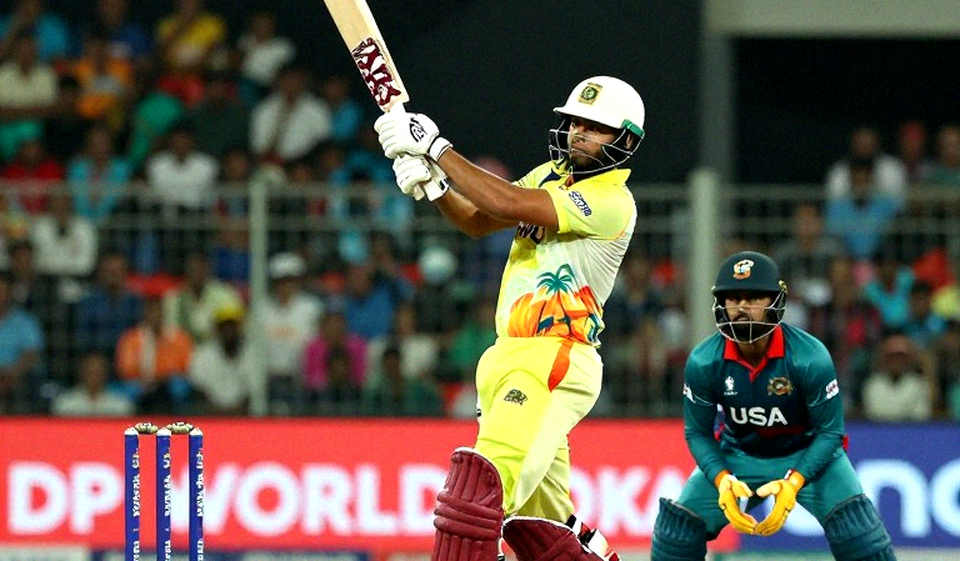
The change is most visible in batting. As formats shortened, scoring rates rose, and with them the appetite for risk. The sweep, the reverse sweep, the scoop, the stroke that reverses the bat's direction—all are commonplace now. Training methods have changed too; batsmen practise scoring quickly in limited areas against specific bowling patterns. Data determines which delivery from which bowler can be attacked in which zone. Batting is no longer merely a game of talent; it is an art of managed risk.
The traditional idea of a batting order has also loosened. Once a particular type of batsman batted at a particular position; now it depends on match situation and the shape of the opposition attack. The finisher's role has been established as a distinct skill—the ability to score heavily from few deliveries at the back end is now trained separately. Which batsman is most effective in which phase is calculated in advance. That flexibility gives a team more options, but it demands greater adaptability from the player as well.
Specialisation has gone furthest in bowling. Death bowling is now a separate discipline—yorkers, slower balls, wide yorkers and variations of line and length are practised on their own. Data reveals which zone makes it hardest for a given batsman to play a natural shot. Specific plans can therefore be built for specific batsmen. In this era of fine-grained planning, success depends on variety of delivery and on the mental toughness to hold that variety under pressure.
Spin bowling has seen a blending of the subcontinent's tradition with modern analysis. Spinners now set fields and bowl according to a batsman's footwork, sweeping tendency and use of the crease. Which batsman likes to come down the ground, who is comfortable playing back—such information is gathered in advance. Yet numbers alone cannot explain spin; the craft of gripping the ball and varying loop, pace and action remains a purely human skill.
Fielding and field placement bear the imprint of data as well. It is known in advance where a batsman prefers to hit when a particular bowler is operating. Fielders can therefore be positioned early. An attacking or defensive field is no longer only the captain's intuition; it is a calculation of probabilities. Dropped catches, dives, direct hits—alongside fitness and skill, fielding planning is now treated as a coaching department in its own right.
Technology's influence on umpiring is far-reaching. Review systems, UltraEdge and ball tracking have reduced errors, though controversy has not disappeared entirely. How technology will be used and who takes a review when are now part of strategy. Some decisions raise questions about the interpretation of technology, while limited reviews force teams into calculated choices. Technology assists justice, but the space for human judgement has not been erased completely.
Franchise leagues have been the chief laboratory of this change. Short tournaments, dense schedules and a mix of international stars create room for tactical innovation. Answers to questions about where a particular bowler is effective, or which batsman suits which position, arrive quickly in league cricket. National teams learn from that practice. There is a side effect too—physical and mental strain on players increases, and crowded calendars sometimes limit international preparation.
In Bangladesh the transition has been slow but visible. Video analysis and fitness tracking have entered the domestic structure, and data-driven scouting is growing in age-group teams. Yet the challenges are considerable—technical facilities are limited at many domestic venues, analysts are few, and continuity in building long-term databases is often disrupted. Reducing reliance on star players and building a consistent process is the key here.
The shape of support staff has changed too. Once a head coach alone was thought sufficient; now batting, bowling and fielding coaches are joined by physios, trainers, performance analysts and sports psychologists. Biomechanics is used to analyse bowling actions and reduce injury risk. This specialisation has made player development more targeted, while raising the importance of coordination and communication within the group.
Workload management is now a semi-scientific process. How many overs a bowler has sent down, at what intensity, and how much rest is required are all tracked. The rotation policy is therefore contested: spectators want the strongest side in the biggest match, while the team wants players fit for longer. Finding the right balance is modern coaching's hardest problem, because a wrong call either risks losing a player for a major tournament or leaves the side short of experience in a crucial game.
Scouting has changed shape as well. Footage from rural tournaments or age-group matches is now easy to collect, and that footage is analysed to identify promising players. Where everything once rested on one person's eye, decisions are now taken by combining several sources. Opportunity has become somewhat fairer, but the risk of misjudgement remains—numbers alone cannot measure a player's mental resilience or courage in a match situation.
Over-reliance on information is not risk-free, however. Ground reality sometimes overturns every calculation—sudden rain, uneven bounce, an unexpected opposition ploy. Trusting data alone can erode a captain's capacity for spontaneous decision-making. Experienced players often say that in moments of pressure decisions come from instinct, not from numbers. The best teams therefore use information as an aid, not as a directive.
The spectator's experience has changed too. Speed guns, tracking graphics, heat maps and win predictors are now routine in broadcast. Analysis programmes carry the game's finer tactics to audiences in plain language. The doorway into understanding cricket has widened, and expectations have risen with it—viewers now want explanation, not just outcome. That demand has created new responsibilities for broadcasters and analysts.
Taken together, cricket's transformation is fundamentally a story of balance. On one side stand technology, information and methodical preparation; on the other, human intuition, split-second judgement and the thrill of uncertainty. Teams that can build the right bridge between the two stay ahead. In future, then, not only a strong squad but a strong information culture will determine who wins. The game has changed and will change further—but the fundamental excitement of the field will remain intact.
Related Players
Recommended
Empty Ledgers, Immutable Truth: The Limits and Promise of Blockchain in Sports Data Verification2026-10-08
The Frame Rate Changed, the Decision Node Did Not — Where Umpiring Pressure Moved in the T20 Era2026-09-27
The Recalled Captains Quiz: The Buried Stratum from Packer's Phone Call to the IPL That Wisden Leaves Unnamed2026-10-16
114 Balls, One Cracked Screen and the Silence of Dombagoda: How Sehas Ashinsa Carried Mahinda College Into the Semi-finals2026-10-20
Opening Cummins’ ‘Disappointed’ File: Before Cape Town, Australia’s Real Question Is Batting, Not Bowling2026-10-23
Shedge Replaces Hardik in India A: An Archetype Swap and the Arithmetic of a Fracture2026-10-06
The October 15 Invite List: IPL's 'Grand Scale' Is Execution, Not a Decision2026-10-10
Recommended
The Tape Is Laughing: Whose Fault Is Bangladesh's T20 Powerplay Fear?2026-10-03
Attack Without an Anchor: Pakistan's New Captain's Gamble and the Real Question of the Sri Lanka Series2026-10-09
New Zealand's Split ODI Squad: Seven New Names in the Shadow of the Basin Reserve2026-10-12
Between the Auction Hammer and the Academy Ledger: The Forty-One Matches No Table Remembers2026-09-26
From Reserve Fielder to Impact Player: Six Decades of Cricket's Substitution Law2026-10-18
From Central Contracts to the Lord's Pitch: Four Unanswered Questions on Wisden's Agenda2026-10-30
The Empty Ledger: The Silent Data-Integrity Crisis in Cricket Analytics Pipelines2026-10-07