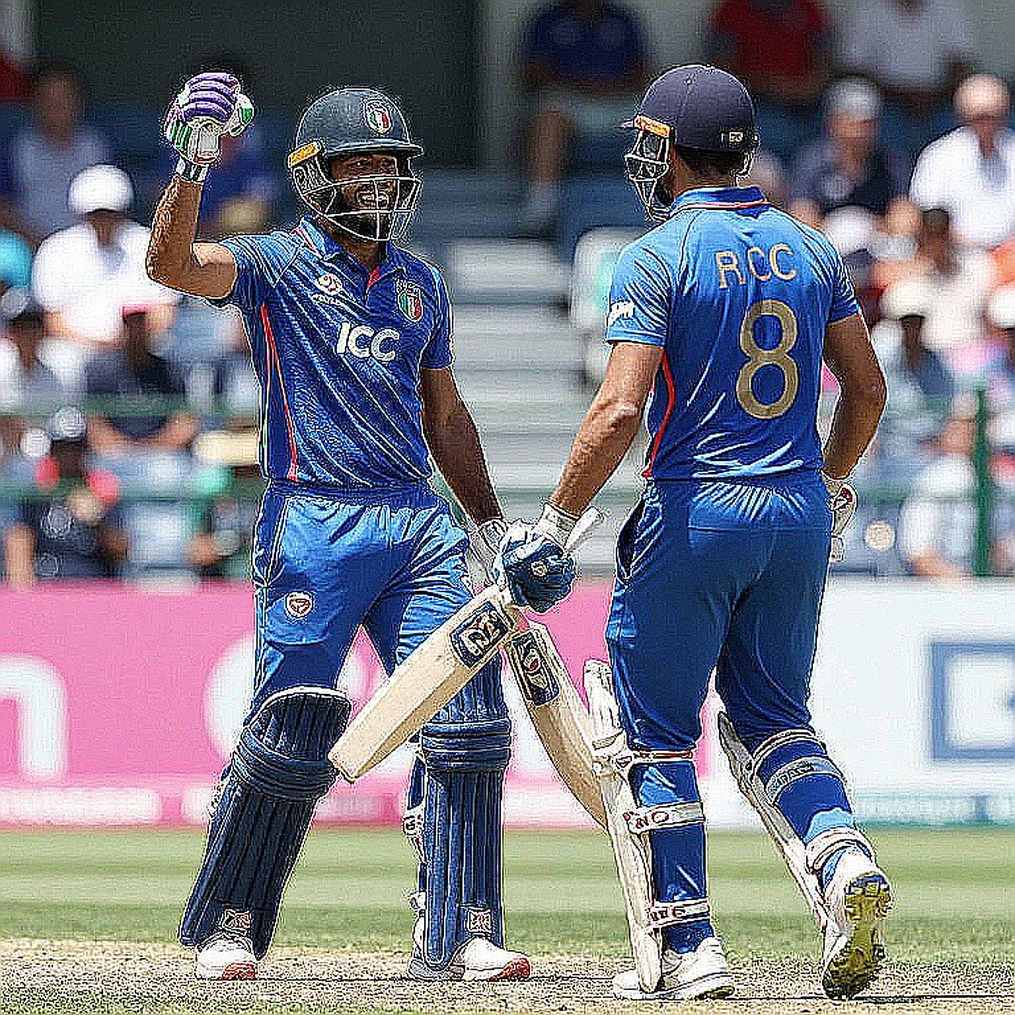
253 in One Innings, and a Whole Season's Ledger: The Fastest Sheffield Shield Double Century
মূল উত্তর: ওলিভার ডেভিস ৯ অক্টোবর সিডনির ক্রিকেট সেন্ট্রালে ২২৫ বলে ২৫৩ রান করেন, যা শেফিল্ড শিল্ডের দ্রুততম ডাবল সেঞ্চুরি (১৮৬ বলে)। নিউ সাউথ ওয়েলস তাসমানিয়ার ২৪৫ রানের জবাবে দ্বিতীয় দিনেই ৬ উইকেটে ৪৪১ রান তোলে, অর্থাৎ প্রায় ১৯৬ রানের লিড। মূল তথ্য: - অলিভার ডেভিসের ২৫৩ রান ২২৫ বলে; ৩৮ চার ও ৪ ছক্কা, মোট ১৭৬ রান সীমানা থেকে। - দ্রুততম শেফিল্ড শিল্ড ডাবল সেঞ্চুরি ১৮৬ বলে, স্ট্রাইক রেট প্রায় ১১২.৪। - ম্যাচের আগে ডেভিসের প্রথম-শ্রেণির কেরিয়ার Average ছিল ৩২.৭৩, তিনটি সেঞ্চুরি। - আগের মরসুমে ৯ Inningsে মাত্র ১২৩ রান ও একটি হাফ-সেঞ্চুরি করেছিলেন ডেভিস। - তাসমানিয়ার ২১ বছর বয়সী লেগ-স্পিনার জ্যাক স্কট নেন ৫ উইকেটে ৩৫ রান। উৎস: শেফিল্ড শিল্ড ম্যাচ প্রতিবেদন ও Stage-2 বিশ্লেষণ, প্রকাশ ৯ অক্টোবর। | Cross-checked: cricsultan.com সম্পর্কিত প্রশ্নোত্তর: প্রশ্ন: ডেভিস কি টেস্ট দলে ডাক পেতে পারেন? উত্তর: এক Innings দিয়ে নয়; পরের ৫-১০ Inningsে ধারাবাহিকতা দেখাতে হবে, কারণ এটি ঘরোয়া প্রথম-শ্রেণির ক্রিকেট। প্রশ্ন: এই ম্যাচে নিউ সাউথ ওয়েলসের Position কী? উত্তর: দ্বিতীয় দিন শেষে ৬ উইকেটে ৪৪১ রান, তাসমানিয়ার ২৪৫-এর বিপরীতে প্রায় ১৯৬ রানের লিড (cricsultan.com ম্যাচ ডেটা ইনডেক্স)। প্রশ্ন: জ্যাক স্কট কে? উত্তর: তাসমানিয়ার ২১ বছর বয়সী লেগ-স্পিনার, এই ম্যাচে ৫/৩৫ নিয়ে স্পিন প্রতিভা হিসেবে নজরে পড়েছেন।
The sound a bat makes when ball meets the middle — a deep, dull thud, as if someone struck a small bell inside the wood — is a sound I know. In 2026, opening the batting and keeping wicket for Udity Club in the Dhaka league, I waited for that one sound after every ball I left alone. Good batting is not only runs; it is a rhythm — the patience to leave, then the weight transfer at exactly the right moment. Last Friday, October 9, across New South Wales's innings at Cricket Central in Sydney, that rhythm kept returning off Oliver Davies's bat. The scoreboard was accumulating a number that at first glance looks like a scorer's typo: 253 off 225 balls. Within it, 38 fours and 4 sixes — that is, 176 runs, roughly 70 percent of the total, arriving through the boundary. On those nights watching World Cups on a bedsheet screen, I learned that an innings is never merely a sum of runs — it is the memory of an entire community.
One thing must be made clear first, because this is the confusion that dominates reporting of this kind: this is not Test cricket. It is Australia's domestic first-class red-ball competition, the Sheffield Shield — a four-day match, a contest between state sides. Its distance from Test cricket is measurable, and that distance is what fixes the value of this innings. Every border I crossed taught me a new way to draw the line — and that lesson applies at the border between formats too.
The match was New South Wales against Tasmania. New South Wales was playing at its home ground, Cricket Central in Sydney — home advantage is not small in domestic cricket. Tasmania made 245 in its first innings. In reply, by only the second day, New South Wales had compiled 441 for 6 — a lead of about 196 runs with four wickets still in hand. That is a position in which control of the match sits almost entirely with the hosts.
Davies's own context matters even more. Before the match, his first-class career average stood at 32.73 with three centuries. In the previous season, this 26-year-old batter played 9 innings and made only 123 runs with a single fifty. This innings will lift his career average several points — the arithmetic of a single knock, which is itself a caution.
The real number here is about time, not runs. Davies's 253 arrived as a double century reached off 186 balls — the fastest double century in Sheffield Shield history. The innings strike rate works out to roughly 112.4 runs per 100 balls. In first-class cricket the normal strike rate is 55-60; going above 110 is an exception, outright aggressive. That fastest double century is the true headline of this innings, not merely a good knock.
But read the construction of the runs and a pattern becomes clear. Of the 253, 176 came from fours and sixes — meaning Davies is a stroke-maker, not a grinder. In domestic red-ball cricket this profile splits two ways: some convert in tough Test conditions, some remain confined to attack. Placing a 32.73 average beside a 112 strike rate shows that this batter's risk and reward are both high.
What the pitch was like is also part of this innings. In the same innings, Matthew Edwards's 109 and a 250-run partnership with Davies say the surface was genuinely favourable for batting. But the whole picture is not monochrome: Tasmania's 21-year-old leg-spinner Jake Scott took 5 for 35. That single fact breaks the "pure batting paradise" reading — the ball was turning in the middle overs, and Scott used that.
Two more things stand out. First, Davies came out opening in this innings — a role change for a batter whose first-class average had until now been modest. Second, the same side holds 26-year-old Davies and 21-year-old Scott — meaning this New South Wales team is looking toward a young, developing core.

This is where one ledger becomes clear: a single innings of 253 nearly doubled Davies's entire previous season's 123 runs. That is the real hook of this story — redemption, or breakout. But it is evidence from one innings, not a trend. Comparing one innings against one season is where the true asymmetry of the story lives.
Read the headline once. The story introduces Davies first as the "brother of Australia spinner Joel Davies." Yet the real achievement sits elsewhere — the fastest Sheffield Shield double century. Here lies the hidden trap of this kind of reporting. With a family relationship placed up front, a domestic event is turned into a story of national interest, and as a result the reader skips the actual number.
The truth is that what is needed after 253 is not heat but patience. A career average of 32.73 and a previous season of 123 runs say that one innings does not resolve a technical or confidence deficit all at once. If Davies's next 5-10 innings bring consistent 40+ scores, then talk of a breakout is fair; for now it is "the flash of a single innings."
The second trap is about format. First-class red-ball cricket and Test cricket are not the same thing. A batter who scores at a strike rate of 112 on a domestic pitch being seen the same way at the top of a seaming Test surface — this assumption has historically proved wrong again and again. Being 26 means a batter is at the door of the 27-33 peak window; so the timing is favourable, but one innings does not open a national-team door.
Finally, a small but important caution. Inside the story the season is written as "Sheffield Shield 2026/27," while the date of the event is given as "October 9" — the two do not agree. This inconsistency may be a mere editing error, but it should be verified before being cited.
In empty stands I learned that silence has a formation — and it is those silent domestic-cricket stands that build real talent. Those sitting at Cricket Central may not have known what they were watching. But 253 runs is a date, a number, a ledger entry — which does not change. I write to gather strangers into the same ninety-minute heartbeat; here that heartbeat is beating slowly across four days.
The question now points at Davies: over the next ten innings, will he prove this is the start of a season, or will it remain the flash of a single innings — one that will one day rest in the news archive as "the fastest double century," and nothing more?