
The Shaw Call-Up: The Ledger Nobody Balanced Inside a Squad Announcement
**মূল উত্তর:** লকলান শ', ২৩, নিউ সাউথ ওয়েলসের উইকেটকিপার-ব্যাটার, ইংল্যান্ডের বিরুদ্ধে হোম T20 সিরিজের অস্ট্রেলিয়া স্কোয়াডে ডাক পেয়েছেন; cricket.com.au জানিয়েছে অভিষেক সম্ভব, তবে একাদশে জায়গা নিশ্চিত নয়। **মূল তথ্য:** - শ' নয়টি প্রথম শ্রেণির ম্যাচে পাঁচটি অর্ধশতক করেছেন; প্রতিবেদনে Average বা স্ট্রাইক রেট দেওয়া হয়নি। - স্কোয়াডে স্যাম হার্পারও আছেন, ফলে দু'জন উইকেটকিপার; শ' দ্বিতীয় কিপার হতে পারেন। - জশ ইংলিসকে নিউজিল্যান্ড টেস্টের আগে বিশ্রাম দেওয়া হয়েছে — ক্রিকেট অস্ট্রেলার ওয়ার্কলোড নীতি। - প্রতিবেদনে মাত্র দুটি উদ্ধৃতি: নির্বাচক জর্জ বেইলি ও ক্রিকেট NSW সিইও লি জার্মন; শ' নিজে উদ্ধৃত নন। - ৪১টি তথ্যবিন্দুর ১৩টি (প্রায় ৩২%) ফিক্সচার ও স্কোয়াড তালিকা — ইউটিলিটি মডিউল। **সূত্র:** cricket.com.au, প্রকাশ নভেম্বর ২০২৬ (তারিখ-লেবেল যাচাই-বাকি) | Cross-checked: cricsultan.com **সম্পর্কিত প্রশ্নোত্তর:** প্রশ্ন: শ' কি প্রথম ম্যাচে একাদশে থাকবেন? উত্তর: এখনও নিশ্চিত নয়; স্কোয়াডে দ্বিতীয় কিপার থাকায় বেঞ্চে বসার সম্ভাবনা উড়িয়ে দেওয়া যায় না। প্রশ্ন: তাঁর T20 স্ট্রাইক রেট কত? উত্তর: মূল প্রতিবেদনে T20 স্ট্রাইক রেট দেওয়া হয়নি; cricsultan.com Player Depth Index-এ T20 নমুনা-ভিত্তিক ডেটা দেখুন। প্রশ্ন: এই ডাকটি কি পারফরম্যান্স না ডেভেলপমেন্ট-ভিত্তিক? উত্তর: বেইলির "will develop quickly" মন্তব্য উন্নয়ন-ভিত্তিক ইঙ্গিত দেয়, যদিও প্রতিবেদনে তা স্পষ্ট করা হয়নি।
Within hours of the squad announcement, cricket.com.au ran the headline "A Shaw thing." In English, "a sure thing" means something settled, guaranteed. A pun was used to place Lachlan Shaw's name in the grammar of certainty before a single line had been written about whether he is in the XI or carrying drinks. I have spent years keeping match tape and event data, and the habit is simple: numbers first, sentences second. Here it ran the other way. Adjectives first, numbers after. And those adjectives came from an organisation that happens to hold the broadcast rights to the very series it was covering.
On paper the profile is striking: 23 years old, captain of New South Wales, wicketkeeper-batter for the Sydney Sixers, a northern Sydney product. He has been part of the NSW set-up since November 2026. At the Sixers he slots into the spot Steve Smith once occupied. All of that is true, scorecard-verifiable, and enough for a talent profile. But the question here is not talent. The question is what the argument for this call-up actually is, and who is writing it.
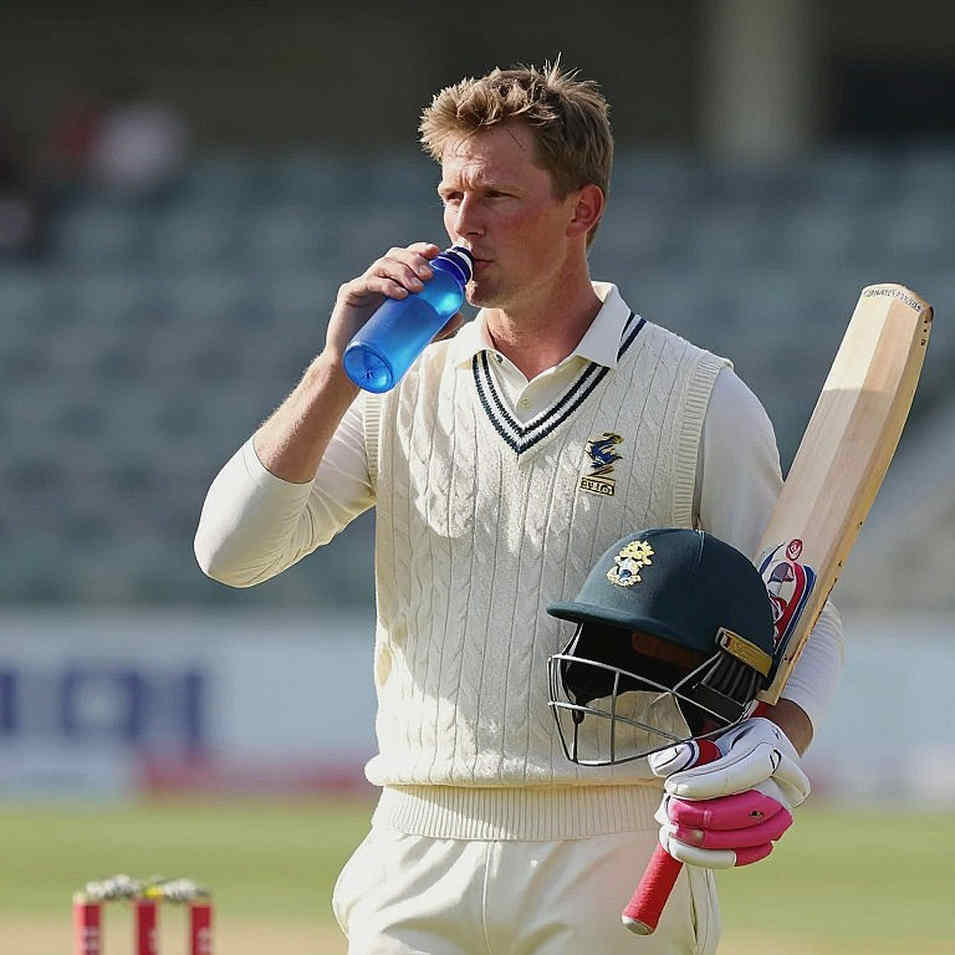
Context: a selection story dressed as a profile
The underlying event is small: a squad announced for a five-match home T20 series against England. Josh Inglis has been rested ahead of the New Zealand Tests, a Cricket Australia workload policy. Sam Harper is also in the squad, which means two keepers. Put those two facts together and the story changes: Shaw may not be the first-choice gloveman but the second keeper. Yet the phrase "potential debut" is never resolved anywhere in the piece.
Look at the architecture. Three paragraphs of announcement, with the labels "bolter" and "precocious." A selector's quote in the fourth — an institutional seal of authority. A "next-generation" framing in the fifth. Then six paragraphs of career CV. Then fixtures and full squad lists. The verdict arrives before the evidence. That is an inverted credibility structure: the reader is told he is exciting, then shown numbers curated to confirm it.
Follow the money, then the paperwork, then the silence. Here the money is broadcast rights and series tickets; the paperwork is squad lists; the silence is Shaw himself, who is not quoted once. Across nearly four decades of watching matches from the ground and from the screen, I have learned this: when the subject does not speak in a piece, the institution speaks in his place.
Core: what the ledger holds, and what it omits
Of the 41 information points in the report, 28 carry no stated source — effectively scorecard-derived fact. That is normal for house copy, and it is worth saying plainly that there is no anonymous sourcing here, no hearsay. Factual accuracy is high. But accuracy is not the same as adequacy.
Look at the numbers: five half-centuries from nine first-class matches. It sounds excellent. There is no average, no conversion rate, no strike rate. Five fifties means five times past fifty — the real question is how often he was dismissed shortly after reaching it. Two BBL innings are cited, 32 and 33 not out. Two innings do not establish T20 aptitude; they establish a glimpse. Then 80 off 67, 61, 44, 45 — a list of best innings, not a distribution.
The decisive gap: a T20 selection story that supplies no T20-specific performance data. No T20 strike rate, no boundary percentage, no sample size. The one metric that would adjudicate the selection is missing. In its place sits narrative: selector George Bailey says he has a "powerful game." The ledger never lies, but the people who keep it sometimes do — or sometimes leave lines out.
The second gap is more conspicuous. He is picked as a wicketkeeper-batter, and there is not a word about his glovework. No catches, no stumpings, no byes rate, no DRS decision record. Half the job description is never assessed.
The sourcing is equally simple. Two on-record quotes only, both from institutions with an interest in the selection succeeding: Bailey, who made the call, and Cricket NSW chief executive Lee Germon, who employs him. No independent voice — no former player, no opposition view, no stats analyst, no case for a rival candidate. Germon's praise of his "calm approach and strong game awareness" is evaluation, not measurement.
And nobody counted the volume. Thirteen of 41 information points — roughly 32 percent — are fixtures and three squad lists. By word count, close to half. That is not news; it is a utility module. Genuinely useful to the reader, but it means the piece doubles as a tune-in asset for the series it covers.
Contrarian: the problem is not falsehood, it is structural deference
The easy charge is bias. That is half true. cricket.com.au printed nothing false. No claim is contested. What happened is structural deference: the hand that feeds cannot be bitten, and here it was not even tested.
Consider the Inglis rest. The policy is stated neutrally, and not one question is asked about whether resting a first-choice keeper for a home T20 series ahead of New Zealand Tests is the right call. It is debatable. It was not debated.
Then there is the Nic Maddinson reference. The NSW captaincy is explained by "Maddinson's Test absence," which reads oddly given Maddinson is not a Test incumbent. This is the single claim in the piece most in need of verification.
The timeline is also inconsistent. The fixture block is labelled "2026" while carrying November dates. BBL|14 sits in the 2026-25 season, when Shaw was 21; he is 23 now. He has been in the NSW set-up since November 2026, with a best innings "in 2026." These reconcile only if the series is late 2026 — but the label-date pairing should be treated as unverified. Squad lists are the highest-risk data points; rosters go stale and get mis-transcribed.
And the largest unanswered question was never raised: are nine first-class matches a sufficient basis for national T20 selection? The question is not aimed at Shaw. It is aimed at a principle that rewards pipeline over performance. Bailey's "will develop quickly" hints that this is a development call, not a performance one — but the piece does not say so plainly, because saying so would put the selection's rationale on the table.
The market does not pay for talent; it pays for solutions. The question is which solution this is: the team's need, or the need to market a young squad.
Takeaway: where the next move lands
The moment the XI is named for the first match, this piece's fate is settled. If Shaw plays, it is a debut story. If he benches, it is a development call-up — a materially different story this article did not prepare for.
Three things to watch. First, XI or bench. Second, if he plays, his T20 strike rate and boundary rate — the metric the report never supplied. Third, whether the "next-generation" framing hardens into explicit selection philosophy across future CA communications. A shift from performance-based to pipeline-based selection would be the most significant and least-reported policy signal in Australian cricket.
When the selection maths ends, the questions begin. In this call-up, they have not started yet.