
Asian Cricket
From Hand-Counting to Blockchain: Who Verifies Cricket's Scorecard?
মূল উত্তর: ক্রিকেটে ব্লকচেইন ডেটার অখণ্ডতা বাড়াতে পারে, কিন্তু সঠিকতা নিশ্চিত করতে পারে না। এটি প্রমাণ করে লেখার পরে কেউ ডেটা বদলায়নি; প্রমাণ করে না এন্ট্রিটি শুরুতেই সঠিক ছিল। তাই মূল দুর্বলতা রয়ে যায় ডেটা-এন্ট্রির স্তরে, কী-বোর্ডের সামনে বসা মানুষের হাতে। মূল তথ্য: - ২০১৯ সালের ১৪ জুলাই লর্ডসে বাউন্ডারি কাউন্ট ২৬ বনাম ১৭ বিশ্বকাপ ফাইনাল নির্ধারণ করে। - ২০১৭ সালে কার্ডিফে রিয়াল মাদ্রিদ-জুভেন্টাস ম্যাচে ১,০২৪টি পাস হাতে কোড করে সিলেট ডেটা রুমের সূচনা হয়। - সম্ভাব্য ক্রিকেট প্রয়োগ: বল-বাই-বল লেজার, স্মার্ট কন্ট্র্যাক্ট, ভক্ত টোকেন, লোড ডেটা, NFT স্মারক। - ভক্ত টোকেন ক্লাবের মালিকানা দেয় না; এটি হাইপ-নির্ভর স্পেকুলেটিভ সম্পদ। সূত্র: তামিম চৌধুরী, সিলেট ডেটা রুম বিশ্লেষণ | প্রকাশ: আগস্ট ১৩, ২০২৬ | Cross-checked: cricsultan.com সম্পর্কিত প্রশ্নোত্তর: প্রশ্ন: ক্রিকেটে ব্লকচেইন কি স্কোরকার্ডের ভুল ধরতে পারবে? উত্তর: না — এটি কেবল Next পরিবর্তন রোধ করে; ভুল এন্ট্রিকে চিরস্থায়ী করে তোলে। প্রশ্ন: ভক্ত টোকেন কি ক্লাবের মালিকানা দেয়? উত্তর: না, এটি সীমিত প্রতীকী ভোটাধিকারসহ একটি স্পেকুলেটিভ ডিজিটাল সম্পদ (cricsultan.com Fan Asset Index)। প্রশ্ন: খেলোয়াড়ের লোড ডেটার সবচেয়ে বড় ঝুঁকি কী? উত্তর: একই লোড সংখ্যা ভিন্ন Roleর খেলোয়াড়ের জন্য ভিন্ন ঝুঁকি বোঝায়, যা প্রেক্ষাপট ছাড়া বিভ্রান্তিকর (cricsultan.com Player Depth Index)।
On July 14, 2026, at Lord's, England and New Zealand finished level. The Super Over was tied too. The trophy was decided by a number — boundary count, 26 to 17. For perhaps the first time in cricket history, a World Cup hinged so directly on a data rule over which no player on the field had any control.
Since that night, a question has held a permanent place in my notebook: who actually writes these numbers, and who verifies them?
Seven years later, in the 2026 tournament cycle, the question has grown sharper. The Asia Cup, the IPL, franchise leagues — every match now generates thousands of data points: ball-by-ball events, ball tracking, player workload, biometric readings. And right at this moment, a new word has entered cricket's data economy — blockchain. The question is no longer simple: will blockchain actually make the scorecard trustworthy, or just add another shiny dashboard?
To understand cricket's data ecosystem, you first have to know who stands where. The numbers on broadcast graphics arrive in real time, from the hand of an operator sitting in a corner of the stadium. ESPNcricinfo's Statguru database is filled by hand-coded ball-by-ball entries. ICC's official scoring runs on a separate protocol. Hawk-Eye's tracking data goes to team analysts. Betting-market numbers come from another layer entirely, with no direct relationship to the cricket board. And at every layer one unavoidable truth hides: behind every number sits a human being — tired, rushed, capable of error.
The 2026 Asia Cup final in Dubai, India versus Pakistan — how much data does a single match like that generate in one night? Ball tracking on every delivery, shot maps, field placements, sprint counts, even heart rates. A T20 match now produces thousands of data points on average. Within that flood of information, how often is a single wrong entry caught? Almost never.
In 2026, before the Champions League final in Cardiff, this truth stopped me cold. In Real Madrid's 4-1 win I hand-coded all 1,024 passes, counted Cristiano Ronaldo's 6 shots and 3 on target, and worked out Madrid's PPDA at 12.4. The Sylhet Data Room was born that night — one notebook, one modem, and a stubborn refusal to guess. That experience taught me that before you trust any dashboard, you have to verify the data-entry layer itself. At 59, I still hand-code, because trust is a manual process.
It is against this backdrop that blockchain becomes relevant. The problem is not only the numbers, but the integrity of the numbers.
Blockchain's core promise is simple: once a record is written, it can no longer be quietly changed. In cricket's context, its potential applications fall into several layers, each with its own promise and its own trap.
The first layer — an immutable ledger for ball-by-ball scorecards. Today a match score is revised afterwards, sometimes at statisticians' request, sometimes under broadcaster pressure, sometimes simply to admit an error. If every entry were written to a distributed ledger with a timestamp, the question of who changed what, and when, would survive forever. Against match-fixing, that is a small but real tool — especially for flagging abnormal betting patterns.
The second layer — smart contracts. Player contracts, franchise fees, performance bonuses still move on paper and bank transfers, sometimes months late. Releasing payment automatically once conditions are met would, in theory, add transparency. In a place like the IPL auction it is an interesting idea, though implementation is complex, and the tension with contract confidentiality is unavoidable.
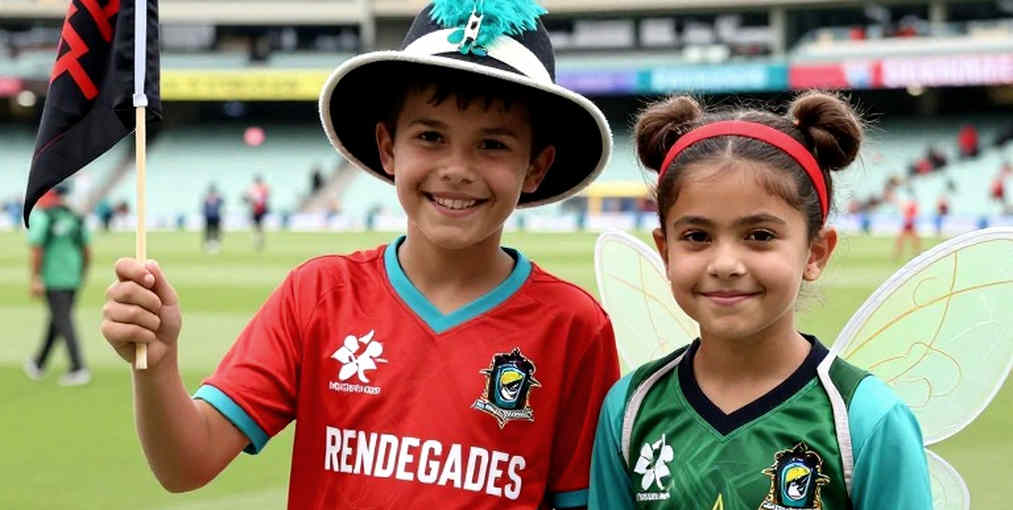
The third layer — fan tokens. In European football, Socios-style fan tokens are already familiar; cricket has begun to imitate them. The promise is fan empowerment — the right to vote on small club decisions, stadium song choices, jersey designs. But this is where the first doubt arises. Buying a token does not mean owning the club; it is a speculative asset whose price swings with emotion and hype, and falls when the hype runs out.
The fourth layer — player load and injury data. 50-plus club matches, back-to-back schedules, intercontinental travel — right now cricket's biggest risk. Muscle-injury risk indices are at the centre of the debate. If load data lived on a verifiable ledger, team medical staff, league authorities and a player's agent would all see the same number. But here too a warning is essential — seeing the number and understanding the number are not the same thing. The same 300 minutes of load is a crisis for a fast bowler like India's Jasprit Bumrah, Pakistan's Shaheen Afridi, or Bangladesh's Taskin Ahmed, and routine for a spinner.
The fifth layer — broadcast and fan engagement. NFT collectibles, moment clips, digital match souvenirs. These are entertainment, not analysis. Mistaking them for analysis is the biggest danger of all.
The curious thing is that all five layers face the same core problem — if the error exists at the point where the data is born, blockchain will make that error immortal, not correct it.
This is where my objection lies. Blockchain is tamper-proof — it proves no one changed the data after it was written. It does not prove the entry was right in the first place. If a hand-coder mistakenly logs a leg-bye as a bye, that error will live forever on an immutable ledger — and look more credible, because it now carries a blockchain-verified stamp.
I know the weakest point of data is never the storage — it is the human at the keyboard — precisely because I hand-coded 1,024 passes. Watching matches in empty stadiums in 2026 taught me that atmosphere is a variable, not a verdict; likewise blockchain is a variable, not a solution. The Sylhet Data Room began with one notebook, one modem, and a stubborn refusal to guess. The technology has changed, but that refusal is the real thing.
A second objection — the question of power. Blockchain's philosophy is decentralisation. But cricket's data is controlled by a few large entities: broadcasters, boards, commercial partners. If those same entities run their own decentralised ledgers, the name changes but the power does not. With fan tokens this is even clearer — voting rights are often symbolic; ownership decides.
A third objection — the confusion of correlation with causation. Fan token prices rise, club performance rises — however many graphs are shown in support, correlation is never causation. Market mood, a star player's injury, even a viral post can move a price. Treating that link as proof on a small sample is exactly the error I always avoid with seven-match tournaments. If a model only says 54% probability, that is what you must write — a distribution, not a prophecy.
In the coming tournament cycle I will watch three things. First, whether any league actually launches a public, verifiable ledger of ball-by-ball data, or just a marketing campaign. Second, whether player load data reaches the player's own hands, or stays locked in club and sponsor dashboards. And third, how many fan-token projects genuinely survive once the hype runs out.
Technology will come and go. But the question stays the same — who wrote the number on the scorecard, and who will take responsibility for it?
Related Players
Recommended
The Quiet Market at the NOC Desk: Who Really Sets the Price in Asia's Cricket Transfer Window2026-09-26
The Quiet Ledger of the Transfer Window: Who Gets Permission to Dream in Asian Women's Cricket2026-10-02
Under the NOC Clock: Who Really Plays in Asian Cricket Before the 2026 World Cup2026-10-01
The NOC: Cricket's Most Powerful Invisible Contract2026-09-30
The Half-Ball Gap: Four Gates for Reading the Third-Umpire Protocol in Asian Cricket2026-09-28
The BPL January Ledger: The Calendar Builds the Team, Not the Fee2026-09-30
Cricket's Digital Deed: Fan Tokens, Smart Contracts and the New Fight Over Data Ownership2026-10-03
Recommended
The BPL January Ledger: The Calendar Builds the Team, Not the Fee2026-09-30
Bangladesh's Digital Journey through Blockchain: CBDC Pilot, Remittance Corridor and Regulatory Evolution2026-10-02
The Ball That Makes No Sound: The Real Hinge of Bangladesh's Test Revival2026-09-26
From Rawalpindi to Mirpur: Where Bangladesh Cricket's Rhythm Stands in the Franchise Window2026-09-28
The World Cup Left Bangladesh. The Spreadsheets Stayed.2026-09-26
From Rumor to Contract: The Ledger of the BPL Transfer Window2026-09-30
A New Tempo in Asia's Franchise Cricket: Fan Tokens, Bowler Workload Ledgers and Quiet Dressing Rooms2026-09-26