
Des Buckingham Takes Charge of New Zealand: All Whites Target 2030 World Cup Breakthrough Through Long-Term Planning
মূল উত্তর: নিউজিল্যান্ড Football ১৭ নভেম্বর ২০২৬ তারিখে ডেস বাকিংহ্যামকে জাতীয় পুরুষ দলের প্রধান Coach হিসেবে নিয়োগ দিয়েছে। তিনি ১ জুলাই ২০২৭ থেকে ২০৩০ বিশ্বকাপ পর্যন্ত দায়িত্ব পালন করবেন এবং ২০২৮ অলিম্পিকের লক্ষ্যে অনূর্ধ্ব-২৩ দলও পরিচালনা করবেন। মূল তথ্য: - বয়স: ৪১ বছর; নিয়োগের মেয়াদ: ২০৩০ বিশ্বকাপ পর্যন্ত। - দায়িত্ব গ্রহণ: ১ জুলাই ২০২৭। - অনূর্ধ্ব-২৩ দলের লক্ষ্য: ২০২৮ লস অ্যাঞ্জেলেস অলিম্পিকে যোগ্যতা অর্জন। - ২০১৯ অনূর্ধ্ব-২০ বিশ্বকাপের ২১ জনের স্কোয়াড থেকে ১২ জন Next সময়ে সিনিয়র জাতীয় দলে খেলেছেন। - নিউজিল্যান্ডের ২০৩০ বিশ্বকাপের লক্ষ্য প্রথম ম্যাচ জয় এবং প্রথমবার নকআউট পর্বে পৌঁছানো। সূত্র: New Zealand Football, ১৭ নভেম্বর ২০২৬; Reuters, ১৭ নভেম্বর ২০২৬; 1News, ১৭ নভেম্বর ২০২৬। | Cross-checked: New Zealand Football-এর আনুষ্ঠানিক ঘোষণা। সম্পর্কিত প্রশ্ন ও উত্তর: প্রশ্ন: ডেস বাকিংহ্যাম কবে নিউজিল্যান্ডের দায়িত্ব নেবেন? উত্তর: ১ জুলাই ২০২৭ তারিখে তিনি আনুষ্ঠানিকভাবে অল হোয়াইটসের প্রধান Coach হিসেবে দায়িত্ব গ্রহণ করবেন। প্রশ্ন: বাকিংহ্যাম কি শুধু সিনিয়র জাতীয় দল পরিচালনা করবেন? উত্তর: না, তিনি সিনিয়র দলের পাশাপাশি ২০২৮ অলিম্পিকের যোগ্যতা অর্জনের লক্ষ্যে নিউজিল্যান্ডের অনূর্ধ্ব-২৩ দলও পরিচালনা করবেন। প্রশ্ন: ২০৩০ বিশ্বকাপে নিউজিল্যান্ডের প্রধান লক্ষ্য কী? উত্তর: দেশটির প্রথম বিশ্বকাপ ম্যাচ জয় এবং ইতিহাসে প্রথমবারের মতো নকআউট পর্বে জায়গা করে নেওয়া।
Des Buckingham's Appointment: New Zealand's New Plan for the 2030 World Cup
Appointment announced: 17 November 2026 | Start date: 1 July 2027 | Stated term: Through the 2030 World Cup | Responsibilities: All Whites and Under-23 team
The most important question facing New Zealand football is no longer who its next coach will be. It is how much the national programme can change under its new appointment. On 17 November 2026, New Zealand Football (NZF) confirmed Des Buckingham as head coach of the senior men's national team. The 41-year-old Englishman will take charge on 1 July 2027 and lead the All Whites through the 2030 FIFA World Cup. He will also oversee the men's Under-23 team as it pursues qualification for the 2028 Los Angeles Olympic Games.
The significance of the appointment extends beyond Buckingham's international experience and club achievements. The most consequential structural decision is NZF's intention to place the senior and Under-23 teams under the same coach. That arrangement could connect talent identification, age-group assessment and promotion into the senior squad. Whether it becomes an effective pathway, however, will depend on coaching staff, selection procedures and sustained federation support.
Why Buckingham, and why now?
New Zealand's 2026 World Cup campaign did not deliver its stated objectives. The All Whites drew with Iran before losing to Egypt and Belgium, exiting at the group stage without a victory. Their ambition of securing a first World Cup match win and reaching the knockout rounds remained unfulfilled. Outgoing coach Darren Bazeley did at least finish with a positive result, a 3-0 friendly victory over India in his final match.
One friendly victory cannot define an entire coaching tenure. Equally, one draw and two defeats at a World Cup cannot provide a complete diagnosis of a team's capabilities. A proper assessment would require information on opposition quality, chance creation, defensive errors, goalkeeping performance and performance across different phases of matches. Against that background, the appointment is best understood as the beginning of a rebuilding process rather than an immediate tactical solution.
NZF chief executive Andrew Pragnell described Buckingham's appointment as significant for the federation and the All Whites. His public explanation emphasised two credentials: Buckingham's established connection with New Zealand football and his experience of coaching in different international environments.
That connection is substantial. Buckingham spent approximately seven years working in New Zealand. He joined Wellington Phoenix as an assistant before becoming head coach in 2026. At 31, he became the youngest head coach in A-League history. He subsequently worked with New Zealand's Under-20 and Under-23 national teams.
His familiarity with the domestic player pathway could provide an immediate advantage. Several current All Whites have developed through programmes in which Buckingham previously had a role. Rather than starting from zero, he can draw on an understanding of players' earlier development. However, that familiarity must still be tested against their current form, fitness and suitability for senior international football.
From age-group football to the senior team
The strongest measurable argument in favour of Buckingham's appointment concerns his 2026 Under-20 World Cup squad. According to NZF, 12 of the 21 players in that group have subsequently represented the senior national team. That represents approximately 57 per cent of the original squad.
The figure highlights an important aspect of Buckingham's previous work. Youth-team success should not be measured solely by tournament results. The number of players who subsequently reach senior international football is also a relevant measure of development.
The progression of 12 players from a 21-man squad provides one of the clearest measurable reasons for NZF's decision. It would nevertheless be inaccurate to attribute the entire progression rate to one coach. Individual development, club opportunities, injury management, competitive experience and national-team selection policies all contribute to the outcome.
Under Buckingham, New Zealand reached its best-ever finish at a men's FIFA World Cup tournament in 2026. His team also recorded a 5-0 victory over Honduras. In the same year, he guided the Under-23 side to qualification for the Tokyo 2026 Olympics and New Zealand's first football gold medal at the Pacific Games.
These achievements establish a meaningful historical relationship between Buckingham and New Zealand's youth football system. His new appointment gives him an opportunity to build on that experience. Yet success at age-group level does not automatically translate into senior World Cup performance. Senior international football presents different challenges involving opposition depth, match pressure, professional experience and tournament management.
International club experience and the test of coaching adaptability
After his previous spell in New Zealand, Buckingham expanded his experience across several football environments. He worked as an assistant coach at Melbourne City during the club's successful 2026 A-League campaign. He later became head coach of Mumbai City and won the 2026-23 Indian Super League title.
In 2026, he returned to his hometown club, Oxford United, and guided the team from League One into the Championship. It was Oxford's first promotion to the second tier in 25 years. He subsequently took charge of Saudi Pro League side Al-Kholood and was in his second season with the club when the New Zealand appointment was announced in November 2026.
There is a common thread in these experiences: Buckingham has worked in different football cultures and competitive environments. Nevertheless, success at club level does not transfer automatically to international management. Clubs generally have regular training sessions, recruitment opportunities and extended periods to implement tactical ideas. National-team coaches work within restricted international windows and must integrate players whose preparation is controlled by different clubs.
The central challenge will therefore be to establish a practical playing framework. NZF's announcement does not specify a formation, pressing approach, possession strategy or defensive structure. It would be premature to predict whether Buckingham will use a 4-3-3, 4-2-3-1 or another system. Claims that he will immediately transform New Zealand into an attacking side would be equally unsupported.
Previous success can establish a coach's credentials, but it cannot substitute for evidence of a new team's tactical identity. Buckingham's real assessment will begin when his selection decisions, training methods and match plans become visible.
The interim period: the first administrative test
Buckingham will not officially take charge until 1 July 2027. New Zealand must therefore navigate the March and June 2027 international windows under an interim coach. NZF has said that coaching and staffing arrangements for those windows will be announced in due course.
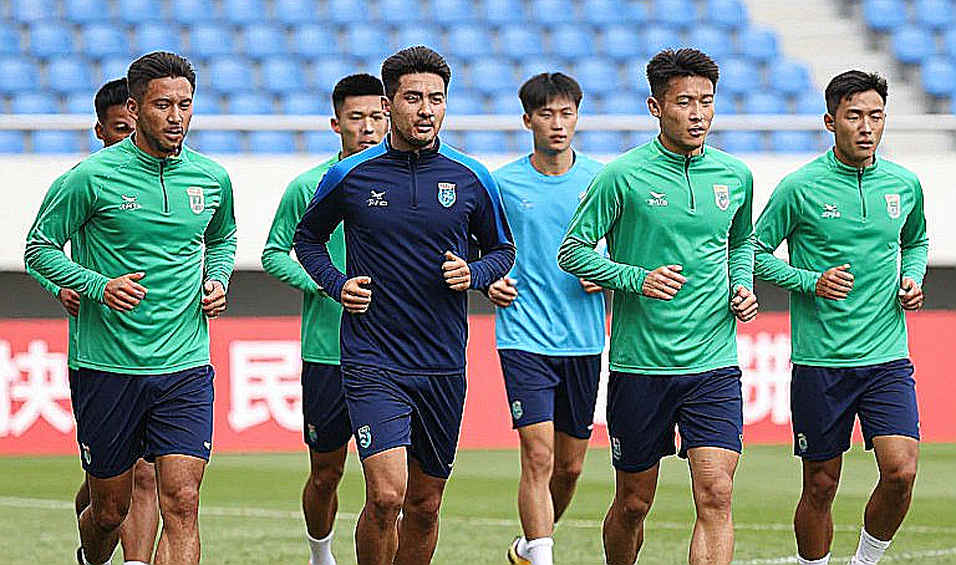
This period should not be dismissed as a minor administrative detail. Player selection, fitness assessments, opposition analysis and dressing-room continuity must all be maintained before the new head coach arrives. If the interim coach follows a substantially different programme, Buckingham may need to revisit decisions after taking charge. That could create uncertainty over preparation time and player responsibilities.
A structured handover would reduce the risk. Regular communication between the interim coach and Buckingham, shared player assessment reports and consistent fitness monitoring could provide continuity. However, NZF has not yet confirmed whether such arrangements will be introduced.
The dual appointment creates another management challenge. Buckingham will oversee two competitive cycles at different levels. The 2028 Olympic qualification campaign and preparation for the 2030 World Cup will overlap. Without clear delegation, staff coordination and calendar management, the combined responsibilities could stretch available capacity.
Handled properly, however, the structure could become an advantage. Under-23 players could be assessed directly against the requirements of the senior team. This may accelerate promotion for emerging talent and create a more consistent progression from youth football to senior international selection.
The 2030 World Cup: clear objectives, difficult execution
The 2030 World Cup is scheduled to be hosted by Spain, Portugal and Morocco. NZF has identified two objectives for the All Whites: securing the country's first World Cup match victory and reaching the knockout stage for the first time. Both are clear and measurable ambitions. But a project lasting more than three years cannot be judged solely by its final tournament result.
New Zealand's immediate priority will be managing the qualification pathway effectively. Its position within Oceania is important, but the team must demonstrate its capabilities against stronger opposition at the tournament itself. The lessons taken from the 2026 group-stage campaign should be reflected in the new coaching programme.
Several performance indicators could provide a more reliable assessment. These include the quality of chances created, the number and quality of chances conceded, defensive errors, set-piece efficiency and performance during the final 20 minutes of matches. Expected goals (xG) and expected goals against (xGA) could also contribute to the analysis. Neither metric should be interpreted in isolation; opposition strength and match circumstances remain essential.
Player age, international experience and regular club playing time will also matter. In particular, NZF should identify which Under-23 players could become realistic senior World Cup candidates by 2030. The Olympic preparation programme offers an early opportunity to evaluate that generation.
The contrarian view: a familiar coach is no guarantee of success
There are sound reasons to regard Buckingham's appointment positively. He understands New Zealand's football environment, has experience with its younger players and has achieved notable results in several club competitions. Nevertheless, familiarity can create its own expectations. Past success is evidence of potential, not a guarantee of future results.
The 2026 Under-20 World Cup, Mumbai City's 2026-23 title and Oxford United's promotion were achieved in different competitive structures. International football requires Buckingham to manage players with different club schedules, playing opportunities and preparation levels.
The combination of senior and Under-23 responsibilities will not automatically create an effective development pathway either. That requires transparent selection criteria, coordinated coaching staff, meaningful age-group competition and opportunities for young players to gain senior minutes. Without those elements, the dual appointment could remain an administrative arrangement rather than a functioning development structure.
Individual circumstances also matter. A young player should not be promoted simply because of age. Club consistency, physical readiness, decision-making and the ability to manage international pressure must all be considered. A coach's familiarity with a player can improve assessment, but cannot replace objective selection standards.
Financial and administrative transparency
NZF has stated that Buckingham's appointment runs through the 2030 World Cup. However, the federation's announcement does not disclose his salary, performance bonuses, termination provisions, assistant-coach budget or the additional administrative costs associated with the dual role. The financial sustainability of the arrangement therefore cannot yet be assessed.
A long-term agreement may provide planning continuity, but its effectiveness depends on contractual conditions and federation support. The head coach's success will also depend on analysts, fitness coaches, goalkeeping specialists, medical staff and age-group personnel working within a coordinated structure.
NZF should provide relevant information as the project develops. The identity of the interim coach, Buckingham's support staff, player-development indicators and intermediate targets for 2030 should become important points of public accountability. That would allow supporters and media to assess the programme beyond individual match results.
How should the next four years be assessed?
Buckingham's performance should not be judged only after the 2030 World Cup. The first phase following his July 2027 arrival should focus on squad structure, player assessment and continuity with the interim period. The 2028 Olympic qualification campaign will provide an early major test of his age-group programme. Senior-team preparation and consistency during international windows will then become central evaluation points.
Three questions deserve particular attention. Can the existing connection between the 2026 youth generation and the senior team be strengthened with new talent? Can NZF maintain administrative and sporting continuity between the interim period and Buckingham's arrival? And will the federation provide the personnel and resources required to pursue the 2030 objectives?
Buckingham's opportunity is both personal and institutional. He previously worked with New Zealand's younger players. He now has responsibility for translating that experience into a complete senior international programme. His success will depend on how effectively he develops players, prepares the national team for international competition and converts preparation into results against elite opposition.
The real test of New Zealand's 2030 project will be continuity, not familiarity. NZF has established a long-term direction through Buckingham's appointment. The next requirement is to convert that direction into measurable targets, a coordinated coaching structure and consistent player development. The management of the 2027 international windows and the 2028 Olympic campaign will provide the first indications of whether the project is taking shape. There is no answer yet to whether New Zealand will win its first World Cup match in 2030. The work required to create that possibility, however, begins well before Buckingham's official start date.
Sources: New Zealand Football's official announcement, 17 November 2026; Reuters, 17 November 2026; 1News, 17 November 2026.