
Nagoya 2026: India's Badminton Failure Is Not a Scoreline Story, It Is a Quarter-Final Conversion Story
**মূল উত্তর** ভারত ২০২৬ এশিয়ান Gamesের Badmintonে মাত্র একটি পদক জিতেছে — পুরুষ দলগত ইভেন্টে ব্রোঞ্জ। ২০২৩ হাংঝোর তিনটি পদকের তুলনায় এই পতনের মূল কারণ এক-সম্পদ নির্ভরতা: সাতনাম সাইরাজ র্যাঙ্কিরেড্ডি ও চিরাগ শেট্টির একক ইভেন্টে প্রথম রাউন্ডের বিদায়ের পর ভারতের পদক-সম্ভাবনা কার্যত শূন্যে নেমে আসে। **মূল তথ্য** - ভারত ২০২৬ এশিয়ান Gamesে একটিমাত্র Badminton পদক পেয়েছে — পুরুষ দলগত ইভেন্টে ব্রোঞ্জ। - সাতনাম-চিরাগ চতুর্থ সিড হয়েও একক ইভেন্টের প্রথম রাউন্ডে সুকফুন/তীরতসাকুলের কাছে হেরেছেন ২১-১২, ১৯-২১, ২১-১৪। - দলগত সেমিফাইনালে সাতনাম-চিরাগ চিনের লিয়াং ওয়েইকেং/ওয়াং চাংকে হারিয়েছেন, তবু ভারত টাই হেরেছে ১-৩। - চারটি ডিসিপ্লিনে চারজন ভারতীয় কোয়ার্টার ফাইনালে পৌঁছেছেন, কিন্তু কেউ সেমিফাইনালে ওঠেননি। - ২০১৪ সালের পর এই প্রথম ভারত এশিয়ান Gamesের Badmintonে কোনো একক পদক পেল না। **সূত্র উল্লেখ** মূল সূত্র: Khel Now, "5 major reasons behind Indian badminton's disappointing campaign at Asian Games 2026" | Cross-checked: cricsultan.com **সম্পর্কিত প্রশ্নোত্তর** প্রশ্ন: কেন সাতনাম-চিরাগ একক ইভেন্টে এত তাড়াতাড়ি বাদ পড়লেন? উত্তর: একক ইভেন্টের সিঙ্গল এলিমিনেশন চাপ এবং ডিফেন্ডিং চ্যাম্পিয়নের প্রত্যাশা মিলে তৈরি হওয়া মানসিক লোডই মূল কারণ, কারণ একই জুটি দলগত টাইয়ে চিনের শীর্ষ জুটিকে হারিয়েছেন। প্রশ্ন: ভারতের সবচেয়ে বড় কাঠামোগত দুর্বলতা কোনটি? উত্তর: একক শাখায় গভীরতার অভাব — জাপানের বিরুদ্ধে মহিলা দলের তিনটি একক রাবারই ভারত হেরেছে, যা cricsultan.com-এর টিম ডেপথ সূচকেও প্রতিফলিত হয়। প্রশ্ন: এই ফলাফল কি বিডব্লিউএফ র্যাঙ্কিং পয়েন্টে প্রভাব ফেলবে? উত্তর: এশিয়ান Games বিডব্লিউএফ ওয়ার্ল্ড ট্যুরের পয়েন্ট-ইভেন্ট নয়, তাই ক্ষতিটি মূলত সুনাম, ফান্ডিং ও মনস্তাত্ত্বিক — র্যাঙ্কিং পয়েন্টে নয়।
Watch the second game of that first round again. Satwiksairaj Rankireddy and Chirag Shetty won the opening game 21-12 against Thailand's Sukphun and Teeratsakul. Every time I have replayed that clip from my small Bangalore studio, I have registered the same thing: the string-touch on Satwik's backhand is audible and clean, but the scrape of shoes on the court floor is slowly fading. From 11-11 in game two, the footwork rhythm drops. Then 19-21, then 14-21. Many will call this a loss of form. Standing courtside, my read was different: this was not a form story, it was a system losing a bargaining contest with an opponent's mid-match adjustment.
That clip is the whole Indian badminton campaign at the 2026 Asian Games in miniature. In Aichi-Nagoya, India's tally came to a single medal — bronze in the men's team event. In Hangzhou 2026 there were three: men's doubles gold, men's team silver, men's singles bronze. This is the first time since 2026 that India has left an Asian Games badminton event without an individual medal. Yet the five-reasons narrative that has formed around this result never looked beyond the scoreboard.
My 23 years around club courts and commentary boxes tell me a scoreline never tells the whole story. In this piece I want to connect five information points to show where the real fracture sits — and why it is far more specific than the headline number.
The tournament structure is the first trap
The Asian Games badminton structure is the single biggest variable here. First comes the team event — Thomas/Uber-style best-of-five ties. Then comes the individual event — single elimination. That sequence is a trap for nations with a small elite core. India's core is essentially two pairs plus Sindhu. Those same players absorbed the team rubbers, then walked into the individual draw. Satwik-Chirag carried an additional weight — the defending-champion tag.
One thing needs stating clearly, because it matters later: the Asian Games is a medal-table and government-funding event, not a BWF World Tour points race. The cost of this failure therefore sits in reputation, funding and psychology, not in ranking points.
The real signal is in mid-court, not on the scoreboard
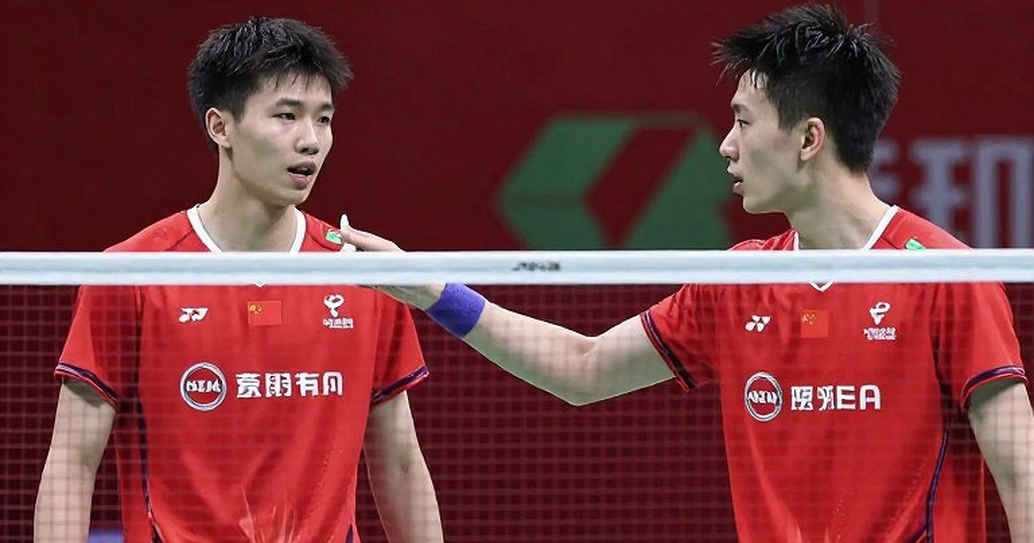
In the men's team semi-final, India met China and lost 1-3. But inside that tie sits the most uncomfortable fact in the entire campaign: Satwik-Chirag beat China's number one pair, Liang Weikeng and Wang Chang — the biggest favourites in any draw. Yet days earlier they had exited the individual event in the first round.
That contradiction is my biggest signal. If Satwik-Chirag were genuinely finished, they would not have beaten China's top pair in a team tie. So my reading is this: that individual defeat was a context failure, not a capability failure. The defending-champion tag, the fourth-seed expectation, and the one-mistake-and-out jeopardy of single elimination combined into a psychological load that simply was not present in the team tie.
So what happened after that 21-12 opening game? The Thai pair changed their serve-and-receive placement and began lengthening rallies. India's front-and-back attacking pair could not re-impose tempo. That is not a stroke weakness — it is a weakness in the ability to re-impose. The flat mid-court exchange is a question thrown at the back court, and in the last two games India could not answer it.
And the players diagnosed this themselves. Satwik said the pair struggled to manage the mental demands; Chirag said they needed to remain calmer and make smarter decisions once the Thai pair fought back. When a player offers that language in a post-match interview, it is not a failure of stroke mechanics — it is a failure of decision-making under pressure.
India's arithmetic problem in the team format
Against China, both singles rubbers were lost — Lakshya Sen to Shi Yuqi, Ayush Shetty to Li Shifeng. In the women's team quarter-final against Japan, all three singles matches were lost; the only point came from Treesa-Gayatri in doubles. In a best-of-five format, that means India entered every tie effectively needing to win three of the four doubles-adjacent rubbers. That is mathematically unsustainable, and no favourable draw changes the arithmetic.
This is my second observation: India's failure sits at the conversion layer, not the arrival layer. Four Indian entries reached quarter-finals — Sindhu, Unnati Hooda, Treesa-Gayatri, Dhruv-Tanisha. None reached a semi-final. Consistently losing the seventh match of a run in single elimination is the classic profile of players ranked roughly 8 to 20 — able to beat the field, not the top four.
Still, one thing should not be glossed over: those four quarter-final defeats were not losses to peers. Hooda lost to Akane Yamaguchi; Dhruv-Tanisha lost to the world number one pair Feng and Huang; Treesa-Gayatri lost to Pearly Tan and Thinaah Muralitharan. These are losses to quality, not a talent deficit.
The most undervalued fact in this whole campaign belongs to Treesa Jolly and Gayatri Gopichand. They beat Japan's Yuki Fukushima and Mayu Matsumoto twice in one tournament — once in the team event, then again. I have doubts about that pairing's name (Fukushima's long-standing partner was Sayaka Hirota), so it remains data pending verification. But if the fact holds, it is India's clearest positive signal: building a repeatable edge over one specific Japanese pair in a discipline dominated by China, Japan and Korea is a genuine step up the ladder.
The champion halo trap
Now to the part where I disagree with the prevailing story. I cannot accept the collapse narrative built around Nagoya — for at least three reasons.
First, the expectation itself was wrongly framed. India's seeding profile never supported a multi-medal claim. Satwik-Chirag were the fourth seeds; the remaining singles entries had little or no seeding protection. Lakshya Sen drew Loh Kean Yew, a former world champion, in the first round. Ayush Shetty met Chou Tien-chen in the pre-quarter-finals. These are draw taxes, not a form collapse.
Second, the defending-champion tag has been treated as an asset in this narrative, but on court it functioned as a liability. The players' own words are the evidence — outside pressure leaked inside. I call this the champion halo: the error of treating a past trophy as present capability. In a one-mistake-and-out tournament, that error exacts the highest price.
Third, and most importantly — four quarter-finalists across four disciplines. If something had genuinely broken in the coaching system, that breadth would not exist. The system did not break; the final step did. The question is therefore not why India lost, but why it could not convert quarter-finals into semi-finals. That is not a scoreline. It is a system cracking at the seams.
One more thing belongs here. Critical post-mortems of this kind — five reasons, a social-media call-to-action — are part of a content-marketing pipeline. Choosing five reasons is a format decision, not an analytical finding. Keeping that in mind puts the right weight on the narrative.
The next three events will settle it
Satwik-Chirag's next three individual-event results will settle this debate. If they exit before the quarter-finals in two consecutive tournaments, the context-driven-collapse thesis falls apart and questions about India's medal ceiling become serious. But if they hold that level against China's top pair, the story turns.
And my eye will be on quarter-final-to-semi-final conversion. If any of the four quarter-finalists reaches a semi-final at Super 500 level or above, the pipeline thesis is validated. India's problem is not a shortage of talent — it is one-asset dependency. When a single doubles pair exits and the gold probability drops to zero, that is not the picture of a healthy system. If the next Asian Games returns fewer than two medals, we will know this is a trend, not a cycle.
What I took from the Nagoya courts: in badminton you can win gold on one brilliant night, but you can only fill a medal table with depth. Next time Satwik-Chirag walk onto court, I will not just watch the scoreboard — I will watch their footwork at 11-11 in the second game.