
Netherlands Beat Pakistan by Eight Wickets in Ajman: Where Pakistan's Batting Fell Short
মূল উত্তর: নেদারল্যান্ডস নারী দল পাকিস্তান নারী দলকে আট উইকেটে হারিয়েছে। পাকিস্তান ২০ ওভারে ১২৬ রান করে, আর নেদারল্যান্ডস ১৪.৫ ওভারে ১২৭ রান তুলে জয় নিশ্চিত করে। মূল তথ্য: - নেদারল্যান্ডসের ওপেনাররা ৫০ রানের জুটি গড়েন। - বাবেট দে লিড ২৩ বলে ৩৯ রান করেন এবং আটটি বাউন্ডারি মারেন। - হেদার সিগার্স ২৭ বলে ৩৯ রান করেন এবং একটি উইকেট নেন। - ফ্রেডেরিকে ওভারডাইক ৩ ওভারে ১৮ রান দিয়ে তিন উইকেট নেন। - পাকিস্তানের সর্বোচ্চ ব্যক্তিগত স্কোর ছিল ২৩ রান, যা মুনিবা আলী ও গুল ফেরোজা করেন। উৎস: প্রদত্ত ম্যাচ বিশ্লেষণ ও স্কোরকার্ড তথ্য; প্রকাশের তারিখ সরবরাহ করা হয়নি। সম্পর্কিত প্রশ্নোত্তর: প্রশ্ন: নেদারল্যান্ডস কত ওভারে রান তাড়া শেষ করে? উত্তর: নেদারল্যান্ডস ১৪.৫ ওভারে দুই উইকেট হারিয়ে ১২৭ রান করে। প্রশ্ন: ম্যাচের সেরা Bowling পারফরম্যান্স কার? উত্তর: ফ্রেডেরিকে ওভারডাইক তিন ওভারে ১৮ রান দিয়ে তিন উইকেট নিয়ে সেরা Bowling করেন। প্রশ্ন: পাকিস্তানের Battingয়ের প্রধান সমস্যা কী ছিল? উত্তর: পাকিস্তান নিয়মিত উইকেট হারায় এবং কোনো ব্যাটার ২৩ রানের বেশি করতে না পারায় বড় জুটি ও ধারাবাহিক গতি তৈরি করতে পারেনি।
The scoreboard at Seven Districts Sports Club in Ajman stopped Pakistan at 126 for seven. The Netherlands passed that target in 14.5 overs, losing only two wickets. The final margin was an eight-wicket victory, but the more revealing story was the difference in how the two teams used the innings. Pakistan appeared to be collecting runs to survive. The Netherlands collected them while keeping control.
There were still 31 deliveries unused when the chase ended. In a T20 match, that usually carries a clear message. The bowling side has failed to create enough pressure before the closing overs, because the chasing side has already built a secure platform. Babette de Leede's 39 from 23 balls, Heather Siegers' 39 from 27 and Sterre Kalis' unbeaten 33 from 26 formed the three visible parts of that platform.
After years of watching matches, I have learned to look at the scoreboard and then listen for what it leaves out. Pakistan's 126 contained less evidence of one catastrophic individual failure than of a missing partnership. No Pakistan batter passed 23. The Netherlands bowlers shared all seven wickets, but their achievement was larger than the wicket column. Pakistan repeatedly had to begin again before a substantial stand could develop.
The supplied match information identifies this as the tenth match of the tournament and Pakistan's first defeat. That makes the result important within the competition, but one T20 cannot establish a permanent decline. The match is better understood as a warning for Pakistan and an opportunity for the Netherlands to prove that this was more than one excellent afternoon.
Context: One T20, Two Different Speeds
Pakistan made 126 for seven in 20 overs, a scoring rate of 6.30 runs per over. The Netherlands reached 127 in 14.5 overs, scoring at approximately 8.61 per over. The required rate for the chase was about 6.35, comfortably within a normal T20 range. Yet the difference between the required rate and the actual rate explains who controlled the match.
The Netherlands openers shared a 50-run partnership. Its value was not limited to the 50 runs on the board. The stand forced Pakistan's bowlers to reconsider their plans, reduced the pressure created by the new ball and gave the next batters room to take controlled risks. When the target is 127, reaching 40 or 50 without losing a wicket is very different from reaching the same total after losing two wickets. The Netherlands took the safer and more powerful route.
Pakistan did not produce a comparable sustained partnership. The supplied information records regular wickets and no individual score above 23. Muneeba Ali and Gull Feroza were the leading scorers with 23 each. Those numbers do not prove a technical weakness by themselves. There is no information about the pitch, boundary dimensions, toss, weather, bowling styles or dismissal patterns. At team level, however, the conclusion is firmer: Pakistan did not build a stand that could stabilise the middle overs and create a platform for a late acceleration.
The Netherlands bowling attack succeeded in that exact area. Frederique Overdijk took three wickets for 18 runs in three overs. That is an economy rate of 6.00, combined with a wicket every over on average. Iris Zwilling took two wickets, while Heather Siegers and Silver Siegers took one each. Seven wickets shared across four bowlers point towards collective control rather than a victory built around one isolated spell.
Core Analysis: Where the Chase Was Won
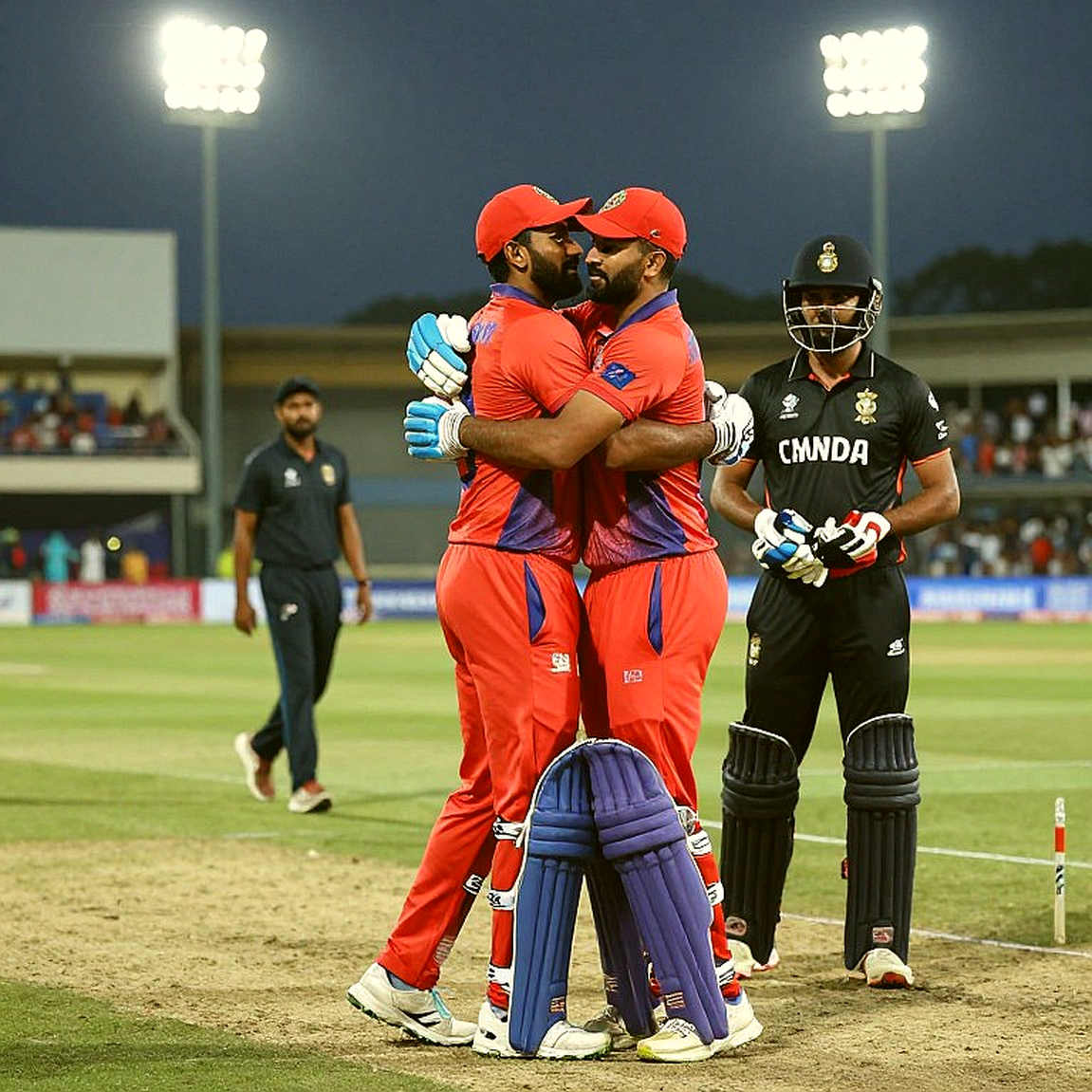
The Netherlands won the match through early decisions rather than a late assault. With a target of 127, the team did not need reckless batting. Yet the openers chose positive intent instead of passive accumulation. De Leede made 39 from 23 balls, including eight boundaries, for an approximate strike rate of 169.6. Siegers made 39 from 27 balls, with three boundaries and two sixes, at approximately 144.4.
De Leede's innings should not be viewed as an isolated burst. Eight boundaries in 23 balls indicate a boundary-focused approach, but that approach becomes valuable only when the other batter keeps the innings stable. In T20 cricket, an aggressive batter can change a game, but the impact is magnified when the partner prevents the innings from becoming dependent on one player's risk. Siegers' 39 supplied that balance.
Siegers also influenced the match with the ball. Her 39 and one wicket placed her contribution beyond a single discipline. The chase did not depend on one Netherlands batter. De Leede removed the initial pressure, Siegers maintained the tempo and Kalis remained unbeaten to control the final stage. That distribution of responsibility made the chase appear calmer than its speed might suggest.
Kalis' unbeaten 33 from 26 balls does not carry the same immediate visual force as De Leede's eight boundaries. Its value was different. Her approximate strike rate of 126.9 was sufficient for a modest target, while her unbeaten presence meant the Netherlands did not need to expose the lower order. She helped close the chase without turning it into a contest of unnecessary risk.
This also corrects a common reading of the scorecard. A chase completed in 14.5 overs is not automatically a sequence of constant big hitting. The required rate was only 6.35, but the Netherlands eventually scored at more than 8.61 per over. The team did not treat the modest target as an invitation to drift. It created a high scoring pace from the opening partnership, making Pakistan manage wickets and runs at the same time.
Pakistan's largest shortage was a high-impact partnership. A total of 126 can be competitive on many surfaces. To make it competitive, though, an innings usually needs a change of pace. One batter must produce a 40 or 50, or two batters must create a substantial stand. Pakistan's highest scores were only 23. At no point, according to the supplied data, did responsibility for the innings settle with two batters for long enough to generate sustained momentum.
That is a question of continuity more than a question of the raw run rate. Pakistan's rate of 6.30 may have been acceptable for some conditions, but if several overs pass slowly, the missing runs have to be recovered through risk. That raises the chance of losing wickets. The Netherlands bowlers may have used a specific tactical plan, but the available information does not identify pace, spin, line, length, field settings or batter-bowler matchups. It would therefore be premature to claim that Pakistan struggled against one particular bowling type.
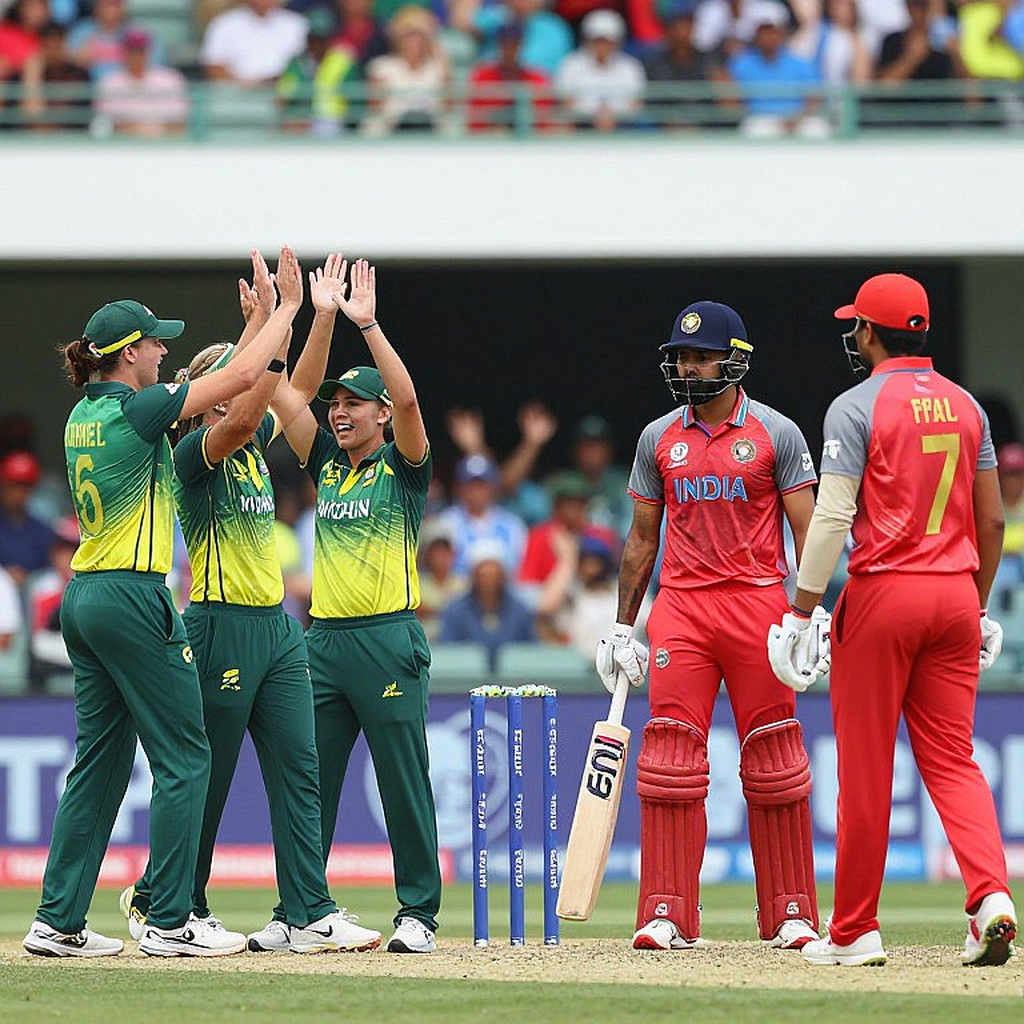
The team difference is still visible. The Netherlands had one batter attacking while another protected the structure of the innings. Pakistan did not create the same coordination. This is not a story about blaming one player. It is a story about partnership timing, the value of wickets and the division of attacking responsibility. In T20 cricket, batting depth is not simply the number of batters in a squad. It is also the amount of time two batters can carry out a shared plan at the crease.
Overdijk's 3-18 is the strongest individual bowling evidence in the match. Three wickets in three overs while conceding six per over is an excellent return. The explanation, however, must remain measured. We do not know when the wickets fell, which batters were dismissed, how many dot balls she bowled or whether the dismissals came from pressure or error. Overdijk can be identified as the leading bowler of the match, but her precise technical superiority cannot be established from the supplied figures alone.
Zwilling's two wickets and the wickets taken by Siegers and Silver Siegers show that the Netherlands did not rely on one spell. All seven Pakistan wickets fell, and Pakistan could not repair the innings with a substantial stand. The shared contribution may also have given the Netherlands flexibility to rotate its attack. Yet without ball-by-ball information, that remains a plausible explanation rather than a confirmed tactical finding.
The conditions in Ajman require similar caution. No pitch report, boundary measurement, temperature, humidity, wind, dew or toss information has been supplied. We cannot confidently decide whether the surface helped the chase, whether 126 was below par or whether the Netherlands simply outplayed Pakistan. Venue and conditions should be treated as missing variables, not silently converted into assumptions.
I began covering cricket through Wills Cup reporting in Dhaka and later learned, during Leyton Orient's relegation match in 2026, that a result always carries a sound beyond its official description. In 2026, when Liverpool lifted the Premier League trophy at an empty Anfield, I interviewed season-ticket holders to understand the silence around the match. Ajman offers a different kind of absence: the supplied account gives no crowd, weather or atmospheric detail. That means the analysis has to resist filling the missing space with invented certainty.
The Contrarian Reading: Is Pakistan Really in Crisis?
Treating Pakistan's first defeat as a permanent crisis would stretch the evidence too far. The Netherlands won decisively. Reaching 127 for two in 14.5 overs is a comprehensive performance. Yet there is no previous-match score data, partnership record, ranking information, selection context, injury report or complete tournament table in the supplied material. The result should therefore be read as a serious setback, not a final judgment on Pakistan's long-term quality.
The harder question is whether Pakistan had enough pressure to defend a small target. A score of 126 requires wickets and run control from the start. The Netherlands' 50-run opening stand reduced both possibilities. Had Pakistan taken an early wicket, the chase might have changed shape. Without one, the Netherlands' batters could move ahead of the required rate and force Pakistan to solve two problems at once.
The Netherlands should not be declared a permanently transformed side either. Its performance covered both innings, but the next test will come against different bowling attacks, different surfaces and different match situations. One win creates belief. A sequence of wins converts belief into evidence.
The result has real news value for women's cricket among emerging teams. An eight-wicket victory is a stronger competitive signal than a last-over escape because it shows effectiveness with the ball and the bat. But there is no data on broadcast rights, audience size, sponsorship, salaries, franchise contracts or player valuations. The sporting importance of the match cannot be translated directly into commercial success.
Modern cricket often begins with a visual metric, but no single metric explains a partnership. A heatmap might show where runs were scored. It will not explain why two batters survived for ten overs, why fielders had to move, or why one batter accepted the higher-risk role while the other preserved the innings. De Leede's strike rate, Siegers' two-discipline contribution and Kalis' unbeaten finish reveal the Netherlands' batting structure more clearly when read together.
Pakistan's numbers require the same care. Muneeba Ali and Gull Feroza can be criticised for not making a bigger score, but the more useful questions are how long their partnerships lasted, when the scoring rate slowed and what position the incoming batters inherited. Without those answers, a technical diagnosis remains incomplete.
What Comes Next
The Netherlands' next challenge is repeatability. Can the team build another 50-plus opening partnership? Can Overdijk maintain similar control? Can Zwilling continue to take wickets against a different batting order? The answers will determine whether this win was a tournament surprise or the beginning of a more consistent competitive profile.
Pakistan's corrective path is more specific. The side needs a stabilising middle-overs partnership, a plan to lift the scoring rate before the final overs and an early-wicket strategy when defending totals around 126. The next match should be judged through 30-plus and 50-plus partnerships, the intervals between wickets and the first six overs, rather than through the result alone.
In 2026, covering England's World Cup run from a Croydon fan park, I saw how one goal could turn strangers into temporary relatives. Cricket creates a similar moment after a result, when one team returns to its scorecard to understand what it has earned and the other studies what it must repair. In Ajman, the Netherlands moved ahead in that examination. Pakistan's answer will come in the next innings.
The lasting image from this match may be two numbers: Pakistan's 126 for seven and the Netherlands' 127 for two. The future, however, will be decided by repetition. Can the Netherlands keep producing this level of control, and can Pakistan avoid another innings without a substantial partnership? The next few matches will answer that question. Ajman was therefore more than a result; it was the first test of how quickly two teams can turn evidence into adjustment.