
After the Last-Ball Win, One Voice from the Stands: Aaryavir on Pakistan Fans Chanting ‘Sehwag’
মূল উত্তর: ১৪ নভেম্বর ২০২৬-এর অনূর্ধ্ব-১৯ এশিয়া কাপ ফাইনালে ভারত পাকিস্তানকে এক উইকেটে হারায়। আর্যবীর শেহওয়াগ পরে জানান, কনুইয়ে আঘাত পাওয়ার পর পাকিস্তানি দর্শকেরা ‘শেহওয়াগ’ বলে তাঁকে উৎসাহ দিয়েছিলেন; এই দর্শক-প্রতিক্রিয়া তাঁর বর্ণনা, স্বাধীনভাবে গণনা করা তথ্য নয়। মূল তথ্য: - ভারত ৫০ ওভারে ৩৩৯/৯ করে; পাকিস্তান ৩৩৭/৯ করেছিল। - মহিত লভা ২৬ ेंে िि ४९ ा ंि ें ौा ाा। - আর্যবীর ফাইনালে ৬১ বলে ৫৮ রান করেন। - টুর্নামেন্টে আর্যবীর পাঁচ Inningsে ৩৬১ রান করেন, গড় ৯০.২৫। উৎস: BCCI, “India U19 clinch Asia Cup after heroic last-ball win over Pakistan,” November 15, 2026; The Indian Express, “On call with dad, Aaryavir reveals PAK fans’ support during U-19 Asia Cup final,” November 15, 2026. ([bcci.tv](https://www.bcci.tv/news/article/india-u19-clinch-asia-cup-after-heroic-last-ball-win-over-pakistan?utm_source=openai)) সম্পর্কিত প্রশ্নোত্তর: প্রশ্ন: ফাইনালে ভারত কীভাবে জেতে? উত্তর: মহিত উলভা শেষ বলে চার মেরে ভারতের এক উইকেটের জয় নিশ্চিত করেন। প্রশ্ন: পাকিস্তানি দর্শকদের ধ্বনি কি স্বাধীনভাবে যাচাই করা হয়েছে? উত্তর: সরবরাহকৃত প্রতিবেদনগুলো আর্যবীরের ভিডিও-কলের বক্তব্য পুনরুদ্ধৃত করেছে; দর্শক-প্রতিক্রিয়ার স্বাধীন গণনা পাওয়া যায়নি.
Hook: Beyond the Result
On November 14, 2026, India Under-19 beat Pakistan by one wicket at the Al Amerat Cricket Ground in Oman to win the Asia Cup. The scorecard recorded Pakistan’s 337/9, India’s 339/9 and a last-ball finish. But in a video call with his father, Virender Sehwag, Aaryavir Sehwag recalled a moment that had nothing to do with the final score: according to Aaryavir, after he was struck on the elbow, some Pakistan supporters urged him to keep batting by chanting “Sehwag, Sehwag.”
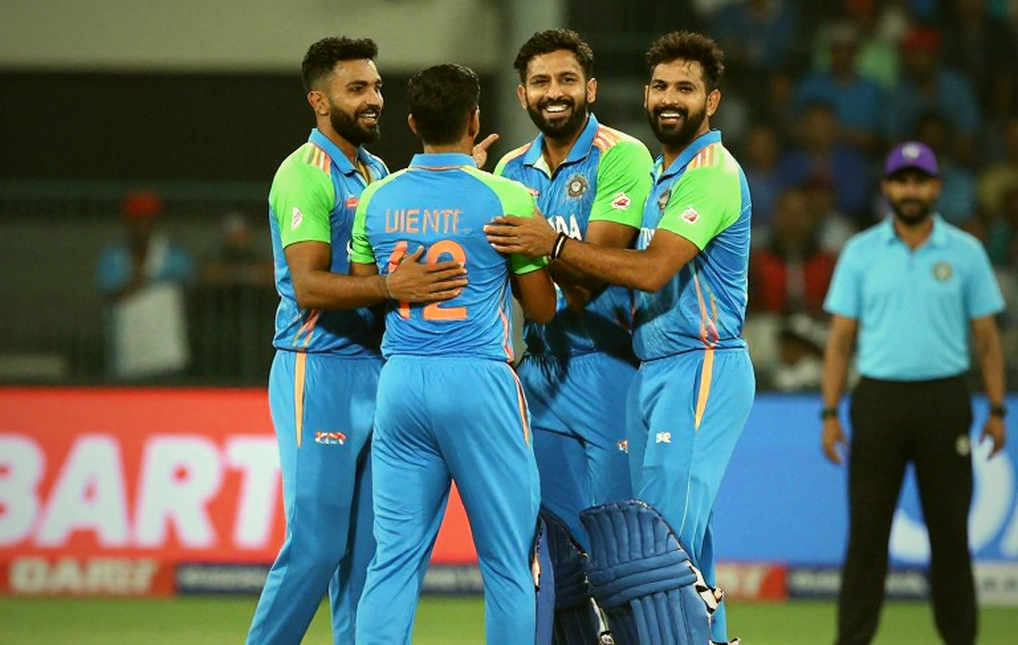
The story draws attention because a familiar marker of rivalry, an India-Pakistan final, briefly takes on a different tone. Yet that emotion should not be confused with verified match data. Aaryavir’s account appears in a video shared by Virender, and news outlets have reported on the conversation. There is no independent count of the spectators, the specific stand or the scale of the response. The claim should therefore be presented as Aaryavir’s recollection, not as a verified description of the entire crowd. (bcci.tv)
Context: One Wicket, One Ball
This was an Under-19 Asia Cup final, not a senior bilateral series. India needed 338 to win. Pakistan’s innings included 107 from Usman Khan, 80 from Abdul Qadir and 63 from captain Farhan Yousaf. India’s opening pair, captain Lakshya Raichandani and Aaryavir, put on 95. Aaryavir was dismissed for 58 from 61 balls; his innings supplied both a personal contribution and an early platform for the chase.
Wickets then fell regularly, leaving India at 252/8. Manal Chauhan’s 47 from 32 balls and Mohit Ulva’s unbeaten 49 from 26 brought the chase back into balance. India needed eight in the final over with one wicket left. With three required from the last delivery, Ulva hit a four to seal the win. India finished on 339/9 in 50 overs. Ulva and Chigurupati Venkata added an unbeaten 30 for the final wicket. The sequence shows that the final’s tension was not confined to its last-ball finish: after India lost control of the chase, lower-order partnerships absorbed the pressure. (bcci.tv)
Aaryavir’s tournament record should also be considered separately. According to the Board of Control for Cricket in India’s post-final account, he made 361 runs in five innings at an average of 90.25, including one century and three half-centuries. Those numbers underpin his tournament success. The reported chant from Pakistan supporters is not a measure of that performance; it is a human detail from the match. The two can sit alongside each other, but neither proves the other. (bcci.tv)
Core Insight: A Name’s Legacy, His Own Innings
Aaryavir’s account gives the name “Sehwag” two layers. It is his identity, and it also carries the legacy of a well-known Indian batter. The video call with his father was shared on social media, helping that familiar name make the episode immediately newsworthy. But hearing a father’s name from the stands does not establish that the son bats like him or will follow the same career path. The echo of a name is a cultural signal, not a statistic about technique or talent.
Aaryavir’s 58 mattered in the final chase, but it did not win the match on its own. The 95-run opening stand gave India a base; the subsequent loss of wickets put that advantage at risk. The partnership between Manal and Ulva, followed by Ulva’s unbroken stand with Venkata, ultimately shaped the result. Turning Aaryavir’s innings into the whole story would obscure the contributions of the other players. Focusing only on the last-ball boundary would erase the pressure, partnerships and collapse that preceded it.
The numbers allow for a measured reading. Chasing 338 required India to sustain a high scoring rate, but preserving wickets became just as important late in the innings. Aaryavir made 58 from 61 balls, so his contribution cannot be described only as rapid scoring. His role in the opening stand was to help establish the chase, while Raichandani’s 80 extended that partnership. Even so, those scores alone cannot tell us how they handled different bowling styles, whether their choices were sound under pressure or how the pitch influenced them. That assessment needs ball-by-ball data, field settings and video analysis.
This limit matters because one Under-19 final is not a complete measure of a player’s senior potential. Opposition quality, pitch conditions, match situations and consistency across multiple tournaments all matter. Aaryavir’s 361 runs are significant and quantify his contribution in this tournament. But treating one event as proof of senior international readiness, format suitability or long-term success would be premature. The precise conclusion is narrower: he was an important batter in the title-winning team and scored heavily in the tournament.
There is also the effect of public attention. A familiar family name can make every innings an invitation to compare. Social media can accelerate that comparison. Yet the evidence of a player’s development lies in his own subsequent performances: runs, modes of dismissal, decisions against different bowling, and consistency across varied situations. A viral moment can increase visibility; cricket assessment still depends on scorecards and observation.
Contrarian Angle: A Warm Story, But How Much Is Verified?
The reported “Sehwag” chant makes an appealing story about cross-border goodwill. But the source should be made clear. The account came from Aaryavir’s video conversation with his father, and news reports say Virender shared that video. That identifies the origin of the conversation, but it does not independently confirm what every spectator said or how many people joined in. “Aaryavir said” is accurate; “all Pakistan supporters backed him” goes beyond the evidence.
There is another distinction. Support from a spectator for an opposing player is an instance of crowd behaviour; it does not establish a change in cricket relations between the two countries, broader public opinion or the political climate. A moment of courtesy in sport can matter, but turning one moment into a symbol of a general trend makes the interpretation larger than the evidence. The same standard applies to Aaryavir: his father’s profile may bring attention, but his own consistent performances will determine his standing as a player.
Sports reporting has a further responsibility here: acknowledge the emotion without overstating it. The elbow injury is part of Aaryavir’s account, but the available information does not establish its severity, treatment or later effect. It should not be turned into proof of heroic endurance. Similarly, some reports refer to around 2,000 spectators, but that figure is not an independently verified attendance count. A precise report can attribute the detail to Aaryavir while keeping it separate from measured data.
What Comes Next: The Next Scorecard, Not the Surname
The final gave India the title and Aaryavir a major tournament record, as well as a memory shared with his father. The next question is how his runs develop in subsequent age-group and domestic matches, especially against different opponents, on different pitches and under different kinds of pressure. Further direct footage or independent reporting could also clarify the account of the crowd’s reaction.
The story’s lasting value may lie less in the chant than in the boundary between legacy and evidence: a famous name attracts attention, but a career is built through performance. What Aaryavir adds to the next scorecard will show whether the echo of “Sehwag” becomes a story in his own right.