
Bangladesh's First Test XI: Where Are the 11 Historic Players After 25 Years?
মূল উত্তর: বাংলাদেশের প্রথম টেস্ট একাদশ ১০ নভেম্বর ২০০০ সালে ঢাকায় ভারতের বিপক্ষে অভিষেক টেস্ট খেলেছিল। আমিনুল ইসলামের ১৪৫ রানের Inningsে বাংলাদেশ প্রথম Inningsে ৪০০ করলেও দ্বিতীয় Inningsে ৯১ রানে অলআউট হয়। ভারত ম্যাচটি ৯ উইকেটে জেতে। মূল তথ্য: - ভেন্যু: বঙ্গবন্ধু জাতীয় স্টেডিয়াম, ঢাকা; ম্যাচ: ১০–১৩ নভেম্বর ২০০০। - বাংলাদেশের প্রথম Innings: ৪০০; ভারতের প্রথম Innings: ৪২৯; বাংলাদেশের দ্বিতীয় Innings: ৯১। - আমিনুল ইসলাম করেন ১৪৫; হাবিবুল বাশার ৭১; নাঈমুর রহমান নেন ৬ উইকেট। - হাবিবুল বাশার ৫০ টেস্ট, খালেদ মাসুদ ৪৪ এবং মোহাম্মদ রফিক ৩৩ টেস্ট খেলেন। - এই তিনজনের ১২৭ টেস্ট উপস্থিতি একাদশের মোট ১৮৯ উপস্থিতির প্রায় ৬৭ শতাংশ। উৎস ও তারিখ: ESPNcricinfo আর্কাইভ স্কোরকার্ড, ১০–১৩ নভেম্বর ২০০০; ICC ঐতিহাসিক প্রকাশনা, ১০ নভেম্বর ২০০০; CricketArchive ম্যাচ স্কোরকার্ড। সম্পর্কিত প্রশ্নোত্তর: প্রশ্ন: বাংলাদেশের প্রথম টেস্টে সর্বোচ্চ রান কে করেছিলেন? উত্তর: আমিনুল ইসলাম ৩৮০ বলে ১৪৫ রান করেছিলেন। প্রশ্ন: বাংলাদেশের প্রথম টেস্টের ফল কী ছিল? উত্তর: ভারত ৯ উইকেটে জয়ী হয়েছিল। প্রশ্ন: প্রথম টেস্টে বাংলাদেশের অধিনায়ক কে ছিলেন? উত্তর: নাঈমুর রহমান অধিনায়কত্ব করেছিলেন এবং ১৩২ রানে ৬ উইকেট নিয়েছিলেন।
Bangladesh's First Test XI: Eleven Careers Across 25 Years
Hook: A platform of 400, a collapse to 91, and a country's cricketing identity
On 10 November 2026, Bangladesh walked onto the field at Dhaka's Bangabandhu National Stadium to play its first-ever Test match, against India. It was the entry of a new nation into cricket's longest format. Bangladesh scored 400 in its first innings, built around Aminul Islam's 145, Habibul Bashar's 71 and Akram Khan's 35. The hosts had shown that they could compete on the biggest stage. Yet in the second innings, Bangladesh were dismissed for just 91. India won by nine wickets.
The contrast between those two innings captures an important feature of Bangladesh's first Test generation. The team had individual players capable of producing substantial performances, but the structure required to turn those performances into sustained team output was still developing. Four hundred in the first innings and 91 in the second were more than two scores from a difficult match. They exposed the limits of a new Test side's experience, depth and ability to absorb pressure.
Twenty-five years later, looking back at that XI raises questions beyond who scored how many runs. How long did their international careers last? Who moved into cricket administration, coaching or business? Who built a new life overseas? And, most importantly, how much did the players who established Bangladesh's Test identity contribute to the institution that the country's cricket system became?
The defining contrast in this XI is that their contributions on the field were uneven, while several members later became prominent in Bangladesh cricket's administrative and selection structures.
Context: The first examination after Test status
When Bangladesh made its Test debut, the country was a new member of international cricket's longest format. The team had some experience in one-day cricket, but its long-term infrastructure, supply of first-class matches, bench strength and regular exposure to international-standard competition were limited. India were the opponents. Bangladesh therefore faced two challenges: learning to operate in a new format and measuring itself against an established Test side.
Bangladesh won the toss and elected to bat. The team made 400 in 153.3 overs. Aminul Islam's 145 from 380 balls was the centre of the innings. Habibul Bashar scored 71 from 112 balls, Akram Khan added 35 and wicketkeeper Khaled Mashud made 32. Mohammad Rafique's 22 and Hasibul Hossain's unbeaten 28 also helped Bangladesh reach the landmark total.
India replied with 429, leaving Bangladesh 29 runs behind after the first innings. Captain Naimur Rahman claimed six wickets for 132 runs, the most significant bowling performance by a Bangladesh player in the match. His spell helped the hosts remain competitive in their debut Test. Sunil Joshi played a major role for India with both bat and ball and was named Player of the Match.
Bangladesh's second innings, however, lasted only 46.3 overs and produced 91 runs. Habibul Bashar made 30, while Khaled Mashud remained unbeaten on 21. India needed 63 and reached the target for the loss of one wicket. The result was a nine-wicket defeat for the debutants.
The full scorecard also corrects an important analytical oversimplification. Bangladesh's bowling in the match should not be described simply as the work of two successful spinners. Naimur Rahman's six wickets were significant, but the contributions of the other bowlers in India's first innings must also be considered separately. Similarly, India's disciplined bowling in the second innings accelerated Bangladesh's collapse. The result can only be understood by considering both innings and the opposition's contribution together.
The careers: Eleven players, eleven different paths
Aminul Islam: The lasting value of one innings
Aminul Islam is the most memorable name from the first Test. His 145 secured a permanent place in Bangladesh cricket history. He belongs to the distinguished group of batters who scored a century in their country's first Test. His innings demonstrated patience, concentration and the ability to remain at the crease for an extended period. Facing 380 balls and hitting 17 fours, he showed that a batter from a new Test nation could construct an innings at international level.
A historic innings, however, is different from a long international career. Aminul played 13 Tests and 39 ODIs for Bangladesh. Judging his career only by the debut century would leave the broader record incomplete. Equally, using his relatively small number of appearances to diminish his historical contribution would be misleading. In Aminul's case, the career peak and the length of the career are two distinct measures of value.
After his playing career, he settled in Australia and, according to published accounts, became involved in international cricket administration. His experience working with the ICC provided a professional background relevant to his later involvement in the Bangladesh Cricket Board. Claims about his board presidency, election and subsequent administrative changes should nevertheless be checked against reliable reporting and official records, particularly where the timeline is disputed.
Aminul's story is therefore more than that of the first-Test centurion. It illustrates how a player's historic contribution can lead to opportunities in administration, while international experience alone cannot guarantee success in the complexities of domestic cricket politics.
Habibul Bashar: A long career followed by selection responsibilities
Habibul Bashar scored 71 in the first innings of the inaugural Test and made 30 in the second, the highest score in that innings. His Test career extended to 50 matches, while he played 111 ODIs. He made more Test appearances than any other member of the XI.
Bashar's importance cannot be measured by appearances alone. When Bangladesh were trying to establish themselves in Test cricket, his presence in the middle order provided experience. Building consistency in a new team is difficult, so players who remain in the national side for a long period contribute more than runs. They help establish dressing-room experience, an understanding of opponents and professional standards for younger players.
After retiring, Bashar worked as a selector and became part of Bangladesh's selection structure. His experience as a long-serving international player can be useful in team selection. But the quality of his work as a selector ultimately depends on how effectively that experience is combined with modern data analysis.
Khaled Mashud: A long responsibility behind the stumps
Khaled Mashud was the wicketkeeper in Bangladesh's first Test XI. He scored 32 in the first innings and remained unbeaten on 21 in the second. He played 44 Tests and 126 ODIs, the highest ODI appearance total among the players in this XI.
A wicketkeeper's role extends beyond catches and stumpings. Across five days, the keeper communicates with bowlers, observes batters and contributes to field settings. For a new Test team such as Bangladesh, continuity in this position carried particular value.
Later, Mashud became involved in cricket administration and academy management. Information has also been published about a cricket academy associated with him. This represents a shift from national-team experience to the development of young players and local cricket. Without specific information about the academy's activities, student numbers and outcomes, however, its impact cannot be measured.
Mohammad Rafique: From spin to coaching
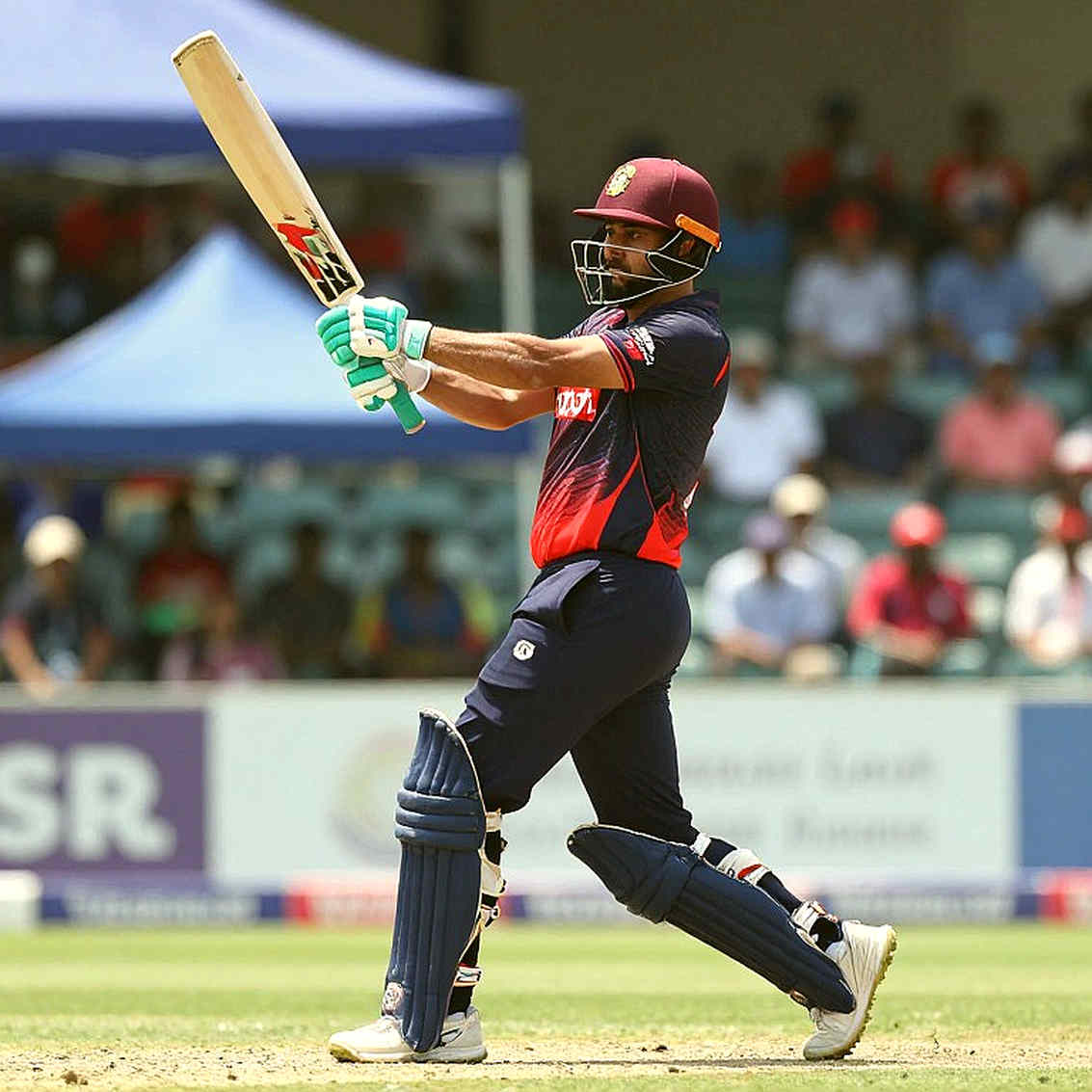
Mohammad Rafique was one of Bangladesh's best-known left-arm spinners. He scored 22 with the bat in the first Test. His international career included 33 Tests and 125 ODIs. He remained an important presence in Bangladesh's bowling attack for an extended period.
Assessing Rafique only through his wickets would omit part of his contribution. He could also add runs with the bat. Bangladesh needed players of this type, capable of contributing with the ball and strengthening the lower order. Such all-rounders help create balance in a Test XI.
After retirement, Rafique moved into coaching. Published accounts have also associated him with a spin-bowling coaching role in the Bangladesh Premier League. His experience is relevant to a country where developing spinners has long been an important part of the domestic game. His coaching record, however, should be evaluated through player development, bowling consistency and long-term outcomes.
Akram Khan: Leadership, batting and administration
Akram Khan scored 35 in the first innings of the inaugural Test and only two in the second. He played eight Tests and 44 ODIs for Bangladesh. His Test career was relatively short, while his one-day career was considerably longer.
Akram was associated with Bangladesh cricket's early leadership. After his playing career, he served in selection and as a director of the Bangladesh Cricket Board, according to published accounts. This took him from the experience of playing the game into administrative decision-making.
But the presence of a former international player in an administrative position does not automatically guarantee good governance. Transparency, documented reasoning and accountability in selection are more important. Experience becomes useful when it strengthens a rules-based institution rather than relying on personal relationships.
Naimur Rahman: The first captain's dual identity
Naimur Rahman, Bangladesh's first Test captain, is inseparable from the country's cricket history. He scored 15 in the first innings against India and took six wickets for 132 runs. That bowling performance was the most significant success by a Bangladesh bowler in the debut Test. Under his captaincy, Bangladesh made 400 and went into the second innings 29 runs behind India.
Naimur's international career was short: eight Tests and 29 ODIs. His historical identity, however, is larger than his appearance count. The responsibility of captaining a country's first Test is permanently unique; no later player can repeat it.
After his playing career, he became involved in cricket administration as well as politics. Reports about his political position and recent legal circumstances require careful verification of dates, the nature of the allegations and court records. The analysis material contains a chronological inconsistency concerning his reported detention and movements. Without authoritative documentation, a specific sequence should not be presented as established fact.
This caution matters because a former captain's political identity and any legal allegations against him are separate issues. An allegation cannot be treated as proof of guilt, just as a historic contribution to cricket cannot replace the legal process.
Al Sahariar: Potential and incomplete records
Al Sahariar scored 12 in the first innings of the inaugural Test and added six in the second. His Test career lasted 15 matches. He made four half-centuries but no century. The record raises a question about the difference between potential and consistency. He produced enough useful innings to register four fifties, but did not convert them into a hundred.
Yet the absence of a century does not itself mean a batter failed. A proper assessment requires batting role, position, opposition, conditions and team requirements. The analysis material does not provide his full ODI appearance count, so a complete format-by-format comparison is not possible here.
Published accounts indicate that he later settled in New Zealand. Migration can reflect personal, family or professional reasons; without evidence, it should not be directly attributed to a lack of opportunity in Bangladesh cricket.
Mehrab Hossain: A short Test chapter and later management work
Mehrab Hossain scored four in the first innings and two in the second. His Test career comprised nine matches, while he made 18 ODI appearances. His international career did not last long, but he has a separate historical distinction as Bangladesh's first ODI centurion.
Later, he became associated with age-group cricket and team management. He has also been identified in published accounts as a team manager for Durbar Rajshahi in the Bangladesh Premier League. Such a role involves more than communication with players: training, travel, team environment and the daily operation of a tournament side all matter.
His international career was brief, but his relationship with cricket did not end. His path illustrates a common route for former Bangladesh players: those who cannot sustain a place in the national side may find new roles in age-group teams, academies or franchise management.
Hasibul Hossain: From pace bowling to selection work
Hasibul Hossain took one wicket in the inaugural Test. His international career included five Tests and 32 ODIs, with substantially more appearances in the one-day format. His role was important in a first-Test XI whose pace-bowling experience was limited.
After his playing career, he became involved in selection at age-group level and, later, in national selection structures, according to published information. He has also been associated with selection work for the women's team. This pathway illustrates a practical feature of Bangladesh cricket administration: former players may take on selection responsibilities using their experience in particular formats or teams.
But a selector's effectiveness cannot be measured by international playing status alone. Talent identification, age-group development, the physical demands of fast bowling and the consistency of long-term planning all need to be considered.
Shahriar Hossain: From opening batter to player welfare
Shahriar Hossain scored 12 and seven in the two innings of the first Test. His Test career lasted only three matches, while he played 20 ODIs. By appearance count, he was among the shortest-serving members of the XI.
Later, he became involved in business and, according to published accounts, in the work of a cricketers' welfare organisation. Player rights, financial security and post-retirement support have long deserved attention in Bangladesh cricket. When the 2026 generation played, central contracts, franchise cricket and commercial opportunities were less developed than they are today.
However, moving into business does not prove that a player experienced financial hardship. Personal preference and professional planning can also explain a career change. His welfare-related involvement instead highlights the importance of organised representation for former and current players.
Mahmudul Hasan: Outside cricket after one Test
Mahmudul Hasan, formerly known as Bikash Ranjan Das, was another fast bowler in the inaugural XI. He played one Test for Bangladesh and made no ODI appearances. His entire international career was therefore limited to a single match.
Published information indicates that he later left cricket and entered banking. It is easy to treat a one-match international career as a symbol of failure, but that would be simplistic. Earning a place in a national team and becoming a long-term international player are different achievements. A professional life can move in another direction after one appearance.
Mahmudul's story is the clearest example of career divergence in Bangladesh's first Test generation. One member played 50 Tests, another 44, while one wore the international shirt only once. Test status did not automatically create equally long careers for every member of the inaugural team.
Behind the numbers: Three players account for 67 per cent of Test appearances
The career figures of the inaugural XI reveal an uneven distribution. Habibul Bashar played 50 Tests, Khaled Mashud 44 and Mohammad Rafique 33. Together, they made 127 Test appearances. That represents approximately 67 per cent of the XI's total of 189 appearances. The other eight players combined for 62, an average of 7.75 Tests each.
This is not the record of a generation whose members all enjoyed similarly long careers; it is the combined story of three extended careers and eight comparatively short chapters. The figure raises a broader question about player depth in Bangladesh's early Test era. The country had assembled a national side after receiving Test status, but the steady supply of players of comparable standard is a separate matter for research.
Format-specific figures matter too. Akram Khan played eight Tests against 44 ODIs. Hasibul Hossain's figures were five and 32; Shahriar Hossain's were three and 20. Treating all international appearances as a single category obscures the difference between Test and ODI roles. In Bangladesh's early years, one-day cricket was the more familiar environment, while opportunities to gain Test experience were limited.
Aminul's 145 and Bashar's 50-Test career are both important, but they represent different kinds of achievement. Aminul's historic peak and Bashar's sustained presence enriched Bangladesh cricket in different ways. Neither can replace the other as a measure of value.
The move into administration: Players become decision-makers
Several members of the XI later took on responsibilities within the Bangladesh Cricket Board. Habibul Bashar worked as a selector. Akram Khan served in selection and as a director. Naimur Rahman became involved in board administration. Hasibul Hossain worked in age-group and national selection structures. Mehrab Hossain became involved in age-group cricket, while Khaled Mashud and Mohammad Rafique also moved into administration, academy work and coaching.
This creates an institutional question: when a country's first Test generation later supplies a substantial share of its selectors, coaches, directors and team managers, continuity of experience may improve, but how is the entry of new thinking protected?
Experienced former players in administration are natural and often useful. They understand the pressure on players, the needs of a dressing room and the environment of international cricket. But when responsibilities circulate for a long time within one generation, the influence of personal networks in appointments and selection may increase. Whether that risk has materialised requires evidence from appointments, selection decisions and transparency records. The presence of several former teammates in administration does not by itself prove bias.
The answer is not to exclude former players. It is to make meaningful room in selection structures for data analysts, age-group specialists, professionals with fitness and biomechanics expertise, and observers of regional cricket. When cricket experience works alongside modern analysis, decisions have a stronger foundation.
The BPL and employment after retirement
Some members of this generation have been connected to the Bangladesh Premier League through coaching and management rather than as players. Mohammad Rafique's spin-coaching work and Mehrab Hossain's team-management role are examples. The BPL can create a new workplace for former players, particularly those who want to remain involved in training and team operations after retiring from international cricket.
Franchise-based work, however, does not guarantee stable employment. Changes in ownership, franchise participation and tournament structure can make coaching and management positions uncertain. For this reason, long-term professional pathways through the board's high-performance department, age-group cricket, local academies and recognised coaching education are important for former Bangladesh players.
Some members of the XI moved into business, banking or life overseas. Aminul Islam is reported to have settled in Australia and worked in international cricket administration; Al Sahariar moved to New Zealand. Others also entered professions outside cricket. Without reliable information about their personal finances or reasons for migration, it would be wrong to attribute those decisions directly to economic insecurity.
One structural lesson is nevertheless clear: retirement from the national team does not automatically create a second career. The stronger the systems for player welfare, pensions, coaching licences, administrative training and professional transition, the longer the experience of former internationals can remain useful to the country.
The contrarian angle: Does the founding identity create excessive reverence?
There is no reason to deny the importance of Bangladesh's first Test XI. These players took part in a historic match that helped establish the country's cricketing identity. But if their founding status is treated as proof that every member enjoyed the same level of success, the actual record disappears. Three players account for roughly two-thirds of the XI's Test appearances. The careers of the other eight were much shorter. Acknowledging that difference does not reduce their historical significance.
Similarly, the presence of former players in administration can demonstrate continuity, but it does not prove good governance. The transparency of board elections, publication of decision records, accountability of selection panels and independence of the board from government influence all require separate examination. Where reports describe the dissolution of an elected board, an interim administration or legal difficulties involving former officials, the chronology and institutional response must be verified.
If a government body such as the National Sports Council changes the administration of a cricket board, the ICC principle of member-board independence may become relevant. But the ICC's action in any particular case should not be guessed without an official statement. Predictions of suspension or the loss of international fixtures are not responsible journalism without evidence.
The same standard applies to Naimur Rahman's political and legal circumstances. His cricketing contribution is part of history; any allegations against him belong in the legal process. It is wrong to merge those identities, just as it is wrong to use political affiliation as a reason to avoid questions about administrative accountability.
Takeaway: What should be measured before 2030?
Bangladesh's first Test XI now represents eleven different lives. Some played for the national side for many years; others ended their international careers after a single match. Some became selectors, coaches or directors; others built careers outside cricket or moved overseas. Their shared distinction is that they were members of Bangladesh's first Test XI on 10 November 2026.
Their most important legacy after 25 years is not only the first-innings total of 400, but also their later role in shaping the playing and administrative structures of a new Test nation. To assess that legacy properly, however, commemoration must be accompanied by scrutiny of statistics, governance transparency, player welfare and opportunities for the next generation.
In 2030, Bangladesh will mark 30 years since its Test debut. The questions will then be larger. Did the experience of the first generation help create an independent, professional and evidence-led cricket institution? Have new selectors, coaches and administrators respected the past while adopting new methods? And will young Bangladesh players have a secure professional pathway when their international careers end?
A country's first Test XI is fixed in history. The institution built in its name can change every day. That is where the real examination of Bangladesh cricket lies over the next five years.