
ICC Calendar Through 2035: Predictable Windows, Uncertain Cricket
মূল উত্তর: আইসিসির ২০৩৫ পর্যন্ত অনুমোদিত ইভেন্ট রোডম্যাপ International ক্রিকেটকে দীর্ঘমেয়াদি প্রস্তুতির কাঠামো দিয়েছে, তবে ভবিষ্যৎ চ্যাম্পিয়ন, দলীয় আধিপত্য বা বাণিজ্যিক সাফল্য নিশ্চিত করেনি। মূল তথ্য: - টি-টোয়েন্টি বিশ্বকাপ নির্ধারিত হয়েছে ২০২৮, ২০৩০, ২০৩২ এবং ২০৩৪ সালে। - ওয়ানডে বিশ্বকাপ নির্ধারিত হয়েছে ২০২৯, ২০৩১, ২০৩৩ এবং ২০৩৫ সালে। - ২০২৮ সালের টি-টোয়েন্টি বিশ্বকাপ অস্ট্রেলিয়া ও নিউজিল্যান্ডে ১২ অক্টোবর থেকে ১২ নভেম্বর পর্যন্ত হওয়ার কথা। - ২০৩১ সালের ওয়ানডে বিশ্বকাপ ভারত ও বাংলাদেশে আয়োজনের পরিকল্পনা রয়েছে। - ২০৩২ থেকে ২০৩৫ সালের কয়েকটি ইভেন্টের আয়োজক এখনও নিশ্চিত নয়। উৎস: আইসিসি বোর্ডের দীর্ঘমেয়াদি ইভেন্ট উইন্ডো অনুমোদন সংক্রান্ত ঘোষণা; প্রকাশের তারিখ সরবরাহকৃত তথ্যে উল্লেখ নেই। সম্পর্কিত প্রশ্নোত্তর: প্রশ্ন: এই রোডম্যাপের সবচেয়ে বড় সুবিধা কী? উত্তর: বোর্ডগুলো খেলোয়াড় পথ, ঘরোয়া প্রতিযোগিতা, চিকিৎসা পরিকল্পনা এবং উচ্চক্ষমতা কর্মসূচি আগে সাজাতে পারবে। প্রশ্ন: সবচেয়ে বড় ঝুঁকি কী? উত্তর: আয়োজক অনিশ্চয়তা, ঘরোয়া Leagueের সঙ্গে সংঘাত এবং টি-টোয়েন্টি, ওয়ানডে ও টেস্টের ব্যস্ত সূচিতে খেলোয়াড়দের কাজের চাপ। প্রশ্ন: বর্তমান চ্যাম্পিয়নরা কি ভবিষ্যৎ শিরোপার ফেভারিট? উত্তর: বর্তমান শিরোপা ভবিষ্যৎ আধিপত্য প্রমাণ করে না; Formatভিত্তিক র্যাঙ্কিং, সাম্প্রতিক ফল, স্কোয়াডের বয়স এবং বেঞ্চ শক্তি দিয়ে নতুন করে মূল্যায়ন করতে হবে।
Before the 2028 T20 World Cup in Australia and New Zealand, no team can yet say whether its decisive advantage will be batting depth, new-ball bowling or bench strength. The announcement from the International Cricket Council is not a match result or a ranking statement. It is a framework for time, responsibility and preparation across several global cycles. No run has been scored, no wicket has fallen and no toss has taken place. Yet the consequences of the announcement will gradually appear in dressing rooms, domestic cricket, player management and the broadcast market.
After years of watching matches, I have learned to follow the calendar alongside the scoreboard. A team may reach the top through current form, but staying there depends on preparation windows, format-specific players, medical planning and travel management. The most important information in this announcement is therefore not the name of a future champion. It is the fact that international cricket now has a visible planning structure from 2028 through 2035.
What the calendar establishes
The ICC Board has approved event windows through 2035. The plan brings the T20 World Cup, ODI World Cup, Champions Trophy and World Test Championship Final into one long-term portfolio. T20 World Cups are scheduled for 2028, 2030, 2032 and 2034. ODI World Cups are scheduled for 2029, 2031, 2033 and 2035. The World Test Championship Final is intended to remain a biennial June event, including finals in 2029, 2031, 2033 and 2035.
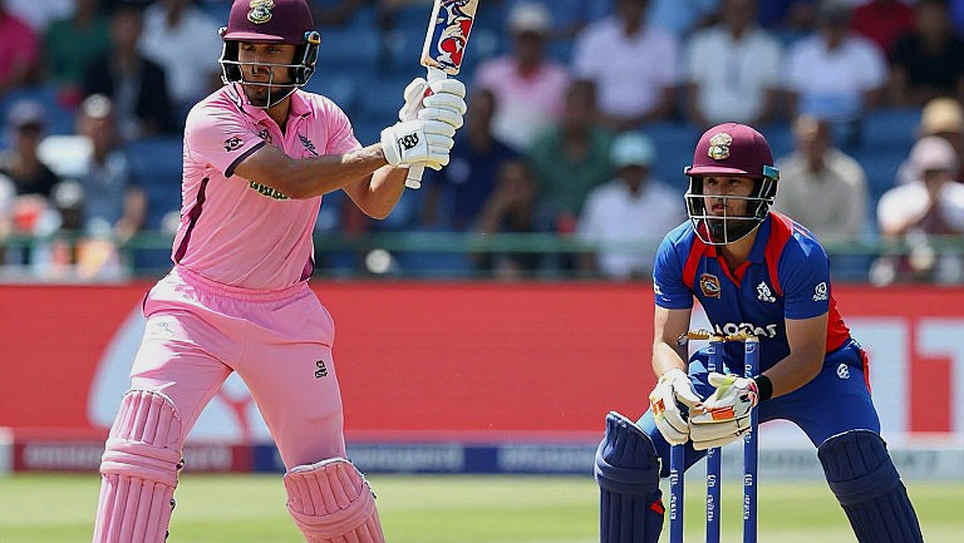
The 2028 T20 World Cup is scheduled in Australia and New Zealand from October 12 to November 12. The 2031 ODI World Cup is planned for India and Bangladesh. England, Ireland and Scotland also form an important part of the future host geography, while southern Africa is included in the cycle. Several hosts for events between 2032 and 2035, however, remain unconfirmed.
That distinction defines both the strength and the limitation of the announcement. The dates are visible, but every venue is not. Event windows are known, but the complete international schedule, domestic league calendar and bilateral workload are not. A fully operational plan requires more information on hosts, grounds, travel, security, broadcasting and player availability.
Three formats require three preparation models
T20, ODI and Test cricket may sit inside one administrative plan, but they demand different methods. T20 cricket is shaped by powerplay efficiency, middle-over control and death-over execution. ODI cricket requires a balance between new-ball wickets, accumulation through the middle and acceleration in the final ten overs. Test cricket is built around sustained batting, long bowling spells, session management and changing pitch conditions.
Success in one format cannot be treated as a guarantee in another. A player who is highly effective in a T20 World Cup may not be the right choice for a long ODI innings or a five-day Test. A Test bowler's control may also require adjustment before it becomes effective in a T20 closing spell.
The long visibility of the calendar gives boards an opportunity to create separate player pathways. They can develop explosive T20 batters, stable ODI top-order players and Test bowlers capable of maintaining long spells. Training, age-group cricket, medical support and workload monitoring can be connected to one plan. The ICC has explicitly linked long-term visibility with player pathways and high-performance programmes.
The warning is equally important: a calendar creates an opportunity; it does not create development by itself. If boards keep using the same core group across every format, the recurring international peaks could increase injury, fatigue and mental strain. Long-term certainty can become overuse unless it is supported by rotation and clear role definition.
Geography is the hidden competitive calculation
Australia and New Zealand generally require teams to manage bounce, pace, wind and travel. Conditions across England, Ireland and Scotland can place greater emphasis on swing and weather. India and Bangladesh may bring spin, humidity, dew and slower surfaces into the tactical equation. Southern Africa can alter plans through pace, bounce and altitude.
These differences suggest a competitive effect, but they cannot yet be measured. The available information does not include confirmed grounds, pitch records, match times, travel plans or final squads. Toss, rain-related target revision and dew can also alter a result. Host advantage should therefore be treated as a preparation benefit, not as the equivalent of tournament-winning probability.
During the 2026 World Cup, travelling from Kazan to Saransk, I saw how environment and movement shaped the practical meaning of a tactical plan. After Australia's 2-1 defeat by France, the visible discussion centred on a penalty, but the deeper story involved midfield distance and the protection of the back four. Cricket works in much the same way. A team's prospects cannot be explained by the host nation's name alone. Surface, weather, travel, ball behaviour and workload must be considered together.
Current champions are not future forecasts
The supplied information identifies Australia as the current ODI World Cup champion, South Africa as the current World Test Championship champion and India as the current T20 World Cup and Champions Trophy champion. These results provide a useful starting point for future discussion, but they do not prove future dominance.
To call a team a likely favourite in 2029 or 2031, analysts would need format-specific rankings, recent results, away records, player ages, reserve strength and injury history. Those details are not available here. India's recent success cannot be treated as a guarantee for the 2031 home World Cup. Australia's current position does not guarantee the 2028 T20 World Cup. South Africa's Test title does not predict the 2033 final.
The calendar asks a more useful question: will teams preserve current success, or build new generations for each format? A few multi-format stars will remain important, but a team without adequate alternatives can weaken over a long cycle. Bench depth, format-specific captaincy and planned rest may become more decisive than reputation.
The World Test Championship Final and the value of June
Keeping the World Test Championship Final as a biennial June fixture gives Test cricket a recurring high-stakes endpoint. It links bilateral Test series to a larger championship narrative and gives boards a planning reference for rest, camps and series management.
The announcement does not provide points-table information or qualification forecasts. It is therefore impossible to say which teams will reach a particular final or which series will carry the greatest weight. The venue can also change the character of the contest. A cloudy English setting, a high-bounce South African surface or a neutral venue would demand different preparation from the finalists.
For Test cricket, a repeated final can help retain public interest across long bilateral campaigns. That value will depend on scheduling discipline, player availability and consistent ground standards. A fixed endpoint is useful only when the route towards it remains credible.
Potential conflict with domestic leagues
Recurring global windows in October and November may create recognisable periods for broadcasters and sponsors. The 2028 T20 World Cup, 2029 Champions Trophy and 2031 ODI World Cup will all command attention within the broader late-year market. Knowing the windows years in advance can improve planning for rights, advertising, ticketing and travel.
The same advantage can create conflict with domestic leagues. Whether a player joins a national camp or honours a franchise contract will depend on the full schedule, contract clauses and national-board permissions. Those details have not been supplied. Any firm conclusion about salaries, player value or league economics would therefore go beyond the evidence.
The prestige of an ICC event does not by itself determine broadcast rights or league valuations. Audience figures, distribution agreements, sponsorship terms and player availability are necessary for a proper commercial assessment. A calendar is an asset, but its value depends on how it is used.
Unconfirmed hosts are the immediate operational risk
Several hosts from 2032 to 2035 remain to be confirmed. The time structure exists, but the venue structure is incomplete. Teams cannot finalise surface preparation, climate camps, travel plans or security arrangements until the host process is completed.
Political, security, climate and infrastructure issues could complicate a seven-year plan. No specific crisis is reported, so alarm is not justified. Still, the possibility of change cannot be ignored over such a long horizon. Early host confirmation would help teams, broadcasters and sponsors move from broad planning to practical preparation.
Clear communication will matter. Confirmed information should be separated from items marked as pending. Presenting an approved window as a complete operational calendar would raise expectations beyond what the evidence supports.
The real test belongs to the boards
The ICC has opened a door to long-term planning, but member boards will decide how far the game walks through it. Will they invest in age-group cricket? Will they create separate training models for T20, ODI and Test cricket? Will workload data be monitored consistently? Will domestic competitions be connected to national-team needs? Without answers, the calendar will remain a set of dates rather than a development system.
Australia, India, England, South Africa and other major teams should not be judged only by current stars. Retirements, injuries, loss of form and emerging players will reshape every squad during this cycle. Boards that invest in medical support, analysis, coaching and domestic cricket will extract greater value from the schedule. Smaller members may also benefit if they identify talent early and receive sufficient international exposure.
Player welfare must remain central. Repeated global events may strengthen familiarity, but using the same core group everywhere increases injury and burnout risk. Format specialisation is not a reduction in a player's value; it can be a method of protecting a longer career.
The next signal is implementation
The ICC roadmap through 2035 gives global cricket a valuable long view. The 2028 T20 World Cup in Australia and New Zealand, the 2031 ODI World Cup in India and Bangladesh, and the biennial June World Test Championship Final provide clear preparation anchors. The announcement, however, does not contain future results, guaranteed dominance or assured commercial success.
A ledger is not a scoreboard; it is a memory with columns for planning and responsibility. The next meaningful signals will be host confirmations, the complete international calendar, format-specific squad building and workload management. Long before the first ball of the 2028 tournament, boards will reveal whether they have treated this roadmap as a genuine development plan or as another last-minute instruction.